
Damage Restoration in Pueblo West, CO
- Damage Restoration Services Overview
- Common Damage Restoration Issues in Pueblo West, Colorado
- Neighborhoods We Serve in Pueblo West
- Seasonal Damage Patterns in Pueblo West
- Housing Characteristics & Restoration Considerations
- Environmental Conditions & Damage Implications
- What to Expect During a Restoration Project in Pueblo West
Damage Restoration Services Overview
You come home from a weekend in the mountains, open the door, and hear water running where no water should be. A supply line under the kitchen sink let go on Friday, and now the flooring is buckling and the drywall is soaked halfway up the wall. Situations like this hit Pueblo West homes regularly, and what happens in the first hours shapes how much of the home can be saved.
Restoration work covers a wide range of emergencies, and each one calls for a different response:
- Water damage restoration - burst supply lines, failed water heaters, appliance leaks, and roof intrusion
- Flooded basement recovery - extraction, structural drying, and moisture mapping below grade
- Sewage cleanup - septic backups and main line failures handled under Category 3 biohazard protocols
- Fire damage restoration - board-up, debris removal, structural cleaning, and rebuild coordination
- Smoke damage restoration - soot removal, odor neutralization, HVAC decontamination, and contents cleaning
- Mold removal - containment, air filtration, material removal, and post-remediation verification
The benefit of acting quickly is straightforward: dry materials can often be saved, wet ones cannot. Fast extraction limits secondary damage, keeps mold from establishing, and reduces how much of your home has to be torn out and rebuilt.
Common Damage Restoration Issues in Pueblo West, Colorado
Pueblo West's geography and building stock produce a fairly predictable set of restoration problems. Understanding them helps homeowners spot trouble before it spreads through the structure.
Frequent Causes of Damage
- Monsoon runoff - late summer storms drop heavy rain on hard, dry ground that sheds water toward foundations and window wells
- Clay soil movement - expansive soils in Pueblo County shift with moisture cycles, cracking foundations and creating seepage points
- Septic system backups - rural properties on septic face drain field saturation and tank failures, especially after heavy rain
- Well pump failures - pressure tank ruptures and pump malfunctions can flood mechanical rooms and crawl spaces
- Winter pipe freezes - unheated garages, exterior walls, and crawl spaces on properties left vacant during cold snaps
- Grass and brush fires - dry semi-arid conditions carry fire and heavy smoke toward outlying properties
- Furnace and fireplace incidents - puffbacks and chimney issues deposit soot throughout ductwork and living space
Warning Signs Worth Investigating
- Musty odors that intensify when the HVAC system runs
- Staining or bubbling paint along baseboards and basement walls
- Flooring that feels spongy, cups, or separates at the seams
- Slow drains or gurgling fixtures pointing toward a septic or sewer issue
- Unexplained increases in water usage with no visible leak
- Persistent smoke odor weeks after a small kitchen or fireplace fire
Any of these signs justify a moisture inspection. Hidden water behind drywall and under subfloor can feed mold growth long before the damage becomes visible.
Neighborhoods We Serve in Pueblo West
Pueblo West covers a large footprint, and response coverage extends across the entire metropolitan district and beyond into surrounding Pueblo County.
- Neighborhoods along McCulloch Boulevard and Purcell Boulevard corridors
- Properties near Pueblo West Golf Course and the surrounding subdivisions
- Acreage lots on the north and west edges toward Lake Pueblo State Park
- Established sections near Joe Martinez Boulevard and Industrial Boulevard
- Newer residential development south of Highway 50
- Rural parcels toward Beulah Valley, Avondale, Boone, and Rye
- Adjacent service areas in Pueblo proper, Blende, Salt Creek, and Colorado City
Larger lots and longer driveways mean equipment staging takes planning, particularly for whole-home drying or fire cleanup. Crews arrive prepared for properties without municipal sewer or water service, where septic and well systems change how a job is approached.
Seasonal Damage Patterns in Pueblo West
Restoration calls in Pueblo West follow the calendar closely. Knowing what each season brings helps homeowners prepare.
- January through March - frozen and burst pipes dominate. Cold snaps combined with dry indoor air stress supply lines in crawl spaces, garages, and exterior walls. Furnace puffbacks and heating-related fires also spike.
- April through June - snowmelt and spring rain saturate clay soils, pushing water into basements and crawl spaces. Hail and wind open roofs to intrusion.
- July through September - monsoon season delivers the year's heaviest flash flooding. Basement flooding, window well overflow, and septic drain field saturation peak. Mold growth accelerates in the humidity that follows.
- October through December - fireplace and wood stove season brings chimney fires and smoke damage. Early freezes catch unwinterized outdoor spigots and vacant properties.
Mold removal requests tend to lag water events by several weeks, often surfacing when a homeowner notices odor after an incomplete drying job. Sewage cleanup follows both heavy rain and holiday periods when septic systems handle unusual loads.
Housing Characteristics & Restoration Considerations
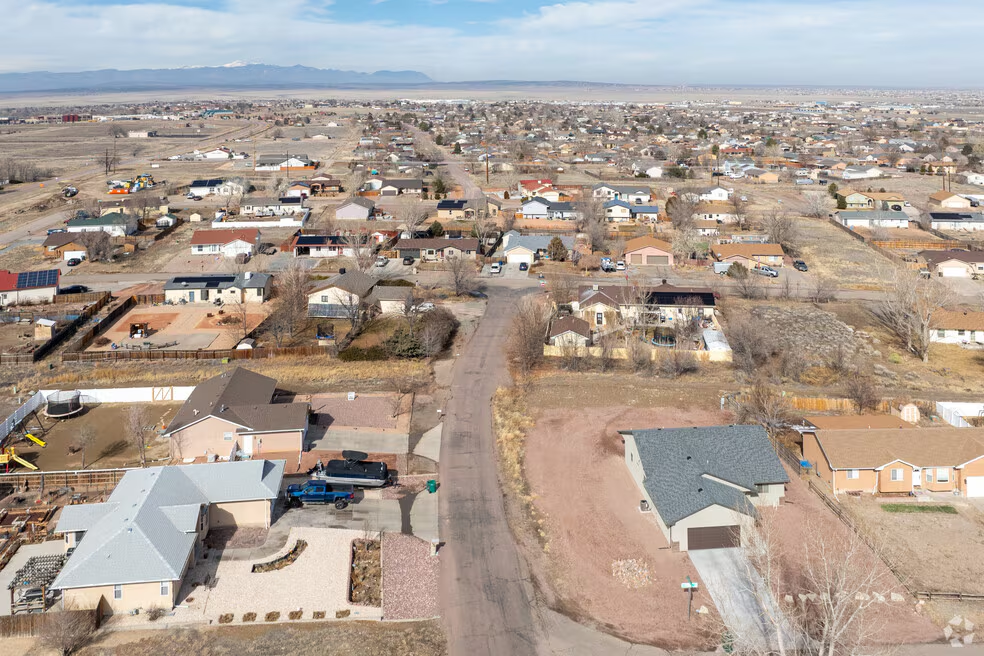
Pueblo West grew in waves, and that shows in the building stock. Homes range from 1970s and 1980s ranch construction to subdivisions finished within the last few years. Each era brings its own restoration challenges.
Older Homes (1970s - 1990s)
- Galvanized or early polybutylene plumbing prone to pinhole leaks and sudden failure
- Original wood subfloor and particleboard underlayment that swells quickly when wet
- Possible asbestos-containing materials in flooring, texture, and insulation requiring testing before demolition
- Undersized or absent sump systems in below-grade spaces
- Aging ductwork that spreads soot and mold spores efficiently
Newer Construction (2000s - Present)
- Tighter building envelopes that trap moisture rather than letting it dissipate
- Engineered wood products and OSB sheathing that delaminate after prolonged saturation
- Finished basements with carpet, pad, and drywall that must come out fast after flooding
- PEX plumbing that resists freezing but still fails at fittings and manifolds
Property-Wide Factors
- Many properties run on private wells and septic, which changes sewage cleanup and water restoration protocols
- Large lots often mean detached garages, shops, and outbuildings that also need drying or fire cleanup
- Crawl space construction is common, and these spaces hold moisture long after the living area appears dry
Drying plans are built around the specific assembly - a slab-on-grade ranch dries differently than a two-story with a finished walkout.
Environmental Conditions & Damage Implications
The semi-arid high desert climate west of Pueblo shapes every part of the restoration process, sometimes helping and sometimes complicating the work.
Climate and Air
- Low ambient humidity aids evaporative drying, but structural cavities still hold water for days
- Wide daily temperature swings drive condensation inside wall assemblies and crawl spaces
- Wind-carried dust settles into soot residue after fires, making smoke cleanup more involved
- Regional wildfire smoke can infiltrate homes and compound existing odor problems
Soil and Water
- Expansive clay soils swell when wet and shrink when dry, stressing foundations and creating new seepage paths
- Hard ground sheds monsoon rain rapidly instead of absorbing it, sending sheet flow toward structures
- Hard water with high mineral content accelerates wear on water heaters, supply lines, and fixtures
- Saturated drain fields push septic waste back into homes during wet stretches
What This Means for Restoration
- Moisture meters and thermal imaging are used to verify dryness rather than relying on surface appearance
- Mold containment is set up early because spore counts rise fast in warm, wet cavities even in a dry climate
- Category 3 water from septic backups requires full PPE, antimicrobial treatment, and removal of porous materials
- Air scrubbers with HEPA filtration run throughout smoke and mold projects to protect indoor air quality
What to Expect During a Restoration Project in Pueblo West
Restoration goes better when homeowners know what is happening and why. Clear documentation also protects you during the insurance process, which matters when a claim covers structural drying, contents, and rebuild work.
The Typical Sequence
- Emergency contact and dispatch - crews respond around the clock across Pueblo West and greater Pueblo County
- Inspection and damage assessment - moisture mapping, thermal imaging, and water category classification determine the scope
- Water extraction or debris removal - standing water is pulled out, or fire debris and unsalvageable materials are cleared
- Controlled demolition - saturated drywall, insulation, carpet pad, and contaminated materials are removed as needed
- Drying and dehumidification - air movers and commercial dehumidifiers run with daily moisture readings logged
- Cleaning and sanitizing - antimicrobial application, soot removal, odor treatment, and contents cleaning
- Verification - readings confirm materials have reached dry standard before equipment comes out
- Reconstruction - drywall, flooring, paint, and finish work return the space to pre-loss condition
Transparency Throughout
- Photo and moisture documentation collected daily and shared with you and your adjuster
- Plain-language explanation of why specific materials must be removed instead of dried in place
- Written scope of work so there are no surprises about what is included
- Direct communication with your insurance carrier, with you copied on the details
- Clear answers about containment, equipment noise, and which rooms stay usable
Certification Matters
IICRC-certified technicians follow published industry standards for water restoration, applied structural drying, and mold remediation. AMRT certification covers mold work specifically, including containment design and post-remediation verification. Asking about certifications before work begins is a reasonable question, and any legitimate contractor will answer it directly.





