
Damage Restoration in Monmouth, OR
- Damage Restoration Services Overview
- Common Damage Restoration Issues in Monmouth, Oregon
- Neighborhoods We Serve in Monmouth
- Seasonal Damage Patterns in Monmouth
- Housing Characteristics & Restoration Considerations
- Environmental Conditions & Damage Implications
- Why Sewage Backups and Basement Flooding Demand Extra Care in Monmouth
Damage Restoration Services Overview
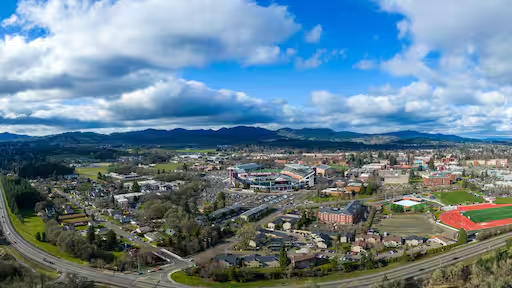
Monmouth sits in the heart of the Willamette Valley, where wet winters, clay-heavy soil, and a housing stock that spans a century create restoration challenges you won't find in drier parts of Oregon. Water finds its way into crawl spaces and basements, and once moisture settles into a building, mold follows.
Oregon Restoration handles every phase of a property loss with one team of specialists - respond fast, stabilize the damage, then rebuild.
- Water Damage Restoration - extraction, moisture mapping, structural drying, and dehumidification after pipe breaks, appliance failures, roof leaks, and storm intrusion.
- Flooded Basement Cleanup - pumping standing water, removing saturated materials, and drying below-grade spaces that hold humidity long after the water is gone.
- Sewage Cleanup - containment, removal of contaminated porous materials, disinfection, and deodorizing after backups and septic failures.
- Fire Damage Restoration - structural stabilization, debris removal, soot cleanup, and drying of firefighting water.
- Smoke Damage Restoration - residue cleaning, staining treatment, and odor management for grease, protein, electrical, wood, plastic, wildfire, and puff-back events.
- Mold Removal - containment, source correction, safe removal, and rebuilding of affected assemblies.
Monmouth property owners get mitigation and reconstruction from the same company, which means fewer handoffs and a faster return to pre-loss condition.
Common Damage Restoration Issues in Monmouth, Oregon
Most losses in Monmouth trace back to three sources: prolonged winter rain, aging plumbing and sewer laterals, and the seasonal shift between damp and dry that stresses building materials.
Frequent Causes
- Saturated ground pushing water through foundation walls and cold joints in older basements
- Failed sump pumps during multi-day rain events off the Coast Range
- Supply line and water heater failures in homes with original galvanized or early plastic plumbing
- Sewer backups when heavy inflow overwhelms lines, or when tree roots invade older clay laterals
- Septic system saturation on rural parcels outside city limits
- Kitchen grease fires, wood stove and fireplace issues, and furnace puff-backs during heating season
- Wildfire smoke intrusion during late summer, leaving odor and fine residue in HVAC systems and soft goods
Warning Signs Worth Acting On
- A musty smell in the basement, crawl space, or hallway closet that returns each fall
- Cupping hardwood, bubbling vinyl, or baseboards pulling away from the wall
- Discoloration or tide lines on drywall near floor level
- Slow drains, gurgling fixtures, or standing water around floor drains
- Persistent condensation on windows and cold-wall surfaces
- Soot film on light fixtures, vents, or upper wall surfaces after a small fire
Small signs escalate quickly here because Willamette Valley humidity keeps materials from drying on their own. Documenting the damage early also strengthens an insurance claim.
Neighborhoods We Serve in Monmouth
We respond throughout Monmouth and the surrounding Polk County communities, covering both in-town residential blocks and rural properties on well and septic systems.
- Downtown Monmouth and the historic core near Main Street
- Neighborhoods surrounding Western Oregon University and student rental housing
- Newer subdivisions along the south and west edges of town
- Ash Creek corridor properties and low-lying parcels near the floodplain
- Independence, including the Riverview area near the Willamette
- Dallas, Rickreall, Airlie, Suver, and Buena Vista
- Rural acreage along Highway 99W, Highway 51, and Helmick Road
Coverage extends to commercial buildings, campus-adjacent multifamily housing, churches, and small businesses. Rural calls receive the same rapid response as in-town addresses, with equipment staged for properties that lack municipal sewer connections.
Seasonal Damage Patterns in Monmouth
Restoration demand in Monmouth follows the valley's rainfall curve, with a distinct fire and smoke season layered on top.
- November through February - peak season for flooded basements, crawl space saturation, and groundwater intrusion. Sump pump failures and sewer backups spike during sustained rain. Cold snaps bring frozen and burst pipes, especially in uninsulated crawl spaces and vacant rentals.
- March through May - snowmelt and spring storms keep soil saturated. Water damage from the wet months surfaces as mold growth behind walls and under flooring once temperatures climb.
- June through August - mold removal calls rise as trapped winter moisture activates. Air conditioning condensate lines clog, and outdoor cooking and yard burning increase fire risk.
- Late August through September - wildfire smoke from Coast Range and Cascade fires drives smoke damage restoration, HVAC cleaning, and odor treatment.
- October - the first heating cycles trigger furnace puff-backs, chimney and wood stove fires, and the season's first roof leaks.
Housing Characteristics & Restoration Considerations
Monmouth's housing mix - early 1900s homes near downtown, mid-century ranches, 1970s-90s subdivisions, and newer construction on the edges - changes how each loss is handled.
Older Homes (pre-1960)
- Lath and plaster walls that hold water and require careful moisture testing before drying decisions
- Unfinished or partially finished basements with block or poured walls prone to seepage
- Original clay or cast iron sewer laterals vulnerable to root intrusion and collapse
- Possible asbestos-containing flooring, mastic, and insulation requiring testing before demolition
- Knob-and-tube or aging wiring that raises electrical fire risk
Mid-Century and Suburban Homes
- Vented crawl spaces that trap humidity and support mold on joists and subfloor
- Slab-on-grade construction where leaks migrate under flooring before becoming visible
- Original single-pane windows contributing to condensation and window-wall mold
Newer and Multifamily Construction
- Tight building envelopes that hold moisture and smoke odor longer without mechanical drying
- Shared walls and stacked plumbing in student and rental housing, allowing one leak to affect multiple units
- Engineered flooring and MDF trim that swell and delaminate quickly when wet
Because we handle reconstruction as well as mitigation, drywall, flooring, trim, cabinetry, insulation, and paint are matched back to the original finishes without bringing in a second contractor.
Environmental Conditions & Damage Implications
Monmouth's climate keeps buildings damp for much of the year, which shapes nearly every restoration decision made here.
Climate and Moisture
- Roughly 40 to 45 inches of annual rainfall, concentrated between November and April
- Extended stretches of high outdoor humidity that slow natural drying and make dehumidification mandatory
- Mild winters that rarely freeze surfaces dry, allowing mold to remain active year-round
Soil and Groundwater
- Willamette Valley silt and clay soils drain slowly and hold water against foundations
- Seasonally high water tables push moisture up through slabs and crawl space soil
- Ash Creek and nearby drainages raise flood exposure for low-lying properties
- Expansive clay movement opens foundation cracks that become entry points
Air Quality
- Late-summer wildfire smoke deposits fine particulate in attics, ductwork, insulation, and textiles
- Agricultural dust and pollen combine with soot residue, complicating post-fire cleaning
- Winter inversions trap woodsmoke, intensifying odor in homes with existing smoke damage
These conditions mean drying targets in Monmouth must account for ambient humidity, and mold prevention has to be built into every water and sewage job rather than treated as a separate step. Crawl space vapor barriers, sealed containment, and moisture verification before closing walls are standard parts of the work.
Why Sewage Backups and Basement Flooding Demand Extra Care in Monmouth
Below-grade water losses in Monmouth are rarely simple, because clay soil, seasonal groundwater, and aging laterals often mean the water is both contaminated and likely to return.
A flooded basement that also involves sewage requires a different standard than a clean-water leak. Category 3 water carries bacteria and pathogens, and porous materials it touches typically cannot be salvaged.
How We Handle Contaminated Water Losses
- Rapid response and safety check - power and gas hazards addressed, containment established, and affected areas isolated from clean parts of the building.
- Extraction and removal - standing water pumped out, then saturated carpet, pad, drywall, insulation, and affected contents removed and documented.
- Cleaning and disinfection - hard surfaces, framing, and subfloor cleaned with antimicrobial treatment, followed by HEPA air filtration.
- Structural drying - air movers and commercial dehumidifiers placed based on moisture readings, with daily monitoring until materials reach documented dry standards.
- Source and cause review - identifying whether the backup came from a root-invaded lateral, a failed sump, a saturated septic field, or exterior groundwater.
- Reconstruction - drywall, flooring, trim, paint, and cabinetry rebuilt by the same team, with mold-resistant materials where appropriate.
Details That Matter Locally
- Moisture readings taken inside wall cavities and under flooring, not just on surfaces
- Crawl space soil and vapor barrier inspected after every below-grade loss
- Insulation checked for hidden saturation that would otherwise feed mold growth
- Thorough photo and moisture documentation to support the insurance process
Skipping any of these steps in a valley climate almost always leads to a second call - this time for mold removal. Call to schedule an inspection and we will respond quickly to assess the damage.





