
Damage Restoration in Dallas, OR
- Damage Restoration Services Overview
- Common Damage Restoration Issues in Dallas, Oregon
- Neighborhoods We Serve in Dallas
- Seasonal Damage Patterns in Dallas
- Seasonal Damage Patterns in Dallas
- Housing Characteristics & Restoration Considerations
- Environmental Conditions & Damage Implications
- Sewage Backup Response in Polk County Homes
Damage Restoration Services Overview
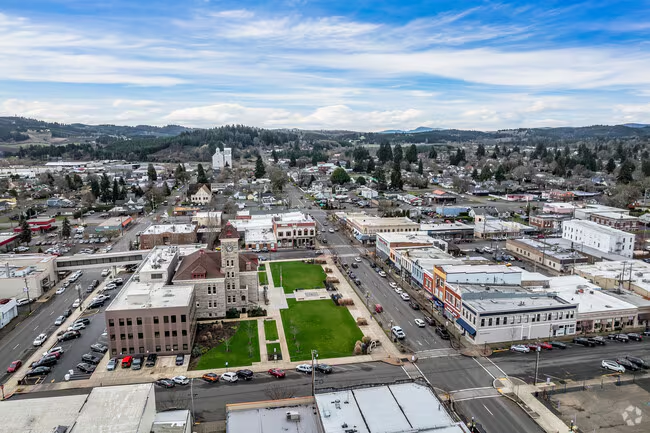
What would you do if you walked into your Dallas home tomorrow morning and found two inches of standing water across the basement floor? Property damage rarely announces itself in advance, and the hours immediately following a loss shape how much of your home can be saved.
Restoration work in Polk County covers a wide spectrum of emergencies, and each type demands different equipment, chemistry, and safety protocols:
- Water Damage Restoration - extraction, structural drying, and moisture mapping after supply line breaks, appliance failures, and roof leaks
- Flooded Basement - pump-out, contents handling, and drying of below-grade spaces where groundwater and stormwater collect
- Sewage Cleanup - containment and decontamination of Category 3 water that may carry viruses, bacteria, and parasites
- Fire Damage Restoration - debris removal, structural stabilization, and rebuilding after flame and heat damage
- Smoke Damage Restoration - soot removal from surfaces, HVAC systems, and porous contents, plus odor neutralization
- Mold Removal - containment, air filtration, material removal, and antimicrobial treatment
The benefit to Dallas residents is straightforward: faster stabilization means fewer materials torn out, less contents loss, and a shorter path back to normal living. Coordinated documentation also supports the insurance claim from the first day, so homeowners are not left assembling evidence weeks later.
Common Damage Restoration Issues in Dallas, Oregon
Dallas sits in the Willamette Valley west of Salem, where wet winters, clay-heavy soils, and an older housing stock combine to create predictable restoration patterns.
Frequent Causes of Loss
- Prolonged winter rainfall saturating soil and pushing groundwater against foundation walls
- Rickreall Creek and area drainage overflow during heavy storm cycles
- Failed sump pumps in daylight basements and crawlspaces
- Sewer line backups caused by root intrusion in older clay laterals
- Cold snaps that freeze uninsulated pipes in crawlspaces and garages
- Wood stove, fireplace, and chimney fires during heating season
- Kitchen grease fires that spread soot through ductwork within minutes
- Summer wildfire smoke infiltrating homes through vents and window gaps
Warning Signs Worth Acting On
- Musty odors in crawlspaces, closets, or near baseboards
- Cupping or darkening hardwood and soft spots underfoot
- Efflorescence, chalky white staining, or hairline cracks on basement walls
- Slow drains throughout the house or gurgling fixtures - often the first hint of a main line problem
- Peeling paint, bubbling drywall tape, or rust at nail heads
- Persistent smoke smell that returns on humid days after a small fire
- Visible dark spotting behind furniture on exterior walls
Sewage backups deserve particular caution. Contaminated water carries pathogens that survive on surfaces long after the liquid is gone, which is why the cleanup sequence matters as much as the removal itself.
Neighborhoods We Serve in Dallas
Service extends across the city and the surrounding Polk County countryside:
- Downtown Dallas and the historic Court Street district
- Neighborhoods around Dallas City Park and Rickreall Creek
- Residential areas near LaCreole Middle School and Dallas High School
- Ellendale and the west-side hillside properties
- Godsey Road, Orrs Corner, and Kings Valley Highway corridors
- Oakdale Heights and newer subdivisions on the north end
- Rural acreage along Ellendale Road, Fern Corner, and Salt Creek
Nearby communities are covered as well, including Rickreall, Monmouth, Independence, Falls City, Perrydale, and the western edges of Salem and West Salem. Rural properties often rely on private wells and septic systems, which changes how water losses and sewage incidents are assessed - those details are factored into the response plan before crews arrive on site.
Seasonal Damage Patterns in Dallas
Seasonal Damage Patterns in Dallas
- November through February - peak season for flooded basements, saturated crawlspaces, and roof leaks. Sustained valley rain keeps soil moisture high, and sump pumps run nearly continuously. Frozen pipe breaks appear during brief cold snaps in December and January.
- December and January - heating season drives fire and smoke incidents from wood stoves, space heaters, chimney creosote, and holiday cooking.
- March through May - spring rains and rising groundwater expose foundation weaknesses. Mold growth accelerates as temperatures climb while materials stay damp from winter.
- June through August - sewer backups increase as tree roots grow aggressively into clay laterals. Air conditioning condensate lines clog, and irrigation lines fail against foundations.
- July through September - regional wildfire smoke settles in the valley, depositing fine particulate in attics, HVAC systems, and soft furnishings.
- October - the first heavy rains reveal clogged gutters, failed downspout extensions, and roofing damage that went unnoticed all summer.
Scheduling gutter cleaning, sump pump testing, and chimney inspection in early October heads off a meaningful share of winter emergencies.
Housing Characteristics & Restoration Considerations
Dallas has a mixed housing stock - early twentieth century homes near the downtown core, mid-century ranches, and subdivisions built from the 1990s onward. Each era brings distinct restoration challenges.
Older Homes (pre-1978)
- Lath and plaster walls hold moisture longer than drywall and dry unevenly
- Cast iron and clay sewer laterals are prone to cracking and root intrusion
- Asbestos-containing floor tile, mastic, and pipe wrap require testing before demolition
- Lead paint considerations affect how surfaces are sanded or removed after fire and smoke damage
- Unlined masonry chimneys raise fire risk during wood-heating months
Mid-Century and Ranch Homes
- Vented crawlspaces with minimal vapor barrier - a common source of persistent mold
- Galvanized supply lines that corrode and fail without warning
- Limited attic insulation, allowing smoke and moisture to travel freely
Newer Construction
- Tighter building envelopes trap smoke odor and humidity indoors
- Engineered wood flooring and OSB subfloor swell quickly and rarely recover after saturation
- Finished basements and bonus rooms mean carpet pad, baseboard, and drywall are all in play during a flood
- Multi-zone HVAC systems distribute soot and mold spores across every floor
Drying plans are built around what the structure is actually made of. Dense plaster, solid-core doors, and layered flooring all need extended dry times and monitoring rather than a standard three-day setup.
Environmental Conditions & Damage Implications
The Willamette Valley climate around Dallas produces roughly 45 to 50 inches of annual rainfall, most of it concentrated between October and April, with mild temperatures and high relative humidity through the wet months.
How Local Conditions Drive Damage
- High winter humidity - indoor drying slows considerably, so dehumidification equipment carries more of the workload than open-window ventilation
- Clay and silt loam soils - poor drainage means water pools against foundations rather than percolating away, feeding basement seepage
- Seasonal groundwater rise - hydrostatic pressure pushes moisture through concrete block and slab cracks
- Mild temperatures - the valley rarely gets cold enough or dry enough to halt mold growth, so colonies expand year-round in crawlspaces
- Wildfire smoke events - fine particulate lodges in insulation, ductwork, and fabrics, producing odor that resurfaces months later
- Well and septic systems on rural parcels - a saturated drain field can back sewage into the home during heavy rain
What This Means for Restoration Work
- Moisture readings are tracked daily rather than assumed - valley conditions can stall drying progress
- Crawlspace vapor barriers and encapsulation are frequently recommended alongside repairs
- HEPA air filtration runs during mold and smoke projects to protect indoor air quality
- Antimicrobial treatment is applied to framing and subfloor before any reconstruction begins
Sewage Backup Response in Polk County Homes
Sewage damage is the most hazardous category of water loss, and it is treated that way from the moment a crew arrives. Contaminated water can carry viruses, bacteria, parasites, and mold spores that remain infectious on surfaces well after the visible liquid is gone.
The Cleanup Sequence
- Full personal protective equipment - crews suit up before entering the structure, with respiratory protection and containment established at the affected area
- Preliminary antimicrobial spray - the entire affected zone is treated to kill surface bacteria before any physical handling begins
- Liquid sewage extraction - waste is removed with dedicated equipment and disposed of according to disposal regulations, never through household drains
- Material removal - carpet, pad, drywall, insulation, and other porous items that absorbed contaminated water are cut out and bagged
- Hard surface cleaning - framing, concrete, and subfloor are scrubbed and rinsed
- Second antimicrobial and deodorizing application - a final treatment neutralizes residual bacteria and the odors that linger in porous materials
- Structural drying and verification - dehumidifiers and air movers run until moisture readings return to normal, confirmed with meters rather than guesswork
Why Backups Happen Around Dallas
- Mature trees along established streets send roots into aging clay laterals
- Heavy winter rain overwhelms combined drainage during storm peaks
- Rural septic drain fields saturate and fail when the water table rises
- Grease and wipes accumulate in older, narrow lines
Homeowners should avoid entering an affected area, keep children and pets away, shut off HVAC to prevent spore and odor distribution, and photograph conditions from a safe distance for the insurance file. The goal is a home that is not simply cleaned but genuinely safe and odor-free before anyone moves back in.





