Damage Restoration in Olmsted County, MN
- Damage Restoration Services Overview
- Common Damage Restoration Issues in Olmsted County, Minnesota
- Neighborhoods We Serve in Olmsted County
- Seasonal Damage Patterns in Olmsted County
- Housing Characteristics & Restoration Considerations
- Environmental Conditions & Damage Implications
- Storm Damage Documentation and Disaster Relief Reporting in Olmsted County
Damage Restoration Services Overview
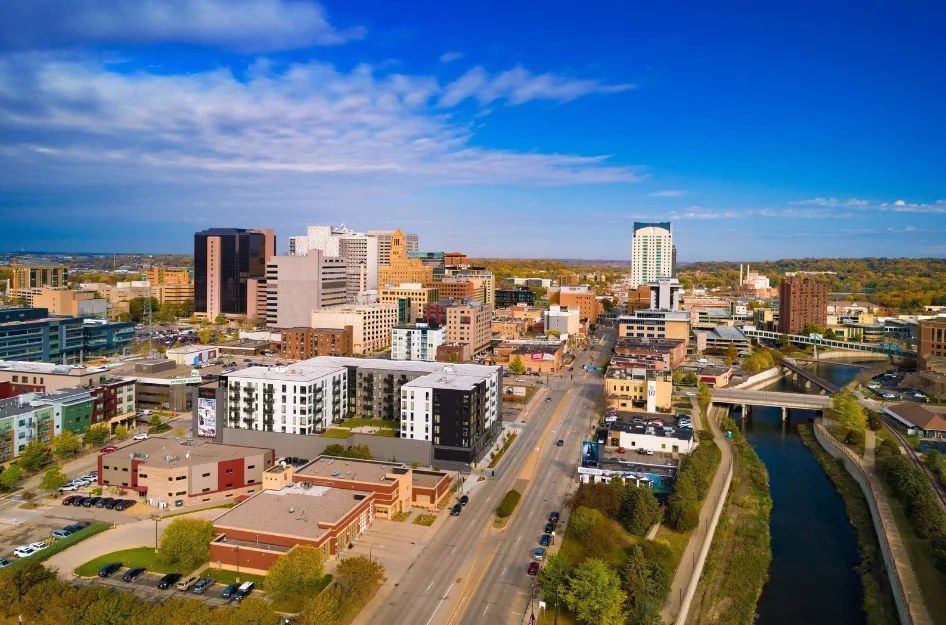
When water pours into a basement on a Rochester side street or smoke settles into the drywall of a farmhouse outside Byron, the first hours shape everything that follows. Professional restoration turns a chaotic situation into a documented, methodical recovery - one where structures dry properly, contaminants are contained, and salvageable belongings are treated before damage becomes permanent.
Olmsted County properties face a wide mix of losses, and restoration work here spans the full range:
- Water Damage Restoration - extraction, structural drying, and moisture mapping after burst supply lines, appliance failures, roof breaches, and storm intrusion.
- Flooded Basement - pump-out, saturated material removal, and dehumidification for below-grade spaces that take on groundwater or backed-up drainage.
- Sewage Cleanup - containment, removal of contaminated porous materials, and antimicrobial treatment following floor drain backups and septic failures.
- Fire Damage Restoration - debris removal, structural stabilization, soot cleanup, and coordination with rebuild trades.
- Smoke Damage Restoration - odor neutralization, HVAC decontamination, and surface cleaning tuned to the type of smoke residue present.
- Mold Removal - containment barriers, negative air pressure, controlled removal, and correction of the moisture source behind growth.
The benefit for homeowners is straightforward: less secondary damage, cleaner insurance documentation, and a home that is genuinely dry rather than simply dry to the touch.
Common Damage Restoration Issues in Olmsted County, Minnesota
Olmsted County sits in a corner of Minnesota where flat farmland meets the bluff country of the Zumbro River watershed, and that geography drives most of what restoration crews see.
Storm and severe weather losses
The county has recent, vivid experience with severe weather. A single spring outbreak brought four tornadoes across the county, with Marion Township hit hardest - roughly 30 homes affected, a dozen with major structural damage, and utilities disconnected for safety while Minnesota Homeland Security and Emergency Management, Rochester Fire, and the Olmsted County Sheriff's Office ran door-to-door checks. Stewartville and Quincy Township reported additional damaged structures. Wind-opened roofs and shattered windows let rain into attics and wall cavities, which is exactly how a wind event becomes a water and mold event weeks later.
Warning signs worth acting on
- Musty odor in a finished basement, especially near carpet edges and behind paneling
- Efflorescence, chalky white staining, or bubbling paint on foundation walls
- Slow floor drains or gurgling fixtures - often the first hint of a sewer backup
- Tape seams lifting or nail pops appearing on ceilings after a storm
- Smoke odor that returns on humid days after a small kitchen or furnace fire
- Dark speckling on joists, subfloor, or the back side of baseboards
Systems and structures
Sump pump failure during heavy rain, frozen and split supply lines during January cold snaps, aging cast iron and clay laterals under older Rochester homes, and wood stove or furnace malfunctions in rural townships all generate a steady share of calls throughout the year.
Neighborhoods We Serve in Olmsted County
Coverage extends across the county's cities, townships, and rural routes:
- Rochester - Kutzky Park, Slatterly Park, Homestead, Northrop, Folwell, Bamber Valley, Elton Hills, Meadow Park, Sunset Terrace, and the growing northwest and southeast developments
- Stewartville - including neighborhoods that sustained major and minor storm damage
- Byron, Eyota, Dover, Chatfield edge, Oronoco, and Pine Island approaches
- Townships - Marion, Quincy, Haverhill, Cascade, Salem, High Forest, Farmington, Rock Dell, Elmira, Orion, New Haven, Kalmar, and Viola
- Rural acreages along the Zumbro River, Bear Creek, Willow Creek, and Root River tributaries
Response covers both dense urban blocks near downtown Rochester and remote farm properties where septic systems, outbuildings, and well water introduce additional considerations.
Seasonal Damage Patterns in Olmsted County
- December through February - Frozen and burst pipes in crawl spaces, garages, and exterior walls. Ice dams push meltwater under shingles into ceilings. Heating equipment, space heaters, and chimney fires drive fire and smoke damage calls.
- March through April - Snowmelt over still-frozen ground saturates foundations and overwhelms sump pumps, producing flooded basements. Early severe weather season begins, and April has already proven capable of delivering tornado damage across the county.
- May through July - Peak storm season. Straight-line winds, hail, and heavy rainfall cause roof breaches, window failures, and municipal system surcharging that leads to sewage backups.
- August through September - Warm, humid air combined with lingering moisture from spring events accelerates mold growth in basements, attics, and behind wall cavities that were never fully dried.
- October through November - Furnace startup releases dust and puff-back soot, generating smoke damage calls. Freeze-thaw cycles reopen foundation cracks ahead of winter.
Housing Characteristics & Restoration Considerations
Olmsted County housing spans well over a century of construction, and the era of a home dictates the restoration approach.
Pre-1940 homes
- Common in Rochester's Slatterly Park, Kutzky Park, and older sections of Stewartville and Eyota
- Stone or unreinforced block foundations that wick groundwater
- Plaster over wood lath, which holds moisture and requires slower, controlled drying
- Balloon framing that allows smoke and soot to travel vertically between floors
- Potential asbestos in floor tile, pipe wrap, and mastic - testing precedes removal
Mid-century through 1980s
- Poured concrete or block foundations with finished basement rec rooms
- Wood paneling, carpet over concrete, and drop ceilings that trap moisture after flooding
- Cast iron and clay sewer laterals prone to root intrusion and backups
Modern construction
- Tighter building envelopes that hold humidity and smoke odor longer
- Engineered floor trusses and OSB subfloor that lose strength quickly when saturated
- Egress-window basements and daylight walkouts with finished living space at risk
- Spray foam and dense insulation that conceal moisture until mold appears
Rural properties add wells, septic drainfields, and pole barns to the equation, changing how sewage cleanup and water testing are handled.
Environmental Conditions & Damage Implications
Local climate and geology directly influence how damage develops and how long recovery takes.
- Humid continental climate - Summer dew points climb high enough that outdoor air alone cannot dry a structure. Dehumidification with monitored equipment is the only reliable path.
- Karst geology - Southeastern Minnesota's fractured limestone and sinkhole-prone bedrock move surface water quickly into the subsurface, which affects groundwater intrusion at foundations and raises contamination concerns after sewage or fuel spills.
- Heavy clay and silt loam soils - These hold water against foundation walls after storms, feeding hydrostatic pressure and basement seepage long after rainfall stops.
- Freeze-thaw cycling - Repeated expansion widens foundation cracks and stresses buried laterals, creating new entry points each spring.
- Private wells and septic systems - Rural Olmsted County properties require water testing and careful handling when a septic backup contaminates living space.
- Agricultural dust and seasonal air quality - Field dust, wildfire smoke drift, and pollen load HVAC filters, which matters when a system must be cleaned after a fire.
Together these conditions mean a basement can read dry on the surface while framing and concrete still hold significant moisture. Moisture meters, thermal imaging, and daily readings replace guesswork, and drying continues until documented targets are met rather than until the space simply looks acceptable.
Storm Damage Documentation and Disaster Relief Reporting in Olmsted County
After the tornado outbreak that damaged homes across Marion Township, Stewartville, and Quincy Township, county officials asked residents to submit a severe weather damage assessment form. Those reports were not paperwork for its own sake - aggregate damage totals pushed the county past the state threshold needed to trigger disaster relief funds. Documentation matters, both for the community and for individual claims.
How restoration documentation supports your claim
- Initial photo and video record - Conditions are captured before any material is moved or removed, including moisture readings at affected surfaces.
- Scope development - Affected areas are mapped room by room with material types, square footage, and category of water or class of fire damage noted.
- Daily drying logs - Temperature, relative humidity, and moisture content readings are recorded each visit to demonstrate the drying process met recognized standards.
- Contents inventory - Salvageable and non-salvageable items are listed separately, with cleaning or pack-out records attached.
- Completion documentation - Final readings, clearance results for mold work, and post-remediation verification close out the file.
Standards that guide the work
- IICRC S500 for water damage restoration and structural drying
- IICRC S520 for mold remediation, containment, and clearance
- IICRC S700 for fire and smoke restoration procedures
- EPA guidance on mold and moisture control in buildings
- Minnesota Department of Health recommendations for flood-affected homes and private wells
Practical steps after a storm
- Confirm utilities are safe before re-entering - crews disconnected gas and electricity in the hardest-hit areas for good reason
- Submit the county damage assessment form through the Olmsted County website or by emailing sheriffweb@olmstedcounty.gov
- Contact your insurer and a restoration provider in parallel rather than sequentially
- Keep receipts for lodging and emergency purchases - community partners including Olmsted County Public Health, Rochester Emergency Management, the American Red Cross, and host sites such as Autumn Ridge Church have coordinated shelter during past events
Careful documentation paired with standards-based work gives Olmsted County homeowners the strongest footing for a full recovery.