
Damage Restoration in Redmond, OR
- Damage Restoration Services Overview
- Common Damage Restoration Issues in Redmond, Oregon
- Neighborhoods We Serve in Redmond
- Seasonal Damage Patterns in Redmond
- Housing Characteristics & Restoration Considerations
- Environmental Conditions & Damage Implications
- Wildfire Smoke, Winter Freezes & Why Local Response Time Matters
Damage Restoration Services Overview
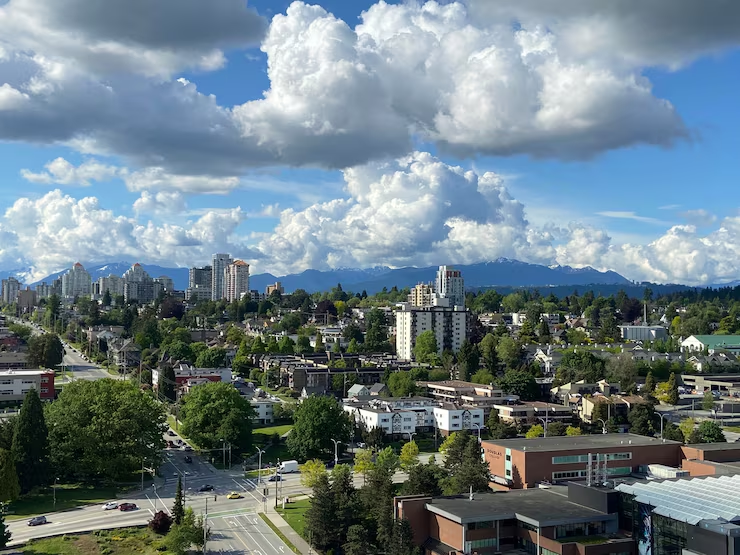
Redmond sits at roughly 3,000 feet on the dry side of the Cascades, receiving under 10 inches of rain a year - yet water damage remains one of the most frequent property emergencies in Deschutes County. High desert cold snaps freeze supply lines, and low humidity does nothing to stop a burst pipe from soaking framing, subfloor, and insulation within hours.
Masters of Disaster LLC is based right here in Redmond, and our crews handle the full range of property disasters affecting homes, rentals, and commercial buildings across Central Oregon:
- Water Damage Restoration - extraction, structural drying, and moisture mapping after pipe breaks, appliance failures, and roof leaks
- Flooded Basement - pump-out, dehumidification, and drying of below-grade spaces, crawl spaces, and daylight basements
- Sewage Cleanup - removal of contaminated materials, disinfection, and safe disposal after backups and septic failures
- Fire Damage Restoration - board-up, debris removal, soot cleaning, and coordination of structural repairs
- Smoke Damage Restoration - odor neutralization, HVAC cleaning, and content restoration after house fires or wildfire smoke intrusion
- Mold Removal - containment, source correction, and remediation of hidden growth in crawl spaces and wall cavities
Because we live and work here, response time is measured in minutes, not hours routed through a distant call center. We bill insurance directly and walk property owners through the claim from the first phone call to the final walkthrough.
Common Damage Restoration Issues in Redmond, Oregon
The high desert creates a distinct damage profile. Wide daily temperature swings, wildfire seasons, and vented crawl spaces produce problems that look different from what coastal or valley restoration crews encounter.
What Causes Most Losses Locally
- Frozen and burst pipes - uninsulated lines in garages, crawl spaces, and exterior walls fail during single-digit January nights
- Crawl space saturation - slow supply-line drips and irrigation overspray soak vapor barriers and joists unnoticed for months
- Septic and sewer backups - rural properties around Terrebonne, Powell Butte, and Tumalo rely on septic systems that surcharge during heavy runoff
- Wildfire smoke intrusion - late-summer smoke from Cascade and eastern Oregon fires settles into attics, ductwork, and soft goods
- Woodstove and chimney fires - common in older homes and outlying properties heated with wood
- Sudden snowmelt and rain-on-snow - saturates lava rock soils and pushes water toward foundations and window wells
Warning Signs Worth Acting On
- Musty odor that intensifies when the furnace or crawl space fan runs
- Cupped or crowning hardwood, or vinyl plank lifting at seams
- Staining on baseboards, cabinet kick plates, or ceiling drywall
- Unexplained jumps in water usage on a City of Redmond bill
- Slow drains paired with gurgling toilets - often the first sign of a sewer line problem
- Lingering smoke smell that returns on hot days after a fire
Left alone, a small leak becomes mold within days. Calling early keeps demolition and reconstruction to a minimum.
Neighborhoods We Serve in Redmond
Our trucks stage in Redmond, which puts most of the region within a short drive at any hour.
- In Redmond: Downtown and the historic core, Dry Canyon corridor, Canyon Rim Village, Ridgeview, Obsidian, Forked Horn Butte, Cascade View, Eaglecrest, Redmond Heights, Antler Ridge, and homes near Redmond Airport and the fairgrounds
- North and east: Terrebonne, Crooked River Ranch, Smith Rock area, Powell Butte, and Prineville
- West and south: Tumalo, Sisters, Eagle Crest Resort, Bend, Sunriver, and La Pine
We work with homeowners, landlords, property managers, HOAs, short-term rental owners, and commercial building owners throughout Deschutes, Crook, and Jefferson counties. Rural properties on wells and septic systems get the same response as in-town addresses - our crews carry equipment sized for long driveways, gravel access, and buildings without municipal utilities.
Seasonal Damage Patterns in Redmond
Restoration work in Central Oregon follows a predictable annual rhythm.
- December - February: Peak frozen pipe season. Burst supply lines in garages, crawl spaces, and vacant vacation rentals drive most water damage and flooded basement calls. Woodstove and heating-related fires also spike.
- March - April: Snowmelt and rain-on-snow push groundwater toward foundations. Crawl space flooding, window well intrusion, and septic surcharge lead to sewage cleanup calls.
- May - June: Irrigation season begins. Broken sprinkler lines, hose bib failures, and irrigation district water near foundations create slow-developing moisture problems.
- July - August: Wildfire season. Smoke damage restoration and air-quality-driven cleaning dominate, along with structure fires from dry vegetation. Air conditioning condensate line failures also appear.
- September - October: Mold discoveries peak as spring and summer moisture finally surfaces during real estate inspections and pre-winter maintenance.
- November: First hard freezes catch unwinterized homes, sprinkler backflow devices, and outbuildings.
Vacation homes and seasonal rentals around Sunriver, Sisters, and Eagle Crest carry elevated risk year-round simply because losses go undiscovered longer.
Housing Characteristics & Restoration Considerations
Redmond's housing stock spans more than a century, and each era brings its own restoration challenges.
Common Construction Types
- Pre-1960 homes near downtown and the Dry Canyon: shallow vented crawl spaces, original wood siding, cast iron or clay sewer laterals, and knob-and-tube or early wiring that complicates fire restoration
- 1970s - 1990s ranch and split-level homes: polybutylene or early plastic supply lines, minimal crawl space vapor barriers, and attic insulation that traps smoke odor
- 2000s - present subdivisions: engineered floor trusses, OSB subfloor, slab-on-grade or shallow crawl spaces, tighter envelopes that hold moisture and smoke longer
- Manufactured and modular homes: common in outlying areas; belly wrap traps water and requires specialized drying access
- Rural acreage properties: wells, septic systems, detached shops, and barns with limited power for drying equipment
How This Shapes Our Work
- We map moisture with meters and thermal imaging before opening any wall, so demolition stays targeted.
- Crawl spaces get dedicated drying setups, vapor barrier replacement, and post-drying verification - the single most overlooked source of mold in Redmond homes.
- Sewage losses in older homes with porous materials call for full removal of affected drywall, insulation, and flooring rather than surface cleaning.
- Fire and smoke jobs include HVAC and duct cleaning, since forced-air systems distribute soot through the entire structure.
- Tight, newer homes need controlled dehumidification rather than open-window drying, which the dry outside air can't accomplish alone.
Environmental Conditions & Damage Implications
Redmond's climate and geology influence every stage of a restoration project.
- Low humidity, high elevation: outside air is often dry enough to help drying - but only when equipment is configured correctly. Rapid surface drying can leave trapped moisture behind wall cavities and under flooring.
- Extreme temperature swings: 40-degree daily shifts stress plumbing, cause condensation inside walls, and accelerate material movement after a loss.
- Volcanic and lava rock soils: shallow bedrock and fractured basalt cause water to travel laterally instead of percolating, delivering it straight into crawl spaces and below-grade rooms.
- Hard, mineral-rich water: scale buildup shortens the life of water heaters, supply lines, and appliance hoses - a leading cause of sudden indoor flooding.
- Wildfire smoke events: fine particulate infiltrates attics, insulation, upholstery, and HVAC systems, leaving odor that returns whenever temperatures rise.
- Juniper and sagebrush pollen combined with dust: loads air filters and mixes with soot, making post-fire air cleaning more involved.
Mold behaves differently here than in wetter parts of Oregon. Growth is usually concentrated in enclosed, humid microclimates - crawl spaces, under-sink cabinets, behind shower surrounds, and around unvented bathroom fans - rather than spread broadly through the structure. That means containment and source correction matter more than blanket treatment. Our crews test, isolate, remove affected material, and verify results before rebuilding.
Wildfire Smoke, Winter Freezes & Why Local Response Time Matters
Two events define restoration demand in Central Oregon: the August smoke plume and the January freeze. Both hit hundreds of properties at once, and both reward property owners who call a crew already stationed nearby.
After a Wildfire Smoke Event
- Smoke enters through crawl space vents, attic vents, recessed lighting, and every gap in the building envelope
- Odor bonds to porous surfaces - carpet, drapes, insulation, unfinished wood - and re-emerges with heat
- Effective work includes HVAC and duct cleaning, filter replacement, hard surface cleaning, content treatment, and odor neutralization at the source
- Attic and crawl space insulation sometimes requires removal and replacement when smoke loading is heavy
After a Winter Freeze
- Shut off the main water supply and cut power to affected areas if it's safe to reach the panel
- Call for emergency response before moving saturated contents or pulling flooring
- Our crew extracts standing water, sets containment, and places drying equipment on arrival
- We document moisture readings daily and share them with the insurance adjuster
- Once dry standards are met, repairs and reconstruction begin - drywall, flooring, cabinetry, trim, and paint
During a regional freeze, out-of-town companies get overwhelmed and Central Oregon lands at the bottom of the dispatch list. Masters of Disaster LLC is local, independent, and family owned, with equipment staged in Redmond and technicians who know which subdivisions have shallow crawl spaces, which rural roads need four-wheel drive in February, and which older sewer laterals fail first. We bill your insurance directly, assist with the claim from start to finish, and answer the phone ourselves - day or night, every day of the year.
Call Masters of Disaster LLC at (541) 480-2225 for emergency water, fire, smoke, sewage, and mold response in Redmond, Bend, and across Central Oregon. We cannot control the disaster. We can control the response.





