
Damage Restoration in Coos Bay, OR
- Damage Restoration Services Overview
- Common Damage Restoration Issues in Coos Bay, Oregon
- Neighborhoods We Serve in Coos Bay
- Seasonal Damage Patterns in Coos Bay
- Housing Characteristics & Restoration Considerations
- Environmental Conditions & Damage Implications
- Storm Season Readiness for South Coast Property Owners
Damage Restoration Services Overview
When water pours through a ceiling or smoke settles into every fabric in the house, having a trained restoration crew on the way changes everything. Property owners along the South Coast deserve straight answers, careful documentation, and work that holds up years down the road.
Restoration in Coos Bay covers a wide span of emergencies, and each one demands different equipment and different training:
- Water Damage Restoration - extraction, structural drying, and moisture mapping after pipe failures, roof leaks, or appliance overflows
- Flooded Basement - pump-out, crawlspace and foundation drying, and correction of drainage that let water in to begin with
- Sewage Cleanup - containment and disinfection after septic backups, sewer line failures, and lift station overflows
- Fire Damage Restoration - debris removal, structural stabilization, board-up, and rebuild of charred framing and finishes
- Smoke Damage Restoration - soot removal from surfaces and HVAC systems, plus odor treatment that reaches porous materials
- Mold Removal - containment, controlled removal of colonized materials, and correcting the moisture source
The benefits go beyond a dry floor. Fast response limits secondary damage, protects indoor air quality, supports insurance claims with photo and moisture logs, and keeps families in a home that feels safe again.
Common Damage Restoration Issues in Coos Bay, Oregon
Life on the bay means salt air, heavy winter rain, and older housing stock - a combination that keeps restoration crews busy year-round. Coastal humidity rarely drops low enough for materials to dry on their own.
Local Causes of Loss
- Wind-driven rain forced under siding, around windows, and beneath roof flashing during Pacific storm systems
- High groundwater and saturated soils pushing moisture into crawlspaces and daylight basements
- Aging cast iron and clay sewer laterals in older neighborhoods, prone to root intrusion and backups
- Septic systems on outlying properties that surcharge during prolonged rain
- Woodstove and chimney fires during long, damp heating seasons
- Regional wildfire smoke drifting inland and settling into homes during late summer
Warning Signs Worth Acting On
- Musty odor in a hallway, closet, or near baseboards - often the first hint of hidden mold
- Cupping or darkening hardwood, bubbling paint, or soft drywall low on a wall
- Slow drains in multiple fixtures, gurgling toilets, or standing water near a cleanout
- Insulation sagging in the crawlspace or condensation on subfloor framing
- Lingering acrid smell after a small kitchen or chimney fire, which signals soot in the HVAC system
- Rusty fasteners and corroded nail heads on framing, pointing to sustained high humidity
Small clues on the coast escalate quickly. A damp corner in November can become a mold remediation project by January if nothing changes.
Neighborhoods We Serve in Coos Bay
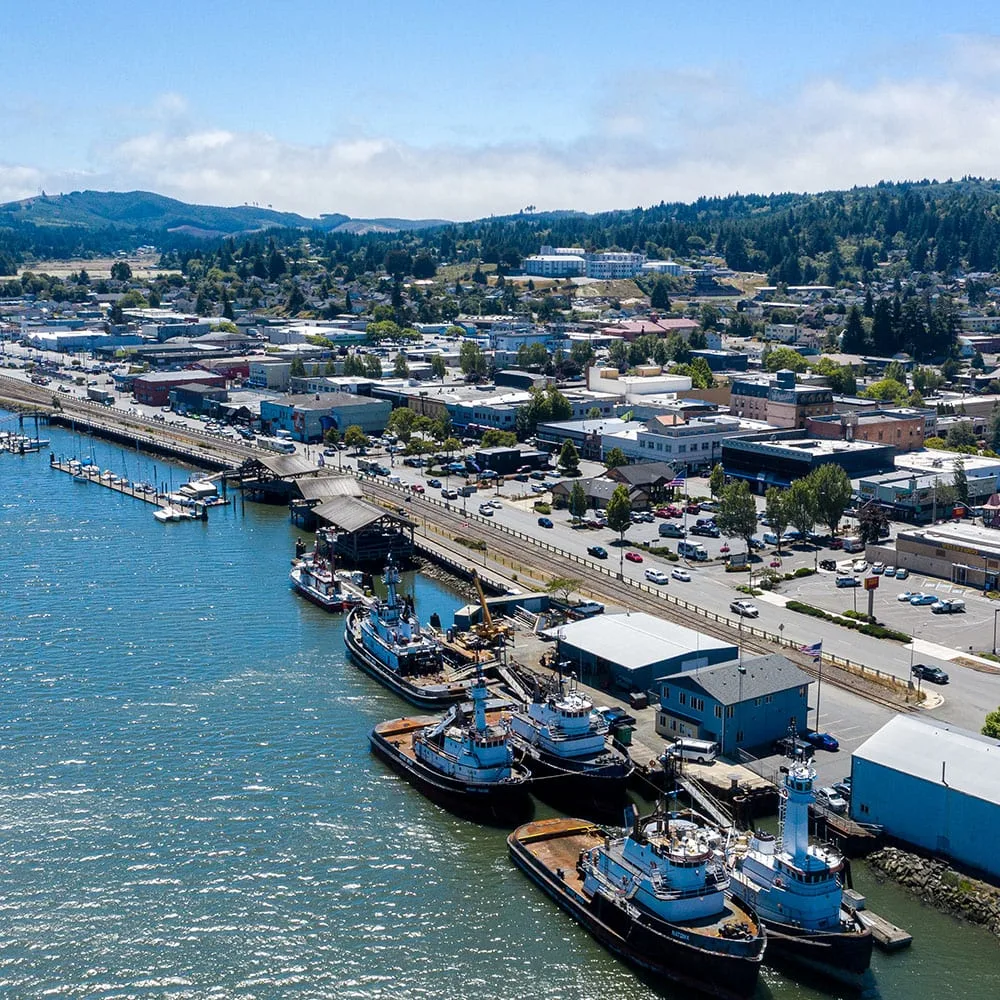
Coverage stretches across the city and out along the Oregon Coast, reaching both bayfront homes and rural properties on gravel roads.
- Downtown and the Boardwalk district - older commercial buildings and mixed-use structures near the waterfront
- Empire - established homes on the west side with mature trees and aging sewer laterals
- Eastside - bayfront and low-lying parcels sensitive to groundwater
- Bunker Hill and Englewood - hillside lots where runoff concentrates against foundations
- Near Southwestern Oregon Community College - rentals and student housing
- North Bend, Charleston, and Barview - coastal and harbor-adjacent properties
- Surrounding communities - Coquille, Bandon, Lakeside, Hauser, Allegany, and the Coos River corridor
Rural addresses along the dunes, river valleys, and Highway 101 corridor receive the same equipment and documentation as in-town work.
Seasonal Damage Patterns in Coos Bay
The South Coast calendar shapes what kind of emergency calls come in each month.
- November through February - peak season for water damage and flooded basements. Sustained rain, saturated ground, and clogged gutters drive intrusion. Sewer backups spike when systems take on stormwater.
- December and January - heating season fires from woodstoves, chimneys, and space heaters, along with the smoke damage that follows.
- March through May - mold discovery season. Winter moisture that never dried out becomes visible growth as temperatures rise.
- June through August - drier weather is ideal for crawlspace repairs, vapor barrier replacement, and drainage corrections that prevent next winter's flooding.
- Late August through September - wildfire smoke intrusion from inland fires, requiring duct cleaning and odor treatment even in homes far from any flame.
- October - first big storms expose roof and flashing failures, kicking off the water damage cycle again.
Ocean-moderated temperatures mean freeze-related pipe bursts are less common here than inland, but unheated vacation properties and outbuildings still see cold-snap failures.
Housing Characteristics & Restoration Considerations
Much of Coos Bay's housing traces back to the timber and fishing boom years, with a large share of homes built between the 1920s and 1970s. Newer subdivisions have filled in around the edges, but older construction still dominates core neighborhoods.
Construction Traits That Shape the Work
- Raised foundations and vented crawlspaces - common locally, and the first place water and mold problems take hold
- Daylight and partial basements on hillside lots - vulnerable to hydrostatic pressure and seepage through block walls
- Old-growth fir framing - dense and durable, but slow to release moisture once saturated
- Wood siding and shingle exteriors - beautiful in salt air, though prone to paint failure and hidden intrusion
- Plaster and lath walls - hold water differently than drywall and need targeted drying rather than blanket demolition
- Original galvanized or cast iron plumbing - a frequent source of slow leaks and sewage backups
How That Affects Restoration
- Pre-1980 homes require asbestos and lead-paint awareness before any demolition begins
- Crawlspace drying often calls for containment, vapor barrier replacement, and dehumidification rather than simple fans
- Soot and smoke residue travel through balloon-framed wall cavities in older houses, spreading odor far from the fire
- Knob-and-tube or aging wiring must be assessed before power is restored to a water-affected area
- Historic trim and built-ins are frequently salvageable with careful cleaning instead of replacement
Environmental Conditions & Damage Implications
Coos Bay sits in a marine climate with mild temperatures, heavy winter precipitation, and humidity that stays elevated most of the year. Those conditions influence every phase of a restoration project.
Climate and Moisture
- Annual rainfall well above the national average, concentrated in a wet season that runs for months
- Relative humidity that often sits high enough for mold growth without any leak at all
- Cool temperatures that slow evaporation, making mechanical dehumidification necessary rather than optional
- Persistent fog and marine layer that keep exterior materials damp for extended stretches
Soil, Water, and Air
- Estuarine and alluvial soils around the bay drain poorly and hold water against foundations
- Shallow water tables in low-lying areas push moisture up through slabs and crawlspace ground
- Tidal influence near the bay and Coos River can slow drainage during storm events
- Salt-laden air accelerates corrosion of fasteners, ductwork, and electrical components after any water event
- Late-summer smoke episodes elevate particulate levels and load HVAC filters
What That Means on a Job Site
- Drying plans built around dehumidification and controlled airflow, not open windows
- Moisture meter readings tracked daily until framing reaches a documented dry standard
- Antimicrobial treatment after sewage or long-standing water, given the region's mold pressure
- Air scrubbing with HEPA filtration during smoke, fire, and mold work to protect occupants
Storm Season Readiness for South Coast Property Owners
Winter storms rolling in off the Pacific are the single biggest driver of restoration work in Coos Bay. Preparation before October pays off when a system parks over the coast for a week.
Before the Rain Arrives
- Clear gutters and downspouts, then extend discharge at least several feet from the foundation.
- Walk the roof line with binoculars, checking flashing, vents, and any lifted shingles.
- Inspect the crawlspace for standing water, torn vapor barrier, and sagging insulation.
- Test sump pumps and any backup power source under actual load.
- Have sewer laterals scoped if the home is older or has a history of slow drains.
- Move stored valuables off basement and crawlspace floors onto shelving.
- Service woodstoves and chimneys before the first cold night.
When Damage Happens
- Shut off water or power at the source if it is safe to reach
- Photograph everything before moving items or starting cleanup
- Stay clear of standing water that may contain sewage - contaminated water requires protective equipment and disinfection
- Avoid running the HVAC system after a fire, which spreads soot through every room
- Resist wiping soot from walls, since improper cleaning drives residue deeper into surfaces
- Call for professional assessment quickly - the window before mold establishes itself is short in this climate
Why Local Experience Matters
Crews familiar with Coos Bay know which neighborhoods flood first, how coastal humidity affects drying timelines, and what documentation insurers expect from a South Coast claim. That familiarity shortens the path from emergency to a finished, dry, livable home - whether the job is a flooded basement in Empire, a chimney fire near Bunker Hill, or mold found behind a bathroom wall in Charleston.





