
Damage Restoration in Colusa, CA
- Damage Restoration Services Overview
- Common Damage Restoration Issues in Colusa, California
- Neighborhoods We Serve in Colusa
- Seasonal Damage Patterns in Colusa
- Housing Characteristics & Restoration Considerations
- Environmental Conditions & Damage Implications
- Floodplain Realities and Emergency Preparedness Along the Sacramento River
Damage Restoration Services Overview
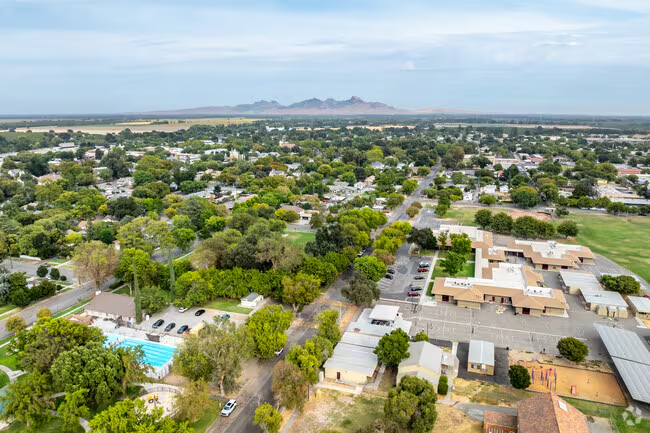
Damage spreads on a clock. Water wicks into drywall within hours, smoke residues become acidic overnight, and mold colonies can establish in a damp Colusa crawl space in a matter of days. Fast, methodical response protects both the structure and the belongings inside it.
Property owners in Colusa County face a mix of river-valley flooding, aging plumbing, agricultural dust, and wildfire smoke drift. A single restoration partner handling every phase - extraction through reconstruction prep - keeps the work sequenced correctly.
- Water Damage Restoration - extraction, structural drying, moisture mapping, and antimicrobial treatment after supply line breaks, appliance failures, or roof leaks.
- Flooded Basement - pump-out of standing water, sump and drainage evaluation, and drying of below-grade walls and slabs.
- Sewage Cleanup - containment, removal of contaminated porous materials, and disinfection after backups from septic systems or municipal lines.
- Fire Damage Restoration - debris removal, board-up, soot cleaning, and salvage of contents after kitchen, electrical, or exterior fires.
- Smoke Damage Restoration - odor neutralization, HVAC cleaning, and residue removal from surfaces far beyond the burn area.
- Mold Removal - containment barriers, HEPA filtration, and removal of colonized materials with post-remediation verification.
Coordinated documentation supports insurance claims from the first walkthrough forward.
Common Damage Restoration Issues in Colusa, California
Colusa sits on the Sacramento River near river mile 147, and the surrounding valley floor shapes nearly every damage scenario local crews encounter.
Water and Flooding Triggers
- Winter storm runoff and elevated river stages pressing against levees and low-lying tracts north and south of town
- Irrigation canal and district ditch overflow during peak agricultural delivery periods
- Shallow water tables that push moisture up through slabs and basement floors
- Modeled 1- and 2-year floodplain boundaries that do not account for local topography, meaning real-world flooding often reaches beyond mapped lines
Sewage and Drainage Problems
- Rural septic systems saturated by high groundwater, causing backups into tubs and floor drains
- Tree root intrusion in older clay laterals under mature street trees
- Storm-loaded municipal lines during heavy rain events
Fire and Smoke Sources
- Rice straw and stubble burning, plus grass fires along dry levee banks and roadsides
- Regional wildfire smoke drifting into the valley and settling during inversions
- Kitchen and outbuilding fires on farm properties with older wiring
Warning Signs Worth Acting On
- Musty odors in closets, under sinks, or near baseboards
- Bubbling paint, cupping wood floors, or tape seams lifting on drywall
- Yellow-brown staining on ceilings after storms
- Persistent smoke odor returning on warm, humid days
- Slow drains that gurgle when other fixtures run
Neighborhoods We Serve in Colusa
Coverage spans the city of Colusa and the farming communities threaded along Highway 20 and Highway 45.
- Downtown Colusa - Market Street and the surrounding historic commercial blocks with older masonry and wood-frame buildings
- Riverside and levee-adjacent neighborhoods - properties closest to the Sacramento River channel
- Colusa-North tract vicinity - rural parcels roughly two miles north of town near the wildlife area subunit
- Residential districts near Colusa County Fairgrounds and Burchfield Park
- Arbuckle, College City, and Grimes - southern county communities
- Williams, Maxwell, and Princeton - western and northern county service points
- Meridian and Sutter County river communities across the bridge
- Outlying ranch and orchard properties throughout the Colusa Basin
Rural addresses receive the same drying equipment, containment materials, and documentation standards as in-town jobs.
Seasonal Damage Patterns in Colusa
Damage calls follow a fairly predictable annual rhythm in the Sacramento Valley.
- November through February - peak water damage restoration and flooded basement season. Atmospheric river storms raise river levels, saturate soils, and overwhelm gutters, sump pumps, and yard drains.
- January through March - sewage cleanup rises as high groundwater floods septic leach fields and storm flow surcharges older sewer laterals.
- March through May - mold removal requests climb sharply. Materials that stayed damp through winter begin producing visible growth and musty odors as temperatures warm.
- June through August - triple-digit heat drives air conditioning condensate overflows, water heater failures, and refrigerator line leaks. Grass and equipment fires increase across dry ground.
- August through October - fire damage restoration and smoke damage restoration dominate. Wildfire smoke from surrounding ranges plus agricultural burning settles into homes through HVAC intakes and open windows.
- October through November - first rains reveal roof and flashing failures that went unnoticed during the dry months.
Housing Characteristics & Restoration Considerations
Colusa's housing stock blends pre-1940 Victorian and Craftsman homes downtown with mid-century ranch construction and newer subdivisions on the edges of town. Each vintage responds differently to water, fire, and microbial damage.
Older Homes (pre-1950)
- Raised foundations with vented crawl spaces that trap humidity and invite mold growth
- Lath and plaster walls that hold water far longer than modern drywall and require careful drying rather than fast demolition
- Shiplap subfloors and old-growth framing worth salvaging when dried promptly
- Original clay or cast iron drain lines prone to sewage backups
- Knob-and-tube or early wiring remnants that raise fire risk and complicate post-fire assessment
- Potential asbestos and lead-based materials requiring testing before demolition
Mid-Century and Ranch Homes
- Slab-on-grade construction where moisture migrates laterally under flooring adhesives
- Ducting run under slabs or in crawl spaces that collects smoke residue and moisture
- Original galvanized supply piping nearing the end of its service life
Newer Construction
- Tighter building envelopes that hold smoke odor and humidity indoors
- Engineered wood flooring and MDF trim that swell irreversibly after saturation
- Multi-story layouts where a second-floor leak affects three levels of assembly
Farmhouses and outbuildings on surrounding agricultural parcels often combine several of these traits, so every restoration plan starts with a moisture map and material inventory rather than assumptions.
Environmental Conditions & Damage Implications
The valley climate and soil profile directly shape how damage behaves inside Colusa buildings.
Climate
- Hot, dry summers regularly exceeding 100 degrees, accelerating microbial growth in any wet cavity
- Cool, foggy winters with extended high humidity that slows natural drying to a crawl
- Tule fog inversions that hold smoke, dust, and particulates near ground level for days
Soils and Groundwater
- Fine-textured alluvial clays and silty loams deposited by historic river channels that shifted repeatedly between 1956 and 1991
- Poor infiltration rates, so surface water ponds against foundations instead of percolating away
- Shallow depth to water table across much of the basin, confirmed by auger sampling in nearby restoration tracts, which keeps crawl spaces and below-grade areas persistently damp
- Expansive clay movement that opens foundation cracks and creates entry points for water
Air and Water Quality
- Seasonal agricultural dust and particulate loading that combines with smoke residue on interior surfaces
- Hard, mineral-heavy well water that stresses plumbing fittings and leaves scale in supply lines
- Floodwater from canals and river overtopping that may carry agricultural chemicals and organic matter, requiring category-appropriate handling
These conditions mean drying equipment must run longer than in drier inland areas, dehumidification is non-negotiable in winter, and post-remediation moisture verification protects against repeat mold problems.
Floodplain Realities and Emergency Preparedness Along the Sacramento River
Mapped flood boundaries around Colusa tell an incomplete story. Studies of nearby tracts noted that the line between the modeled 1-year floodplain and normal flow was offset without clear explanation, and that state flood frequency estimates do not account for local topography. In practice, areas outside a mapped zone still flood, and property owners who assume otherwise get caught unprepared.
Preparation Steps Worth Taking
- Photograph and inventory contents now, room by room, and store the file off-site or in the cloud.
- Verify whether your policy includes flood coverage - standard homeowners policies exclude rising water.
- Elevate water heaters, electrical panels, and stored valuables above likely water lines in garages and basements.
- Install and annually test a sump pump with battery backup in below-grade spaces.
- Add a backwater valve on sewer laterals to reduce backup risk during surcharge events.
- Clear gutters, downspout extensions, and yard drains before the first November storms.
- Keep a shutoff valve location map posted for water, gas, and electrical.
What Happens When You Call
- Emergency response with truck-mounted extraction, pumps, and containment supplies
- Moisture mapping using meters and thermal imaging to find hidden saturation behind walls and under flooring
- Category and class determination that separates clean water, gray water, and sewage contamination
- Air movers and commercial dehumidifiers sized to the affected cubic footage, monitored daily
- HEPA filtration and negative air containment for mold and smoke work
- Soot and odor treatment matched to the residue type - dry, wet, protein, or fuel oil
- Written documentation, moisture logs, and photo records formatted for insurance adjusters
Levee-adjacent and rural properties north of town near the wildlife area subunit deserve particular attention, since access can be limited during high-water events and response planning matters as much as the equipment itself.





