
Damage Restoration in Seaside, OR
- Damage Restoration Services Overview
- Common Damage Restoration Issues in Seaside, Oregon
- Neighborhoods We Serve in Seaside
- Seasonal Damage Patterns in Seaside
- Housing Characteristics & Restoration Considerations
- Environmental Conditions & Damage Implications
- Protecting Coastal Vacation Rentals and Second Homes
Damage Restoration Services Overview
A wet subfloor left alone for a week rarely stays a small problem. In a coastal town like Seaside, moisture migrates into framing, insulation, and drywall cavities, and what began as a burst supply line becomes structural rot, colonized mold, and lingering odor months later. Delay also complicates insurance claims, since carriers expect prompt mitigation.
ServiceMaster by JTS serves Seaside and the surrounding Clatsop County communities with a full range of restoration work:
- Water Damage Restoration - extraction, structural drying, and moisture mapping after leaks, storm intrusion, or appliance failures
- Flooded Basement - pump-out, contents handling, and drying of below-grade spaces and crawlspaces
- Sewage Cleanup - antimicrobial treatment, removal of contaminated materials, and deodorization after backups
- Fire Damage Restoration - debris removal, structural cleaning, and reconstruction coordination
- Smoke Damage Restoration - soot removal from surfaces, contents, and HVAC systems
- Mold Removal - containment, controlled remediation, and moisture-source correction
Benefits for Seaside property owners include faster reoccupancy, reduced material loss, documented drying records for claims, and a property that smells and feels genuinely clean rather than simply dried out.
Common Damage Restoration Issues in Seaside, Oregon
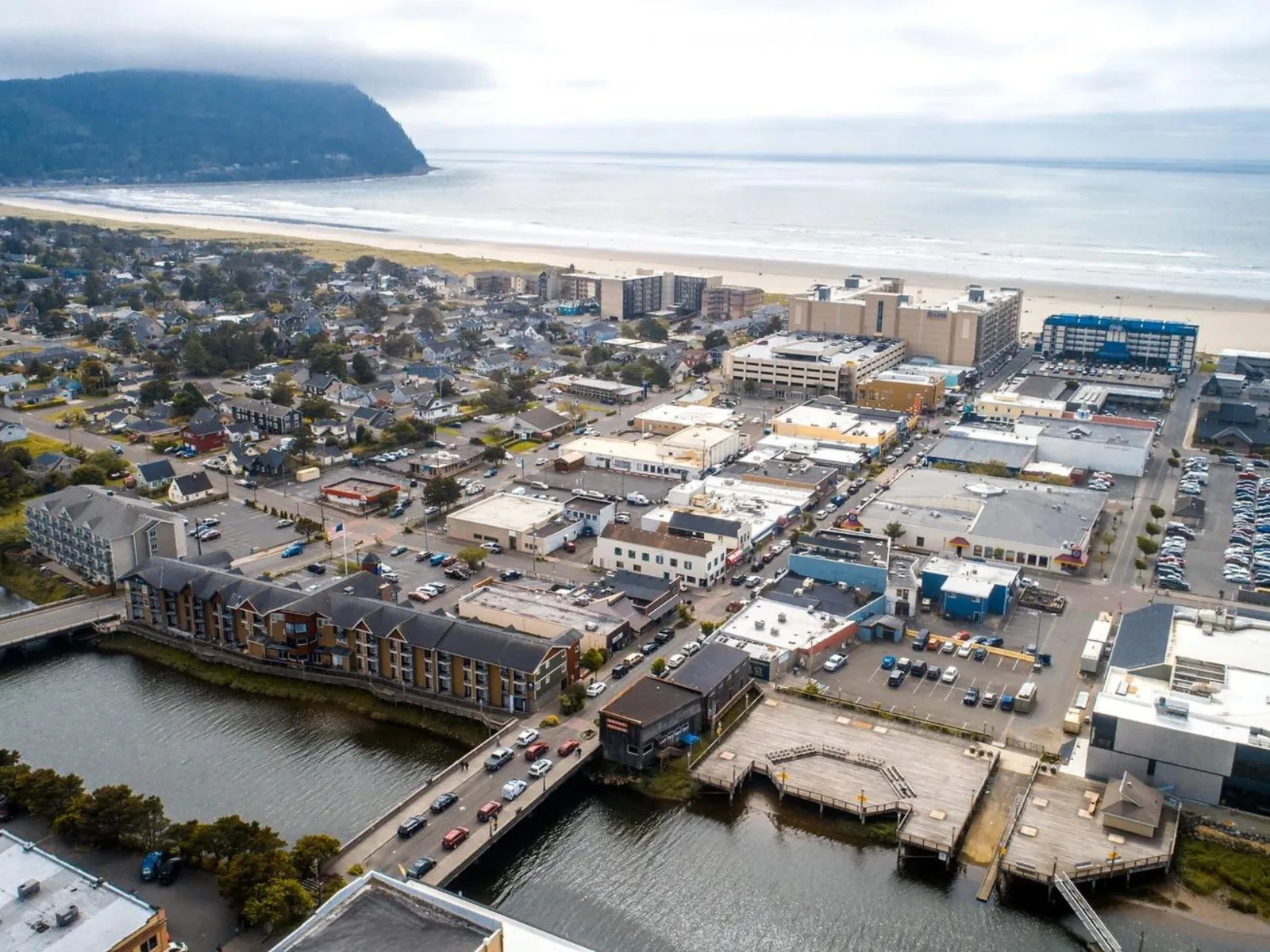
Seaside sits at the mouth of the Necanicum River, roughly at sea level, with a high water table and persistent marine humidity. Those conditions drive most of the damage calls we receive.
Local Causes We See Repeatedly
- Wind-driven rain forced past siding, window flashing, and roof penetrations during winter storms off the Pacific
- Groundwater rising into crawlspaces and daylight basements when the river runs high
- Storm-surcharged municipal lines causing sewage backups through floor drains and lower-level fixtures
- Vacation rentals and second homes where a failed water heater or supply line runs undetected between guests
- Chimney, woodstove, and space heater fires during cold, damp stretches
- Chronic condensation in poorly ventilated bathrooms and closets on exterior walls
Warning Signs Worth Acting On
- A musty odor that intensifies on damp days or when the furnace runs
- Cupping or darkening at the edges of hardwood and laminate flooring
- Peeling paint, staining, or blistering along baseboards and window sills
- Slow drains, gurgling toilets, or backflow at the lowest fixture in the house
- Soot filming on window glass, lampshades, and vent registers after any fire event
- Visible growth behind furniture placed tight against north-facing walls
Neighborhoods We Serve in Seaside
Our crews respond throughout Seaside and the broader north coast, including:
- Downtown Seaside and the Broadway corridor
- The Prom and oceanfront blocks
- Cove and Sunset Boulevard neighborhoods
- Seaside Heights and hillside residences east of Highway 101
- Necanicum River properties and Avenue U through Avenue S areas
- Gearhart, Surf Pines, and Cullaby Lake
- Cannon Beach, Arch Cape, and Tolovana Park
- Astoria, Warrenton, Hammond, and Svensen
Because we live and work in Clatsop County, response times to Seaside addresses stay short even during storm events that stretch resources thin. We know which streets flood first, which older neighborhoods have aging lateral lines, and how to stage equipment on narrow beach-access lots.
Seasonal Damage Patterns in Seaside
- November through February - peak season for water damage and flooded basements. Atmospheric river events, king tides, and saturated soils combine to push water into crawlspaces and below-grade rooms. Sewage backups spike when storm volume overwhelms drainage.
- December and January - highest fire and smoke damage volume. Woodstoves, fireplaces, holiday cooking, and portable heaters account for most residential ignitions on the coast.
- March through May - mold removal calls rise sharply as winter moisture that was never fully dried begins colonizing wall cavities and subfloors during warming temperatures.
- June through August - vacation rental turnover exposes hidden plumbing failures. Higher occupancy means more supply line, toilet, and washer hose incidents discovered late.
- September and October - the first sustained rains reveal roof and flashing failures that developed over the dry months, leading to ceiling and attic water intrusion.
Scheduling crawlspace inspections in early fall consistently prevents the worst winter outcomes.
Housing Characteristics & Restoration Considerations
Seaside's housing stock spans well over a century, and each era responds differently to water, smoke, and microbial growth.
Common Construction Types
- Early to mid-century beach cottages - board sheathing, minimal or no wall insulation, single-wall construction in some cases, and unconditioned crawlspaces on post-and-pier foundations
- Mid-century ranch homes - plaster or early gypsum board, original cast iron and galvanized drain lines prone to backups
- Daylight basements and split-levels on the hillside east of 101, where slab-adjacent framing absorbs groundwater
- Modern vacation rentals and condominiums - engineered flooring, shared plumbing stacks, and multi-unit water migration risk
How Age Shapes the Restoration Plan
- Older homes often hide layered flooring - original fir, felt, sheet vinyl, then laminate - which traps moisture and requires selective demolition rather than surface drying.
- Pre-1980 materials may contain asbestos or lead, so testing precedes any aggressive removal during fire or water work.
- Uninsulated crawlspaces need vapor barrier replacement and dehumidification, not just standing water extraction.
- Balloon framing in older structures lets smoke and soot travel vertically into attics, so smoke damage restoration extends well beyond the burn room.
- Shared walls in condominiums require moisture readings in adjacent units before drying equipment placement.
Environmental Conditions & Damage Implications
Seaside receives roughly seventy to eighty inches of rain annually, with relative humidity that rarely drops low enough for passive drying to work. That single fact changes how restoration must be performed here.
Climate and Moisture
- Mild temperatures year-round mean mold-friendly conditions in almost every month, not just summer
- Open windows and fans alone will not dry a structure when outdoor dew points are high - controlled dehumidification is required
- Salt-laden marine air accelerates corrosion on fasteners, ductwork, and appliance components exposed to water
Soil and Groundwater
- Sandy coastal soils drain quickly but sit on a shallow water table, so crawlspaces can pond even without surface flooding
- River-adjacent parcels experience hydrostatic pressure against foundation walls during high-flow periods
- Older drain tile and sump systems frequently fail silently, discovered only after a flooded basement event
Air Quality Considerations
- Smoke residue behaves differently in humid air - soot bonds faster to cool, damp surfaces, making prompt cleaning more effective than delayed attempts
- Sewage contamination in high-humidity environments spreads bioaerosols quickly, requiring negative air containment
- Post-remediation air scrubbing with HEPA filtration matters more here than in dry inland climates
Every drying plan we build for a Seaside property accounts for these conditions with documented moisture readings taken to completion.
Protecting Coastal Vacation Rentals and Second Homes
A large share of Seaside property sits vacant for weeks at a time. That absence is the single biggest multiplier of restoration cost on the north coast - a supply line that fails on a Tuesday may not be discovered until Saturday check-in, by which point water has traveled through multiple floors and mold has a head start.
Prevention Steps for Absentee Owners
- Install water sensors near water heaters, washing machines, dishwashers, and under kitchen and bath sinks
- Add an automatic shutoff valve tied to those sensors or shut off main supply between stays during winter
- Replace braided supply hoses on a regular replacement cycle rather than waiting for failure
- Have crawlspaces inspected each fall for standing water, torn vapor barrier, and sump function
- Service woodstoves, chimneys, and dryer vents before the heating season
- Keep a local contact who can access the property within hours of an alert
What Professional Response Looks Like
- Documentation first - moisture mapping, thermal imaging, and photographic records support the insurance claim
- Category and class determination - clean water, gray water, and sewage each dictate different removal thresholds under industry standards
- Containment before demolition - especially for mold removal and smoke damage restoration, to keep contaminants out of clean areas
- Engineered drying - air movers and dehumidifiers sized to the affected cubic footage, monitored daily until materials reach dry standard
- Odor resolution - source removal, cleaning, and appropriate treatment rather than masking
ServiceMaster by JTS has spent more than a decade working in these buildings. We know the shortcuts that fail on the coast, and we build restoration plans that hold up through the next wet season.





