
Damage Restoration in Astoria, OR
- Damage Restoration Services Overview
- Common Damage Restoration Issues in Astoria, Oregon
- Neighborhoods We Serve in Astoria
- Seasonal Damage Patterns in Astoria
- Housing Characteristics & Restoration Considerations
- Environmental Conditions & Damage Implications
- Handling Contaminated Water and Post-Storm Losses on the Lower Columbia
Damage Restoration Services Overview
Water that sits for a few days rarely stays a simple water problem. In a coastal climate like Astoria's, moisture trapped inside wall cavities and subfloors feeds mold colonies, softens framing, corrodes fasteners, and leaves behind odors that outlast the original event by years. Delaying restoration turns a contained loss into a structural repair - and often into an insurance dispute.
Full-service restoration in Astoria covers the entire arc of a property loss, from the first extraction to the final coat of paint:
- Water Damage Restoration - source control, extraction, structural drying, and moisture verification after storms, supply-line failures, and roof leaks.
- Flooded Basement - pump-out, saturated material removal, and drying of below-grade spaces built into Astoria's steep hillsides.
- Sewage Cleanup - containment and disinfection of Category 3 contamination from backups, overflows, and failed septic or lateral lines.
- Fire Damage Restoration - stabilization, debris removal, soot cleaning, and reconstruction of damaged assemblies.
- Smoke Damage Restoration - deodorization, HVAC cleaning, and treatment of porous surfaces where odor molecules settle.
- Mold Removal - containment, HEPA filtration, and removal of affected materials with correction of the moisture source.
The benefit for property owners is continuity: one documented process, one moisture log, and one team accountable for returning the building to pre-loss condition.
Common Damage Restoration Issues in Astoria, Oregon
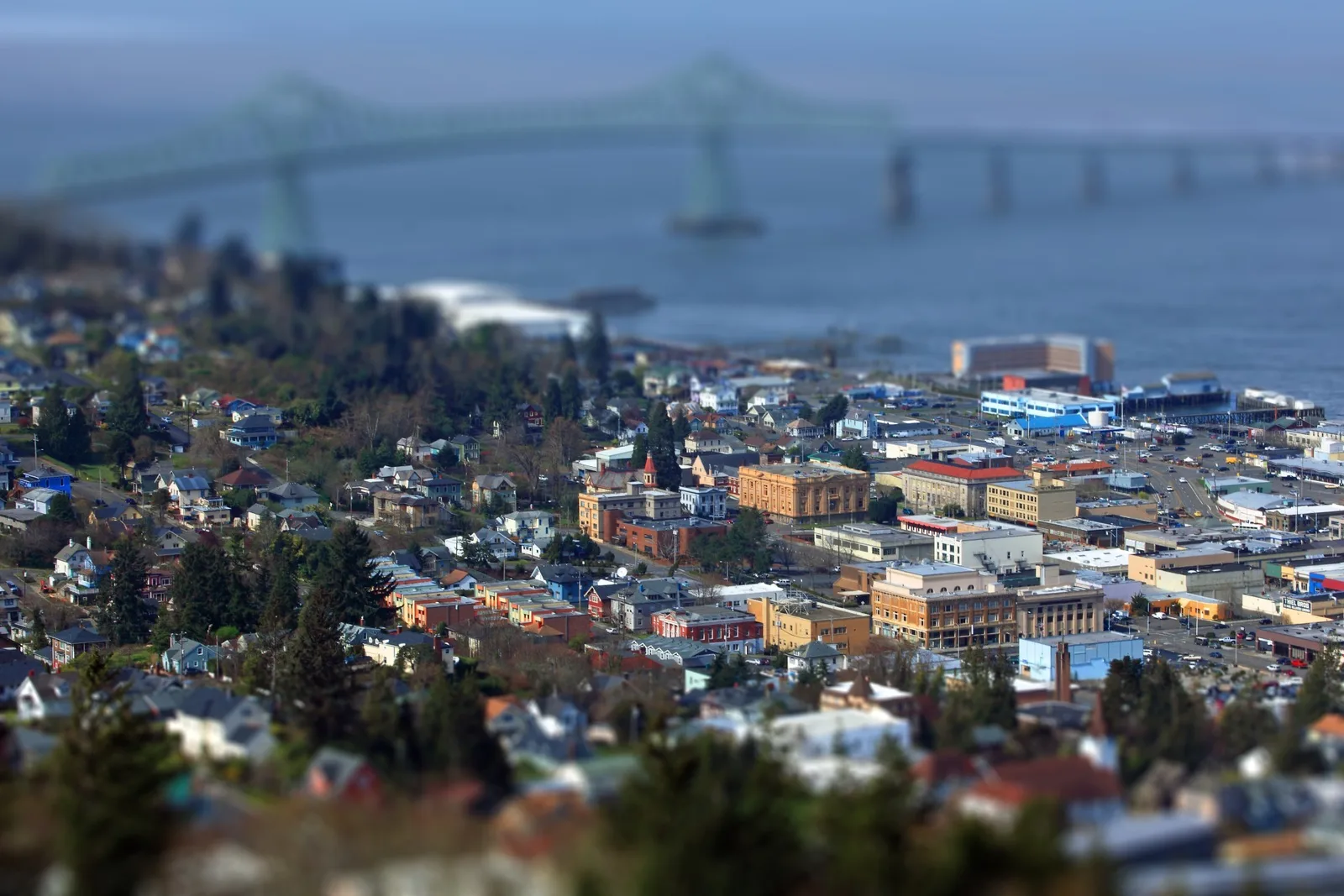
Astoria sits where the Columbia River meets the Pacific, and that geography drives nearly every loss we see. Sustained rainfall, wind-driven moisture off the river, and hillside runoff combine with an older housing stock to create predictable failure points.
Local Causes We Respond To
- Wind-driven rain forced under shingles, siding laps, and around aging window flashing during winter storms.
- Hillside runoff and hydrostatic pressure pushing water through basement walls and daylight-basement slabs.
- Clogged or overwhelmed gutters and downspouts discharging against foundations.
- Sewer backups when heavy rain surcharges lines, plus septic issues on properties outside the city core.
- Failed supply lines, water heaters, and appliance hoses in homes with original plumbing.
- Chimney, woodstove, and space-heater fires during the cold months, along with kitchen fires year-round.
- Persistent mold growth in crawlspaces, closets on north-facing walls, and unventilated bathrooms.
Warning Signs Worth Acting On
- A musty smell that intensifies when the furnace or heat pump runs.
- Cupping or crowning hardwood, blistering paint, or tide lines on drywall.
- Efflorescence, white powder, or dark staining on basement foundation walls.
- Gurgling drains or slow toilets, which often precede a full sewage backup.
- Soot film on window glass, lampshades, or above heat registers after a small fire.
- Condensation forming on interior walls during long stretches of damp weather.
Catching these early keeps a mitigation job from becoming a demolition and rebuild.
Neighborhoods We Serve in Astoria
Astoria's terrain changes street by street, and so do its restoration challenges. Crews work throughout the city and the surrounding Clatsop County communities.
- Downtown and the Riverfront - commercial buildings, mixed-use structures, and historic masonry near the Columbia.
- Uppertown and Alderbrook - older homes on sloped lots where runoff and drainage issues concentrate.
- Uniontown and the Port area - properties exposed to river wind and salt-laden air.
- Shively-McClure and the hilltop districts - historic residences with basements, crawlspaces, and original wood framing.
- Mill Pond and the east side - newer construction with tight envelopes prone to trapped moisture.
- Surrounding areas - Warrenton, Hammond, Gearhart, Seaside, Svensen, Knappa, and the Youngs Bay corridor.
Familiarity with local access roads, steep driveways, and older utility layouts means equipment arrives where it is needed without delay.
Seasonal Damage Patterns in Astoria
Astoria receives heavy annual rainfall concentrated in the cooler months, and each season brings a distinct pattern of loss.
- November through February - peak season for storm-driven water damage, flooded basements, roof leaks, and sewer backups during high-volume rain events. Chimney and heating-equipment fires also rise as woodstoves run continuously.
- March through May - lingering saturation shows up as mold growth in crawlspaces and behind baseboards. This is when last winter's undetected leak finally announces itself.
- June through August - drier weather brings kitchen and grill fires, plus smoke damage from regional wildfire haze infiltrating homes. Supply-line failures in vacant vacation properties are common.
- September and October - the first sustained storms test gutters, flashing, and sump pumps that sat idle all summer, producing a spike in basement intrusion calls.
Pre-season checks of downspouts, sump pumps, crawlspace vapor barriers, and chimney flues prevent a large share of these losses.
Housing Characteristics & Restoration Considerations
Astoria has one of the older housing stocks on the Oregon coast, with a large number of homes built from the late 1800s through the mid-twentieth century. That history shapes every restoration decision.
Construction Types and What They Mean
- Victorian and Craftsman homes - balloon framing allows water and smoke to travel vertically between floors, so inspection must extend well beyond the visible damage.
- Plaster and lath walls - hold moisture far longer than drywall and require careful drying to avoid unnecessary demolition of original material.
- Daylight and partial basements on hillsides - unsealed concrete, stone, or block foundations that wick groundwater during wet months.
- Vented crawlspaces - a persistent mold source when vapor barriers are torn, missing, or covered in standing water.
- Old-growth fir framing and subfloors - dense and salvageable, but slow to release moisture without directed airflow.
- Cast iron and clay sewer laterals - vulnerable to root intrusion and joint failure, a leading cause of sewage backups.
Restoration Adjustments for Older Astoria Homes
- Extended drying schedules with daily moisture mapping rather than fixed equipment runs.
- Testing for asbestos and lead in pre-1980 materials before any demolition begins.
- Negative-pressure containment when cleaning soot in homes with open stairwells and transom-vented rooms.
- Careful matching of trim profiles, fir flooring, and historic siding during reconstruction.
Environmental Conditions & Damage Implications
Astoria's marine climate is mild, wet, and consistently humid - conditions that slow natural drying and accelerate microbial growth once materials get wet.
Climate and Air
- Ambient humidity often stays high enough that opening windows adds moisture instead of removing it, which is why sealed drying with dehumidification is standard here.
- Cool average temperatures reduce evaporation rates, requiring more air movers and longer monitoring than in inland Oregon.
- Summer wildfire smoke from regional fires can settle into HVAC systems and soft goods, producing odor complaints unrelated to any on-site fire.
- Salt-laden coastal air corrodes metal fasteners, ductwork, and electrical components already stressed by fire or water exposure.
Water, Soil, and Ground Conditions
- Clay-heavy and silty soils on Astoria's slopes drain slowly, holding water against foundations after storms.
- High water tables near the river and Youngs Bay keep basement slabs damp and push moisture upward through concrete.
- Steep grades funnel surface runoff toward downhill structures, overwhelming perimeter drains.
- Tidal and storm-surge influence near the waterfront raises the odds of contaminated floodwater requiring Category 3 handling.
These conditions make moisture verification with meters and thermal imaging - not appearance - the standard for declaring a structure dry.
Handling Contaminated Water and Post-Storm Losses on the Lower Columbia
Not all water is the same, and in Astoria the distinction matters more than most places. Rain that overwhelms a combined line, a backed-up lateral, or floodwater that has crossed soil and roadway all arrive as Category 3 water - contaminated, and unsafe to dry in place. Treating that water like a clean supply leak leaves bacteria and biological residue behind in porous materials.
How Contaminated Losses Are Handled Step by Step
- Stabilize and secure - stop the source, isolate electrical hazards, and establish safe entry and exit paths.
- Contain - build barriers and run negative air with HEPA filtration so contamination does not migrate into clean areas of the home.
- Extract and remove - pump standing water, then remove saturated carpet, pad, insulation, and affected drywall to a documented cut line.
- Clean and disinfect - wash and treat framing, subfloor, and salvageable hard surfaces with appropriate antimicrobial products.
- Dry to a measured standard - place dehumidifiers and air movers, then log daily moisture readings against unaffected reference materials.
- Verify and rebuild - confirm dry conditions, address any mold discovered during demolition, and reconstruct with materials that match the original build.
Details That Get Missed on Rushed Jobs
- Wet insulation left inside wall cavities behind a cosmetically repaired surface.
- Crawlspace vapor barriers not replaced after standing water is pumped out.
- Ductwork never cleaned after sewage or smoke exposure, recirculating odor and particulate.
- Toe kicks, cabinet bases, and stair stringers skipped during drying.
- Soot residue left on the backs of doors, inside closets, and above ceiling fans after fire cleanup.
Thorough documentation - photos, moisture logs, and material inventories - supports the insurance claim and gives the property owner proof that the work was completed correctly.





