Damage Restoration in Calvert County, MD
- Damage Restoration Services Overview
- Common Damage Restoration Issues in Calvert County, Maryland
- Neighborhoods We Serve in Calvert County
- Seasonal Damage Patterns in Calvert County
- Housing Characteristics & Restoration Considerations
- Environmental Conditions & Damage Implications
- Septic Backups and Rural Water Loss: A Calvert County Specialty
Damage Restoration Services Overview
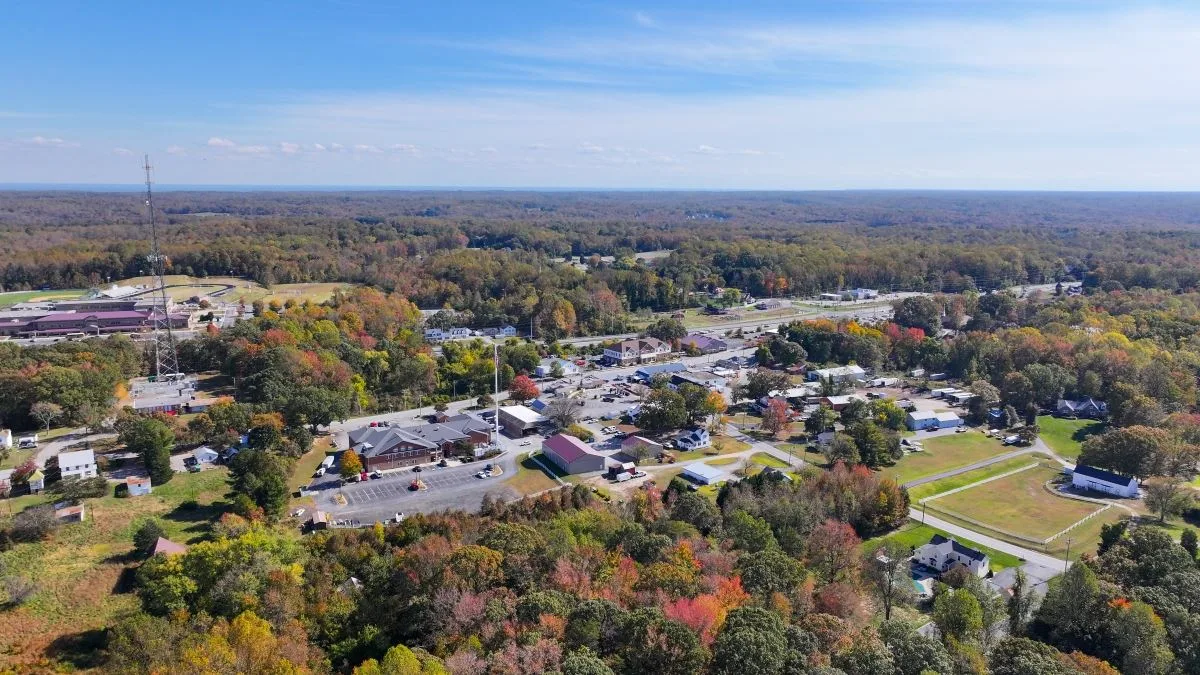
Calvert County sits on a narrow peninsula with roughly 30 miles of Chesapeake Bay shoreline on one side and the Patuxent River on the other - meaning almost no property in the county is more than a few miles from a major body of water. That geography, combined with clay-heavy soils and a humid subtropical climate, makes moisture the single most persistent threat to homes from Dunkirk down to Solomons.
Restoration work here covers a connected set of disciplines, each addressing a different stage or source of property loss:
- Water Damage Restoration - extraction, structural drying, and moisture mapping after plumbing failures, appliance leaks, roof intrusion, and storm-driven water.
- Flooded Basement recovery - pump-out, sump and drainage evaluation, and drying of below-grade framing, insulation, and finished spaces.
- Sewage Cleanup - containment and decontamination of Category 3 water from septic backups, failed grinder pumps, and main line blockages.
- Fire Damage Restoration - stabilization, debris removal, structural cleaning, and coordination of rebuild work.
- Smoke Damage Restoration - soot removal from surfaces and contents, odor neutralization, and HVAC decontamination.
- Mold Removal - containment, controlled removal of colonized materials, and correction of the moisture source feeding growth.
Free price estimates from local damage restoration providers make it straightforward for Calvert County homeowners to compare scope and approach before committing to a plan.
Common Damage Restoration Issues in Calvert County, Maryland
Losses in southern Maryland follow recognizable patterns tied to weather, well-and-septic infrastructure, and the county's mix of waterfront cottages and newer inland subdivisions.
Leading Causes of Loss
- Tropical systems and nor'easters - remnant hurricane rainfall and coastal storms push water through roofs, window flashing, and foundation walls in Chesapeake Beach, North Beach, and Broomes Island.
- Septic and drain field failures - much of rural Calvert relies on on-site septic; saturated soils reduce absorption and force sewage backward into basements and lower-level bathrooms.
- Groundwater and hydrostatic pressure - clay subsoils hold water against foundations, seeping through cove joints and block walls.
- Sump pump and well pump failures - power interruptions during summer thunderstorms leave basements without protection.
- Frozen and burst supply lines - crawl spaces, garages, and seasonal waterfront properties are especially exposed during January cold snaps.
- Fire sources - wood stoves, fireplaces, propane appliances, outdoor burning, and electrical faults in older panels.
Warning Signs Worth Acting On
- Musty odor in a basement, crawl space, or closet that returns after cleaning
- Efflorescence, chalky white staining, or bubbling paint on foundation walls
- Cupped or lifting hardwood, spongy subfloor, or discolored baseboards
- Slow drains throughout the house at once - often the first sign of a septic issue rather than a single clog
- Soot filming on windows, ceilings above lamps, or around HVAC registers
- Persistent smoke odor that intensifies with humidity or when the air handler runs
- Increased allergy or respiratory complaints among household members indoors
Neighborhoods We Serve in Calvert County
Coverage extends across the full length of the peninsula, from the Anne Arundel line to the Solomons bridge, including:
- North county - Dunkirk, Owings, Sunderland, and Friendship, where larger newer homes on wooded lots face roof and basement water issues.
- Bay communities - Chesapeake Beach, North Beach, and Breezy Point, with dense older cottages, tight lots, and shoreline exposure.
- Central Calvert - Prince Frederick, Huntingtown, Barstow, and Port Republic, a mix of subdivisions and farm properties on septic.
- Patuxent side - Broomes Island, St. Leonard, Lower Marlboro, and Mackall, with waterfront and rural drainage challenges.
- South county - Lusby, Solomons, Dowell, Drum Point, and the Chesapeake Ranch Estates.
Service also reaches neighboring Charles, St. Mary's, Anne Arundel, and Prince George's counties for regional response.
Seasonal Damage Patterns in Calvert County
- December through February - burst pipes in unheated crawl spaces and vacation properties, ice damming on low-slope roofs, and the county's highest concentration of fire and smoke damage from heating equipment, chimneys, and space heaters.
- March through May - snowmelt and spring rain saturate clay soils, driving flooded basement calls, foundation seepage, and the first mold growth of the season behind stored belongings.
- June through August - severe thunderstorms, lightning strikes, and power outages disable sump pumps; high dew points push indoor humidity into mold-friendly territory in basements and crawl spaces; grill and outdoor fire incidents rise.
- September through November - peak tropical storm and nor'easter window brings wind-driven rain, roof intrusion, tidal flooding along Bay and Patuxent shorelines, and septic drain field saturation that leads to sewage backups.
Late summer into early fall is when overlapping problems appear most often - a storm causes water intrusion, and untreated moisture becomes a mold issue weeks later.
Housing Characteristics & Restoration Considerations
Calvert County's housing stock spans mid-century waterfront cottages, 1970s and 1980s ranchers and split-levels, and a large wave of construction from the 1990s onward as the county became a commuter community for Washington, Annapolis, and Pax River.
How Construction Type Shapes the Work
- Full basements and walkouts (common in Huntingtown, Dunkirk, Prince Frederick) - finished lower levels mean carpet, pad, drywall, and framing all hold water; drying requires selective removal rather than surface extraction alone.
- Crawl space foundations (widespread in Lusby, St. Leonard, and older Bay communities) - poor ventilation, exposed earth, and fiberglass insulation create ideal mold conditions after even minor plumbing leaks.
- Slab-on-grade additions and sunrooms - moisture wicks upward and gets trapped under flooring adhesives.
- Older cottages with knob-and-tube or aging panels - elevated electrical fire risk and often plaster walls that respond differently to soot cleaning than modern drywall.
- Well and septic systems - a septic backup is not a municipal issue with a quick shutoff; cleanup includes decontamination plus assessment of the tank and drain field.
- Newer tight-envelope homes - excellent efficiency, but reduced air exchange means smoke odor and humidity linger and spread through ductwork.
Restoration providers in the area frequently handle both the mitigation and the rebuild - drywall, flooring, carpentry, roofing, siding, and window replacement - so damaged spaces return to pre-loss condition without a separate contractor handoff.
Environmental Conditions & Damage Implications
The peninsula's environment works against drying and in favor of microbial growth for a large share of the year.
- Humid subtropical climate - summer relative humidity regularly sits high enough that opening windows during a water loss makes drying worse, not better; controlled dehumidification is the only reliable approach.
- Roughly 44 inches of annual precipitation - distributed year-round with heavy convective bursts in summer that overwhelm gutters and grading.
- Clay-rich and marine terrace soils - slow percolation keeps water against foundations and limits septic drain field recovery after saturation.
- High water tables near shorelines - Bay and Patuxent frontage properties in Solomons, Drum Point, and Broomes Island contend with groundwater that rises with tide and rainfall.
- Brackish tidal flooding - salt content accelerates corrosion of fasteners, ductwork, and appliances, and requires different cleaning chemistry than fresh water intrusion.
- Cliff and bluff erosion along the Calvert Cliffs corridor - shifting soils affect drainage patterns and foundation performance.
- Pollen and coastal airborne particulates - combined with smoke residue, these load HVAC systems quickly after a fire event, making duct cleaning a standard part of smoke restoration.
These conditions explain why mold removal in Calvert County so often traces back to an unresolved water event rather than a new source. Correcting grading, downspout discharge, crawl space vapor barriers, and dehumidification capacity is treated as part of the remediation, not an optional upgrade.
Septic Backups and Rural Water Loss: A Calvert County Specialty
A substantial portion of Calvert County homes operate on private wells and on-site septic systems rather than municipal utilities. That single fact changes how sewage cleanup and water damage response are handled compared with work in Baltimore or the D.C. suburbs.
Why Septic-Related Losses Are Different
- There is no public utility to shut off or dispatch a crew - the homeowner owns the entire system.
- Backups usually occur during or right after heavy rain, when the drain field cannot accept effluent, so multiple homes in a neighborhood may fail at once.
- Contents contacted by Category 3 water - carpet, pad, upholstered furniture, particleboard cabinetry - generally cannot be salvaged and must be documented for the insurance claim before removal.
- Well water may need testing if the intrusion reached a wellhead or pressure tank area.
- Odor lingers in floor joists, sill plates, and subfloor unless surfaces are cleaned and treated, not just extracted.
A Practical Response Sequence
- Stop all water use in the home to prevent additional discharge into the failed system.
- Establish containment and negative air pressure to keep contaminants out of living space.
- Extract standing waste water and remove porous materials that absorbed contamination.
- Clean and apply antimicrobial treatment to framing, concrete, and remaining hard surfaces.
- Install dehumidification and air movers, monitoring moisture readings until structural materials reach dry standard.
- Evaluate the underlying cause - tank pumping, drain field condition, grinder pump function, grading, or downspout placement.
- Rebuild affected areas with materials suited to below-grade conditions, such as closed-cell insulation and moisture-tolerant flooring.
Custom solutions matter here. A Solomons waterfront cottage on a crawl space and a Dunkirk colonial with a finished walkout basement need entirely different drying plans, containment strategies, and rebuild specifications - and local crews who know the county's soils, septic patterns, and storm behavior build the scope accordingly.