
Damage Restoration in Philomath, OR
- Damage Restoration Services Overview
- Common Damage Restoration Issues in Philomath, Oregon
- Neighborhoods We Serve in Philomath
- Seasonal Damage Patterns in Philomath
- Housing Characteristics & Restoration Considerations
- Environmental Conditions & Damage Implications
- Advanced Drying and Remediation Technology for Willamette Valley Properties
Damage Restoration Services Overview
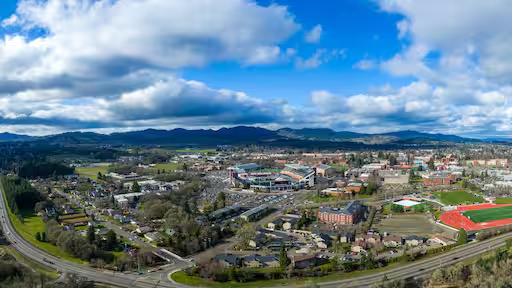
Philomath sits where the Marys River valley meets the foothills of the Coast Range, and that position shapes nearly every restoration call in town. Heavy winter rainfall rolling off the hills, aging septic systems on rural parcels, and well-water plumbing all create damage patterns that differ from those in larger cities across the Willamette Valley.
Property owners here need a response team that handles the full arc of a loss - stabilizing the structure first, then drying, cleaning, and rebuilding.
- Water Damage Restoration - extraction, moisture mapping, and structural drying after burst pipes, appliance failures, and storm intrusion.
- Flooded Basement - pump-out, sump and drain evaluation, and drying of below-grade rooms along Marys River drainage areas.
- Sewage Cleanup - safe removal of Category 3 contamination from septic backups and main line failures.
- Fire Damage Restoration - board-up, debris removal, structural cleaning, and reconstruction planning.
- Smoke Damage Restoration - soot removal, HVAC decontamination, and odor neutralization for wildfire haze and woodstove puff-backs.
- Mold Removal - containment, HEPA filtration, and remediation of hidden growth in crawlspaces and wall cavities.
The benefit of a single coordinated team is fewer handoffs, faster drying, and less secondary damage to floors, framing, and belongings.
Common Damage Restoration Issues in Philomath, Oregon
Most losses in Philomath trace back to a small set of local conditions - persistent winter rain, older housing stock, rural utilities, and summer smoke.
Frequent Causes
- Saturated soils forcing groundwater through foundation joints and crawlspace vapor barriers
- Clogged gutters and downspouts discharging against the foundation during November through February storms
- Septic drainfield saturation causing sewage backups into low fixtures and basements
- Well pump and pressure tank failures flooding utility rooms and garages
- Uninsulated pipes in crawlspaces splitting during Coast Range cold snaps
- Woodstove and chimney fires, plus kitchen grease fires that spread soot through ductwork
- Wildfire smoke intrusion during late summer, leaving fine particulate on surfaces and in filters
Warning Signs Worth Acting On
- Musty odors that intensify after rain - a strong indicator of crawlspace or wall-cavity mold.
- Cupping or darkening hardwood along exterior walls, signaling ongoing moisture migration.
- Slow drains at multiple fixtures at once, which often precedes a full septic backup.
- Efflorescence, chalky white staining, or peeling paint on basement and foundation walls.
- Yellow-brown ceiling rings that reappear after painting, pointing to an active roof or plumbing leak.
- A lingering campfire smell weeks after a small fire - soot residue still living in ducts and insulation.
Catching these signs early usually means drying and cleaning rather than tearing out and rebuilding.
Neighborhoods We Serve in Philomath
Response covers the full city and the surrounding rural stretches of Benton County.
- Downtown Philomath and the Main Street corridor, including older commercial buildings
- Neighborhoods around Philomath High School, Clemens Primary, and Blodgett Street
- College Street, 19th Street, and the residential blocks north of Highway 20
- Newton Creek and Marys River adjacent properties with elevated flood exposure
- Rural acreage along Highway 34 toward Alsea and westward toward Blodgett and Wren
- Neighboring communities including Corvallis, Adair Village, Albany, Monroe, and Kings Valley
Rural service matters here - properties on septic systems and private wells require different containment, disinfection, and water-source handling than city-serviced homes. Crews arrive equipped for gravel access roads, long hose runs, and remote power staging.
Seasonal Damage Patterns in Philomath
Restoration demand in the Willamette Valley follows a predictable rhythm, and knowing it helps property owners prepare instead of react.
- November - February: Peak water damage season. Sustained rain, high groundwater, and flooded basements dominate. Septic drainfields saturate, driving sewage backups. Frozen and split pipes appear during brief freezes.
- March - April: Snowmelt from the Coast Range and spring storms keep crawlspaces wet. Mold growth accelerates as temperatures climb while materials stay damp.
- May - June: Hidden winter moisture surfaces. Musty odors, warped flooring, and wall-cavity mold discoveries spike during remodeling projects.
- July - August: Fire risk climbs with dry grass and forested edges. Wildfire smoke drifts into the valley, leaving smoke damage and particulate in HVAC systems.
- September - October: Woodstoves and fireplaces return to service, bringing puff-backs, chimney fires, and soot. First rains reveal roof and gutter failures.
Pre-season gutter cleaning, sump pump testing, chimney inspection, and crawlspace checks prevent a large share of these losses.
Housing Characteristics & Restoration Considerations
Philomath's housing spans more than a century of building practice, and each era responds differently to water, fire, and mold.
Older Homes (pre-1960)
- Post-and-pier or shallow crawlspace foundations with limited ventilation - prime mold territory
- Original wood siding, lath and plaster, and balloon framing that lets smoke and fire travel vertically
- Potential asbestos in flooring, duct wrap, and textured ceilings, plus lead paint - all requiring testing before demolition
- Galvanized supply lines and cast iron drains prone to pinhole leaks and backups
Mid-Century and 1970s - 1990s Homes
- Daylight basements and partial below-grade spaces vulnerable to hydrostatic pressure
- Fiberglass batt insulation in crawlspaces that holds moisture and sags once wet
- Polybutylene or early plastic supply lines with a history of joint failure
Newer Construction and Rural Builds
- Tighter building envelopes that trap moisture and concentrate smoke odor when ventilation fails
- Engineered flooring and OSB subfloor that delaminate quickly under standing water
- Manufactured and modular homes with sealed underbellies where water pools undetected
- Outbuildings, shops, and barns needing separate drying strategies
Restoration plans account for these differences - a plaster wall gets dried and salvaged where drywall would be cut out, and a vented crawlspace needs a different airflow approach than a sealed one.
Environmental Conditions & Damage Implications
Philomath's climate is the single largest driver of restoration work in the area. Wet, mild winters combined with clay-heavy valley soils create long moisture exposure windows.
Climate and Moisture
- Roughly 50 inches of annual rainfall, concentrated in a five-month window
- Winter relative humidity frequently above 80 percent, slowing natural drying to a crawl
- Mild temperatures year-round that keep mold biologically active through winter
Soil and Groundwater
- Dense clay and silt loam soils that drain slowly and hold water against foundations
- Seasonal high water tables near Marys River and Newton Creek, pushing moisture up through slabs
- Saturated drainfields that reduce septic capacity and increase backup risk
Water Supply and Air Quality
- Private wells with mineral content that can affect equipment and requires separate disinfection protocols after contamination
- Iron and sulfur bacteria in some rural water, adding staining and odor challenges
- Late-summer wildfire smoke depositing fine particulate that settles into attics, ducts, and soft goods
- Woodstove use in cooler months contributing to indoor soot accumulation
Because ambient conditions work against natural drying most of the year, mechanical dehumidification and controlled airflow are not optional here - they are the difference between a dried structure and a mold claim three months later.
Advanced Drying and Remediation Technology for Willamette Valley Properties
Damp valley air makes open windows and box fans nearly useless for serious water losses. Modern restoration relies on measurement and controlled environments rather than guesswork.
Detection and Documentation
- Thermal imaging cameras to trace water migration behind walls and under flooring without demolition
- Penetrating and non-penetrating moisture meters that establish dry standards against unaffected materials
- Thermo-hygrometers tracking grain depth and humidity to verify drying is actually progressing
- Daily moisture logs and photo documentation that support insurance claims
Drying and Air Control
- Extract standing water with truck-mounted and portable units before any drying begins.
- Remove unsalvageable materials - saturated carpet pad, wet insulation, swollen particleboard.
- Set low-grain refrigerant or desiccant dehumidifiers sized to the affected cubic footage.
- Position centrifugal and axial air movers to create evaporation across wet surfaces.
- Use injectidry and negative-pressure systems to dry wall cavities, hardwood, and crawlspaces in place.
- Monitor daily and adjust equipment until documented dry standards are reached.
Contamination and Odor Control
- Negative air machines with HEPA filtration and sealed containment for mold and sewage work
- EPA-registered antimicrobials and enzyme treatments for Category 3 septic losses
- HEPA vacuuming, soda and media blasting, and duct cleaning for soot and wildfire particulate
- Hydroxyl generators and thermal fogging for smoke odor bound into porous materials
- Air scrubbers protecting occupied areas of the home during active remediation
The payoff for Philomath property owners is a shorter disruption, more original material saved, and verifiable proof that the structure is dry and clean before reconstruction starts.





