Damage Restoration in Talladega County, AL
- Damage Restoration Services Overview
- Common Damage Restoration Issues in Talladega County, Alabama
- Neighborhoods We Serve in Talladega County
- Seasonal Damage Patterns in Talladega County
- Housing Characteristics & Restoration Considerations
- Environmental Conditions & Damage Implications
- Emergency Response Timelines Across Talladega County
Damage Restoration Services Overview
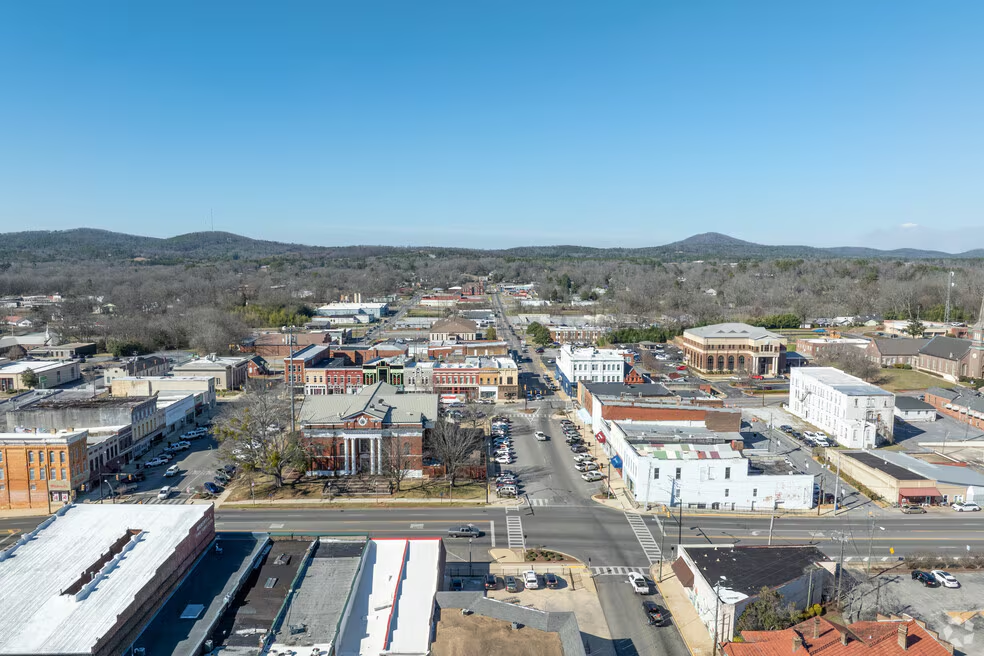
Talladega County sits in the foothills of the Appalachians, where Talladega Creek, Choccolocco Creek, and the Coosa River basin shape how water moves across the land. That geography, combined with humid Alabama summers and a mix of older farmhouses, mid-century brick ranches, and newer subdivisions, creates restoration challenges that differ from what you'd find in flatter parts of the state.
Property owners in Talladega, Sylacauga, Childersburg, Lincoln, and Munford face a full spectrum of loss events - and each one demands a different response.
- Water Damage Restoration - extraction, structural drying, and moisture mapping after pipe bursts, appliance failures, and roof intrusion
- Flooded Basement - pump-out, sub-slab drying, and treatment of below-grade spaces where groundwater and hydrostatic pressure push moisture inward
- Sewage Cleanup - containment and sanitation for septic backups and municipal line failures, treated as Category 3 contaminated water
- Fire Damage Restoration - debris removal, structural stabilization, board-up, and rebuild of affected framing and finishes
- Smoke Damage Restoration - soot removal from surfaces and HVAC systems, plus odor neutralization that reaches into porous materials
- Mold Removal - containment barriers, HEPA filtration, and removal of colonized materials under industry protocols
The benefit of a single coordinated response is simple: fewer handoffs, faster drying, better documentation for your insurance carrier, and a clearer path back to a livable, safe property.
Common Damage Restoration Issues in Talladega County, Alabama
Damage in this county usually traces back to a handful of repeat causes. Recognizing them early is what separates a two-day dry-out from a multi-week reconstruction.
Frequent Causes of Loss
- Spring and summer thunderstorms - wind-driven rain, hail, and downed limbs that open roof systems to water intrusion
- Creek and low-lying flooding - runoff along Choccolocco and Talladega Creek corridors overwhelming yards, crawl spaces, and walk-out basements
- Winter pipe bursts - hard freezes hitting uninsulated crawl space plumbing in older homes
- Septic system backups - common on rural properties outside city sewer service, especially after saturating rains
- Aging water heaters, supply lines, and washing machine hoses - slow leaks that go unseen behind cabinets and walls
- Electrical and kitchen fires - older wiring in pre-1970s homes and space heater use during cold snaps
Warning Signs Worth Acting On
- Musty odor in a crawl space, basement, or closet that lingers after ventilation
- Buckling hardwood, soft spots in subfloor, or peeling vinyl edges
- Brown ceiling rings that expand after each rainfall
- Condensation on ductwork or supply registers during humid months
- Gurgling drains or slow toilets - often the first hint of a sewer or septic problem
- Smoke odor that returns on humid days after a small fire, indicating soot still trapped in porous materials
- Visible discoloration on drywall paper, baseboards, or the underside of subfloor
Delay is the expensive part. Water migrates through framing within hours, and mold colonies can establish quickly in Alabama's humidity.
Neighborhoods We Serve in Talladega County
Response covers the full county and the surrounding corridor, including rural addresses well off the main highways.
- Talladega - historic downtown district, Silk Stocking neighborhood, and properties near the Talladega Superspeedway corridor
- Sylacauga - Marble City neighborhoods, Blue Bell area, and homes along the Highway 280 corridor
- Childersburg - riverside properties near the Coosa and the Kymulga area
- Lincoln - newer subdivisions and lakefront homes along Logan Martin Lake
- Munford, Oak Grove, and Bon Air - foothill and rural acreage properties
- Talladega Springs, Fayetteville, and Alpine - southern county communities
- Waldo, Curry Station, and Eastaboga - smaller unincorporated areas
Service also extends to bordering communities in Clay, Randolph, Coosa, St. Clair, and Calhoun counties, including Lineville, Ashland, Wedowee, Pell City, and Oxford.
Seasonal Damage Patterns in Talladega County
Winter (December - February)
- Hard freezes cause supply line and crawl space pipe bursts, driving emergency water damage calls
- Heating equipment, fireplaces, and space heaters increase fire and smoke damage incidents
- Puff-back from oil and gas furnaces spreads soot through ductwork
Spring (March - May)
- Peak severe weather season - tornado outbreaks, hail, and torrential rain
- Flooded basements and saturated crawl spaces as ground water tables rise
- Sewage and septic backups increase when saturated soil prevents drain field absorption
Summer (June - August)
- High humidity accelerates mold growth in any space that stayed damp through spring
- Afternoon storms and lightning strikes trigger roof leaks and structure fires
- HVAC condensate line clogs cause hidden ceiling and closet water damage
Fall (September - November)
- Tropical system remnants push heavy rain inland from the Gulf
- Clogged gutters from leaf drop redirect water toward foundations
- Fireplace and chimney reuse leads to early-season smoke damage events
Housing Characteristics & Restoration Considerations
Talladega County housing stock skews older than the national average, with a large share of homes built before 1980 and a meaningful number of historic structures in Talladega and Sylacauga dating to the early 1900s. Newer construction clusters around Lincoln and the Logan Martin Lake area.
Common Construction Types and What They Mean
- Pier-and-beam homes with vented crawl spaces - the most common older configuration; moisture collects underneath and migrates upward into subfloor and joists, making crawl space drying and mold inspection standard practice
- Slab-on-grade brick ranches - water spreads laterally under flooring and wicks into drywall; specialized mat systems and injection drying protect hardwood and reduce demolition
- Full or partial basements - more common in the hillier northern county; block walls and floor-wall joints are frequent entry points for groundwater
- Historic homes with plaster and lath - hold moisture far longer than drywall and require slower, monitored drying to prevent cracking
- Manufactured and modular housing - vulnerable to floor decking saturation and underbelly water retention that hides moisture for weeks
Age-Related Factors
- Galvanized and polybutylene supply lines nearing end of life
- Knob-and-tube or early aluminum wiring raising fire risk in unrenovated properties
- Cast iron drain lines prone to cracking, contributing to sewage backups
- Asbestos-containing flooring and insulation in pre-1980 homes requiring careful handling during demolition
- Original single-pane windows and minimal vapor barriers that encourage condensation and mold
Environmental Conditions & Damage Implications
The county's humid subtropical climate delivers roughly 55 inches of rain annually - well above the national average - with summer dew points that regularly sit in the low 70s. That combination is the single biggest driver of secondary damage after any water event.
Climate Factors
- Long humid season keeps indoor relative humidity elevated, feeding mold growth on cellulose materials
- Rapid temperature swings between winter fronts cause freeze-thaw cycles and pipe stress
- Heavy rainfall events overwhelm gutters, downspouts, and older drainage systems
Soil and Water Conditions
- Clay-heavy soils across much of the county drain slowly, holding water against foundations and increasing hydrostatic pressure on basement walls
- Karst and limestone formations in parts of the Coosa Valley create unpredictable subsurface water movement
- High groundwater tables near creek bottoms and lake margins keep crawl spaces damp year-round
- Well and septic reliance in rural areas means backups carry higher contamination risk and require full Category 3 sanitation
Air Quality Considerations
- Pollen loads in spring can mask early mold symptoms, delaying detection
- Smoke and soot particulates settle into HVAC systems and insulation, requiring duct cleaning and often insulation replacement
- Humid conditions reactivate smoke odor molecules, which is why thermal fogging and hydroxyl treatment matter here more than in dry climates
Emergency Response Timelines Across Talladega County
Water damage is measured in hours, not days. Within the first 24 to 48 hours, clean water can degrade into contaminated water, drywall wicks moisture vertically, and mold spores begin colonizing damp organic material. That window shrinks further in Alabama's summer humidity.
What Rapid Response Actually Involves
- Emergency call and triage - a few quick questions establish the water source, affected square footage, and whether power or gas needs shutoff
- On-site arrival and inspection - moisture meters and thermal imaging map the true extent of intrusion, including hidden migration into wall cavities and under cabinets
- Documentation for your carrier - photos, moisture readings, and scope notes recorded from the start so the claim moves without back-and-forth
- Extraction and containment - truck-mounted and portable extraction, plus containment barriers when sewage or mold is present
- Structural drying - air movers, commercial dehumidifiers, and daily moisture readings until materials reach dry standard
- Cleaning, sanitizing, and deodorizing - antimicrobial application, soot removal, HVAC cleaning, and odor treatment as the loss type requires
- Reconstruction - drywall, flooring, trim, and paint returning the property to pre-loss condition
Why Geography Affects Response Here
- Rural addresses in Munford, Talladega Springs, and Fayetteville sit well off main routes - crews stage equipment accordingly
- Storm events often produce simultaneous losses across multiple communities, making early calls a real advantage
- Lake-area properties around Logan Martin may involve dock, boathouse, and walk-out basement damage in the same event
- Race weekends at the Superspeedway increase traffic on I-20 and Highway 77, factored into dispatch planning
Crews are available around the clock, every day of the year, for water extraction, flooded basement pump-out, sewage cleanup, fire and smoke restoration, and mold remediation throughout Talladega County.