Damage Restoration in Cleveland County, OK
- Damage Restoration Services Overview
- Common Damage Restoration Issues in Cleveland County, Oklahoma
- Neighborhoods We Serve in Cleveland County
- Seasonal Damage Patterns in Cleveland County
- Housing Characteristics & Restoration Considerations
- Environmental Conditions & Damage Implications
- Emergency Response After Cleveland County Storms and Outages
Damage Restoration Services Overview
You come home to Norman after a spring storm rolls through, flip on the basement light, and hear water sloshing under your shoes. Or you wake to the smell of smoke long after a kitchen fire was put out. These moments move fast, and the decisions made in the first hours shape how much of your home survives.
Reset Restoration handles the full range of property emergencies across Cleveland County, from the first extraction to the final rebuild. Property owners in Norman, Moore, and the surrounding communities rely on a single crew for:
- Water damage restoration - burst supply lines, roof leaks, appliance failures, and storm intrusion
- Flooded basement cleanup - pump-out, structural drying, and moisture mapping below grade
- Sewage cleanup - contaminated water removal, antimicrobial treatment, and safe material disposal
- Fire damage restoration - debris removal, structural stabilization, and content recovery
- Smoke damage restoration - soot removal from surfaces, HVAC decontamination, and odor neutralization
- Mold removal - containment, controlled removal, and correction of the moisture source
The benefit of a coordinated response is simple: fewer materials get thrown away, documentation for your insurer stays organized, and your household returns to normal sooner.
Common Damage Restoration Issues in Cleveland County, Oklahoma
Cleveland County sits in one of the most active severe weather corridors in the country. Tornado damage paths here can stretch up to a mile wide and 50 miles long, and the same storm systems that produce them bring straight-line winds, hail, and rainfall rates local drainage cannot absorb.
Local conditions that trigger restoration calls include:
- Wind-lifted shingles and roof punctures that allow rain into attics and wall cavities for days before anyone notices
- Flash flooding along the Canadian River corridor and low-lying neighborhoods where clay soil sheds water rather than absorbing it
- Sanitary sewer backups when heavy rain overwhelms municipal lines, pushing contaminated water into floor drains and basement fixtures
- Extended power outages after ice or wind events - crews may need hours to reach individual neighborhoods, leaving sump pumps and dehumidifiers dark
- Electrical and space heater fires during winter cold snaps, followed by widespread smoke and soot travel through ductwork
- Frozen and split pipes in uninsulated crawl spaces and exterior walls
Warning signs worth acting on right away:
- Musty odors in closets, crawl spaces, or near HVAC returns
- Discolored rings or bubbling paint on ceilings and baseboards
- Buckling laminate, cupping hardwood, or soft spots underfoot
- Slow floor drains or gurgling toilets after heavy rain
- Lingering smoke odor that returns when humidity rises
- Unexplained spikes in your water bill
Catching any of these early keeps a drying job from becoming a demolition and mold remediation project.
Neighborhoods We Serve in Cleveland County
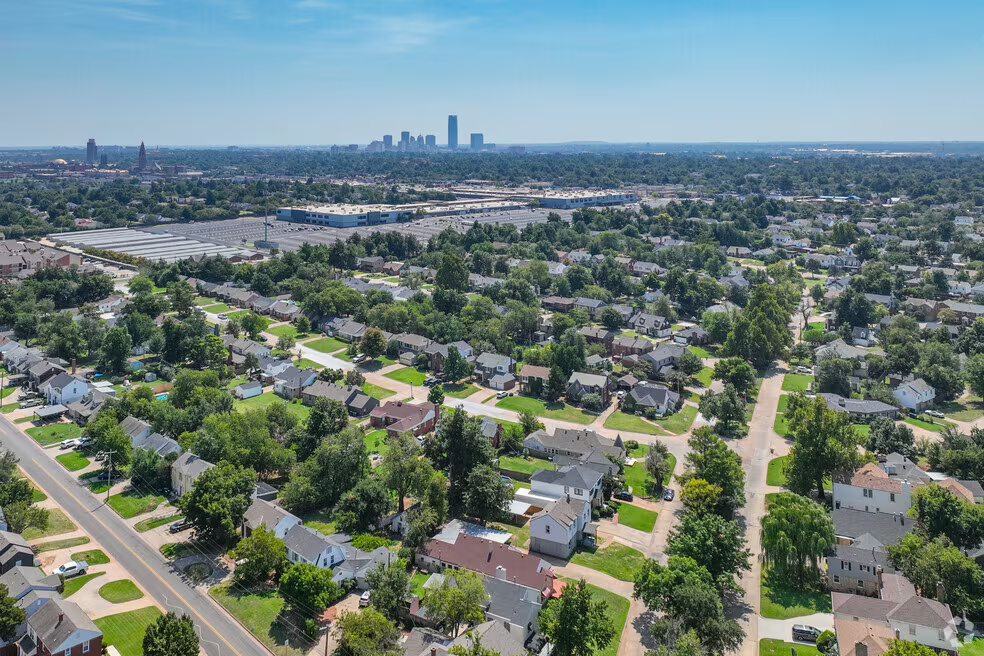
Response crews cover the county seat at Norman and every surrounding community, with familiarity of local street layouts, storm drainage, and municipal utility contacts.
- Norman - including Campus Corner, the historic downtown district near 201 S. Jones Ave., Brookhaven, Trailwoods, and the neighborhoods along 12th Avenue
- Moore - central Moore, Broadmoore, and the subdivisions rebuilt after past tornado events
- Noble and the surrounding rural properties south along Highway 77
- Slaughterville, Lexington, and Etowah
- Goldsby, Washington, and unincorporated acreage on the county's western edge
- Oklahoma City's southern edge where city limits overlap Cleveland County
Coverage extends to homes, rental properties, student housing near the university, retail spaces, and light commercial buildings throughout the county.
Seasonal Damage Patterns in Cleveland County
Damage types follow a predictable rhythm here, and knowing the calendar helps you prepare before the call becomes urgent.
- March through June - peak severe weather. Tornadoes, hail, and torrential rain drive roof leaks, flooded basements, and storm-related water damage. Sewer backups spike during multi-inch rainfall days.
- July and August - heat and humidity accelerate mold growth in any space that stayed damp through spring. Air conditioning condensate line clogs cause quiet, slow ceiling and closet leaks.
- September through October - a second, smaller severe storm season. Dry grass and burn-ban conditions raise wildfire and outbuilding fire risk on rural acreage.
- November through February - freeze events split supply lines in crawl spaces and exterior walls. Heating equipment, fireplaces, and space heaters drive the year's heaviest fire and smoke damage volume. Ice storms bring outages that stall sump pumps.
Two transitional periods deserve attention: the first hard freeze and the first sustained warm stretch. Each one exposes weaknesses in plumbing and drying that went unnoticed the season before.
Housing Characteristics & Restoration Considerations
Cleveland County housing spans more than a century of construction, and each era responds differently to water, fire, and microbial growth.
- Pre-1950 homes near downtown Norman - wood lath and plaster, original hardwood, cast iron drain lines, and knob-and-tube remnants. Plaster holds water in ways drywall does not, requiring longer controlled drying and careful cavity access.
- 1960s-1980s ranch homes - slab-on-grade construction with carpet over concrete. Water wicks laterally under tack strips and into base plates, so moisture mapping matters more than surface appearance.
- Post-2000 subdivisions in Moore, Goldsby, and south Norman - tighter building envelopes, engineered wood products, and vinyl plank flooring. Sealed construction traps humidity, and swelling in engineered materials is often irreversible without replacement.
- Storm shelters, cellars, and partial basements - relatively uncommon in Oklahoma but present enough to matter. Below-grade spaces flood first and dry last, and they frequently share drainage with sewer laterals.
- Rural and manufactured housing - crawl space and pier foundations with exposed underbelly insulation that holds saturation and breeds mold long after the visible water is gone.
Aging cast iron and clay sewer lines under older neighborhoods crack and separate, which is why sewage cleanup calls cluster in the same streets year after year. In fire and smoke work, older homes with open wall cavities and balloon framing let soot travel much farther than the burned room, so containment and cleaning scope extend well beyond the obvious damage.
Environmental Conditions & Damage Implications
The local environment shapes how quickly damage spreads and how restoration must be sequenced.
- Dense clay soil - much of the county sits on expansive clay that swells when wet and shrinks in drought. This movement cracks foundations and slabs, creating direct entry points for groundwater and sewer seepage.
- Humid subtropical climate - summer dew points regularly climb high enough that mold colonies establish within roughly a day or two on wet cellulose materials. Drying equipment must control humidity, not just remove standing water.
- Wide temperature swings - freeze-thaw cycles stress pipes, mortar joints, and roof flashing across a single winter week.
- Wind-driven dust and pollen - fine particulate settles in ductwork and combines with soot after a fire, making HVAC cleaning a standard part of smoke damage restoration here rather than an add-on.
- Hard, mineral-heavy water - scale buildup shortens water heater and supply line lifespan, contributing to sudden failures.
- Aging municipal infrastructure - stormwater and sanitary systems in older districts can surcharge during heavy rain, sending Category 3 water into homes.
These conditions mean drying targets are set to local seasonal norms, not generic numbers. Air scrubbing, containment barriers, and post-remediation moisture verification are used on nearly every job, because a home that appears dry in Cleveland County's summer humidity often is not.
Emergency Response After Cleveland County Storms and Outages
The hours immediately after a storm decide the outcome. When a tornado or wind event carves through the county, utility crews prioritize main lines and substations, and residents are reminded it may take hours before workers reach individual neighborhoods. During that window, sump pumps sit idle, refrigeration fails, and water keeps moving into wall cavities.
What an emergency response looks like on the ground:
- Immediate contact and triage - crews gather details on water source, standing water depth, power status, and access so equipment is loaded before departure.
- Safety and stabilization - electrical hazards identified, tarping or board-up applied to compromised roofs and windows, and structural risks flagged.
- Extraction and containment - truck-mounted extraction for standing water, containment barriers for sewage or fire-affected zones, and generator power when the grid is down.
- Structural drying - air movers and dehumidifiers placed by moisture readings, with daily monitoring and adjustment.
- Cleaning and decontamination - antimicrobial application for sewage, soot removal and thermal fogging for smoke, HEPA filtration throughout.
- Documentation and rebuild - photo logs, moisture records, and material inventories prepared for your insurance carrier, followed by reconstruction.
Practical steps you can take before crews arrive:
- Shut off water at the main if the source is a broken line
- Stay out of standing water where electrical service may still be live
- Photograph every affected room and damaged item before anything is moved
- Move furniture and valuables to dry, upper-level rooms if it is safe to do so
- Avoid contact with sewage water entirely and keep pets and children away
Fast mobilization keeps a water loss from becoming a mold remediation project and keeps smoke odor from permanently setting into framing and textiles.