
Damage Restoration in Valley, AL
- Damage Restoration Services Overview
- Common Damage Restoration Issues in Valley, Alabama
- Neighborhoods We Serve in Valley
- Seasonal Damage Patterns in Valley
- Housing Characteristics & Restoration Considerations
- Environmental Conditions & Damage Implications
- Crawl Space and Below-Grade Moisture Control in Chambers County Homes
Damage Restoration Services Overview
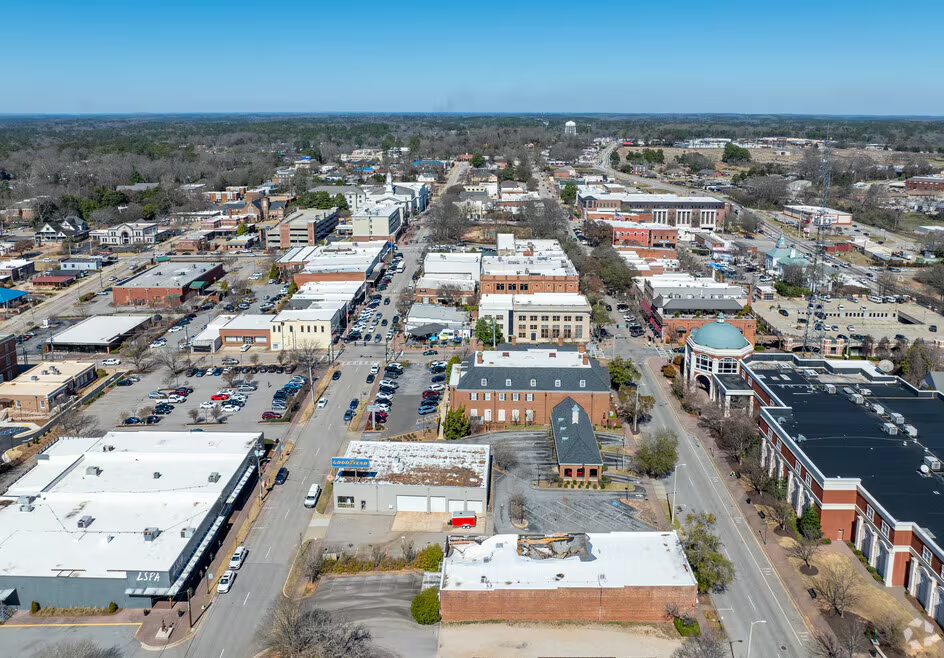
Valley sits in one of the wettest corners of Alabama, averaging well over 50 inches of rain a year - roughly 20 inches more than the national average. Add a town built around four former textile mill villages with housing stock dating back a century, and the result is a community where water, mold, and fire damage show up in ways that generic restoration playbooks miss.
Every project starts with a detailed inspection using moisture meters and thermal imaging, then moves through controlled drying, cleaning, antimicrobial treatment, and structural repair so your property is both safe and comfortable again.
- Water Damage Restoration - burst supply lines, failed water heaters, roof leaks, appliance overflows, and storm intrusion
- Flooded Basement Recovery - extraction, dehumidification, and drying of below-grade spaces and crawl spaces
- Sewage Cleanup - biohazard removal, disinfection, and safe disposal of contaminated materials
- Fire Damage Restoration - debris removal, soot cleaning, content recovery, and rebuild work
- Smoke Damage Restoration - odor neutralization, HVAC cleaning, and treatment of porous surfaces
- Mold Removal - containment, HEPA filtration, material removal, and moisture-source correction
Handling all six under one roof means no gaps between phases - the crew that dries your home is the crew that checks it for mold and rebuilds what was removed.
Common Damage Restoration Issues in Valley, Alabama
Chambers County's geography, humidity, and aging construction combine to create predictable damage patterns. Knowing them helps homeowners catch problems early.
Local Causes We See Most
- Heavy convective rainfall - summer thunderstorms drop several inches in an hour, overwhelming gutters and yard drainage on sloped lots near the Chattahoochee corridor
- Clay soil expansion - Piedmont red clay swells when saturated, pushing against foundation walls and forcing water through cracks into basements and crawl spaces
- Aging cast iron and clay sewer laterals - common in the older mill villages, prone to root intrusion and backups during heavy rain
- Winter pipe failures - uninsulated lines in crawl spaces and exterior walls split during hard freezes
- Space heaters and aging wiring - a leading fire ignition source in older homes with limited circuit capacity
- Chronic humidity - unventilated crawl spaces and closed-up attics feed mold growth year-round
Warning Signs Worth Acting On
- Musty odor that intensifies when the HVAC cycles on
- Cupping or darkening hardwood along baseboards and doorways
- Bubbling paint, chalky white staining, or soft drywall near floor level
- Slow drains in multiple fixtures at once - often the first sign of a main line issue
- Persistent smoke odor weeks after a small kitchen or appliance fire
- Visible condensation on ductwork, windows, or crawl space vapor barriers
Neighborhoods We Serve in Valley
Our crews cover the entire city and the surrounding Chambers County communities, with familiarity in each area's construction style and drainage quirks.
- Langdale - historic mill village homes with raised pier foundations and original wood framing
- Shawmut - the circular village layout, with mature tree cover and older sewer laterals
- Fairfax - a mix of mill-era cottages and mid-century additions
- Riverview - properties closest to the Chattahoochee and its flood-prone low areas
- Milltown and Cusseta - rural parcels on septic systems with well water
- Lanett, West Point, and the I-85 corridor - newer subdivisions and commercial properties
- Huguley, Standing Rock, and northern Chambers County - outlying homes with private drives and longer response distances we plan for
Whether the call comes from a Shawmut bungalow or a newer build off Fob James Drive, our response approach is the same - inspect first, document thoroughly, then stabilize.
Seasonal Damage Patterns in Valley
Winter (December - February)
- Frozen and burst pipes during Arctic outbreaks, especially in crawl spaces and garages
- Peak fire and smoke damage season from heating equipment, fireplaces, and holiday cooking
- Roof leaks from ice-loaded gutters and freeze-thaw shingle damage
Spring (March - May)
- Severe weather and tornado season across east Alabama - wind-driven rain, roof breaches, and flash flooding
- Flooded basements and saturated crawl spaces from prolonged rainfall on already-wet clay
- Sewage backups when storm volume overloads aging lines
Summer (June - August)
- Peak mold season - dew points in the 70s and indoor humidity that outruns undersized AC systems
- Lightning strikes causing attic and electrical fires
- Condensation damage around ductwork and poorly sealed crawl spaces
Fall (September - November)
- Remnants of Gulf tropical systems pushing inland with heavy rain and wind
- Clogged gutters from leaf drop redirecting water against foundations
- Early-season heating fires as furnaces and flues fire up after months idle
Housing Characteristics & Restoration Considerations
Valley's housing stock skews older than the Alabama average, with a large share built between the 1920s and 1960s during the West Point Manufacturing era, plus newer construction along the interstate corridor.
Common Construction Types and What They Mean
- Mill village cottages - wood frame on brick piers, often with original shiplap sheathing that holds moisture and demands slower, monitored drying rather than aggressive heat
- Vented crawl spaces - the dominant foundation type here; the primary source of mold complaints and where our moisture mapping usually begins
- Plaster and lath walls - wick water upward and can hide saturation behind an intact surface
- Mid-century ranches - partial basements, original galvanized plumbing, and limited insulation in exterior walls
- Newer slab-on-grade builds - fewer freeze failures but harder-to-detect slab leaks and wall-cavity wicking
Restoration Adjustments We Make
- Test for asbestos-containing materials and lead paint before demolition in pre-1980 homes
- Use controlled drying chambers to save original hardwood and trim where possible
- Seal and negative-pressure crawl spaces during sewage or mold work to stop cross-contamination through floor penetrations
- Clean and treat HVAC systems after fire events, since older duct runs distribute soot through the whole structure
- Rebuild with moisture-tolerant materials in the areas most likely to be affected again
Environmental Conditions & Damage Implications
The environment around Valley works against drying and in favor of microbial growth for much of the year.
Climate and Humidity
- Humid subtropical conditions with long, muggy summers and mild but damp winters
- Relative humidity often above 70 percent overnight, which stalls passive drying entirely
- Rainfall spread across all twelve months - there is no reliable dry season for structural drying
Soil and Water
- Piedmont red clay - low permeability means surface water pools and travels along foundation walls instead of soaking in
- Chattahoochee River and West Point Lake influence - elevated groundwater in low-lying Riverview and creek-adjacent parcels
- Iron-rich water - leaves staining on materials after floods, which affects cleaning method selection
- Septic systems in rural areas - clay soil limits absorption, so saturated fields back up into homes after extended rain
Air Quality Effects
- High pollen loads in spring settle into wet materials and accelerate microbial colonization
- Smoke and soot particles bond more tightly to surfaces in humid air, making rapid cleaning after a fire important
- Closed-up, air-conditioned homes recirculate mold spores and residual odors without HEPA filtration and source removal
Because of these conditions, mechanical dehumidification and containment are non-negotiable parts of any Valley project - opening windows simply pulls more moisture in.
Crawl Space and Below-Grade Moisture Control in Chambers County Homes
More restoration calls in Valley trace back to what is under the floor than to anything happening above it. The combination of vented crawl spaces, dense clay, and near-constant humidity creates a moisture reservoir that quietly damages framing, subfloor, and indoor air quality for years before anyone notices.
How Crawl Space Problems Escalate
- Rain saturates clay soil that cannot drain, raising moisture at the foundation perimeter
- Water enters through pier footings, block joints, or unsealed vents
- Warm, humid outdoor air enters the vents and condenses on cooler ductwork and joists
- Wood moisture content climbs past 20 percent, the threshold where mold begins colonizing
- The stack effect pulls that air upward into living space, spreading spores and musty odor
- Sustained saturation leads to subfloor delamination, joist rot, and eventually sagging floors
What Our Crews Address
- Full moisture mapping of joists, subfloor, insulation, and vapor barrier
- Standing water extraction and targeted removal of contaminated insulation and debris
- Containment and HEPA filtration before any mold-affected material is disturbed
- Antimicrobial treatment of exposed framing followed by verification readings
- Grading, downspout, and drainage recommendations to stop water at the source
- Vapor barrier replacement, sealing, and dehumidification strategy for long-term control
- Structural repair of compromised joists, girders, and subfloor sections
The same principles apply to flooded basements and sewage events - remove the water, remove what cannot be salvaged, disinfect, then control humidity until materials reach documented dry standards. Skipping the final verification step is the most common reason homeowners face repeat mold problems a season later.
If you are seeing standing water, smelling smoke or mustiness, or dealing with a sewage backup anywhere in Valley, Langdale, Shawmut, Fairfax, or Riverview, call 256-534-7756 to schedule an on-site assessment.





