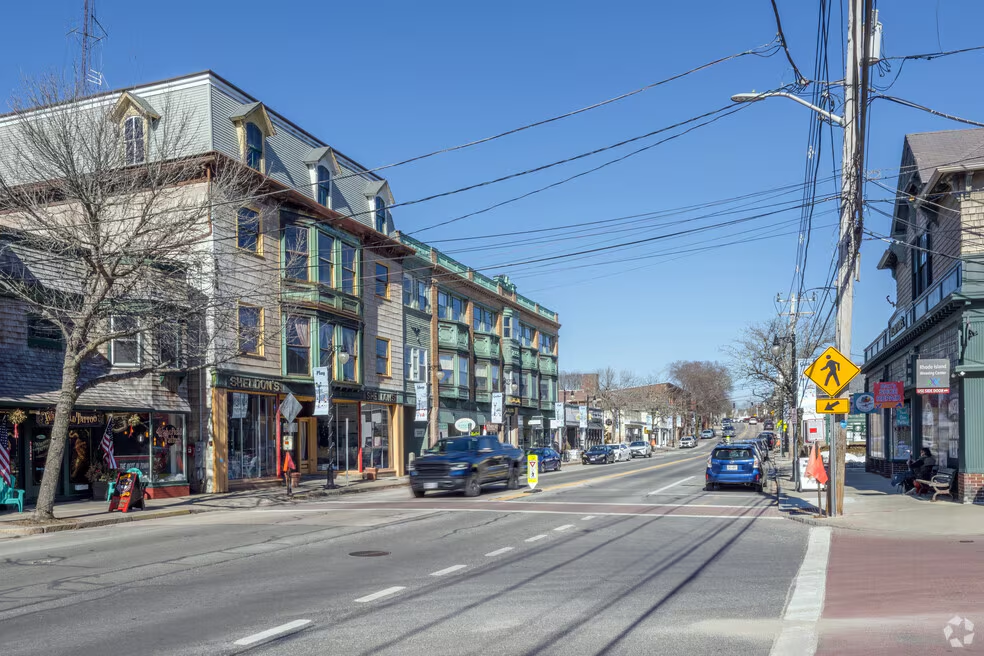
Damage Restoration in Washington County, RI
- Damage Restoration Services Overview
- Common Damage Restoration Issues in Washington County, Rhode Island
- Neighborhoods We Serve in Washington County
- Seasonal Damage Patterns in Washington County
- Housing Characteristics & Restoration Considerations
- Environmental Conditions & Damage Implications
- Coastal Storms, Septic Systems, and the First 48 Hours
Damage Restoration Services Overview
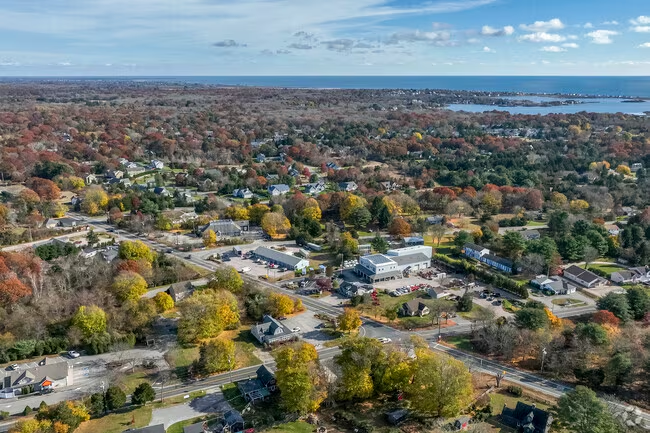
What happens to a South County home in the hours after a burst pipe, a chimney fire, or a nor'easter that pushes groundwater through a fieldstone foundation? The answer usually depends on how quickly trained restoration crews arrive and how methodically they work.
Property damage in Washington County rarely stays in one category. Water becomes mold, fire leaves smoke residue and firefighting water behind, and a backed-up septic line turns a finished basement into a biohazard. Coordinated restoration addresses every layer at once.
- Water Damage Restoration - extraction, structural drying, moisture mapping, and monitoring of framing, subfloor, and insulation cavities
- Flooded Basement - pump-out, sump and drain evaluation, content handling, and dehumidification of below-grade spaces
- Sewage Cleanup - removal of contaminated materials, antimicrobial treatment, and disinfection after septic or municipal line failures
- Fire Damage Restoration - stabilization, debris removal, soot cleaning, and rebuilding of damaged assemblies
- Smoke Damage Restoration - odor neutralization, HVAC cleaning, and treatment of porous surfaces far from the burn area
- Mold Removal - containment, HEPA filtration, controlled removal, and correction of the moisture source
For homeowners from Westerly to Wickford, the benefits are practical: less demolition, salvaged belongings, cleaner indoor air, and documentation that supports an insurance claim.
Common Damage Restoration Issues in Washington County, Rhode Island
Coastal exposure, aging housing stock, and heavy reliance on private wells and septic systems shape the damage patterns seen across South County.
Local Causes of Loss
- Nor'easters and tropical storm remnants driving wind-blown rain into roofs, soffits, and gable ends along the shoreline
- Seasonally high water tables near the salt ponds, Pawcatuck River, and Narrow River pushing water through slab joints and stone foundations
- Frozen and split supply lines in seasonal cottages at Matunuck, Misquamicut, and Weekapaug left unheated over winter
- Septic system saturation and drain field failure after prolonged rain, leading to sewage backups in lower levels
- Chimney, wood stove, and pellet stove fires in older farmhouses across Exeter, Richmond, and Hopkinton
- Electrical faults in knob-and-tube or early aluminum wiring still present in some pre-1960 homes
Warning Signs Worth Acting On
- Musty odors in a basement or crawlspace that intensify during humid stretches
- Efflorescence, white powder, or dark staining along foundation walls
- Cupping hardwood, bubbling paint, or soft baseboards near exterior walls
- Gurgling drains, slow toilets, or wet spots over the leach field
- Lingering smoke odor that returns when the furnace or air conditioning cycles
- Visible growth behind furniture, inside closets, or under sinks
Small clues often precede large losses. A slow supply-line drip behind a vanity can feed mold colonies for months before anyone notices staining on the ceiling below.
Neighborhoods We Serve in Washington County
Response covers the full breadth of South County, from the Connecticut line to the west passage of Narragansett Bay.
- Westerly and Hopkinton - Watch Hill, Weekapaug, Misquamicut, Bradford, Ashaway, and Hope Valley
- South Kingstown - Wakefield, Peace Dale, Kingston, Matunuck, Green Hill, Snug Harbor, and the URI campus area
- Narragansett - Narragansett Pier, Point Judith, Galilee, Bonnet Shores, and Jerusalem
- North Kingstown - Wickford, Quonset, Saunderstown, Hamilton, and Davisville
- Charlestown - Quonochontaug, Cross Mills, Shannock, and Carolina
- Richmond and Exeter - Wyoming, Usquepaug, and the rural stretches along Route 102
- New Shoreham - Block Island properties, including seasonal rentals and inns
Neighboring communities in Kent and Providence counties, including Cranston and West Greenwich, also fall within reach for both residential and commercial work.
Seasonal Damage Patterns in Washington County
South County damage follows a fairly predictable rhythm tied to weather and occupancy.
- December through February - frozen and burst pipes in unheated cottages, ice dams on older roofs, chimney and heating-appliance fires, and smoke damage from wood stoves
- March and April - snowmelt combined with spring rain saturating soils, flooded basements, sump pump failures, and septic backups where drain fields cannot absorb runoff
- May and June - rising humidity turning winter moisture into active mold growth in crawlspaces and closed-up seasonal homes
- July and August - condensation on cool basement walls, air conditioning line leaks, grill and outdoor fire incidents, and heavy thunderstorm downpours
- September and October - hurricane and tropical storm season bringing wind-driven rain, coastal flooding, and power outages that disable sump pumps
- November - first heating cycles revealing furnace puff-backs, soot deposits, and dormant smoke odor in ductwork
Shoulder seasons matter most for vacation properties. A pipe that fails in January may go undiscovered until an owner returns in April, by which point drying alone will not resolve the mold that developed.
Housing Characteristics & Restoration Considerations
Washington County housing spans four centuries, and each era carries its own restoration challenges.
Common Construction Types
- Colonial and Federal-era farmhouses in Exeter, Richmond, and Kingston with post-and-beam framing, plaster on wood lath, and fieldstone or rubble foundations
- Mill village housing in Peace Dale, Shannock, Carolina, and Bradford, often narrow, tightly spaced, and built on stone cellars
- Mid-century ranches and capes in Wakefield and North Kingstown with block foundations and finished basement rec rooms
- Coastal cottages and elevated homes at Misquamicut, Matunuck, and Quonochontaug built on piers, slabs, or crawlspaces
- Newer subdivisions with engineered lumber, poured concrete, and tight building envelopes that trap moisture
How Age Shapes the Work
- Plaster and lath hold water far longer than drywall and need targeted drying rather than immediate removal
- Stone foundations wick groundwater continuously, making dehumidification and drainage correction part of any basement project
- Balloon framing lets smoke and soot travel between floors, so odor treatment extends well beyond the fire origin
- Pre-1980 materials may contain asbestos or lead, requiring testing before demolition
- Finished basements with carpet, paneling, and stored belongings raise both mold and sewage contamination risk
- Tight modern envelopes reduce air exchange, concentrating smoke odor and humidity indoors
Environmental Conditions & Damage Implications
The coastal climate of South County keeps moisture in play nearly year-round, which affects every category of restoration work.
Climate and Air
- Summer dew points regularly sit in the 60s and 70s, feeding mold in basements and crawlspaces without mechanical dehumidification
- Salt-laden air accelerates corrosion of fasteners, flashing, and mechanical equipment near the shoreline
- Annual precipitation exceeding 45 inches, distributed across all seasons, gives soils little chance to dry out
- Wood smoke from stoves and fireplaces contributes to indoor particulate loads during winter
Water and Soil
- Sandy glacial outwash across much of Charlestown and South Kingstown drains quickly but transmits groundwater rapidly toward foundations
- Dense glacial till and shallow bedrock in Exeter and Richmond cause perched water and surface runoff against foundation walls
- Widespread private wells and septic systems mean sewage events are treated as contaminated water, with full disinfection and material removal
- Coastal water tables sit close to grade, limiting how deep drainage improvements can go
- Radon and soil gases can be redistributed when basements are opened up during restoration, making containment important
These conditions explain why drying targets in South County must account for local humidity rather than generic benchmarks. Equipment placement, air exchange, and monitoring are adjusted to what the building and the season allow.
Coastal Storms, Septic Systems, and the First 48 Hours
Most severe losses in Washington County trace back to two sources: storm water arriving faster than a property can shed it, and septic systems that fail when soils are saturated. Both demand fast, structured action.
What to Do Immediately
- Stop the source if it can be done safely - shut the main water valve, kill power to affected circuits, or close a failed fixture
- Keep people and pets away from standing water, particularly anything involving sewage or a fire scene
- Photograph conditions and damaged contents before anything is moved
- Contact your insurer to open a claim and record the reference number
- Call for emergency response so extraction and drying begin before secondary damage sets in
- Move salvageable belongings to a dry, conditioned area away from the affected zone
How Restoration Proceeds
- Inspection and moisture mapping using meters and thermal imaging to find water inside wall and floor cavities
- Extraction and stabilization including pump-out of flooded basements and board-up after fire
- Controlled removal of unsalvageable drywall, insulation, carpet padding, and sewage-contaminated materials
- Cleaning and disinfection with antimicrobials, soot sponges, and appropriate solvents for each surface type
- Structural drying with air movers and dehumidifiers, monitored daily until readings stabilize
- Odor control through HVAC cleaning, hydroxyl or ozone treatment, and sealing of porous framing
- Reconstruction of finishes, flooring, trim, and cabinetry to return the space to pre-loss condition
Preventive Steps for South County Properties
- Service and pump septic tanks on schedule, and avoid heavy water use during saturated periods
- Install a battery backup or water-powered backup for sump pumps
- Add a backflow preventer on basement drains where sewage backup has occurred before
- Insulate pipes and maintain minimum heat in seasonal cottages, or drain the system entirely
- Clean chimneys and dryer vents annually before the heating season
- Run a dehumidifier in basements and crawlspaces through the humid months
- Extend downspouts and regrade soil away from stone and block foundations