
Damage Restoration in Wakefield-Peacedale, RI
- Damage Restoration Services Overview
- Common Damage Restoration Issues in Wakefield-Peacedale, Rhode Island
- Neighborhoods We Serve in Wakefield-Peacedale
- Seasonal Damage Patterns in Wakefield-Peacedale
- Housing Characteristics & Restoration Considerations
- Environmental Conditions & Damage Implications
- Emergency Response Timelines and Insurance Documentation in South County
Damage Restoration Services Overview
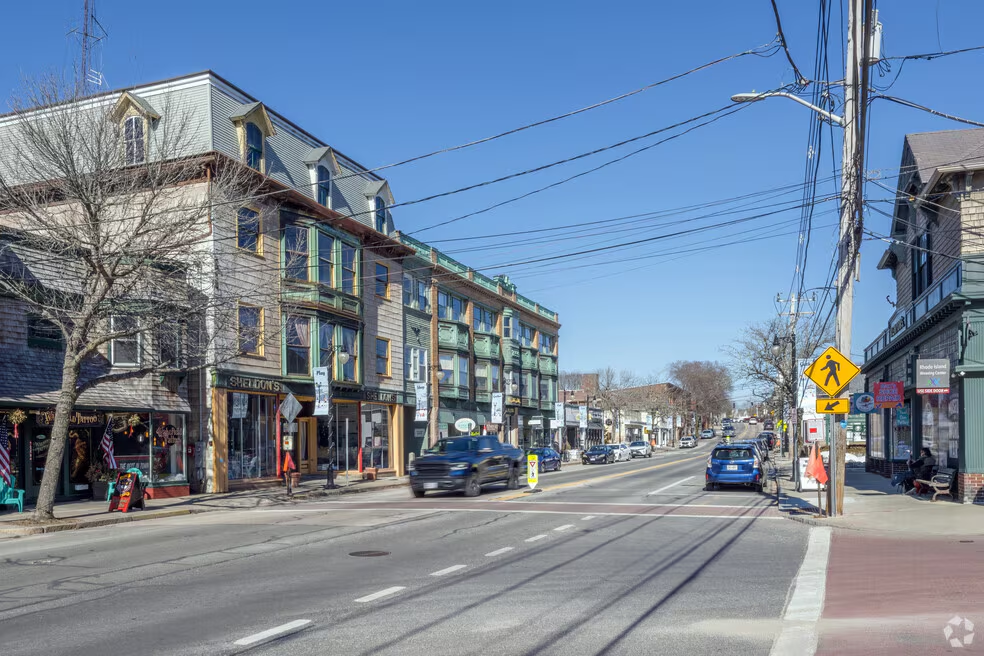
What happens to a South County home in the hours after a pipe bursts, a chimney fire smolders behind a wall, or a coastal storm pushes groundwater through a foundation crack? The answer usually depends on how quickly trained restoration technicians arrive.
Wakefield-Peacedale properties face a wide mix of damage scenarios, and each one calls for a different response. Restoration work in this part of Rhode Island covers:
- Water Damage Restoration - extraction, structural drying, and moisture mapping after leaks, appliance failures, and storm intrusion
- Flooded Basement - pump-out, content removal, and dehumidification for below-grade spaces along the Saugatucket River corridor
- Sewage Cleanup - safe removal of Category 3 contamination from backups, septic failures, and overwhelmed lines
- Fire Damage Restoration - debris removal, structural stabilization, and rebuilding after flame and heat damage
- Smoke Damage Restoration - soot removal, thermal fogging, and odor neutralization in porous materials
- Mold Removal - containment, HEPA filtration, and remediation of colonies fed by coastal humidity
Key benefits for local homeowners include reduced secondary damage, documentation that supports insurance claims, and a clear plan for returning to normal life. Fast, methodical work protects both the structure and the belongings inside it.
Common Damage Restoration Issues in Wakefield-Peacedale, Rhode Island
Sitting in South Kingstown between Narragansett Bay and Point Judith Pond, Wakefield-Peacedale carries a unique combination of coastal moisture, aging mill-era housing, and low-lying terrain.
Local Causes of Property Damage
- Nor'easters and tropical remnants driving wind-blown rain into siding and roof seams
- High water tables near the Saugatucket River and Silver Lake pushing moisture through foundation walls
- Septic systems in outlying areas that surcharge during saturated ground conditions
- Older cast iron and clay sewer laterals prone to root intrusion and collapse
- Wood stoves, fireplaces, and supplemental heaters used heavily through long winters
- Salt air accelerating corrosion on plumbing fittings and water heater tanks
Warning Signs Worth Acting On
- Musty odors in basements, crawlspaces, or closets along exterior walls
- Efflorescence, white chalky residue, or dark staining on foundation blocks
- Gurgling drains or slow toilets signaling a developing sewer backup
- Peeling paint, buckling hardwood, or soft spots underfoot near plumbing
- Lingering smoke smell that returns on humid days after a small kitchen or chimney fire
- Visible mold on window sills, behind furniture, or around bathroom fixtures
Property owners often search out well-reviewed providers such as Roto-Rooter Plumbing & Water Cleanup, and members of the Southern Rhode Island Chamber of Commerce on Old Tower Hill Road handle disaster cleanup for the surrounding villages. Whichever route you take, the priority is the same: stop the source, then dry or decontaminate before damage spreads.
Neighborhoods We Serve in Wakefield-Peacedale
Coverage extends across the villages of South Kingstown and into neighboring communities throughout South County.
- Wakefield village - Main Street, High Street, and the Saugatucket River district
- Peace Dale - historic mill housing near Kingstown Road and the Museum of Primitive Art
- Kingston and West Kingston - including URI-area rentals and student housing
- Matunuck and East Matunuck - shoreline cottages and seasonal properties
- Green Hill, Snug Harbor, and Jerusalem - waterfront homes near Point Judith Pond
- Tuckertown, Curtis Corner, and Wakefield Heights - established residential neighborhoods
Service also reaches Narragansett, Galilee, South Kingstown's rural western edge, Exeter, Charlestown, and North Kingstown. Familiarity with local road access, septic layouts, and shoreline flood zones speeds up response when every hour counts.
Seasonal Damage Patterns in Wakefield-Peacedale
Damage calls in South County follow a predictable rhythm shaped by New England weather.
- December through February: frozen and burst supply lines, ice dams backing water under shingles, and heating-related fire and smoke damage from stoves, chimneys, and space heaters
- March and April: snowmelt plus spring rain producing flooded basements, sump pump overloads, and saturated ground that stresses septic systems into sewage backups
- May through June: rising humidity awakening dormant mold in crawlspaces and finished basements
- July and August: condensation on ductwork, air conditioner overflow pans, and heavy mold growth in closed seasonal cottages; grilling and outdoor fire incidents rise
- September and October: hurricane remnants and coastal surge driving storm water intrusion along the shoreline villages
- November: nor'easters, clogged gutters, and the first heating-season fire calls of the year
Scheduling gutter cleaning, sump pump testing, chimney inspection, and dryer vent clearing ahead of each shift in season prevents a surprising share of emergency calls.
Housing Characteristics & Restoration Considerations
Wakefield-Peacedale housing stock spans nearly two centuries, and each era brings its own restoration challenges.
Common Construction Types
- 19th-century mill worker housing in Peace Dale - balloon framing, plaster-and-lath walls, and fieldstone foundations that wick groundwater
- Early 1900s colonials and Victorians - narrow wall cavities, knob-and-tube remnants, and horsehair plaster that holds smoke odor
- Post-war ranches and capes - block foundations, limited insulation, and original cast iron drain lines
- Shoreline cottages in Matunuck and Green Hill - pier or slab construction, seasonal occupancy, and minimal vapor barriers
- Newer subdivisions - finished basements, engineered flooring, and drywall that fails quickly when saturated
How Age Affects the Work
- Plaster walls in older homes trap soot and smoke residue deep in porous layers, requiring specialized cleaning rather than surface wiping.
- Balloon-framed cavities allow water and smoke to travel between floors, so moisture mapping and thermal imaging guide demolition decisions.
- Homes built before the late 1970s may contain asbestos or lead paint, calling for careful handling during fire and water damage removal.
- Fieldstone and rubble foundations hold moisture indefinitely, making dehumidification and mold prevention a longer commitment.
- Finished basements with carpet and padding almost always require removal after sewage exposure - drying alone will not decontaminate them.
Environmental Conditions & Damage Implications
Coastal Rhode Island's environment influences how quickly damage develops and how long recovery takes.
Climate and Humidity
- Summer relative humidity frequently sits high enough to support mold growth without any leak present
- Roughly 48 inches of annual precipitation, distributed fairly evenly across the year
- Repeated freeze-thaw cycles that widen foundation cracks and stress plumbing
- Salt-laden air that corrodes metal fasteners, HVAC coils, and water heater connections
Soil, Water, and Groundwater
- Sandy glacial outwash soils that drain fast but transmit surface water quickly toward foundations
- Pockets of dense till and clay that trap water against basement walls
- Shallow water tables near ponds, salt marshes, and the Saugatucket River
- Private wells and septic systems in outlying areas that complicate sewage cleanup and require careful disinfection
These conditions matter in practice. A basement in Snug Harbor may re-wet from groundwater even after extraction, so drying plans include perimeter monitoring rather than a single pass. Smoke odor lingers longer in humid coastal air because moisture reactivates soot residue on surfaces. Mold remediation in marsh-adjacent homes benefits from ongoing humidity control - dehumidifiers, vapor barriers, and improved ventilation - not just removal of visible growth. Local marsh restoration efforts around the region are a reminder of how closely water movement and property conditions are linked in this landscape.
Emergency Response Timelines and Insurance Documentation in South County
Water damage does not respect business hours, and neither should the response. In Wakefield-Peacedale, the window between the first drop and permanent damage is short.
What the First Hours Determine
- Within minutes, water spreads across floors and wicks into drywall and baseboards
- Within the first day, drywall swells, furniture finishes bleed onto carpet, and odors begin
- Within a couple of days, mold colonies establish in porous materials and framing
- After a week, structural warping and widespread contamination raise both scope and cost dramatically
A Practical Response Sequence
- Make the property safe - shut off water at the main, cut power to affected circuits, and evacuate if sewage or fire damage is involved.
- Call for emergency dispatch - round-the-clock crews serving Rhode Island and Southeastern Massachusetts can reach South County quickly.
- Document everything - photograph and video every room before anything is moved or removed.
- Notify your insurer - open the claim early and record the adjuster's name and claim number.
- Allow professional assessment - moisture meters and thermal imaging reveal hidden saturation that a visual check misses.
- Approve a written scope - extraction, containment, drying, cleaning, and reconstruction stages should be spelled out.
Working With Your Policy
- Sudden, accidental water damage is typically covered; long-term seepage often is not
- Sewage backup usually requires a separate endorsement - check before you need it
- Coastal flood damage generally falls under a separate flood policy, not homeowners coverage
- Daily moisture logs and drying records strengthen a claim considerably
- Keep receipts for temporary lodging, fans, and emergency supplies
Clear communication throughout each stage keeps you informed without forcing you to manage technical details yourself, and steady documentation shortens the path from emergency to a fully restored home.





