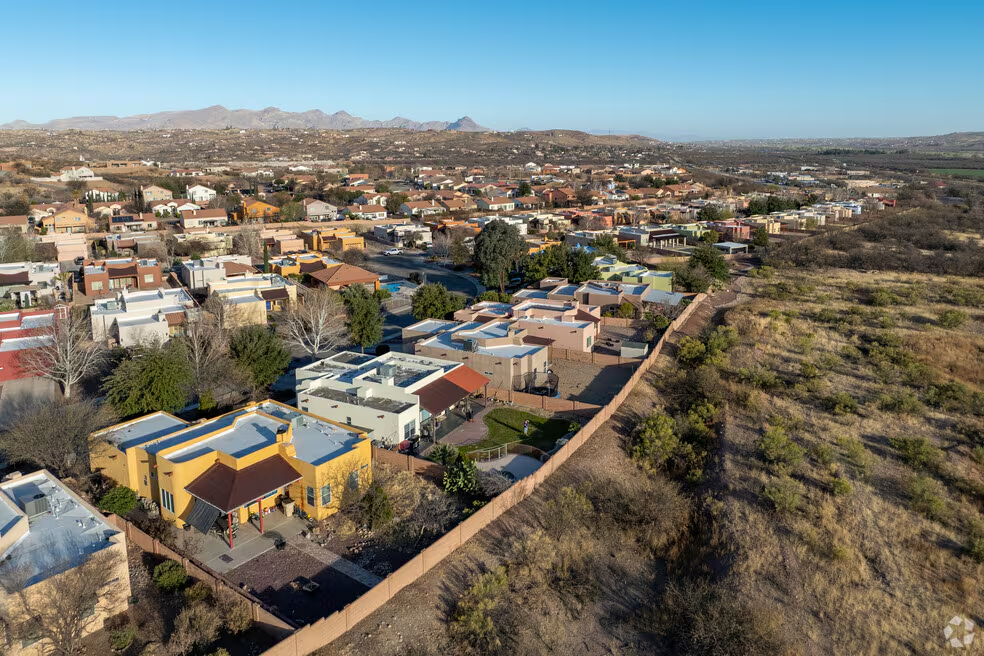
Damage Restoration in Santa Cruz County, AZ
- Damage Restoration Services Overview
- Common Damage Restoration Issues in Santa Cruz County, Arizona
- Neighborhoods We Serve in Santa Cruz County
- Seasonal Damage Patterns in Santa Cruz County
- Housing Characteristics & Restoration Considerations
- Environmental Conditions & Damage Implications
- Post-Monsoon Moisture Verification in Riparian and Floodplain Homes
Damage Restoration Services Overview
A monsoon cell parks over Nogales, drops two inches of rain in forty minutes, and the water finds the low spot in your driveway - which happens to be the door to your garage or basement stairwell. By morning, drywall is wicking moisture, the carpet pad is saturated, and a musty odor is already building. That sequence plays out across Santa Cruz County every summer, and it rarely stops at the water itself.
Property restoration in this corner of southern Arizona covers a connected set of services, each addressing a different stage or source of loss:
- Water Damage Restoration - extraction, structural drying, and moisture mapping after plumbing failures, roof leaks, or storm intrusion
- Flooded Basement - pump-out, contents triage, and drying of below-grade spaces and sunken rooms
- Sewage Cleanup - containment and decontamination after septic backups or main line failures
- Fire Damage Restoration - structural stabilization, debris removal, and surface cleaning after wildfire or house fire
- Smoke Damage Restoration - soot removal, thermal fogging, and odor neutralization in HVAC systems and porous materials
- Mold Removal - containment, removal of affected materials, and correction of the moisture source
For homeowners in Nogales, Rio Rico, Tubac, Patagonia, and the ranch properties between them, the benefit of coordinated response is simple: one moisture problem does not turn into three separate repairs.
Common Damage Restoration Issues in Santa Cruz County, Arizona
Santa Cruz County averages roughly 18 inches of rain a year, but most of it falls in concentrated summer bursts - and that pattern drives the majority of local property losses.
Water and Flooding Triggers
- Monsoon downpours overwhelming roof drains, scuppers, and canales on flat-roofed adobe and stucco homes
- Sheet flow and arroyo runoff from Sky Island slopes near the Patagonia and Santa Rita Mountains
- Santa Cruz River and Sonoita Creek watershed rises affecting low-lying parcels between Nogales and Amado
- Riverbank erosion undermining foundations and outbuildings on riparian-adjacent property
- Slab leaks and failed supply lines in older Nogales housing stock
Sewage and Septic Concerns
- Saturated leach fields backing up into fixtures during heavy rain
- Aging municipal lines and cross-border infrastructure pressure in the Nogales wash corridor
- Grease and root intrusion in mature neighborhoods with established mesquite and cottonwood
Fire, Smoke, and Mold Warning Signs
- Dry-season grassland and brush fire smoke infiltrating attics and return ducts
- Yellow-brown staining above windows or on ceilings weeks after a nearby burn
- Persistent smoky odor that intensifies when the air conditioning runs
- Musty smells in closets sharing a wall with a bathroom or laundry
- Bubbling paint, cupped baseboards, or dark speckling behind furniture
- Allergy symptoms that improve when occupants leave the house
Because native grasslands and dense riparian vegetation sit close to many homes here, fire and water risks often occur in the same calendar year on the same property.
Neighborhoods We Serve in Santa Cruz County
Coverage extends across all 1,238 square miles of Arizona's smallest county, from border neighborhoods to remote ranch roads.
- Nogales - downtown, Mariposa, Country Club, and the hillside neighborhoods above the wash
- Rio Rico - Rio Rico Northeast, Northwest, Southeast, and Southwest, plus Peña Blanca corridor properties
- Tubac - historic village, art district, and golf resort communities
- Tumacácori-Carmen - riverside parcels along the Santa Cruz
- Patagonia - town center and homes near Sonoita Creek and the Preserve
- Sonoita and Elgin - grassland ranches, vineyards, and wine country estates
- Amado and Arivaca Junction - northern county properties along the I-19 corridor
- Kino Springs, Palo Parado, and Calabasas - outlying residential pockets
Rural addresses off Ruby Road, Harshaw Road, and Duquesne Road are reached regularly, including properties where access requires unpaved approach during wet conditions.
Seasonal Damage Patterns in Santa Cruz County
Loss types here follow the calendar closely, and knowing the pattern helps homeowners prepare before a season turns.
- January - March: Winter frontal rain and occasional freeze events. Burst hose bibs, split irrigation lines, and roof leaks on older flat roofs drive water damage calls. Cool, damp interiors let slow leaks develop hidden mold.
- April - June: The dry, windy foresummer. Grassland and brush fire risk peaks across Sonoita, Elgin, and the Sky Island foothills, bringing fire damage and widespread smoke damage work - including homes never touched by flame.
- July - September: Monsoon season. The heaviest concentration of flooded basements, storm water intrusion, sewage backups from saturated septic systems, and post-flood mold growth. Runoff from burn scars compounds flooding downstream.
- October - November: Cleanup and discovery period. Damage hidden during monsoon surfaces as odors, staining, and warped flooring. Ideal window for moisture inspections and mold removal.
- December: Heating season begins. Fireplace, wood stove, and flue-related fire and smoke incidents rise, along with pipe issues during cold snaps in higher-elevation Patagonia and Sonoita.
Housing Characteristics & Restoration Considerations
Santa Cruz County housing spans more than a century of building practice, and the construction type dictates the drying and cleaning approach.
Common Construction Types
- Historic adobe and mud-brick in Nogales, Tubac, and Tumacácori - highly absorbent walls that hold moisture long after surfaces feel dry
- Mid-century block and stucco - CMU walls with furred-out interior finishes that trap water behind drywall
- Post-1990 wood-frame tract homes in Rio Rico - engineered wood, batt insulation, and slab-on-grade foundations
- Ranch and manufactured housing in Sonoita, Elgin, and rural corridors - crawlspaces, skirting, and belly board cavities that hide standing water
- Hillside and split-level homes with daylight basements, garages, and sunken rooms vulnerable to gravity-driven runoff
How Age and Materials Change the Work
- Adobe requires slow, controlled drying - aggressive heat can crack and spall the material
- Pre-1980 homes may contain asbestos-bearing textures or vinyl tile requiring testing before demolition
- Lead paint in older window and trim components affects fire and smoke cleaning methods
- Rural septic systems mean sewage cleanup includes evaluating the tank and leach field, not just the interior
- Open-beam and vaulted ceilings common in Southwest design let smoke odor settle into exposed wood, which needs sealing rather than washing alone
- Well-served properties require water quality checks after flooding or backflow events
Documenting pre-existing conditions in older structures protects homeowners during insurance review and keeps repair scope defensible.
Environmental Conditions & Damage Implications
The same ecological diversity that makes this county remarkable - more than 7,000 plant and animal species across Sky Island terrain - also creates conditions that accelerate damage.
Climate and Air
- Sharp humidity swings between dry foresummer and monsoon push materials through expansion and contraction cycles
- Elevation differences between Nogales and Sonoita produce meaningfully different drying rates on the same day
- Wildfire smoke and cross-border particulate loading can pull soot into homes through attic vents and evaporative cooler intakes
- Evaporative cooling systems, still common locally, add interior humidity that feeds mold after a water event
Water and Soil
- Perennial reaches of the Santa Cruz River and Sonoita Creek keep groundwater relatively shallow in some floodplain parcels
- Clay-rich and caliche soils shed water rather than absorbing it, directing flow toward foundations
- Caliche layers slow leach field percolation, raising septic backup risk during sustained rain
- Riverbank erosion identified as a priority concern in regional restoration planning also destabilizes nearby residential grading
- Sediment-laden floodwater deposits organic material that mold colonizes within days
What This Means for Response
Floodwater in riparian corridors should be treated as contaminated until proven otherwise - it carries livestock waste, wildlife matter, and septic overflow. Drying plans built around local dew point readings work far better than generic equipment placement, and post-fire properties need runoff evaluation before the next monsoon arrives.
Post-Monsoon Moisture Verification in Riparian and Floodplain Homes
The most expensive mistake made after a Santa Cruz County flood is calling a property dry because the floor feels dry. Adobe, block, caliche-backed slabs, and manufactured home cavities all hold water in places a hand cannot reach, and untreated pockets become mold colonies within a week or two.
A Thorough Verification Sequence
- Source confirmation - trace whether intrusion came from roof, grade, plumbing, or septic, since the category determines whether cleaning or decontamination is required
- Perimeter moisture mapping - meter readings at consistent heights along every affected wall, recorded with location markers
- Thermal imaging - identify temperature anomalies behind cabinetry, in wall cavities, and along ceiling planes
- Invasive checks where warranted - inspection holes in base plates, behind toe kicks, and in belly boards on manufactured homes
- Contents and subfloor evaluation - lifting flooring where readings indicate trapped moisture rather than assuming surface drying is sufficient
- Daily monitoring logs - documented readings until materials reach dry standard, not until equipment has run a set number of days
- Post-drying clearance - visual inspection and, where sewage or extended saturation occurred, independent verification
Details That Matter Locally
- Homes near Sonoita Creek and the Santa Cruz River need exterior grading reviewed alongside interior drying
- Vigas, latillas, and exposed beams absorb both moisture and smoke odor and often need sealing after cleaning
- Ductwork in flooded crawlspaces should be inspected before the system is run again
- Well and septic components deserve evaluation on rural parcels after any significant runoff event
- Photographic documentation at each stage supports insurance claims and future disclosure
Thoroughness at this stage is what separates a single restoration project from a repeat mold removal call the following spring.