
Damage Restoration in Hot Springs Village, AR
- Damage Restoration Services Overview
- Common Damage Restoration Issues in Hot Springs Village, Arkansas
- Neighborhoods We Serve in Hot Springs Village
- Seasonal Damage Patterns in Hot Springs Village
- Housing Characteristics & Restoration Considerations
- Environmental Conditions & Damage Implications
- Storm Recovery and the First 48 Hours After Damage in Hot Springs Village
Damage Restoration Services Overview
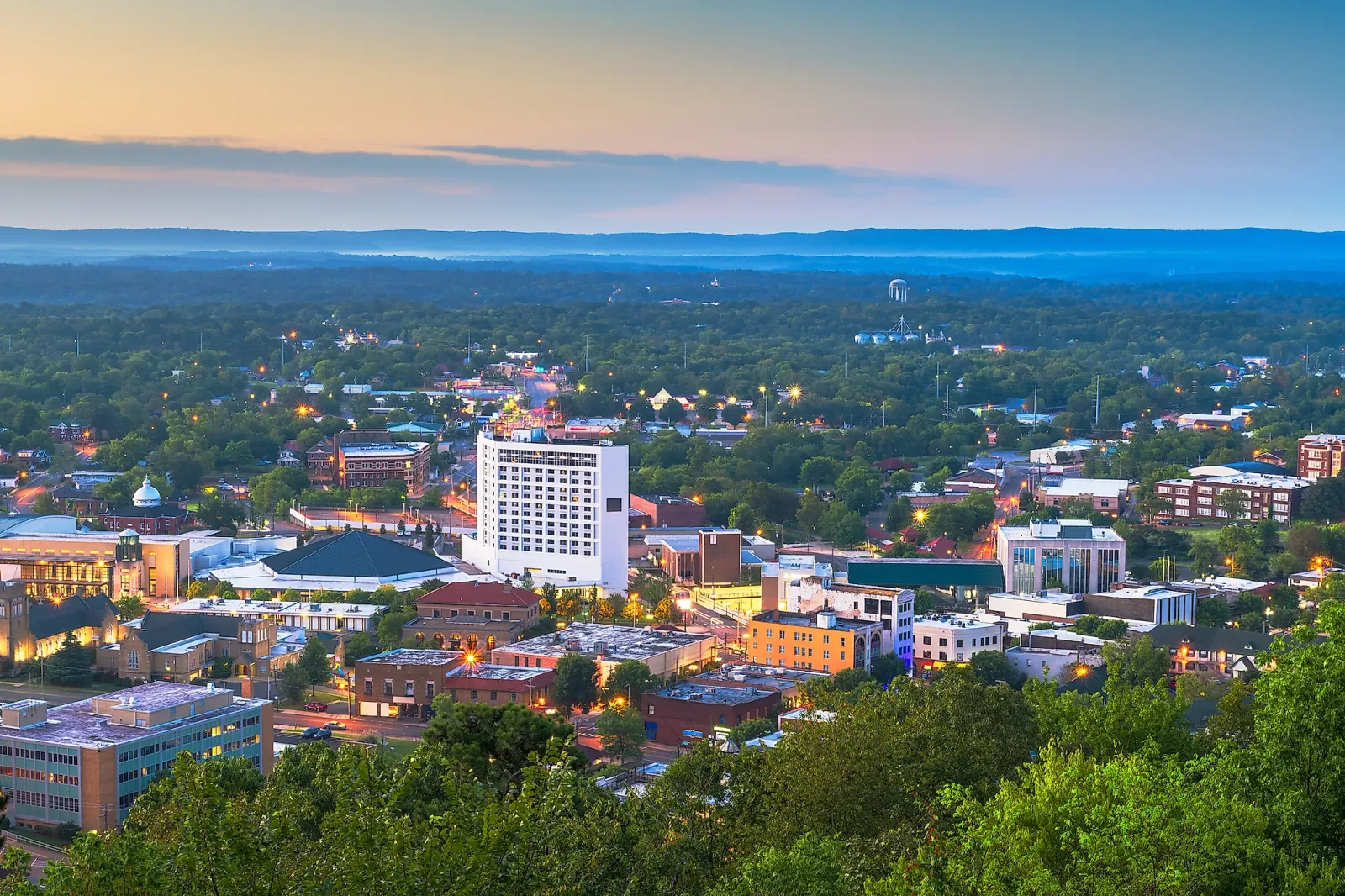
What would you do if you walked into your lower level tomorrow morning and heard water running where no faucet was on? In a gated community built across the ridges and hollows of the Ouachitas, property damage rarely announces itself politely. It arrives with a storm cell, a failed supply line, a chimney fire, or a slow leak behind a wall that finally shows itself as a musty odor.
Hot Springs Village homeowners have access to a full range of restoration disciplines, each addressing a different form of loss:
- Water Damage Restoration - extraction, structural drying, moisture mapping, and monitoring of saturated framing and finishes
- Flooded Basement - pump-out of walkout and daylight basements, drying of below-grade concrete and framing
- Sewage Cleanup - containment, removal of contaminated porous materials, and antimicrobial treatment of Category 3 losses
- Fire Damage Restoration - stabilization, debris removal, soot cleaning, and reconstruction of damaged assemblies
- Smoke Damage Restoration - odor neutralization, HVAC cleaning, and content restoration after puffbacks or nearby fires
- Mold Removal - containment, controlled removal, and correction of the moisture source feeding growth
Providers such as Steamatic of Arkansas, with more than 50 years serving Central Arkansas, and SERVPRO of Hot Springs at (501) 762-1753, offer 24/7 emergency response across Hot Springs and Hot Springs Village - the difference between a contained loss and a whole-home rebuild is often measured in hours.
Common Damage Restoration Issues in Hot Springs Village, Arkansas
The Village sits on wooded, sloping terrain around a chain of lakes, which creates a distinct damage profile compared with flat, urban Arkansas neighborhoods.
Local Causes of Loss
- Severe storms and tornadoes - the EF2 tornado that tore through Hot Springs Village damaged homes and businesses across multiple villas and subdivisions, exposing interiors to wind-driven rain
- Falling timber - mature pine and oak canopy over many lots means roof punctures during ice loading and straight-line winds
- Hillside runoff - lots cut into slopes send sheet water toward walkout basements and garage slabs
- Septic and lift station issues - backups produce sewage cleanup emergencies that require full contamination protocols
- Frozen or burst supply lines - unheated crawlspaces and seasonally vacant homes are frequent sources
- Fireplace, grill, and appliance fires - wood-burning fireplaces and outdoor kitchens are common in Village homes
Warning Signs Worth Acting On
- Musty or earthy odors in closets, lower levels, or near HVAC returns
- Cupping hardwood, bubbling paint, or dark staining at baseboards
- Persistent condensation on windows and duct registers during humid months
- Gurgling drains or slow toilets that hint at a backing-up line
- Sooty film on light-colored surfaces or lingering smoke odor after a fireplace use
- Unexplained spikes in water usage on the monthly bill
Because many Village properties are second homes or seasonal residences, damage can progress unwitnessed for weeks - which is precisely when a modest water loss becomes a mold remediation project.
Neighborhoods We Serve in Hot Springs Village
Restoration crews respond throughout the Village and the surrounding Saline and Garland County communities, including:
- Properties near Lake Balboa, Lake Cortez, Lake Coronado, Lake DeSoto, and Lake Pineda
- Homes and villas along the Balboa, Cortez, DeSoto, Ponce de Leon, Isabella, Magellan, and Diamante golf corridors
- Neighborhoods off Highway 7 North, DeSoto Boulevard, Balearic Road, Carmona Road, and Cooper Circle
- The East Gate and West Gate areas and adjacent unincorporated pockets
- Nearby communities of Hot Springs, Fountain Lake, Jessieville, Mountain Pine, Benton, Bryant, Bauxite, and Royal
Familiarity with gate access procedures, POA notification expectations, and narrow winding streets matters when heavy equipment, dehumidification trailers, and dumpsters need to reach a property quickly.
Seasonal Damage Patterns in Hot Springs Village
Central Arkansas delivers a different restoration challenge nearly every quarter.
- December - February: Freeze events burst supply lines in crawlspaces, garages, and vacant homes. Ice-laden limbs puncture roofs. Fireplace and space heater use drives fire damage restoration and smoke damage restoration calls, including puffbacks from oil and gas appliances.
- March - May: Peak severe weather. Tornadoes, hail, and torrential rain create wind-driven water intrusion and flooded basement emergencies. Saturated soils push groundwater against foundation walls.
- June - August: Heat and humidity turn small unresolved leaks into visible mold growth. Condensation on ductwork, overwhelmed AC condensate lines, and refrigerator supply failures dominate. Storm-driven power loss can stall sump pumps, triggering sewage cleanup needs.
- September - November: Remnants of Gulf tropical systems bring prolonged rainfall. Leaf litter clogs gutters and drainage swales, redirecting water toward foundations. Chimney season begins, and dryer vent lint accumulation raises fire risk.
Scheduling gutter cleaning, dryer vent service, chimney inspection, and crawlspace checks ahead of each shift in season prevents a large share of these losses.
Housing Characteristics & Restoration Considerations
Hot Springs Village developed largely from the 1970s onward, producing a housing stock that blends original ranch-style builds with newer custom construction along the lakes and fairways.
Common Construction Traits
- Slab-on-grade and crawlspace foundations - crawlspaces in the Village are frequently vented and humid, a leading contributor to subfloor mold and joist decay
- Walkout and daylight basements - cut into hillsides, these levels are the first to flood when grading or drainage fails
- Wood framing with brick, stone, or lap siding - moisture wicks readily into framing behind masonry veneer
- Vaulted ceilings and open floor plans - smoke and soot travel quickly through the entire living area during a fire
- Original 1970s and 1980s finishes - older homes may contain materials requiring testing before demolition
- Aging galvanized, polybutylene, or early CPVC plumbing - a recurring source of sudden water losses
How Age and Design Shape the Work
- Deeper drying times for dense hardwood floors and multi-layer subfloors typical of custom builds
- Wall cavity drying with injection systems rather than removal, preserving original trim and paneling
- Full HVAC duct cleaning after smoke events, since shared returns distribute odor to every room
- Sewage cleanup in crawlspaces requiring vapor barrier replacement and insulation removal
- Reconstruction that respects POA architectural standards for exterior materials and rooflines
Environmental Conditions & Damage Implications
The Ouachita environment surrounding the Village directly influences how damage behaves and how restoration is performed.
Climate and Moisture
- Humid subtropical climate with roughly 50-plus inches of annual rainfall, keeping outdoor dew points high much of the year
- Long, warm shoulder seasons that sustain mold-friendly conditions inside enclosed spaces
- Sharp winter cold snaps that stress plumbing without giving homeowners much warning
- Indoor relative humidity targets must be actively managed with dehumidification, not open windows
Soil, Water, and Terrain
- Rocky, shallow soils over shale and novaculite bedrock shed water rather than absorbing it, concentrating runoff downslope
- Steep lots and heavy tree canopy funnel stormwater toward foundations and window wells
- Lake-adjacent properties experience elevated ambient humidity and higher crawlspace moisture readings
- Mineral-rich local water can leave staining that requires specialized cleaning after a loss
- Septic systems on some outlying properties are vulnerable to saturation-driven backups
Air Quality Considerations
- Heavy pollen and pine debris load HVAC filters, reducing airflow needed for effective drying
- Wildfire and controlled-burn smoke from surrounding national forest land can infiltrate homes
- Post-fire particulate testing and air scrubbing with HEPA filtration protect occupants during cleanup
Storm Recovery and the First 48 Hours After Damage in Hot Springs Village
The EF2 tornado that struck the Village demonstrated how quickly a normal week becomes a coordinated recovery effort across dozens of properties at once. When demand surges, thoroughness separates a durable repair from a cosmetic one.
What a Careful Response Looks Like
- Safety and stabilization - power and gas verification, structural assessment, roof tarping, and board-up of broken openings before any interior work begins
- Documented inspection - moisture meters, thermal imaging, and photo logs recording every affected room, cavity, and content item for insurance purposes
- Water extraction and category classification - determining whether the loss is clean water, gray water, or sewage, which dictates what can be dried versus removed
- Containment - negative air machines and poly barriers to keep soot, spores, and contaminants out of unaffected areas
- Controlled drying - air movers and low-grain refrigerant dehumidifiers sized to the cubic footage, with daily readings until materials reach dry standard
- Cleaning and deodorization - soot removal by surface type, HVAC decontamination, hydroxyl or thermal fogging for embedded smoke odor
- Mold remediation where indicated - removal of affected porous material, HEPA vacuuming, antimicrobial application, and correction of the water source
- Reconstruction - drywall, flooring, cabinetry, trim, and exterior repairs returning the home to pre-loss condition
Steps Homeowners Can Take Immediately
- Shut off the water main or affected fixture supply if the source is plumbing
- Photograph everything before moving items, including standing water depth
- Avoid entering flooded lower levels until electrical hazards are ruled out
- Keep foot traffic off wet carpet to prevent spreading contamination
- Notify your insurance carrier and the POA if common areas or shared structures are involved
- Call a 24/7 responder such as SERVPRO of Hot Springs at (501) 762-1753 rather than waiting for daylight
Verifying dryness inside wall cavities, under cabinet toe kicks, and beneath subfloors is where thorough work is proven - and where shortcuts eventually return as mold.





