
Damage Restoration in Henryetta, OK
- Damage Restoration Services Overview
- Common Damage Restoration Issues in Henryetta, Oklahoma
- Neighborhoods We Serve in Henryetta
- Seasonal Damage Patterns in Henryetta
- Housing Characteristics & Restoration Considerations
- Environmental Conditions & Damage Implications
- Emergency Response and Insurance Documentation for Henryetta Property Owners
Damage Restoration Services Overview
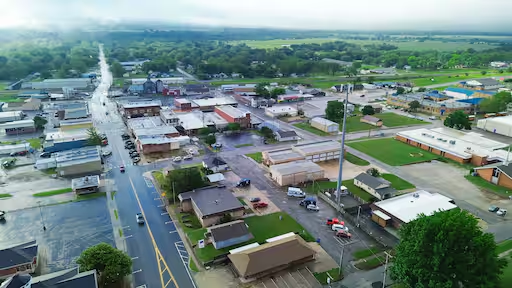
When water pours through a ceiling or smoke settles into every room, the fastest path back to normal starts with a trained restoration crew. FloodSERV serves Henryetta, Oklahoma with emergency response, drying science, and full property rebuilds - call 918-268-7650 any hour.
Our teams handle the full spectrum of property damage for Okmulgee County homes and businesses:
- Water Damage Restoration - extraction, structural drying, moisture mapping, and repair of walls, floors, and framing
- Flooded Basement Cleanup - pump-out, sump system evaluation, and dry-down of below-grade spaces
- Sewage Cleanup - safe removal of Category 3 contamination from backups and septic failures, plus antimicrobial treatment
- Fire Damage Restoration - board-up, debris removal, soot cleaning, and reconstruction of damaged structures
- Smoke Damage Restoration - odor neutralization, HVAC cleaning, and content restoration for hard and soft surfaces
- Mold Removal - containment, air filtration, material removal, and correction of the moisture source
Henryetta residents gain more than dry drywall. They gain documented moisture readings for insurance, contamination handled to industry standards, and a single point of contact from the first extraction hose to the final coat of paint.
Common Damage Restoration Issues in Henryetta, Oklahoma
Henryetta sits in a corridor where spring storm systems, aging plumbing, and clay-heavy soil combine to create repeat restoration problems. Damage rarely arrives alone - a roof leak becomes mold, a fire leaves both smoke residue and water from suppression efforts.
Frequent Causes of Loss
- Severe thunderstorms and hail that damage shingles, allowing rainwater intrusion into attics and upper walls
- Burst or frozen supply lines during January cold snaps, especially in homes with uninsulated crawlspaces
- Sewer backups when heavy rainfall overwhelms older municipal lines or aging clay laterals
- Septic system failure on rural properties east and south of town where saturated soil cannot absorb effluent
- Kitchen grease fires and electrical faults in homes with original mid-century wiring
- Water heater and washing machine hose failures that go unnoticed in garages and utility rooms
Warning Signs Worth Acting On
- Musty odors in closets, along baseboards, or near HVAC returns
- Cupping or buckling in laminate and hardwood planks
- Brown ring stains on ceiling corners or bubbling paint
- Slow drains in multiple fixtures at once - often an early sign of a main line issue
- Soot streaks above outlets or a smoky smell that returns when the furnace runs
- Dark spotting on drywall behind furniture placed against exterior walls
Mold can colonize wet material in 24 to 48 hours, so a same-day call keeps a small loss from spreading through framing and insulation.
Neighborhoods We Serve in Henryetta
Our crews respond across Henryetta and the wider Okmulgee County area, including older established streets and newer builds on the outskirts.
- Downtown Henryetta and the Main Street commercial district
- Neighborhoods surrounding Nichols Park and Lake Henryetta
- Residential areas near Henryetta High School and the Trojan athletic complex
- Homes along West Main, Trudgeon Street, and the Highway 75 corridor
- Properties bordering Interstate 40 and the US-266 junction
- Rural acreage and septic-served homes toward Dewar, Schulter, and Grayson
We also travel to nearby communities including Okmulgee, Morris, Beggs, Weleetka, Checotah, and Eufaula. Whether the property is a century-old brick storefront or a manufactured home on rural land, our equipment and staffing are matched to the structure.
Seasonal Damage Patterns in Henryetta
Winter (December - February)
- Frozen and burst pipes in crawlspaces, exterior walls, and unheated garages
- Chimney, space heater, and furnace-related fires with heavy smoke residue
- Ice dam backup along low-slope roof sections
Spring (March - May)
- Peak season for storm-driven roof leaks, hail damage, and wind-torn siding
- Flooded basements and crawlspaces after multi-inch rainfall events
- Sewage backups when saturated ground infiltrates aging sewer lines
Summer (June - August)
- Rapid mold growth fueled by high humidity and constant AC cycling
- Condensate line clogs that flood hallways and closets from attic air handlers
- Lightning strikes causing attic and electrical fires
Fall (September - November)
- Grass and brush fires during dry, windy stretches that push smoke into homes
- Clogged gutters channeling water against foundations
- First furnace startups releasing dust and smoke odor through ductwork
Housing Characteristics & Restoration Considerations
Henryetta's housing stock leans older than the Oklahoma average, with many homes dating to the coal and glass boom years through the post-war decades. Construction style directly shapes how water travels and how contamination must be contained.
Common Local Construction Types
- Early 1900s to 1940s frame bungalows with pier-and-beam foundations and shiplap sheathing
- 1950s - 1970s ranch homes on slab with plaster or early gypsum board walls
- Brick veneer homes with wood framing behind the masonry
- Manufactured and modular homes on rural parcels
- Historic downtown commercial buildings with basements and original wood joists
How Age and Structure Affect the Work
- Crawlspace and pier-and-beam homes hold standing water under the floor, requiring dedicated ventilation and subfloor drying rather than surface-only extraction.
- Slab foundations wick moisture upward into tack strips, baseboards, and wall cavities, so we drill controlled access points for injection drying.
- Plaster and lath walls dry slowly and often need targeted cavity drying to save original material.
- Cast iron and clay sewer laterals in older neighborhoods crack and root-intrude, raising the odds of Category 3 backups.
- Pre-1980 materials may contain asbestos or lead paint, so testing precedes any demolition.
- Knob-and-tube or aluminum wiring increases fire risk and calls for careful evaluation before reconstruction.
Downtown basements deserve particular attention - they collect groundwater, sewage, and mold in a single event, and each hazard needs its own handling protocol.
Environmental Conditions & Damage Implications
Local climate and ground conditions in Henryetta shape how quickly damage spreads and how long structures take to dry.
Climate and Humidity
- Humid subtropical conditions with summer dew points that keep indoor humidity elevated
- Annual rainfall well above the national average, concentrated in spring and early fall
- Wide temperature swings that expand and contract building materials, opening gaps for water entry
- High humidity means desiccant and refrigerant dehumidification often run together to hit drying targets
Soil and Drainage
- Clay-rich soils that swell when wet and shrink in drought, stressing foundations and sewer lines
- Slow percolation that keeps water pooled against foundation walls after storms
- Proximity to Deep Fork and Coal Creek drainages raising groundwater levels during wet cycles
- Septic drain fields that surcharge on saturated ground, pushing waste back toward the home
Air Quality Effects
- Seasonal pollen and dust that settle in damp ductwork and feed microbial growth
- Regional grass fire and agricultural burn smoke that infiltrates through attic bypasses
- Smoke particulate that bonds to cool surfaces, requiring chemical sponges and thermal fogging rather than simple wiping
These conditions explain why we monitor moisture daily rather than assuming a fixed drying schedule. Materials in a humid Okmulgee County summer behave very differently than the same materials in a dry winter week.
Emergency Response and Insurance Documentation for Henryetta Property Owners
Most Henryetta claims turn on two things: how fast the water stopped spreading, and how well the damage was documented. We handle both from the first phone call.
What Happens After You Call
- Phone triage - we walk you through shutting off water or power safely while a crew is dispatched.
- On-site assessment - moisture meters, thermal imaging, and contamination category classification establish the scope.
- Stabilization - extraction, board-up, tarping, or containment barriers stop the loss from growing.
- Removal - unsalvageable carpet pad, drywall, insulation, and contaminated materials come out under controlled conditions.
- Structural drying - air movers and dehumidifiers are placed by calculation, with daily readings logged.
- Cleaning and treatment - antimicrobial application, soot removal, HVAC cleaning, and odor neutralization.
- Reconstruction - drywall, flooring, trim, and paint return the space to pre-loss condition.
Documentation That Supports Your Claim
- Photo and video record of conditions before any material is removed
- Daily moisture logs showing progress toward dry standard
- Room-by-room scope written in the estimating format adjusters expect
- Contamination category and class designations for water losses
- Inventory of affected contents and salvage recommendations
What Homeowners Can Do First
- Shut off the water main or the affected fixture supply valve
- Stay out of standing water near outlets or panels
- Avoid contact with sewage - it carries bacteria and viruses requiring protective equipment
- Photograph everything before moving items
- Leave fire-damaged surfaces alone; improper wiping drives soot deeper into finishes
Reach FloodSERV at 918-268-7650 for emergency response anywhere in Henryetta and Okmulgee County.





