Damage Restoration in Lee County, MS
- Damage Restoration Services Overview
- Common Damage Restoration Issues in Lee County, Mississippi
- Neighborhoods We Serve in Lee County
- Seasonal Damage Patterns in Lee County
- Housing Characteristics & Restoration Considerations
- Environmental Conditions & Damage Implications
- Floodplain Awareness and the First 24 Hours After a Loss
Damage Restoration Services Overview

Few things rattle a homeowner like walking into a flooded basement at midnight or smelling smoke long after the fire trucks have gone. Property damage in Lee County rarely arrives on a convenient schedule, and every hour that passes allows water to wick further into drywall, soot to etch into finishes, and mold spores to settle into damp cavities.
Our crews cover the full spectrum of emergency restoration for Tupelo, Saltillo, Baldwyn, and the surrounding communities:
- Water Damage Restoration - extraction, structural drying, and dehumidification after plumbing failures, roof leaks, and storm intrusion
- Flooded Basement Cleanup - pump-out, content handling, and moisture mapping for below-grade spaces along Town and Kings Creeks
- Sewage Cleanup - containment, removal of contaminated porous materials, and antimicrobial treatment of Category 3 losses
- Fire Damage Restoration - board-up, debris removal, structural cleaning, and reconstruction planning
- Smoke Damage Restoration - soot removal from surfaces and HVAC systems, plus odor neutralization
- Mold Removal - containment barriers, HEPA filtration, and removal of colonized building materials
Call 662.302.3735 for 24/7 emergency water damage restoration in Tupelo and Lee County. We dispatch equipped crews ready to stabilize the property, halt secondary damage, and document conditions for your insurance claim from the first walkthrough forward.
Common Damage Restoration Issues in Lee County, Mississippi
Lee County sits in a corridor where creek flooding, severe thunderstorms, and high humidity converge - a combination that keeps restoration crews busy year-round.
Flooding and Creek Overbank Events
Kings Creek and Town Creek have a long, documented history of overbanking into urban, residential, and industrial areas. The March 21-22, 1955 storm remains the record event for the Town Creek watershed, calculated by the Natural Resources Conservation Service as a roughly 100-year recurrence interval. An April 1962 flood on Kings Creek caused substantial damage within Tupelo itself. Properties inside mapped floodplains still face the same hydrology today.
Warning Signs Local Homeowners Report
- Damp, musty odors in crawl spaces and basements that intensify after rain
- Bubbling paint, cupping hardwood, or discolored baseboards along exterior walls
- Slow floor drains or gurgling toilets - often the first hint of a sewer backup
- Dark staining around HVAC registers, a common indicator of smoke residue circulation
- Condensation on ductwork or windows during humid stretches
- Visible growth behind furniture placed against cool exterior walls
Fire and Smoke Triggers
- Lightning strikes during spring and summer supercell activity
- Space heaters and fireplace use during cold snaps in January and February
- Kitchen grease fires that spread soot through entire homes within minutes
- Electrical faults in older knob-and-tube or aluminum-wired properties
Each of these losses compounds quickly. Water feeds mold, smoke penetrates porous materials, and sewage introduces pathogens that ordinary cleaning cannot address.
Neighborhoods We Serve in Lee County
Our response area covers the entire county and spills into neighboring communities when conditions call for it.
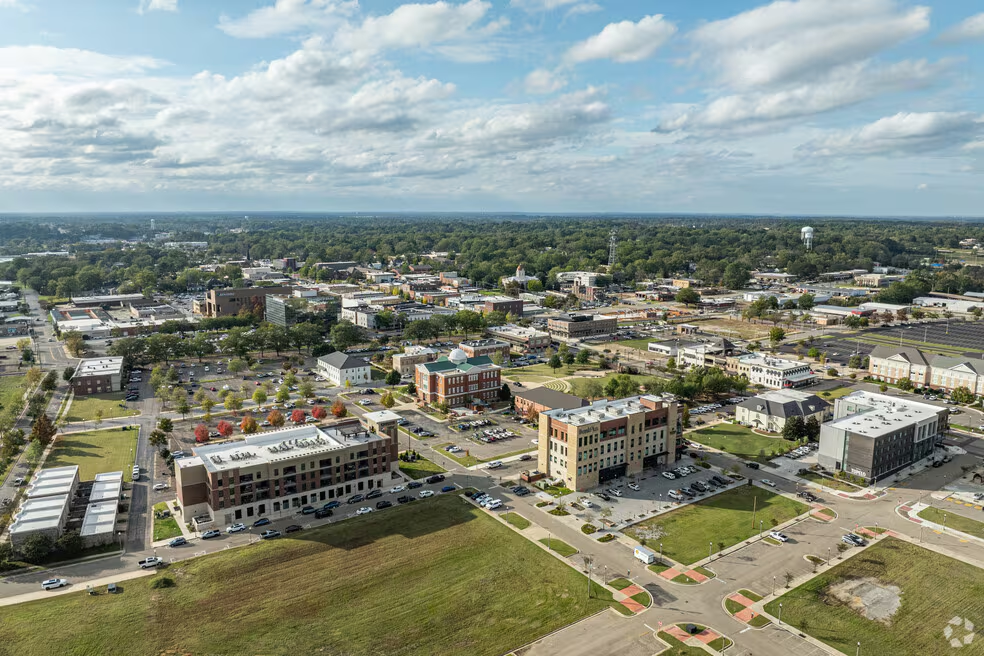
- Tupelo - including Joyner, Church Street, Haven Acres, Highland Circle, Belden-adjacent subdivisions, and properties near the Town Creek corridor
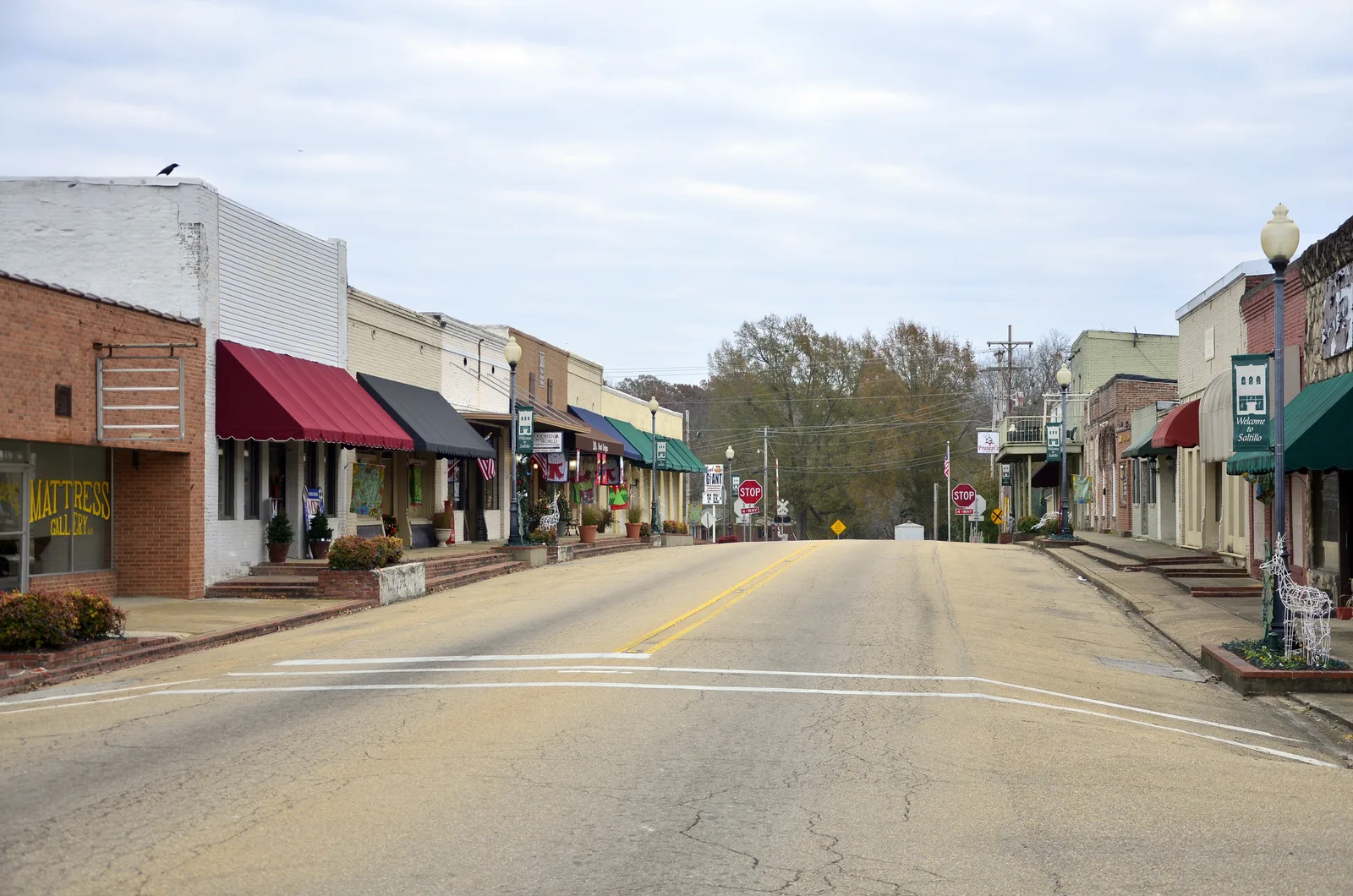
- Saltillo - residential growth areas along Highway 145 and Mobile Street
- Baldwyn - a longstanding NFIP participating community with mapped flood hazard areas
- Guntown, Plantersville, Shannon, Nettleton, Verona, and Richmond
- Mooreville, Palmetto, Auburn, and Eggville rural properties
- Commercial corridors along Gloster Street, McCullough Boulevard, and North Veterans
Rural addresses with septic systems, private wells, and long driveways receive the same response priority as in-town properties - our trucks carry extended hose runs, portable generators, and off-road-capable equipment for those calls.
Seasonal Damage Patterns in Lee County
Winter (December - February)
- Frozen and burst supply lines in crawl spaces and unheated garages
- Peak fire and smoke damage from heating equipment and chimneys
- Water heater failures during heavy demand periods
Spring (March - May)
- Historically the highest-risk window for creek flooding and flooded basements
- Severe thunderstorms, hail, and wind-driven rain through compromised roofs
- Sewer surcharges when saturated ground overwhelms collection systems
- Lightning-caused structure fires
Summer (June - August)
- Mold growth accelerates as dew points climb and indoor humidity stays elevated
- Condensation-driven damage around undersized or oversized HVAC systems
- Air conditioning drain pan overflows into ceilings and closets
Fall (September - November)
- Tropical remnants tracking north from the Gulf bring multi-day rainfall
- Clogged gutters and downspouts push water against foundations
- First fireplace and furnace startups produce puff-back and smoke incidents
Damage rarely stays seasonal for long. A spring flood that is dried improperly becomes a summer mold job, which is why moisture verification matters more than surface appearance.
Housing Characteristics & Restoration Considerations
Lee County housing spans pre-war cottages near downtown Tupelo, mid-century brick ranches, 1990s and 2000s subdivisions, and rural manufactured homes. Each construction era responds differently to water, fire, and microbial damage.
Older Homes (pre-1970)
- Plaster over wood lath holds moisture far longer than modern drywall
- Hardwood floors over board subfloors require controlled drying to prevent permanent cupping
- Potential asbestos-containing floor tile, mastic, and pipe wrap that demands testing before demolition
- Original galvanized or cast iron plumbing prone to pinhole leaks and sewer line collapse
Mid-Century and Ranch-Style Properties
- Vented crawl spaces that trap humid air and support mold on floor joists
- Slab-on-grade construction where water travels under flooring and hides from view
- Ductwork in crawl spaces or attics that spreads soot and spores throughout the home
Newer Construction and Basements
- Tighter building envelopes hold moisture and odor in without aggressive air exchange
- Engineered flooring and MDF trim swell rapidly and rarely dry in place
- Finished basements combine carpet, pad, and framed walls - all high-absorption materials
Manufactured and Modular Homes
- Belly wrap traps standing water beneath the floor system and must be opened for drying
- Limited cavity depth means faster saturation and quicker mold onset
Understanding the assembly in front of us determines whether a wall can be dried in place or must be opened - a decision that shapes cost, timeline, and long-term air quality.
Environmental Conditions & Damage Implications
Northeast Mississippi's humid subtropical climate creates conditions that work against a drying structure almost every month of the year.
Humidity and Temperature
- Summer dew points frequently sit in the low-to-mid 70s, making outdoor air useless for drying
- Mold colonies can establish on damp cellulose materials within a short window under these conditions
- Closed-drying systems with commercial dehumidifiers are required rather than open windows and box fans
Soil and Drainage
- Clay-heavy soils common across the county shrink and swell, opening foundation cracks
- Low infiltration rates send stormwater across the surface toward basements and crawl spaces
- Loess and silt deposits near creek corridors carry heavy sediment into flooded spaces
- Rural septic fields saturate during extended rainfall, backing waste into homes
Water Quality Considerations
- Floodwater from Kings and Town Creeks is treated as Category 3 - it may carry fuel, fertilizer, and sewage
- Any material that absorbed contaminated water is removed rather than cleaned
- Antimicrobial application and post-remediation verification follow every sewage loss
Air Quality After Fire
- Soot particles are microscopic and migrate through the entire HVAC system
- Protein residue from kitchen fires is nearly invisible but produces persistent odor
- HEPA filtration, thermal fogging, and hydroxyl treatment address what wiping cannot
Floodplain Awareness and the First 24 Hours After a Loss
Lee County communities have participated in the National Flood Insurance Program for decades, with Flood Insurance Rate Maps for Baldwyn and neighboring municipalities revised repeatedly since the 1970s. Knowing whether your address sits in a mapped hazard area changes how you prepare - and how you respond.
Before Water Arrives
- Review current FIRM panels for your parcel through your municipal floodplain administrator
- Confirm whether your policy covers flood, which standard homeowners coverage excludes
- Photograph finished spaces, mechanical equipment, and stored contents annually
- Elevate water heaters, HVAC units, and electrical panels where feasible
- Install and test a sump pump with battery backup in below-grade areas
- Keep a backwater valve in mind for homes with a history of sewer backups
Your First 24 Hours
- Make the property safe. Shut off power to affected circuits and avoid standing water near energized equipment.
- Stop the source. Close the main supply valve for plumbing failures; wait for floodwater to recede on its own for creek events.
- Call for dispatch. Reach our team at 662.302.3735 - crews respond around the clock across Tupelo and the county.
- Document everything. Photograph water lines on walls, damaged contents, and serial numbers before anything is moved.
- Notify your carrier. Open the claim early so adjuster scheduling runs parallel to mitigation.
- Let the drying plan run. Equipment placement is calculated - moving or unplugging units extends the timeline.
What Our Process Delivers
- Thorough inspection with moisture meters and thermal imaging, followed by a written scope
- Standing water extraction and controlled removal of unsalvageable materials
- Structural drying and dehumidification monitored with daily readings
- Sanitizing, deodorizing, and residue cleaning across affected surfaces
- Mold remediation under containment where growth is confirmed
- Reconstruction coordination to return the property to pre-loss condition
We halt the damage in its tracks and restore your home or business - with documentation that supports your claim at every step.