
Damage Restoration in Saltillo, MS
- Damage Restoration Services Overview
- Common Damage Restoration Issues in Saltillo, Mississippi
- Neighborhoods We Serve in Saltillo
- Seasonal Damage Patterns in Saltillo
- Housing Characteristics & Restoration Considerations
- Environmental Conditions & Damage Implications
- Storm Response and the First 24 Hours After Damage in Saltillo
Damage Restoration Services Overview
When water spreads across a floor or smoke settles into drywall, the clock starts immediately. Materials absorb moisture within minutes, and microbial growth can begin inside a day or two. Fast action protects both the structure and everything inside it.
Saltillo property owners rely on a full range of restoration work handled by certified technicians using industry-leading extraction, drying, and cleaning equipment. The goal is simple: stop the damage, then restore and protect the property.
- Water Damage Restoration - extraction, structural drying, moisture mapping, and monitoring until materials return to normal readings.
- Flooded Basement Cleanup - pump-out, sump and drain evaluation, content removal, and dehumidification of below-grade spaces.
- Sewage Cleanup - containment of contaminated water, removal of porous materials, and antimicrobial treatment of affected surfaces.
- Fire Damage Restoration - debris removal, structural stabilization, soot cleaning, and reconstruction of damaged areas.
- Smoke Damage Restoration - odor neutralization, HVAC cleaning, and treatment of walls, ceilings, textiles, and hard contents.
- Mold Removal - containment barriers, HEPA filtration, affected material removal, and correction of the moisture source.
Storm work is also part of the picture, including complete exterior damage checks after severe weather - shingles, vents, pipe boots, flashing, gutters, downspouts, fascia, and roof edges all get inspected before interior repairs begin.
Common Damage Restoration Issues in Saltillo, Mississippi
Sitting in Lee County just north of Tupelo, Saltillo sees the full spectrum of North Mississippi weather - spring supercells, summer humidity, heavy autumn rain bands, and occasional winter freezes. Each brings its own restoration challenges.
Frequent Local Causes of Damage
- Hail and wind-damaged roofing that lets rainwater into attics, ceilings, and wall cavities.
- Flash flooding along low-lying lots and near Mud Creek and other drainages after heavy thunderstorm rainfall.
- Basement and crawlspace water intrusion when saturated clay soil pushes moisture through foundation walls.
- Sewer backups during high-volume rain events or when tree roots invade older service lines.
- Supply line and water heater failures - often discovered hours after the leak began.
- Kitchen fires and electrical fires, plus lightning strikes during spring and summer storm season.
- Mold growth fed by long humid stretches and poorly ventilated crawlspaces.
Warning Signs Worth Acting On
- Musty odors that intensify after rain or when the HVAC runs.
- Buckled laminate, cupped hardwood, or soft spots underfoot.
- Brown ceiling rings, bubbling paint, or tape seams pulling loose.
- Gurgling drains, slow toilets, or standing water around floor drains.
- Lingering smoke odor weeks after a small fire - a sign soot residue remains in ductwork.
- Condensation on ductwork, insulation sagging, or dark staining on subfloor framing.
Neighborhoods We Serve in Saltillo
Response covers the full Saltillo footprint and the surrounding Lee County communities, including the crew base near County Road 1900.
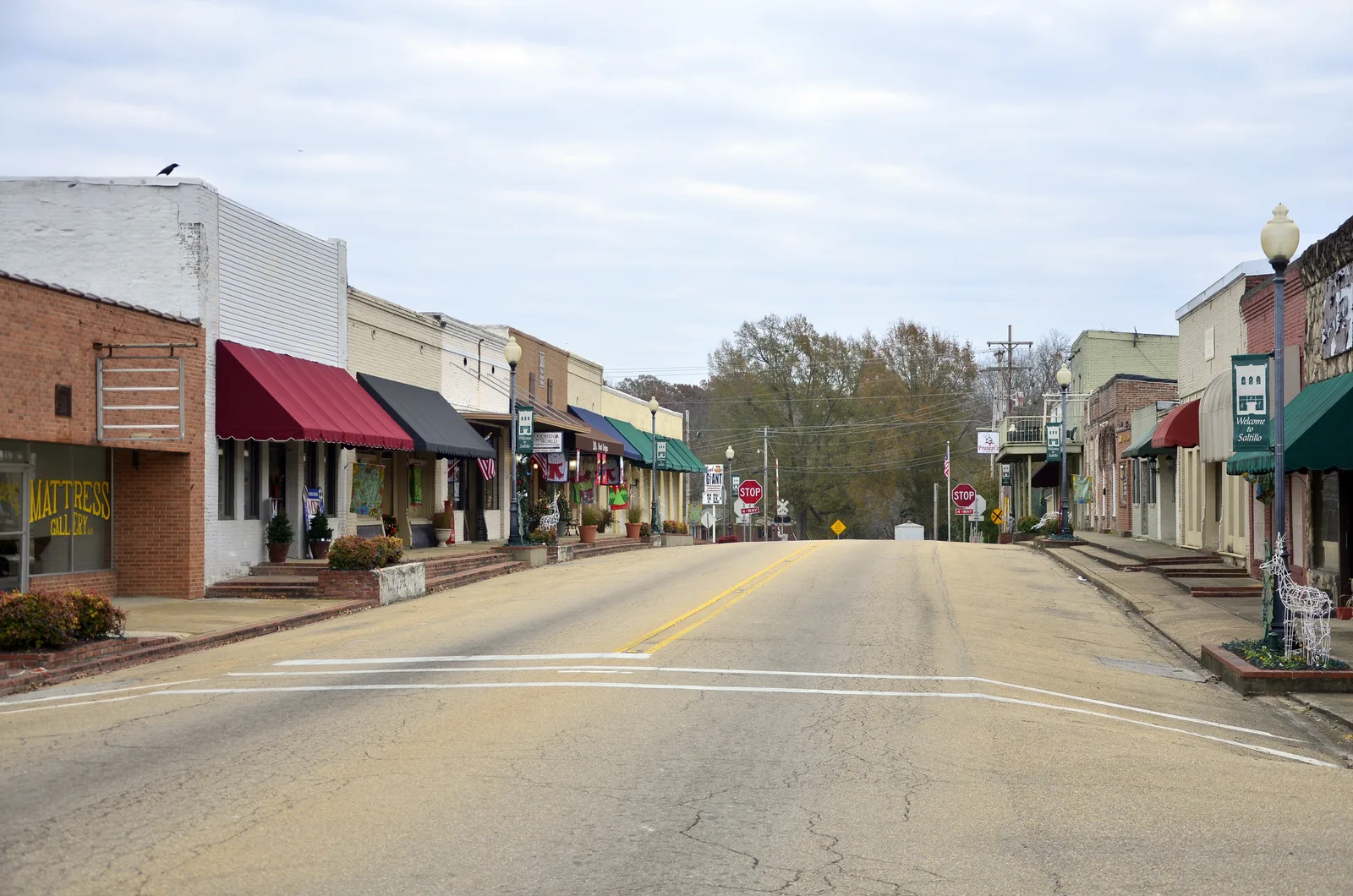
- Downtown Saltillo and the Main Street corridor
- Neighborhoods along Highway 45 and Highway 145
- Subdivisions off Mobile Street and Coley Road
- Rural homesteads on the County Road 1900 and County Road 1500 network
- Communities near Saltillo High School and the city park area
- Adjacent areas: Guntown, Baldwyn, Mooreville, Belden, Plantersville, Sherman, and north Tupelo
Rural properties often sit farther from municipal utilities, with private wells, septic systems, and long driveways that complicate equipment access. Crews arrive prepared for both tight in-town lots and spread-out county acreage, bringing portable extraction units, generators, and containment supplies on every call.
Seasonal Damage Patterns in Saltillo
Spring (March - May)
- Peak severe weather season - hail, straight-line wind, and tornado risk.
- Roof punctures leading to interior water damage and ceiling collapse.
- Saturated ground driving basement and crawlspace flooding.
Summer (June - August)
- High dew points push indoor humidity past mold-friendly thresholds.
- Air conditioning condensate line clogs soak closets and hallways.
- Lightning-related electrical fires and attic smoke damage.
Fall (September - November)
- Tropical remnants deliver prolonged rainfall and gutter overflow.
- Leaf-clogged downspouts send water against foundation walls.
- First heating cycles reveal furnace puff-back and soot deposits.
Winter (December - February)
- Hard freezes burst pipes in crawlspaces, garages, and exterior walls.
- Space heater and fireplace fires increase during cold snaps.
- Closed-up homes trap smoke odor and moisture, accelerating mold behind furniture.
Housing Characteristics & Restoration Considerations
Saltillo's housing stock blends mid-century homes near the older core with steady subdivision growth from the 1990s onward. That mix shapes how each restoration project is approached.
Common Construction Types
- Slab-on-grade brick ranch homes - water tends to migrate under vinyl plank and along baseboards, requiring wall cavity drying and trim removal.
- Crawlspace foundations - vapor barriers, insulation, and floor joists trap moisture and are frequent mold sources.
- Full or partial basements - less common but highly vulnerable to hydrostatic pressure and sump pump failure.
- Manufactured and modular homes - particleboard subfloors and belly wrap hold water long after visible drying.
- Newer two-story builds - upstairs laundry and bathroom leaks cascade through multiple levels.
How Home Age Affects the Work
- Older homes may contain asbestos-era flooring or plaster, calling for careful handling during demolition.
- Galvanized or polybutylene supply lines in mid-century houses fail without warning and often flood entire rooms.
- Original cast iron drain lines corrode, raising the odds of sewage backup into low fixtures.
- Knob-and-tube or aged aluminum wiring increases fire risk and requires electrical clearance before restoration begins.
- Tighter modern envelopes hold humidity in, so post-fire smoke odor and post-flood moisture both linger longer without mechanical drying.
Environmental Conditions & Damage Implications
North Mississippi's humid subtropical climate sets the baseline for nearly every restoration decision made in Saltillo.
Climate and Humidity
- Summer relative humidity routinely sits high enough to sustain mold growth on any damp organic material.
- Annual rainfall totals well above the national average keep soil moisture elevated much of the year.
- Mild winters mean mold rarely goes fully dormant - growth slows but does not stop.
Soil and Drainage
- Clay-heavy soils common across Lee County drain slowly and expand when wet, pressing against foundation walls.
- Expansion and contraction cycles open hairline cracks that become seepage points during downpours.
- Flat lots and shallow ditches allow standing water to sit against slabs and crawlspace vents.
Air and Water Quality Effects
- Pollen and dust loads bond with smoke residue, making post-fire HVAC cleaning a priority.
- Hard water mineral content leaves scale that stresses supply lines and water heaters over time.
- Septic systems on rural properties can surcharge during saturated conditions, creating contaminated water events.
What This Means for Restoration
Drying plans in Saltillo lean on desiccant and refrigerant dehumidification rather than open windows, because outdoor air often carries more moisture than the indoor space. Moisture readings guide when equipment comes down - not a calendar. Mold remediation includes correcting drainage, ventilation, or vapor barrier issues so the same problem does not return next season.
Storm Response and the First 24 Hours After Damage in Saltillo
Severe weather in Lee County tends to arrive fast and leave a wide footprint. What a homeowner does in the first day often determines whether a project stays a cleanup or becomes a full rebuild.
Immediate Steps for Property Owners
- Confirm safety first - stay clear of downed lines, sagging ceilings, and standing water near electrical panels.
- Shut off the water supply if a pipe or appliance is the source.
- Photograph and video everything before moving items, for insurance documentation.
- Call for professional response so extraction and drying equipment can be staged quickly.
- Move valuables, electronics, and documents to a dry, secured area.
- Avoid contact with any water that may contain sewage - contaminated water requires protective equipment.
What the Response Team Handles
- Emergency board-up and tarping to stop further rain entry through damaged roofing.
- Complete exterior damage check covering shingles, vents, pipe boots, flashing, gutters, downspouts, fascia, and roof edges.
- Water extraction and moisture mapping using meters and thermal imaging to find hidden saturation.
- Controlled demolition of unsalvageable drywall, insulation, and flooring.
- Antimicrobial application where contaminated water or early mold growth is present.
- Soot and odor treatment for fire-affected structures, including duct cleaning and sealing.
- Documentation packages that support the insurance claim from start to finish.
Why Local Response Matters
Crews staged near Saltillo know which roads flood, which subdivisions share drainage, and how quickly humidity rebounds after a storm passes. That familiarity shortens arrival time and sharpens the drying plan. Reach the team at (662) 842-9422, (601) 813-9020, or (615) 767-2747 - resolve the damage, then restore and protect the property.





