
Damage Restoration in Conway, AR
- Damage Restoration Services Overview
- Common Damage Restoration Issues in Conway, Arkansas
- Neighborhoods We Serve in Conway
- Seasonal Damage Patterns in Conway
- Housing Characteristics & Restoration Considerations
- Environmental Conditions & Damage Implications
- Storm Season Response and Whole-Home Reconstruction in Faulkner County
Damage Restoration Services Overview
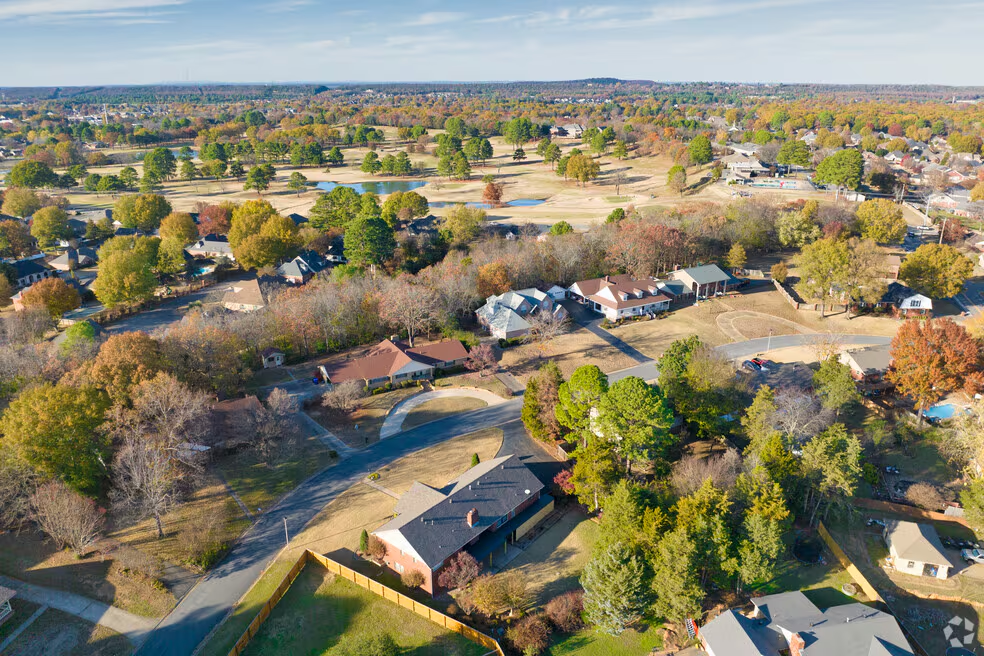
Water that sits for a weekend in a Conway home rarely stays a water problem. It becomes warped subfloor, delaminated cabinet bases, insulation that never fully dries, and mold colonies inside wall cavities that surface months later as a musty odor no air freshener can mask. Fire leaves a similar trail - acidic smoke residue keeps etching metal, grout, and finishes long after the flames are out.
Restoration in Faulkner County covers a connected set of services, and most jobs touch more than one:
- Water damage restoration - extraction, structural drying, moisture mapping, and monitoring until materials return to dry standard
- Flooded basement and lower-level cleanup - pumping, dehumidification, and treatment of below-grade concrete and framing
- Sewage cleanup - containment, removal of contaminated porous materials, and antimicrobial treatment of Category 3 water losses
- Fire damage restoration - debris removal, structural stabilization, content pack-out, and reconstruction
- Smoke damage restoration - soot removal, HVAC cleaning, thermal fogging, and odor neutralization
- Mold removal - containment barriers, HEPA filtration, material removal, and correction of the moisture source feeding growth
For Conway residents - whether near the UCA and Hendrix campuses, in older neighborhoods off Oak Street, or in newer subdivisions west of I-40 - fast action protects property value, indoor air quality, and insurance outcomes.
Common Damage Restoration Issues in Conway, Arkansas
Conway sits in a stretch of Central Arkansas where humidity, storm activity, and aging infrastructure combine to create year-round restoration demand. Cadron Creek, Stone Dam Creek, and the Arkansas River bottoms all influence how water moves through the area during heavy rain events.
Frequent Causes of Loss
- Spring thunderstorm complexes and flash flooding that overwhelm yard drainage and window wells
- Tornado and straight-line wind damage that opens roofs to days of rain intrusion
- Winter ice storms causing burst supply lines in unconditioned crawl spaces and garages
- Sanitary sewer backups when stormwater infiltrates older collection lines
- Sump pump failures and power outages in homes with below-grade rooms
- Kitchen fires, grill fires on wooden decks, and space heater incidents during cold snaps
- HVAC condensate line clogs during long, humid summers
- Water heater and washing machine supply hose failures
Warning Signs Worth Acting On
- Musty or earthy odor in closets, crawl space vents, or near baseboards
- Cupping or buckling in hardwood and laminate flooring
- Staining that reappears on ceilings after each rainfall
- Sluggish floor drains or gurgling toilets - often the first hint of a sewer backup
- Soot film on window glass, mirrors, or vent registers after a small fire
- Persistent smoke odor that intensifies when the HVAC system runs
- Condensation on ductwork or cold-water lines in the crawl space
Sewage and mold both carry health risk. Do not enter a contaminated area, do not run a household vacuum over standing water, and do not attempt mold removal without containment.
Neighborhoods We Serve in Conway
Coverage spans the full city and the surrounding Faulkner County communities, with response extending across the six-county territory.
- Downtown and Old Conway - historic homes near Hendrix College and Central Baptist College
- UCA area and college rental corridors - multi-unit properties with shared plumbing risk
- Salem Road and Tyler Street corridors - established mid-century subdivisions
- West Conway, Prince Street, and Dave Ward Drive - newer construction and commercial properties
- Centennial Valley, Shadow Valley, and Hogan Lane areas
- East Conway and the Lollie Bottoms edge near the Arkansas River floodplain
Nearby service areas include Vilonia, Greenbrier, Mayflower, Guy, Wooster, Enola, Damascus, Mount Vernon, and Holland, plus Cabot, Maumelle, Sherwood, Benton, and the greater Little Rock metro.
Seasonal Damage Patterns in Conway
Restoration calls in Conway follow a predictable rhythm shaped by Arkansas weather.
- December through February - Ice storms and hard freezes drive burst pipes, supply line ruptures, and flooded basements once lines thaw. Heating equipment and fireplace incidents raise fire and smoke damage calls.
- March through May - Peak severe weather. Tornadoes, hail, and training thunderstorms bring roof breaches, wind-driven rain, flash flooding, and sewer backups when systems surcharge.
- June through August - Heat and humidity dominate. Mold growth accelerates in crawl spaces and closets, HVAC condensate overflows soak ceilings, and grill or electrical fires increase.
- September through November - Remnants of tropical systems deliver prolonged rainfall. Foundation seepage and slow leaks surface, and the first furnace runs of the season reveal dust-and-smoke odor issues.
Mold is the one constant. Any untreated water event from any month can turn into a remediation project within days under Central Arkansas humidity.
Housing Characteristics & Restoration Considerations
Conway's building stock spans more than a century, and construction era heavily influences how damage spreads and how drying is approached.
Common Construction Types
- Pre-1950 homes near downtown and Hendrix - pier-and-beam foundations, plaster walls, original hardwood, and sometimes knob-and-tube remnants or galvanized supply lines
- 1950s-1980s ranch homes - crawl space construction, wood paneling, single-pane windows, and older cast iron drain lines prone to backup
- 1990s-2000s subdivisions - slab-on-grade with carpeted rooms and drywall to the floor, which wicks water fast
- 2010s-present builds west and north of the city - engineered flooring, tight envelopes, and complex HVAC systems that trap moisture when unbalanced
- Student rentals and duplexes - stacked plumbing where one failure affects multiple units
How That Shapes the Work
- Crawl spaces need targeted drying and vapor barrier evaluation, not just surface extraction
- Plaster and lath hold moisture differently than drywall and require slower, monitored drying to avoid cracking
- Slab homes often need controlled removal of baseboard and lower drywall to release trapped water behind the wall
- Sewage losses in older cast iron systems typically mean removal of carpet, pad, and affected drywall rather than cleaning in place
- Smoke travels through open framing chases in older homes, requiring inspection well beyond the fire room
- Fire rebuilds in historic districts call for finish matching on trim, siding, and window profiles
Environmental Conditions & Damage Implications
Conway's environment sets the pace for how quickly a small problem becomes a large one.
Climate and Air
- Humid subtropical climate with summer dew points that keep indoor relative humidity elevated
- Roughly 50 inches of annual rainfall, concentrated in spring and late fall
- Extended pollen and mold spore seasons that compound indoor air complaints after water losses
- Smoke particulate from structure fires binds readily to surfaces in humid air, making odor removal a longer process
Soil, Water, and Terrain
- Clay-heavy soils common across Faulkner County expand and contract, stressing foundations and creating seepage paths at wall-floor joints
- Poor infiltration means yard runoff pools against foundations rather than draining away
- Proximity to Cadron Creek, Stone Dam Creek, Lake Conway, and the Arkansas River floodplain raises flood exposure in low-lying areas
- Rural properties on septic systems face saturation failures and backflow after heavy rain
Practical Implications
- Mold can establish within 24 to 48 hours in unconditioned, humid space - drying must be aggressive and verified with meters
- Dehumidification, not just air movement, does the heavy lifting in Arkansas summers
- Groundwater intrusion requires exterior drainage correction, or the basement floods again
- Sewage and floodwater are treated as contaminated regardless of appearance, with full containment and antimicrobial protocols
Storm Season Response and Whole-Home Reconstruction in Faulkner County
Conway sits in one of Arkansas's more active severe weather corridors. A single spring supercell can remove shingles, breach a roof deck, and let rain saturate an attic, ceilings, and insulation within hours - which is why storm response here is almost never a single-service call. It typically becomes water mitigation, mold prevention, and reconstruction on the same property.
How a Storm-Driven Loss Is Handled
- Safety review - electrical hazards, structural stability, and contamination risk are evaluated before entry
- Emergency tarping and board-up - stopping further intrusion is the first priority
- Water extraction and moisture mapping - thermal imaging and meters locate hidden saturation in walls, cavities, and subfloor
- Structural drying - commercial dehumidifiers and air movers positioned for the specific construction type, with daily readings
- Selective demolition - unsalvageable drywall, insulation, and flooring removed to prevent mold
- Antimicrobial treatment and clearance - especially where sewage or floodwater is involved
- Reconstruction - framing, drywall, texture, paint, flooring, trim, and cabinetry returned to pre-loss condition
Custom Solutions for Local Conditions
- Crawl space encapsulation and vapor barrier replacement for homes with recurring humidity problems
- Exterior grading and drainage recommendations for clay-soil lots with repeat basement flooding
- HVAC duct cleaning and filtration upgrades after smoke events to stop odor recirculation
- Content pack-out and off-site cleaning for salvageable furniture, textiles, and documents
- Coordination with adjusters, including documentation, moisture logs, and photo records
- Phased work plans for occupied homes and businesses that need to stay partially operational
Whether the trigger is a tornado, an ice storm, a sewer backup, or a kitchen fire, the goal stays the same - stabilize fast, dry completely, remove what cannot be saved, and rebuild so the home looks and functions the way it did before.





