
Damage Restoration in Clinton, OK
- Damage Restoration Services Overview
- Common Damage Restoration Issues in Clinton, Oklahoma
- Neighborhoods We Serve in Clinton
- Seasonal Damage Patterns in Clinton
- Housing Characteristics & Restoration Considerations
- Environmental Conditions & Damage Implications
- Insurance Documentation and Industry Standards for Clinton Property Claims
Damage Restoration Services Overview
A small water stain on a Clinton ceiling rarely stays small. Left alone, moisture migrates into wall cavities, softens drywall, corrodes fasteners, and creates the damp, dark conditions mold colonies need to establish within a day or two. Fire and smoke damage behave the same way - acidic soot residue keeps etching metal, glass, and painted surfaces long after the flames are out, and untreated odors settle permanently into insulation and framing.
Full-service restoration in Clinton, Oklahoma addresses the entire spectrum of property loss:
- Water Damage Restoration - extraction, structural drying, and moisture mapping after pipe bursts, appliance failures, and roof leaks
- Flooded Basement Recovery - pumping, dehumidification, and treatment of below-grade spaces and storm cellars
- Sewage Cleanup - removal of Category 3 contaminated water, disinfection, and odor neutralization
- Fire Damage Restoration - emergency board-up, tarping, debris removal, and structural rebuild coordination
- Smoke Damage Restoration - soot removal from surfaces, HVAC systems, and personal contents
- Mold Removal - containment, air filtration, antimicrobial treatment, and removal of affected materials
Acting quickly protects your property value, limits insurance complications, and keeps your household breathing clean air.
Common Damage Restoration Issues in Clinton, Oklahoma
Sitting in Custer County along the Washita River corridor and I-40, Clinton faces a demanding mix of severe weather, temperature extremes, and aging infrastructure that drives most restoration calls.
Local Causes of Property Damage
- Spring supercell storms - hail-punctured roofs and wind-driven rain that soaks attic insulation
- Flash flooding - heavy downpours overwhelming storm drains near low-lying areas and creek drainages
- Winter pipe freezes - unheated crawl spaces, exterior hose bibs, and garage plumbing rupturing during cold snaps
- Lightning strikes and electrical fires - common during Oklahoma's active storm season
- Grass and brush fires - dry, windy conditions on the surrounding prairie sending smoke into nearby structures
- Sewer line backups - tree root intrusion and clay-soil shifting in older service lines
- Septic system failures - saturated drain fields on rural properties outside city limits
Warning Signs Clinton Homeowners Should Watch For
- Musty odors that intensify after rain or when the HVAC runs
- Bubbling paint, warped baseboards, or soft spots in flooring
- Slow drains in multiple fixtures at once - often the first sign of a main line issue
- Gurgling toilets or water backing up into tubs and floor drains
- Dark staining along foundation walls or efflorescence on concrete
- Lingering smoke smell that returns on humid days after a small kitchen fire
- Unexplained allergy symptoms, headaches, or respiratory irritation indoors
Neighborhoods We Serve in Clinton
Restoration crews respond throughout Clinton and the surrounding Custer County communities, covering both established in-town neighborhoods and rural acreage properties.
- Downtown Clinton and the Route 66 corridor - historic commercial buildings and older mixed-use structures
- Neighborhoods surrounding Clinton High School and Southwest Elementary
- North Clinton residential areas near Frisco Avenue and Modelle Avenue
- South-side homes along and off S 4th Street and S 10th Street
- Properties near Lake Clinton Foss and the Washita River bottoms
- Rural homesteads and farmsteads throughout Custer County
Service also extends to nearby communities including Weatherford, Arapaho, Foss, Butler, Custer City, Cordell, Elk City, Thomas, and Hydro. Whether the property is a downtown storefront, a school district building, a church, or a farmhouse on a county road, response teams arrive with extraction equipment, air movers, and containment materials ready.
Seasonal Damage Patterns in Clinton
Western Oklahoma's calendar creates predictable restoration cycles, and knowing them helps homeowners prepare before the damage happens.
- March through June - peak severe weather. Hail, straight-line winds, and tornado activity drive roof leaks, flooded basements, and storm-related water intrusion. Sewer backups spike when heavy rain overloads lines.
- July and August - heat and humidity swings fuel mold growth in attics, crawl spaces, and behind poorly sealed windows. Air conditioning condensate line clogs cause hidden ceiling and closet water damage.
- September through October - a secondary storm season brings more roof and window leaks. Dry prairie conditions raise wildfire and grass fire risk, producing smoke damage even in structures untouched by flame.
- November and December - heating equipment returns to service. Furnace malfunctions, space heaters, fireplaces, and holiday cooking generate the year's highest volume of fire and smoke damage calls.
- January and February - hard freezes rupture supply lines in exterior walls, garages, and vacant properties. Thaw cycles then reveal the full extent of water damage all at once.
Housing Characteristics & Restoration Considerations
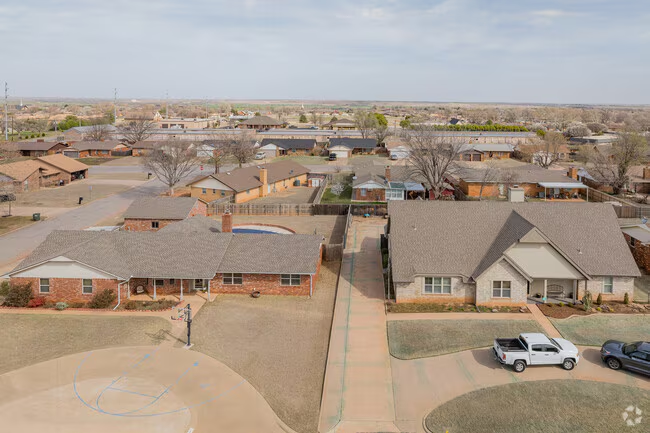
Clinton's housing stock spans more than a century, and the construction era of a property dictates how restoration is approached.
Common Construction Types
- Pre-1950 bungalows and craftsman homes - lath-and-plaster walls, wood lap siding, shiplap sheathing, and original hardwood floors that require controlled drying rather than aggressive heat
- Mid-century ranch homes - slab-on-grade construction, cast iron and galvanized drain lines prone to corrosion and backup
- 1970s-1990s brick veneer homes - concealed moisture behind veneer and weep hole blockages that trap water in wall cavities
- Newer builds - tighter envelopes and engineered materials that hold humidity longer once wet
- Manufactured and modular homes - common on rural parcels, with underbelly insulation that traps water and hides mold growth
How Age Affects Restoration Work
- Older homes may contain asbestos-bearing floor tile, mastic, or textured ceilings requiring testing before demolition
- Lead-based paint in pre-1978 structures calls for RRP-compliant containment during fire and water repairs
- Knob-and-tube or aluminum branch wiring increases electrical fire risk and complicates rebuild scoping
- Storm cellars and partial basements common in Clinton flood easily and hold moisture against porous masonry
- Plaster walls conceal saturation that moisture meters and thermal imaging must locate before drying begins
- Ductwork in older systems distributes soot and mold spores throughout the home and typically needs cleaning after fire or mold events
Environmental Conditions & Damage Implications
Clinton sits at roughly 1,600 feet on the western Oklahoma plains, where the climate swings hard between humid subtropical summers and dry, windy winters. That volatility shapes every restoration project.
Climate Factors
- Summer highs regularly exceeding 95 degrees, pushing indoor dew points high enough for mold colonization within 24-48 hours of a leak
- Annual rainfall concentrated into intense spring and fall downpours rather than steady precipitation
- Sustained prairie winds that drive rain into siding joints, window flashing, and roof penetrations
- Rapid winter temperature drops that freeze plumbing before homeowners can react
- Low winter humidity that spreads smoke odor through dry, porous building materials
Soil, Water, and Air Considerations
- Expansive clay soils common to the region swell and shrink, cracking foundations and creating seepage paths into basements and crawl spaces
- Slow-draining subsoil holds stormwater against foundation walls long after rain stops
- Hard groundwater leaves mineral deposits that mask early plumbing leaks and accelerate pipe failure
- Agricultural dust and pollen load HVAC filters, giving mold spores and soot particles surfaces to accumulate on
- Rural septic systems on saturated clay drain fields back up during wet periods, producing Category 3 sewage losses
- Grass fire smoke infiltrates attics and returns through fresh-air intakes even when a structure never burns
Insurance Documentation and Industry Standards for Clinton Property Claims
Most Clinton restoration projects involve an insurance claim, and the quality of documentation determines how smoothly that claim moves. Professional restoration follows IICRC standards - S500 for water damage, S520 for mold remediation, and S700 for fire and smoke - so the scope of work is defensible and repeatable.
What Proper Documentation Includes
- Photo and video record of conditions before any material is removed
- Moisture readings logged daily from affected materials and unaffected control areas
- Thermal imaging that maps water migration behind walls and under flooring
- Psychrometric readings tracking temperature, relative humidity, and grain depletion during drying
- Water category and class determination - clean, gray, or sewage-contaminated
- Air sampling and containment verification for mold projects
- Contents inventory for smoke-affected belongings, separated into cleanable and non-salvageable
How a Claim Typically Progresses
- Emergency mitigation begins immediately - extraction, board-up, or tarping to stop ongoing loss
- The property is inspected and a written scope is developed with supporting documentation
- The adjuster receives readings, photos, and line-item estimates in standard industry formats
- Structural drying, cleaning, or remediation proceeds while progress is logged
- Post-remediation verification confirms materials are dry and contaminants are cleared
- Reconstruction restores finishes, flooring, cabinetry, and paint
Oklahoma policies frequently distinguish between sudden water discharge and gradual seepage, and between wind-driven rain and rising floodwater. Careful cause-of-loss documentation from the first visit protects Clinton homeowners when those distinctions are questioned, and keeps the restoration moving without stalled approvals.





