
Damage Restoration in Ozark, MO
- Damage Restoration Services Overview
- Common Damage Restoration Issues in Ozark, Missouri
- Neighborhoods We Serve in Ozark
- Seasonal Damage Patterns in Ozark
- Housing Characteristics & Restoration Considerations
- Environmental Conditions & Damage Implications
- What to Expect: The Ozark Restoration Process and Insurance Documentation
Damage Restoration Services Overview
Water that sits for a weekend rarely stays a water problem. It becomes swollen subfloor, delaminated cabinet boxes, rusted duct seams, and mold colonies inside wall cavities that no one sees until the drywall comes down months later.
The same delay logic applies after fire. Smoke residue is acidic, and every hour it stays on metal, grout, and finished wood, the etching gets deeper and the odor bonds harder to porous materials.
Ozark homeowners have access to a full response for every category of loss:
- Water damage restoration - extraction, structural drying, moisture mapping, and monitoring until materials hit dry standard
- Flooded basement cleanup - pump-out, contents triage, sump and drain evaluation, and dehumidification of below-grade space
- Sewage cleanup - containment of Category 3 contamination, removal of porous materials, antimicrobial treatment, and disinfection
- Fire damage restoration - board-up, debris removal, soot cleaning, and coordinated reconstruction
- Smoke damage restoration - HEPA air scrubbing, thermal fogging or hydroxyl treatment, HVAC cleaning, and odor sealing
- Mold removal - containment barriers, negative air, source moisture correction, and post-remediation verification
Benefits for local property owners include faster reoccupancy, fewer secondary claims, protected indoor air quality, and documentation that supports the insurance process from day one.
Common Damage Restoration Issues in Ozark, Missouri
Christian County sits on shallow limestone with heavy clay overburden, which means rainfall does not soak away quickly. Water travels laterally and finds foundations.
Frequent Causes We See Locally
- Flash flooding along Finley River corridors - saturated soil pushes groundwater through cold joints and block walls
- Sump pump failure - power loss during straight-line wind events leaves basements unprotected during the exact storm that fills them
- Frozen and burst supply lines - unconditioned crawl spaces and garage walls are the usual failure points
- Sewer backups - heavy inflow overwhelms laterals, and older clay lines with root intrusion surcharge into floor drains
- Kitchen and appliance fires - grease flare-ups and range mishaps drive most residential fire calls
- Wood stove and fireplace smoke - creosote buildup and puffbacks from furnaces leave soot film through entire homes
Warning Signs Worth Acting On
- Musty odor in a finished basement that intensifies after rain
- Efflorescence, white chalky streaking, on foundation walls
- Tack strips lifting or carpet feeling cool underfoot along exterior walls
- Slow floor drains or gurgling fixtures when a washing machine discharges
- Yellow-brown staining on ceilings above bathrooms
- Soot ghosting on walls near HVAC returns after any smoke event
Any of these signs found early usually means drying instead of demolition.
Neighborhoods We Serve in Ozark
Crews cover the full city footprint and the surrounding Christian County communities.
- Downtown Ozark and the historic Riverside district - older structures near the Finley River with basement and crawl space concerns
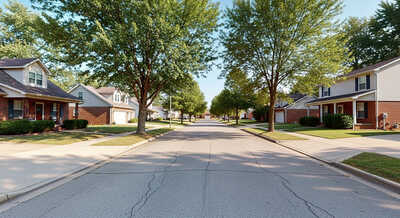
- Selmore and East Ozark - established residential streets with mature tree canopy and storm exposure
- Tanglewood, Deer Lake, and Wilson Creek area subdivisions - newer construction with finished lower levels
- North Ozark along the CC and 14 corridors - mixed residential and commercial properties
- Fremont Hills and Highlandville
- Nixa, Sparta, Clever, Rogersville, and southern Springfield
Rural properties on private septic and well systems outside city limits receive the same response, with added attention to septic-related sewage backups and well contamination after flooding.
Seasonal Damage Patterns in Ozark
Loss types in southwest Missouri follow a fairly predictable annual rhythm.
- December through February - burst pipes in crawl spaces and exterior walls, ice dam leaks at roof eaves, and a spike in heating-related and chimney fires. Space heaters drive many winter fire calls.
- March through May - the heaviest season for flooded basements. Severe thunderstorms, hail, and saturated ground combine with sump pump overload and sewer surcharge.
- June through August - humidity keeps dew points high, which fuels mold growth in basements, crawl spaces, and any home with an oversized or short-cycling air conditioner. Condensate line clogs cause hidden ceiling leaks.
- September through November - remnant tropical systems bring sustained rainfall. Furnaces fire up for the first time and produce puffbacks and smoke odor. Fireplace season begins.
Sewage backups do not follow a season - they follow rainfall intensity and line condition. Any 2-inch rain event in a short window raises the risk countywide.
Housing Characteristics & Restoration Considerations
Ozark's housing stock splits roughly into three groups, and each one dries and cleans differently.
Pre-1970 Homes Near the Historic Core
- Poured or block foundations with limited waterproofing and no interior drain tile
- Plaster over wood lath, which holds water far longer than drywall and needs extended drying
- Original clay or cast iron sewer laterals prone to root intrusion and backups
- Balloon framing in some structures, which lets smoke and fire travel vertically inside wall cavities
1980s to Early 2000s Subdivisions
- Vented crawl spaces that trap humidity and support mold on floor joists and subfloor
- Original polybutylene or early copper supply lines nearing end of service life
- Partially finished basements with carpet and paneling directly against block walls
Newer Construction
- Tight building envelopes that hold moisture and smoke odor inside rather than allowing it to dissipate
- Engineered I-joists and OSB subfloor, which lose structural integrity faster than dimensional lumber when saturated
- Finished walkout lower levels with expensive flooring and built-ins at the lowest elevation
- Multi-zone HVAC that distributes soot and mold spores through the whole house quickly
Assessment always starts with construction type, because a plaster wall, an I-joist floor system, and a block crawl space each demand a different drying plan and different equipment placement.
Environmental Conditions & Damage Implications
Local geography and climate directly shape how damage behaves inside Ozark homes.
Climate
- Humid subtropical pattern with summer dew points frequently in the upper 60s and low 70s
- Roughly 45 inches of annual precipitation, much of it arriving in intense spring bursts
- Freeze-thaw cycling through winter that widens foundation cracks year over year
- High indoor relative humidity means air movers alone will not dry a structure - dehumidification does the real work
Soil and Geology
- Karst limestone beneath much of Christian County, with sinkholes, springs, and unpredictable subsurface water routes
- Clay-heavy topsoil that swells when wet and presses hydrostatic load against basement walls
- Shallow bedrock in places, which limits how deep drainage can be routed and pushes water toward foundations
Water and Air Quality
- Hard, mineral-rich water that leaves scale in water heaters and appliance lines, contributing to failures and leaks
- Karst terrain makes well water vulnerable to contamination after sewage releases or flooding
- Heavy tree pollen in spring and agricultural dust in fall load HVAC filters, which then hold smoke particulate and mold spores
These conditions mean mold prevention is not a separate service here - it is built into every water, sewage, and fire response, because ambient humidity will restart growth on anything left damp.
What to Expect: The Ozark Restoration Process and Insurance Documentation
Most confusion after a loss comes from not knowing what happens next or what the insurer will actually cover. Clear steps and honest reporting remove most of that stress.
How a Typical Project Moves
- Emergency contact and dispatch - safety questions first: is power off, is the water source stopped, is the structure sound
- On-site assessment - moisture meters, thermal imaging, and category classification for water, or soot and odor mapping after fire
- Written scope and photo documentation - before any equipment runs, so the record matches the claim
- Mitigation - extraction, containment, controlled demolition of unsalvageable materials, and equipment placement
- Daily monitoring - moisture readings logged each visit until materials reach dry standard, not just until they feel dry
- Cleaning and remediation - antimicrobial application, HEPA vacuuming, air scrubbing, odor treatment, and post-remediation verification for mold
- Reconstruction - drywall, flooring, cabinetry, paint, and finish work to return the space to pre-loss condition
How Transparency Works in Practice
- One project manager and one phone number for the entire job, mitigation through rebuild
- Photo and moisture logs shared with you and your adjuster, not just filed away
- Plain-language explanation of what gets removed and why, before demolition starts
- Clear separation between what is covered mitigation and what is optional upgrade work
- Direct communication with your carrier so you are not relaying technical details
What Ozark Homeowners Should Do First
- Photograph everything before moving items, if it is safe to do so
- Stay out of standing water near electrical panels and out of any sewage-affected area
- Notify your insurer promptly and record the claim number
- Keep receipts for anything purchased during displacement
- Do not run the HVAC system after a fire or a suspected mold discovery - it spreads contamination house-wide





