
Damage Restoration in Ardmore, OK
- Damage Restoration Services Overview
- Common Damage Restoration Issues in Ardmore, Oklahoma
- Neighborhoods We Serve in Ardmore
- Seasonal Damage Patterns in Ardmore
- Housing Characteristics & Restoration Considerations
- Environmental Conditions & Damage Implications
- Storm Damage, Insurance Documentation, and What to Expect
Damage Restoration Services Overview
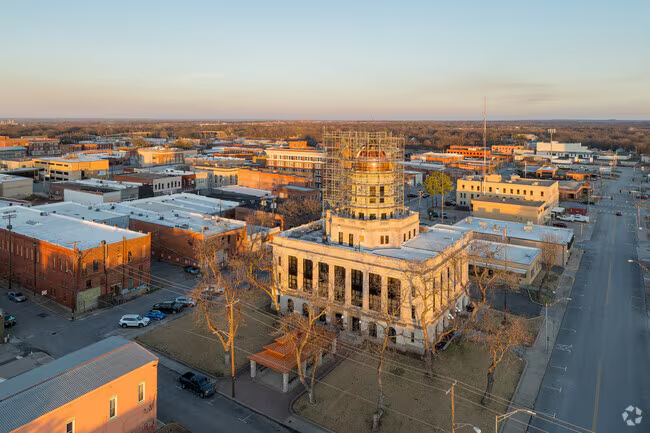
Water spreads through drywall, subfloor, and insulation within hours, and smoke residues become acidic and corrosive almost as fast. In Ardmore, where spring storms, tornado activity, and heavy Carter County downpours arrive with little warning, the first day after a loss shapes how much of your property can be saved.
Our restoration teams handle the full recovery path from the first extraction hose to the final coat of paint:
- Water Damage Restoration - extraction, structural drying, moisture mapping, and monitoring until materials return to dry standard
- Flooded Basement - pump-out, sump and drain evaluation, dehumidification, and salvage of stored belongings
- Sewage Cleanup - containment, removal of contaminated porous materials, and antimicrobial treatment of affected surfaces
- Fire Damage Restoration - board-up, emergency tarping, debris removal, structural cleaning, and rebuild coordination
- Smoke Damage Restoration - soot removal, odor neutralization, HVAC cleaning, and content deodorization
- Mold Removal - containment barriers, HEPA filtration, controlled removal, and correction of the moisture source
Benefits Ardmore property owners see most: faster reoccupancy, fewer secondary losses, documented photo and moisture records for insurance, and a single point of contact from mitigation through reconstruction.
Common Damage Restoration Issues in Ardmore, Oklahoma
Ardmore sits in a corridor where Gulf moisture collides with dry plains air, producing hail, straight-line winds, and rainfall totals that overwhelm older drainage. That weather pattern drives most of the calls we take.
What Causes Damage Locally
- Wind-lifted shingles and hail bruising that let rainwater track down rafters into ceilings
- Flash flooding along creek-adjacent lots and low-lying streets after intense thunderstorm cells
- Municipal line surcharges and backed-up floor drains during saturated ground conditions
- Burst or split supply lines during January and February cold snaps
- Kitchen grease fires, space heater ignitions, and electrical faults in older wiring
- Lightning strikes during severe weather season, which can ignite attic framing
Warning Signs Worth Acting On
- Brown or rust-colored ceiling rings that darken after each rain
- Musty odor in a basement, crawlspace, or closet that never fully clears
- Baseboards separating from the wall or flooring cupping along seams
- Gurgling drains or slow toilets in more than one fixture at once
- Soot film on window glass, lampshades, or the tops of door casings after a small fire
- Persistent smoke odor that returns when the HVAC system cycles on
Any of these signals hidden moisture or residue behind finished surfaces. Left alone through an Oklahoma summer, that moisture reliably produces mold growth within days.
Neighborhoods We Serve in Ardmore
Our crews respond throughout the city and across Carter County, including:
- Downtown Ardmore and the Historic District, where masonry commercial buildings and older residences share party walls
- Northwest Ardmore neighborhoods near Rockford Road and Mount Washington
- Southeast Ardmore near Lake Murray Drive and Veterans Boulevard
- The Regional Park, Broadlawn, and Country Club areas
- Neighborhoods surrounding the Ardmore Airpark and industrial corridor
- Rural properties on well and septic systems outside city limits
We also serve surrounding communities including Dickson, Lone Grove, Springer, Wilson, Healdton, Marietta, Madill, Sulphur, and the Lake Murray area. Rural addresses often mean longer travel for utility crews and slower power restoration, so we bring generators and desiccant equipment to keep drying moving even when service is interrupted.
Seasonal Damage Patterns in Ardmore
Spring (March - May)
- Peak severe weather season - tornado, hail, and wind damage leading to roof leaks and interior water intrusion
- Flash flooding and flooded basements after multi-inch rainfall events
- Sewage backups when saturated soil overloads drain lines
Summer (June - August)
- Mold growth accelerates in humid, poorly ventilated crawlspaces and basements
- Condensation and AC drain pan overflows causing hidden ceiling damage
- Electrical fires tied to peak cooling loads and aging panels
Fall (September - November)
- Secondary severe weather season with renewed storm and wind damage
- Clogged gutters and downspouts pushing water against foundations
- First heating season fires from dirty flues and dormant furnaces
Winter (December - February)
- Frozen and burst pipes in uninsulated attics, crawlspaces, and exterior walls
- Space heater and fireplace fires producing heavy smoke damage
- Ice-related roof leaks during brief but sharp cold snaps
Housing Characteristics & Restoration Considerations
Ardmore's housing stock spans more than a century, from early 1900s bungalows near downtown to slab-on-grade builds along the city's newer edges. Each construction era changes how damage travels and how we approach drying and cleaning.
Older Homes (pre-1960)
- Pier-and-beam foundations with vented crawlspaces that trap humidity and encourage mold
- Plaster and lath walls that hold water far longer than modern drywall and require injection drying
- Original hardwood floors that need controlled drying to avoid permanent cupping
- Balloon framing that lets smoke and fire travel vertically inside wall cavities
- Possible asbestos-containing floor tile, mastic, or insulation requiring careful pre-testing
- Cast iron and clay sewer laterals prone to root intrusion and backups
Mid-Century and Newer Construction
- Slab foundations where water wicks into bottom plates and carpet tack strips before it's visible
- Storm shelters and partial basements that collect groundwater during heavy rain
- Tight building envelopes that concentrate smoke odor in HVAC ductwork and insulation
- Engineered wood flooring and MDF trim that swell quickly and rarely dry back to serviceable condition
- Blown-in attic insulation that absorbs soot and must be removed after fire events
Manufactured and modular homes are common across Carter County as well. Their belly wrap and floor decking hold water against the frame, so extraction usually requires accessing the underbelly rather than surface drying alone.
Environmental Conditions & Damage Implications
Ardmore's humid subtropical climate combines hot summers, mild winters, and roughly 40 inches of annual rainfall delivered in bursts rather than steady soaking. That pattern, paired with local soil, shapes nearly every restoration decision.
Climate and Humidity
- Summer dew points regularly support mold germination within 24 to 48 hours of wetting
- Open-window drying often adds moisture instead of removing it - controlled dehumidification is required
- Wide temperature swings drive condensation inside wall cavities and duct chases
Soil and Drainage
- Expansive clay soils common in southern Oklahoma swell and shrink, opening foundation cracks that admit groundwater
- Poor percolation keeps stormwater pooled against slabs and basement walls
- Soil movement stresses buried sewer laterals, contributing to separations and backups
Water and Air Quality
- Hard water leaves mineral scale that shortens the life of supply lines and water heaters
- Rural septic systems can surcharge during saturated conditions, creating Category 3 contamination indoors
- Regional pollen and dust load HVAC filters, and post-fire soot bonds readily to those existing deposits
- Smoke odor lingers longer in humid conditions because residues remain reactive on porous surfaces
Because of these conditions, we treat moisture control and antimicrobial application as standard steps after any water or sewage event - not optional add-ons.
Storm Damage, Insurance Documentation, and What to Expect
Most large losses in Ardmore begin with weather, and most weather losses involve an insurance claim. Confusion about that process causes more stress than the damage itself, so we keep documentation and communication front and center from the first phone call.
How the Process Typically Runs
- Emergency response - we stabilize the property with board-up, roof tarping, and standing water extraction to stop damage from spreading
- Inspection and scoping - moisture meters, thermal imaging, and photo documentation establish the true extent of affected materials
- Written plan review - you see what will be removed, what will be dried in place, and why, before work begins
- Mitigation - drying equipment placement, controlled demolition, antimicrobial treatment, soot removal, and odor control
- Daily monitoring - readings are logged and shared so progress is measurable, not guessed at
- Reconstruction - drywall, flooring, trim, paint, and coordination with roofing, siding, and gutter work when the loss started outside
Documentation We Provide for Your Claim
- Time-stamped photos of pre-existing conditions and every stage of removal
- Daily moisture and humidity logs for each drying chamber
- Itemized scope of affected materials with quantities
- Equipment placement records and drying duration
- Notes on contamination category for water and sewage losses
We communicate directly with adjusters when you want us to, and we explain coverage questions in plain language rather than industry shorthand. If something falls outside your policy, you hear it early - not after the work is done. That transparency matters most in Ardmore's storm season, when multiple neighbors file claims at once and clear records move a file forward faster.





