
Damage Restoration in Biddeford, ME
- Damage Restoration Services Overview
- Common Damage Restoration Issues in Biddeford, Maine
- Neighborhoods We Serve in Biddeford
- Seasonal Damage Patterns in Biddeford
- Housing Characteristics & Restoration Considerations
- Environmental Conditions & Damage Implications
- Insurance Claims and the Restoration Timeline for Biddeford Property Owners
Damage Restoration Services Overview
Damage spreads on a clock. Water migrates through subflooring within hours, soot etches into finishes overnight, and mold colonies can take hold in a damp Biddeford basement in a matter of days. Fast, correct action protects both the structure and your budget.
Property owners across Biddeford and the Saco River corridor rely on a full range of restoration work, delivered by IICRC-certified technicians using commercial-grade drying and cleaning equipment:
- Water Damage Restoration - extraction, structural drying, and moisture monitoring after burst pipes, appliance failures, ice dams, and roof leaks.
- Flooded Basement - pump-outs, content handling, dehumidification, and treatment of below-grade spaces common in older Biddeford housing.
- Sewage Cleanup - containment and sanitation of Category 3 contamination from backed-up drains, failed ejector pumps, and municipal line surcharges.
- Fire Damage Restoration - board-up, debris removal, structural cleaning, and coordination of rebuild work.
- Smoke Damage Restoration - soot removal from surfaces and HVAC systems, plus odor neutralization that reaches porous materials.
- Mold Removal - inspection, containment barriers, HEPA filtration, and safe removal of affected materials.
Key benefits for local residents include reduced secondary damage, documentation that supports insurance claims, and a single point of contact from the first assessment through reconstruction.
Common Damage Restoration Issues in Biddeford, Maine
Biddeford's coastal position, mill-era housing stock, and hard New England winters combine to create a distinct pattern of property damage.
Frequent Causes of Loss
- Frozen and burst supply lines in uninsulated walls, crawlspaces, and mill-conversion units
- Ice dams on low-slope and older roofs pushing meltwater into ceilings and exterior walls
- Groundwater intrusion through fieldstone and block foundations after rain-on-snow events
- Storm surge, wind-driven rain, and power outages affecting properties near Biddeford Pool and Fortunes Rocks
- Sewer backups when heavy rain overwhelms aging combined drainage infrastructure
- Heating-season fires from wood stoves, chimneys, space heaters, and overloaded circuits
- Kitchen grease fires that spread smoke residue far beyond the room of origin
Warning Signs Worth Acting On
- Musty or earthy odors that intensify when the basement door opens or the furnace runs
- Staining, bubbling paint, or tape seams lifting on ceilings below bathrooms and attics
- Efflorescence on foundation walls - often harmless salt deposits, but a signal that moisture is moving through masonry
- Cupping or darkening hardwood near dishwashers, refrigerators, and washing machines
- Slow floor drains, gurgling toilets, or sewage odor in the lowest level of the home
- Sooty film on window glass, lampshades, or HVAC registers after any fire event
- Recurring allergy or asthma symptoms that ease when occupants leave the property
Documenting these signs early - with photos and dates - gives technicians and adjusters a clearer picture of when damage began.
Neighborhoods We Serve in Biddeford
Crews respond throughout the city and the surrounding York County communities, including:
- Downtown and the Mill District - converted mill lofts, mixed-use buildings, and dense multifamily properties
- Biddeford Pool and Fortunes Rocks - coastal cottages and year-round homes exposed to salt air and storm surge
- Granite Point and Hills Beach - seasonal properties near the University of New England campus
- West Biddeford and Five Points - established residential streets with mid-century and older homes
- Ward 5, Elm Street corridor, and the Route 111 area - commercial buildings and newer subdivisions
Service extends to Saco, Old Orchard Beach, Kennebunk, Arundel, Dayton, Lyman, Scarborough, and neighboring towns along the Saco River and Route 1. Familiarity with local roads, building stock, and municipal permitting keeps response times short and reconstruction on schedule.
Seasonal Damage Patterns in Biddeford
Winter (December - February)
- Burst pipes during deep-freeze stretches and after nor'easter power outages
- Ice dam water intrusion into attics, top-floor ceilings, and exterior walls
- Peak heating-season fire and smoke damage from chimneys, stoves, and portable heaters
Spring (March - May)
- Snowmelt and rain-on-snow flooding in basements and crawlspaces
- Sewage backups when saturated ground and heavy runoff overload drainage systems
- First mold growth of the year appearing on materials that stayed wet through winter
Summer (June - August)
- High coastal humidity driving mold growth in basements, closets, and seasonal cottages
- Air conditioning condensate line failures and water heater leaks
- Thunderstorm and lightning-related fire calls
Autumn (September - November)
- Tropical system remnants and nor'easters bringing wind-driven rain and roof damage
- Clogged gutters redirecting water toward foundations
- Early-season heating equipment fires and smoke odor from long-idle systems
Housing Characteristics & Restoration Considerations
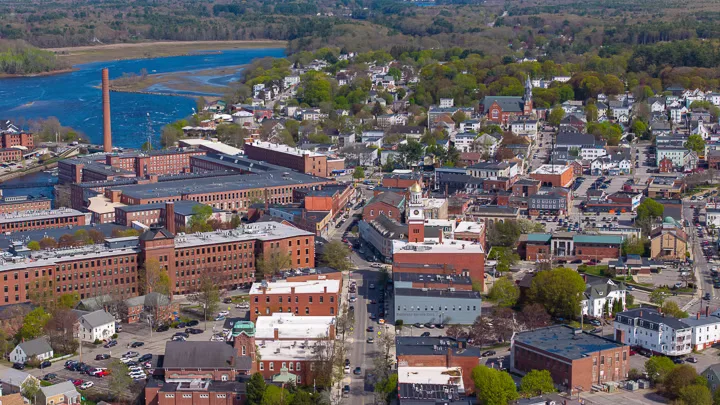
Biddeford's building stock skews old. A large share of homes date to the mill era of the late 1800s and early 1900s, with additional waves of construction after World War II and again in recent decades along the city's outer roads.
Common Construction Types
- Mill-era multifamily and triple-deckers - balloon framing, plaster and lath, and shared stairwells that let smoke and water travel between floors
- Converted mill lofts - brick masonry, timber decking, and open ceilings with exposed mechanical systems
- Colonials, capes, and farmhouses - fieldstone or rubble foundations, dirt or partially finished basements
- Post-war ranches - block foundations, finished basements, and original galvanized or copper plumbing
- Coastal cottages - crawlspaces, piers, and seasonal shutdowns that hide leaks for months
How Age Affects Restoration Work
- Plaster and lath hold water longer than drywall and require targeted drying rather than automatic removal.
- Balloon-framed wall cavities act as chimneys, carrying water down and smoke up - inspection openings are often necessary.
- Pre-1980 materials may contain asbestos or lead paint, so testing precedes demolition in mold and fire projects.
- Fieldstone foundations absorb groundwater, making flooded basement drying and mold containment more involved.
- Older cast iron and clay sewer laterals crack and root-intrude, raising sewage backup risk.
- Multi-unit buildings need containment plans that keep neighboring apartments habitable during cleanup.
Environmental Conditions & Damage Implications
Biddeford sits where the Saco River meets the Atlantic, and that geography shapes nearly every restoration project in the city.
Climate and Moisture
- Humid continental climate with cold winters and warm, humid summers
- Roughly 45-50 inches of annual precipitation plus significant seasonal snowfall
- Coastal fog and sea breezes that keep summer indoor humidity elevated
- Freeze-thaw cycling that opens cracks in foundations, masonry, and chimney crowns
Soil, Groundwater, and Drainage
- Glacial till, marine clay, and sandy coastal deposits with variable drainage rates
- High water tables near the river, marshes, and beach neighborhoods
- Shallow bedrock in some areas, forcing water laterally toward foundation walls
- Aging municipal infrastructure that can surcharge during intense rainfall
Restoration Implications
- Drying plans account for outdoor dew points - simply opening windows in July adds moisture rather than removing it.
- Dehumidification equipment is sized for coastal humidity loads, not textbook averages.
- Salt air accelerates corrosion on fire-damaged metal fixtures, wiring, and appliances, so soot removal is time-sensitive.
- Basements below grade in high-water-table areas often need continued moisture monitoring after equipment leaves.
- Post-fire indoor air quality work includes HEPA filtration and duct cleaning to prevent recirculated soot.
- Clearance moisture readings, not appearances, determine when reconstruction can begin.
Insurance Claims and the Restoration Timeline for Biddeford Property Owners
Most restoration projects in Biddeford involve an insurance claim, and how the first day is handled often determines how smoothly the rest goes. Certified technicians document conditions in a format adjusters recognize, which reduces back-and-forth and keeps work moving.
What Happens After You Call
- Emergency response - crews dispatch around the clock for water extraction, board-up, tarping, or containment of contaminated areas.
- Assessment and documentation - moisture mapping, thermal imaging, photographs, and a room-by-room scope of loss.
- Mitigation - extraction, controlled demolition of unsalvageable materials, drying equipment placement, and antimicrobial treatment where warranted.
- Daily monitoring - technicians record moisture readings and adjust equipment until materials reach dry standard.
- Cleaning and deodorization - soot removal, contents cleaning, HVAC treatment, and odor neutralization for fire and smoke losses.
- Reconstruction - drywall, flooring, trim, paint, and finish work that returns the property to pre-loss condition.
Ways to Support Your Claim
- Photograph damage before moving anything, including standing water depth and soot lines
- Notify your insurer promptly and record the claim number and adjuster contact
- Keep damaged items available for inspection unless they pose a health hazard
- Save receipts for temporary lodging, plumbers, and emergency supplies
- Locate your policy declarations page to confirm coverage for sewer backup and mold, which are frequently limited endorsements
Working with a single provider for mitigation and rebuild keeps communication consistent and avoids gaps between drying and reconstruction. For Biddeford homeowners juggling winter weather, work schedules, and tenants, that continuity matters as much as the equipment on site.





