Damage Restoration in Wyandotte County, KS
- Damage Restoration Services Overview
- Common Damage Restoration Issues in Wyandotte County, Kansas
- Neighborhoods We Serve in Wyandotte County
- Seasonal Damage Patterns in Wyandotte County
- Housing Characteristics & Restoration Considerations
- Environmental Conditions & Damage Implications
- Working With Insurance Claims After Wyandotte County Storm and Water Losses
Damage Restoration Services Overview
You wake up to the sound of running water in the basement, or you smell smoke long after the flames are out. In Wyandotte County, those moments happen more often than most homeowners expect - and what you do in the first few hours shapes how much of your property can be saved.
Restoration work covers a connected set of emergencies, each requiring different equipment and training:
- Water damage restoration - supply line breaks, water heater failures, roof leaks, and appliance overflows
- Flooded basement recovery - extraction, structural drying, and moisture mapping below grade
- Sewage cleanup - backflow from municipal lines, failed ejector pumps, and contaminated Category 3 water
- Fire damage restoration - debris removal, structural stabilization, and content recovery
- Smoke damage restoration - soot removal, thermal fogging, HVAC decontamination, and odor neutralization
- Mold removal - containment, air filtration, antimicrobial treatment, and material replacement
The benefit of handling all six under one roof is continuity. Water left standing becomes mold within days. Fire suppression leaves behind gallons of water that soak drywall and subfloor. A crew that understands the full chain of damage prevents one problem from quietly becoming three.
Common Damage Restoration Issues in Wyandotte County, Kansas
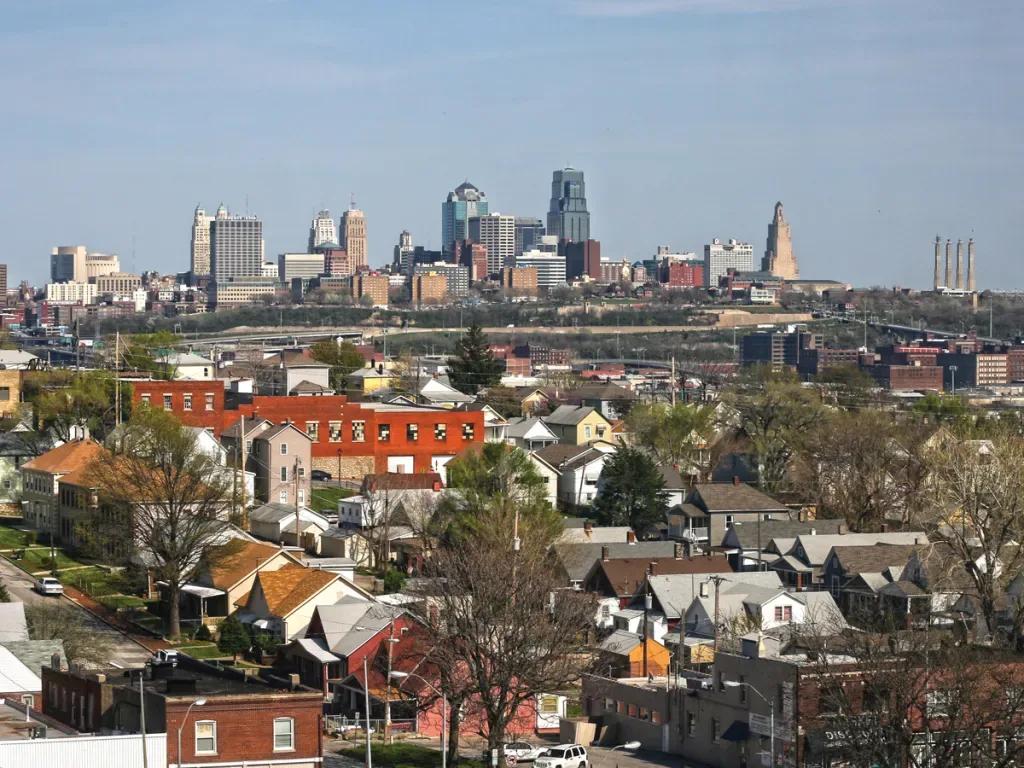
Wyandotte County sits at the confluence of the Kansas and Missouri Rivers, and that geography drives much of the local damage picture. Low-lying areas near the bottoms, aging combined sewer infrastructure in older Kansas City, Kansas neighborhoods, and severe storm exposure all contribute.
Recurring problems local crews respond to:
- Storm-driven roof failures - severe wind events have torn roofing from homes and churches across the county, allowing rain to saturate attics, insulation, and ceilings
- Basement flooding - hydrostatic pressure against foundation walls, failed sump pumps, and window well overflow during heavy rainfall
- Sewer backups - older laterals, tree root intrusion, and surcharged mains that push contaminated water into finished basements
- Frozen and burst pipes - uninsulated lines in crawl spaces and exterior walls during January cold snaps
- Electrical and kitchen fires - knob-and-tube or early aluminum wiring in pre-war housing stock, plus space heater use during extended outages
- Hidden mold colonies - behind paneling, under carpet pad, and inside wall cavities that were dried superficially after a prior leak
Warning signs worth acting on immediately:
- Musty odor that intensifies after rain or when the HVAC runs
- Efflorescence - white chalky residue - on basement block walls
- Buckled baseboards, cupping hardwood, or staining at drywall seams
- Sewer gas smell near floor drains
- Soot film reappearing on walls weeks after a small fire
- Unexplained spikes in humidity or condensation on windows
Neighborhoods We Serve in Wyandotte County
Coverage spans the full county, from the river bottoms to the western edge along the Leavenworth County line.
- Kansas City, Kansas - Argentine, Armourdale, Rosedale, Strawberry Hill, Turner, Piper, Muncie, and Quindaro
- Bonner Springs - including neighborhoods near the Kansas River and Loring
- Edwardsville - residential subdivisions and light industrial corridors along K-32
- Lake Quivira and Wolcott - lakefront and rural-edge properties with private systems
- Northwest Wyandotte County - the Piper corridor and areas bordering Leavenworth County
Response also extends into the wider Kansas City metro, including neighboring Johnson County and Jackson County, Missouri. Teams staged in Shawnee and near Leavenworth keep travel times short, which matters when extraction needs to begin before water wicks up drywall or migrates under flooring.
Seasonal Damage Patterns in Wyandotte County
Each season brings a distinct call pattern, and knowing the cycle helps homeowners prepare.
- December through February - frozen pipe bursts, ice dam leaks at eaves, furnace puff-backs that coat interiors in soot, and heating-related fires during cold snaps
- March through May - snowmelt combined with spring rain drives basement flooding and sump pump overload; severe thunderstorms and tornado activity produce roof and wind damage
- June through August - high humidity accelerates mold growth in basements and crawl spaces; heavy downpours surcharge sewer lines and cause backups; lightning strikes ignite attic fires
- September through October - lingering moisture from summer surfaces as visible mold; first furnace cycles release accumulated dust and smoke odor
- November - cooking-related kitchen fires rise around the holidays; early freezes catch outdoor spigots and unprotected lines
Post-storm recovery periods also create secondary risk. After major wind events, extended power outages leave sump pumps idle and refrigeration off, while generator and candle use raises fire hazards. Damage discovered days later - a saturated attic, a soaked wall cavity - is common when roofs are tarped but interiors are not dried properly.
Housing Characteristics & Restoration Considerations
Wyandotte County has some of the oldest housing stock in the metro, and building age directly shapes restoration strategy.
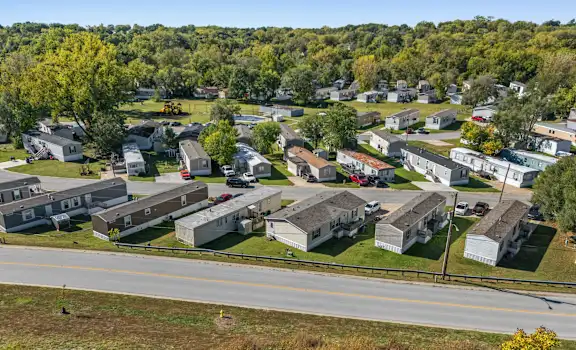
- Pre-1940 homes in Strawberry Hill, Armourdale, and Rosedale often feature stone or unreinforced block foundations, plaster over wood lath, balloon framing, and original hardwood floors
- Mid-century ranches in Turner and Bonner Springs typically have poured concrete basements, plywood subfloors, and finished lower levels with wood paneling
- Newer construction in Piper and western subdivisions uses engineered lumber, OSB sheathing, and tighter building envelopes
How age affects the work:
- Balloon framing allows fire, smoke, and water to travel vertically inside wall cavities from basement to attic, so inspection has to extend well beyond the visible damage zone.
- Plaster and lath holds moisture far longer than drywall and requires slower, controlled drying to avoid cracking and delamination.
- Stone and rubble foundations wick groundwater continuously, making basement mold prevention an ongoing concern rather than a one-time fix.
- Pre-1980 materials may contain asbestos in floor tile, mastic, or pipe wrap, and lead in painted surfaces - both require testing before demolition.
- Tight modern envelopes trap humidity, so post-loss drying must include dehumidification and verification with moisture meters, not just air movers.
Finished basements deserve special attention. Carpet pad, paneling, and framed partition walls hide saturation, and drying in place rarely works after Category 3 sewage exposure - selective removal is usually the safer path.
Environmental Conditions & Damage Implications
Local climate and soil conditions push restoration timelines in specific directions.
- Humid continental climate - summer dew points regularly climb into the seventies, which means outside air cannot be used to dry a structure and closed-drying with dehumidifiers becomes the standard approach
- Heavy rainfall events - intense thunderstorm cells drop large volumes quickly, overwhelming gutters, grading, and municipal storm capacity
- Expansive clay soils - common across the county, these soils swell when saturated and shrink in drought, stressing foundation walls and opening cracks that admit groundwater
- River proximity - the Kansas and Missouri River bottoms carry elevated groundwater tables, keeping basement slabs and block walls damp year-round in some areas
- Freeze-thaw cycling - repeated winter cycles widen existing foundation and mortar cracks
What this means practically:
- Mold spores are present in outdoor air constantly; they need only moisture and time, and Wyandotte County summers supply both. Drying to industry standard moisture content - not just "feels dry" - is the difference between resolution and recurrence.
- Sewage-contaminated water in clay-heavy soil areas can migrate under slabs, so post-cleanup verification and antimicrobial application matter as much as extraction.
- Smoke residue behaves differently in humid conditions, bonding faster to surfaces and etching glass, chrome, and appliance finishes if not addressed promptly.
- Poor air quality after fires and floods calls for HEPA filtration and negative air containment to keep particulate from spreading through ductwork.
Working With Insurance Claims After Wyandotte County Storm and Water Losses
Documentation determines what your policy actually pays. After a major storm event in Wyandotte County - the kind that strips roofing from homes and churches and leaves thousands without power - insurers process a surge of claims at once, and files with thorough evidence move faster and settle more completely.
A detail-driven restoration file typically includes:
- Time-stamped photos and video of every affected room before any material is removed
- Moisture readings logged daily at fixed points, showing progress toward dry standard
- Psychrometric records - temperature, relative humidity, grains per pound - from each drying chamber
- Written scope of work tied to industry-recognized line items and pricing formats insurers recognize
- Inventory of damaged contents with condition notes and salvage recommendations
- Laboratory results where mold or contaminated water is involved
- Post-remediation verification confirming the affected area meets clearance criteria
What the process usually looks like:
- Emergency contact and dispatch - crews stage from Shawnee and the Leavenworth area to reach Wyandotte County properties quickly
- Stabilization - water shut-off, board-up, tarping, and power isolation to stop ongoing loss
- Assessment and documentation - thermal imaging and moisture mapping to find damage behind finishes
- Extraction and demolition - removal of unsalvageable materials with containment where contamination or mold is present
- Structural drying and cleaning - air movers, dehumidification, HEPA filtration, soot removal, and odor treatment
- Verification and reconstruction - confirming dry standard, then rebuilding to current county building codes
Local experience matters here. Crews familiar with Unified Government permitting, county code requirements, and the recovery resources available to residents after declared storm events can keep a project moving instead of stalling at an inspection or an adjuster review.