Damage Restoration in Montgomery County, KS
- Damage Restoration Services Overview
- Common Damage Restoration Issues in Montgomery County, Kansas
- Neighborhoods We Serve in Montgomery County
- Seasonal Damage Patterns in Montgomery County
- Housing Characteristics & Restoration Considerations
- Environmental Conditions & Damage Implications
- Working With Insurance and County Damage Assessment After a Loss
Damage Restoration Services Overview

You come home to Independence after a long day, open the basement door, and hear water running where no water should be. A supply line let go hours ago, and the carpet squishes underfoot. Situations like this unfold across Montgomery County every week - sometimes from a burst pipe, sometimes from a storm that overwhelms a floor drain, and sometimes from a kitchen fire that fills the house with soot.
Restoration work covers the full spectrum of property emergencies, and each service addresses a different threat:
- Water damage restoration - extraction of standing water, moisture mapping, and structural drying after pipe breaks, appliance failures, and roof leaks
- Flooded basement cleanup - pumping, sump support, and drying of below-grade spaces where water collects and lingers
- Sewage cleanup - safe removal of contaminated material, disinfection, and disposal after backups or septic failures
- Fire damage restoration - emergency board-up, debris removal, and structural stabilization following a fire event
- Smoke damage restoration - soot removal from surfaces, contents cleaning, and odor treatment throughout affected areas
- Mold removal - containment, remediation, and correction of the moisture source that fed the growth
The benefit for Montgomery County property owners is straightforward: faster response limits secondary damage, protects belongings, and creates the documentation insurers expect when a claim is filed.
Common Damage Restoration Issues in Montgomery County, Kansas
Southeast Kansas weather swings hard, and local building stock reflects a long history of both prosperity and hard seasons. Those two factors drive most of the damage calls in Coffeyville, Independence, Cherryvale, and the smaller towns between.
Local Causes of Property Damage
- Heavy spring thunderstorm cells that dump several inches of rain in a short window, overwhelming yard drainage and window wells
- Verdigris and Elk River basin flooding that pushes groundwater against foundation walls
- Aging cast iron and clay sewer laterals that crack, root-intrude, and back up into basements
- Winter pipe freezes in uninsulated crawl spaces, attics, and unheated additions
- Wind-driven rain through damaged shingles and flashing after severe weather
- Space heater, wood stove, and electrical fires during extended cold snaps
- Grass and field fires near rural properties during dry, windy stretches
Warning Signs Worth Acting On
- A musty odor in the basement that grows stronger after rain
- Efflorescence, chalky white streaking, or bubbling paint on foundation walls
- Slow floor drains, gurgling toilets, or backing up in the lowest fixture in the house
- Cupping hardwood, soft drywall at the baseboard, or stained ceiling tiles
- Lingering smoke odor that returns on humid days, even after cleaning
- Unexplained allergy symptoms that ease when you leave the house
Reporting matters too. Montgomery County Emergency Management collects damage information and forwards it to the Kansas Division of Emergency Management, so documenting your loss early supports both your claim and any wider county assessment.
Neighborhoods We Serve in Montgomery County
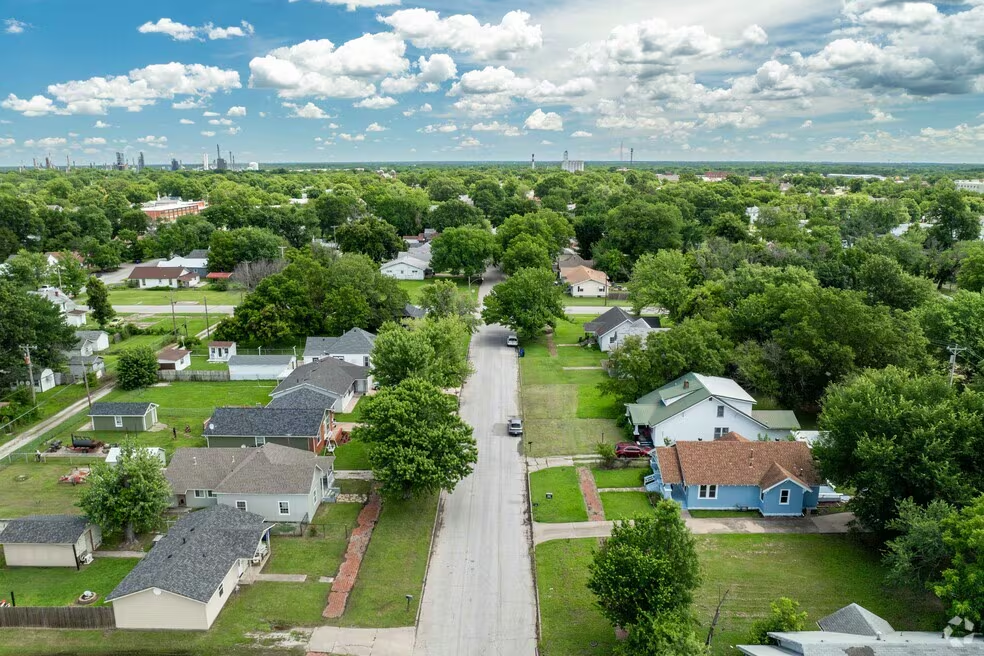
Coverage spans the county line to line, from the Verdigris River bottoms to the Oklahoma border communities.
- Independence - historic downtown blocks, Riverside Park area, and the older residential districts north of Main
- Coffeyville - central neighborhoods, industrial corridor properties, and homes near Onion Creek drainage
- Cherryvale - established family neighborhoods and outlying acreages
- Caney - properties near the Caney River and the southern county line
- Elk City - lake-adjacent homes and cabins
- Havana, Tyro, Dearing, Liberty, Sycamore, and Jefferson - small-town residences and rural farmsteads
Rural service also reaches unincorporated tracts along US-75, US-160, and US-169, including septic-served homes, farm shops, grain storage buildings, and country churches. Commercial response covers retail, medical offices, schools, and manufacturing facilities throughout the county.
Seasonal Damage Patterns in Montgomery County
Damage types follow a fairly predictable calendar in southeast Kansas.
- January - February: Frozen and burst pipes lead the call volume. Heating equipment fires and chimney fires spike, bringing smoke damage restoration work with them.
- March - April: Thawing ground plus early severe storms produce flooded basements and wind-driven water intrusion. Sewer backups increase as saturated soil pressures old lateral lines.
- May - June: Peak storm season. Flash flooding, hail-damaged roofs, and tornado-related losses dominate. Sewage cleanup requests climb when systems surcharge.
- July - August: Heat and humidity accelerate mold growth in any space that was wet during spring. Air conditioning condensate line clogs cause quiet, slow water damage.
- September - October: Remnant tropical moisture brings soaking rain events. Dry, windy days raise grass fire risk on rural property lines.
- November - December: Heating systems restart, and fire damage restoration calls rise. Early freezes catch outdoor spigots and crawl space plumbing unprotected.
Housing Characteristics & Restoration Considerations
Montgomery County housing skews older than the national average. Many Independence and Coffeyville homes date to the oil boom era of the early 1900s, with a second wave built during the postwar decades. That age shapes nearly every restoration decision.
Construction Types and Their Restoration Impact
- Full basements with stone or block foundations - porous masonry absorbs water and needs extended drying with targeted airflow rather than surface-level extraction
- Plaster-and-lath walls - hold moisture behind the surface and often require cavity drying or selective removal instead of standard drywall cuts
- Wood lap siding and original single-pane windows - allow wind-driven rain intrusion at aging caulk joints
- Balloon-frame construction - lets smoke, soot, and fire travel vertically through open wall cavities, expanding the affected area beyond the visible burn
- Crawl space foundations on rural properties - trap humidity and support mold growth on floor joists and subfloor
- Manufactured and modular homes - use moisture-sensitive materials that need faster response and different drying approaches
Older-Home Hazards Worth Screening
- Asbestos in floor tile, mastic, pipe wrap, and textured ceilings built before the late 1970s
- Lead-based paint on trim, doors, and window sashes
- Knob-and-tube or ungrounded wiring exposed during demolition
- Original galvanized supply lines prone to pinhole leaks
- Clay tile sewer laterals vulnerable to root intrusion
Testing before demolition keeps a water or fire job from turning into an unplanned abatement project.
Environmental Conditions & Damage Implications
Local soil, climate, and water conditions influence how damage develops and how long drying takes.
Climate Factors
- Humid subtropical summers with dew points that regularly sit in the upper 60s and 70s, slowing evaporation and requiring dehumidification rather than airflow alone
- Annual rainfall in the low-to-mid 40-inch range, concentrated in spring and early fall bursts
- Freeze-thaw cycling through winter that opens cracks in foundations and driveways
- Strong prevailing south winds that drive rain into wall assemblies and spread wildfire
Soil and Groundwater
- Clay-heavy soils across much of the county expand when wet and contract when dry, stressing foundation walls and opening entry points
- Poor percolation means surface water pools near structures instead of draining away
- Shallow water tables in river bottom areas keep hydrostatic pressure on basement walls year-round
- Shale and limestone bedrock near the surface limits how much subsurface drainage can be improved
Air and Water Quality Considerations
- Summer humidity supports mold colonization within a couple of days on wet cellulose materials
- Agricultural dust and pollen load already stress indoor air, compounding smoke and mold particulate problems
- Hard, mineral-rich water leaves scale that shortens water heater and supply line lifespan
- Rural septic systems in saturated clay soil back up more readily during wet stretches
Each factor shapes equipment placement, drying targets, and containment strategy on site.
Working With Insurance and County Damage Assessment After a Loss
A Montgomery County property loss usually involves two separate paper trails - your insurance claim and, during a declared event, the county's damage assessment process. Handling both well protects your recovery.
How the County Process Works
The Montgomery County Appraiser's Office leads the county's Damage Assessment Program, recruiting and training assessment teams and coordinating inspection priorities with emergency management. Information gathered locally moves to the county Office of Emergency Management, then to the Adjutant General's Office and the Kansas Division of Emergency Management. Structures receive inspection priority, and during larger events the county emergency operations center may open a channel for residents and businesses to submit damage reports directly.
Steps to Take Immediately After Damage
- Make sure everyone is out and the utilities are shut off if safety is in question
- Photograph and video every affected room, including contents, before anything is moved
- Call your insurance carrier to open a claim and record the claim number
- Call a restoration team to begin emergency mitigation - water extraction, board-up, or tarping
- Keep damaged items where possible until the adjuster has reviewed them
- Submit a damage report to county emergency management if a disaster declaration is in progress
- Save all receipts for temporary lodging, repairs, and supplies
Documentation That Strengthens a Claim
- Daily moisture readings showing drying progress in each affected material
- Equipment logs recording what was placed and for how long
- Photo records at intake, mid-project, and completion
- Written scope of work matching industry-standard line items adjusters recognize
- Air sampling or containment records for mold and sewage projects
Under most federal disaster declarations, the federal share of eligible public assistance costs runs 75 percent, with the remainder covered through state and local sources. That framework applies to public facilities, but the same principle holds for homeowners - thorough records determine what gets reimbursed. Restoration crews that document as they work take that burden off you and give the adjuster exactly what the file needs.