
Damage Restoration in Wellington, KS
- Damage Restoration Services Overview
- Common Damage Restoration Issues in Wellington, Kansas
- Neighborhoods We Serve in Wellington
- Seasonal Damage Patterns in Wellington
- Housing Characteristics & Restoration Considerations
- Environmental Conditions & Damage Implications
- Emergency Response Timelines for Wellington Property Owners
Damage Restoration Services Overview
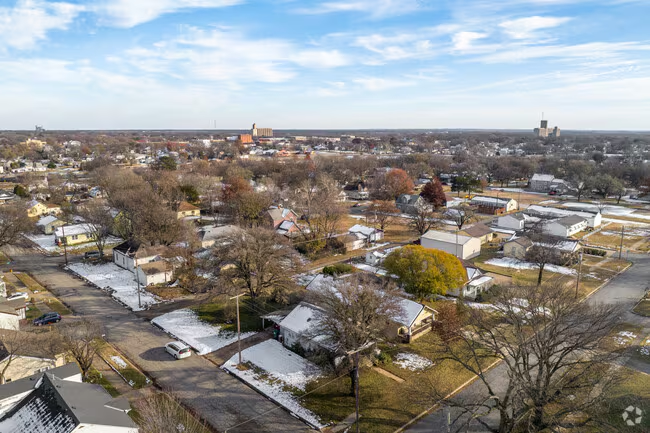
Wellington sits on some of the flattest, heaviest clay ground in Sumner County - soil that sheds rainfall rather than absorbing it. That single geological detail explains why so many homes near Slate Creek and the older platted blocks north of downtown deal with basement water more than once in a decade. Flooding patterns here mean water intrusion is a recurring reality, not a one-time event.
Restoration work in the Wheat Capital covers a wide span of emergencies, and most properties eventually need more than one type of help:
- Water Damage Restoration - burst supply lines, failed water heaters, roof leaks after hail, and storm-driven intrusion
- Flooded Basement service - sump pump failures, foundation seepage, and window well overflow in older limestone cellars
- Sewage Cleanup - backups from saturated municipal mains, floor drain reversals, and failed rural septic systems
- Fire Damage Restoration - structural cleaning, content recovery, and rebuilding after kitchen, electrical, or grass fires
- Smoke Damage Restoration - odor neutralization, soot removal from porous surfaces, and HVAC decontamination
- Mold Removal - containment and remediation where humidity or unresolved leaks allowed growth
The benefit for Wellington homeowners is straightforward: faster drying means fewer materials lost, lower repair scope, and a quicker return to normal routines for the whole household.
Common Damage Restoration Issues in Wellington, Kansas
South-central Kansas throws a full catalog of weather at Sumner County, and local building stock reacts in predictable ways. Knowing which problems cluster in which neighborhoods makes response more effective.
Local Causes We See Repeatedly
- Heavy spring cells dumping several inches quickly, overwhelming storm drains along low-lying streets
- Slate Creek and Hargis Creek backwater pushing groundwater against foundation walls
- Hail and straight-line wind stripping shingles, letting water into attics and wall cavities
- Frozen or split supply lines during January cold snaps in unheated crawl spaces
- Sanitary sewer surcharge sending gray and black water up through basement floor drains
- Grass and stubble fires during and after wheat harvest reaching outbuildings and rural homes
- Kitchen grease and wood-stove flue fires that spread smoke through an entire structure
Warning Signs Worth Acting On
- A musty smell in the basement stairwell that lingers after rain has stopped
- Efflorescence - white chalky residue - on block or limestone foundation walls
- Buckling baseboards, cupped hardwood, or tack strips pulling loose from a slab
- Gurgling floor drains or slow toilets during a downpour, an early sign of sewer backup
- Yellow-brown staining on ceilings below an attic or second-floor bathroom
- Soot film on window glass or a smoke odor that returns whenever the furnace cycles
- Visible growth behind furniture on exterior-facing walls, common in poorly ventilated rooms
Neighborhoods We Serve in Wellington
Crews cover the full city grid and the surrounding Sumner County countryside, including:
- Downtown Wellington and the Washington Avenue business district, including upper-floor apartments and storefront basements
- The historic residential blocks surrounding Worden Park and the older east-side streets
- Neighborhoods near Wellington Lake, the golf course, and the north-side commercial corridor along US-81
- Newer subdivisions on the west and south edges of town with slab-on-grade construction
- Rural acreages, farmsteads, and grain operations throughout Sumner County
Service also reaches nearby communities including Belle Plaine, Oxford, Argonia, Conway Springs, Mayfield, Milan, South Haven, Caldwell, Mulvane, Peck, and the southern Wichita metro. Familiarity with these routes - and with the drainage quirks of each area - shortens arrival time when minutes matter.
Seasonal Damage Patterns in Wellington
- January - February: Pipe freezes and post-thaw bursts dominate. Ice storms bring down limbs and tear roofing. Furnace and space heater fires spike, leaving widespread smoke residue.
- March - May: Peak severe weather. Hail, tornado-related wind, and torrential rain drive flooded basement calls and roof-origin water damage. Sewer surcharge backups follow the heaviest cells.
- June - July: Wheat harvest season raises combine, stubble, and outbuilding fire risk across the county. Humidity climbs, so any lingering moisture becomes a mold problem fast.
- August - September: Mold remediation requests peak as dew points stay high and air conditioning struggles to dehumidify older homes. Slow leaks discovered in summer often started in spring.
- October - November: Fall storms and early cold snaps cause water heater failures and first-use furnace smoke events. Grass fires flare during dry, windy stretches.
- December: Holiday cooking fires, candle incidents, and vacant-home pipe failures while families travel.
Housing Characteristics & Restoration Considerations
Wellington's housing stock skews older than the Kansas average, with a large share of homes built before 1960 and a meaningful cluster of pre-1940 construction near the original townsite. That age shapes every restoration plan.
Construction Types and What They Mean
- Limestone and rubble-stone foundations: Porous, absorbent, and prone to seepage - drying requires extended dehumidification rather than surface wiping.
- Unfinished or partially finished basements: Common storage of keepsakes and documents means content recovery is often as urgent as structural drying.
- Plaster and lath walls: Hold water and smoke odor deep in the substrate; selective removal is sometimes better than aggressive demolition.
- Balloon-framed older homes: Open wall cavities let both water and smoke travel between floors, so inspection has to extend well beyond the visible damage.
- Post-war ranch homes: Frequently have original cast iron or clay sewer laterals susceptible to root intrusion and backup.
- Newer slab-on-grade builds: Water spreads laterally under flooring, requiring mat drying systems and careful subfloor moisture mapping.
- Farmhouses and outbuildings: Wood construction, stored fuel, and distance from hydrants raise fire severity and rebuild scope.
Once the damage picture is clear, the restoration plan is built for that specific property. It accounts for the home's materials, the type and extent of damage, and the family's timeline - and every step gets explained before work begins so there are no surprises.
Environmental Conditions & Damage Implications
Sumner County's environment works against drying in ways that surprise people who move here from lighter-soil regions.
- Clay-heavy soils: Slow infiltration keeps water pooled against foundations for days after rain ends, extending seepage well past the storm.
- Shrink-swell cycles: Drought summers open cracks around foundations; the first heavy rain then routes water straight into basements.
- High summer humidity: Dew points in the 60s and 70s mean outdoor air cannot be used to dry a structure - mechanical dehumidification is required.
- Hard, mineral-rich water: Scale accelerates water heater and supply line failure, a frequent source of interior flooding.
- Persistent south winds: Push smoke, dust, and agricultural particulate through leaky older window frames and into HVAC systems.
- Wide temperature swings: Stress plumbing joints and roofing materials, creating leaks that go unnoticed until staining appears.
These conditions have direct consequences. Mold colonies establish quickly in humid months, so remediation and containment go hand in hand with water extraction. Sewage cleanup demands full disinfection because saturated clay soils keep contaminants from dispersing. And after fire, fine soot bonds to surfaces faster in humid air, making prompt smoke damage treatment far more effective than delayed cleaning.
Emergency Response Timelines for Wellington Property Owners
Damage does not wait for business hours, and neither does the clock on your building materials. Drywall wicks moisture upward within hours. Untreated soot begins etching metal, glass, and finished surfaces the same day. Mold can establish within a day or two under Kansas summer humidity.
What Happens After the Call
- Immediate triage by phone - safety guidance on power, gas, and standing water before anyone arrives.
- Rapid dispatch - crews travel from Wellington and the surrounding Sumner County and south Wichita area, day or night.
- Source control - stopping the leak, tarping the roof, or boarding openings so the damage stops expanding.
- Extraction and stabilization - removing standing water, isolating contaminated areas, and setting containment.
- Documented assessment - moisture mapping, photographs, and material inventory for the insurance file.
- Drying, cleaning, and remediation - air movers, dehumidifiers, soot removal, odor treatment, and mold protocols as the situation requires.
- Reconstruction - restoring finishes, flooring, and structure so the property looks like itself again.
Steps You Can Take Before Crews Arrive
- Shut off the main water valve if the source is a supply line
- Stay out of flooded areas where electrical panels or outlets are submerged
- Avoid contact with any backup involving sewage - treat all of it as contaminated
- Move photos, documents, and valuables to a dry upper level if it is safe to do so
- Photograph conditions for your own records before anything is disturbed
- Do not run the HVAC system after a fire, which spreads soot through every room
Wellington residents consistently say the same thing about good restoration work: the people who show up should be straightforward, friendly, and clear about what comes next. That combination of speed and honest communication is what turns an overwhelming night into a manageable project.





