
Damage Restoration in Orchard Homes, MT
- Damage Restoration Services Overview
- Common Damage Restoration Issues in Orchard Homes, Montana
- Neighborhoods We Serve in Orchard Homes
- Seasonal Damage Patterns in Orchard Homes
- Housing Characteristics & Restoration Considerations
- Environmental Conditions & Damage Implications
- Working With Insurance After a Missoula Valley Loss
Damage Restoration Services Overview
Coming home to standing water in the basement, the smell of smoke in the drywall, or a sewage backup in the laundry room upends everyday life fast. Property damage in Orchard Homes rarely announces itself - it arrives during a spring thaw, an overnight pipe failure, or a wildfire smoke event that pushes particulate into every vent in the house.
Restoration work covers a connected set of services, and most losses need more than one:
- Water Damage Restoration - extraction, structural drying, moisture mapping, and dehumidification of framing, subfloor, and cavities
- Flooded Basement Cleanup - pump-out, sump and drain evaluation, removal of saturated insulation and finished materials
- Sewage Cleanup - containment, removal of contaminated porous materials, antimicrobial treatment, and disinfection of Category 3 losses
- Fire Damage Restoration - board-up, debris removal, char and soot cleaning, and structural cleanup after suppression water
- Smoke Damage Restoration - odor neutralization, HVAC cleaning, soot removal from contents and hard surfaces
- Mold Removal - containment barriers, HEPA filtration, controlled removal of colonized materials, and moisture source correction
The benefit of a single restoration team handling all six is continuity: the same crew that dries a flooded crawl space also documents moisture readings for your insurance adjuster and returns to verify no mold has taken hold weeks later.
Common Damage Restoration Issues in Orchard Homes, Montana
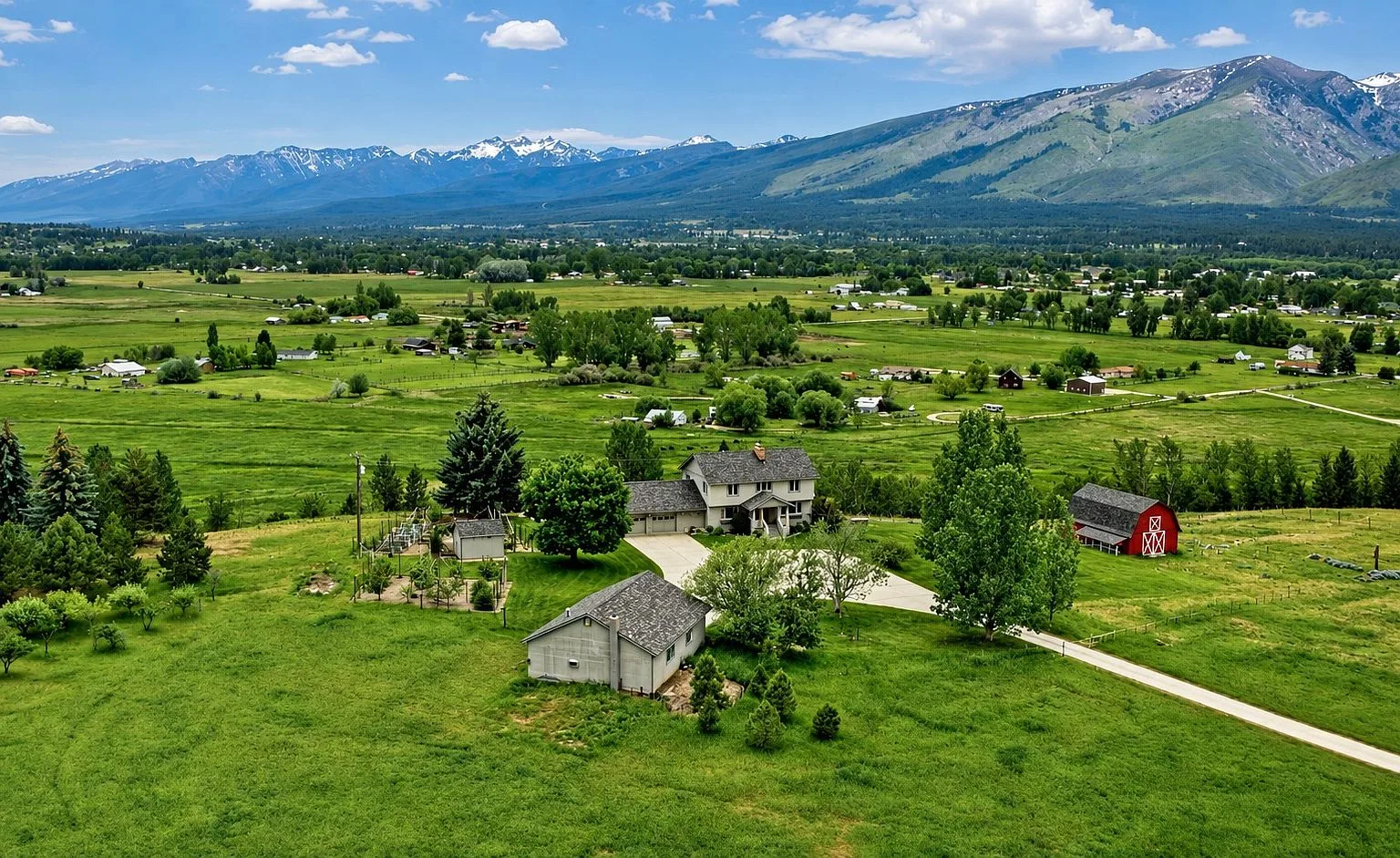
Orchard Homes sits on the valley floor west of Missoula, between the Clark Fork and the lower Bitterroot - low, flat ground with a shallow water table and a long history of irrigation ditches running through neighborhoods.
Local Causes of Property Damage
- High groundwater - spring runoff from the Bitterroot and Clark Fork raises the table and pushes moisture through basement slabs and block walls
- Irrigation ditch overflow - legacy laterals crossing older orchard-lot properties can breach or back up during heavy flows
- Frozen and burst supply lines - unheated crawl spaces and older service lines fail during deep cold snaps
- Failed sump pumps - a single pump on a single circuit is a common point of failure during a multi-day rain event
- Sewer and septic backups - older clay laterals, root intrusion, and properties still on septic near the river bottom
- Wood stove and chimney fires - supplemental heat is common in the valley and creates real fire and smoke exposure
- Wildfire smoke infiltration - late-summer inversions trap smoke in the Missoula Valley and force particulate into homes
Warning Signs Worth Acting On
- Efflorescence, chalky white staining, or dark tide lines on basement walls
- Musty odor in a crawl space that intensifies after rain
- Cupping hardwood, soft baseboards, or nail pops in finished lower levels
- Gurgling floor drains or slow tub drainage - often the first sign of a lateral blockage
- Persistent smoke odor that returns on humid days after a small kitchen or stove fire
- Visible mold along rim joists, behind furniture on exterior walls, or under vinyl flooring
Neighborhoods We Serve in Orchard Homes
Service covers the full Orchard Homes area and the surrounding Missoula Valley communities, including:
- Central Orchard Homes along South and North Avenue West
- The Clements Road and Tower Street corridors
- Properties near Big Flat Road and the lower Bitterroot bottomlands
- Target Range and the Blue Mountain foothills
- Grant Creek, Mullan Road, and the Reserve Street commercial district
- Franklin to the Fort, Westside, and Riverfront neighborhoods in Missoula
- East Missoula, Bonner, and Milltown
- Lolo, Florence, Frenchtown, and Huson
Response extends throughout Missoula County and into the Bitterroot Valley toward Stevensville and Hamilton, as well as north toward Arlee and Polson. Coverage includes single-family homes on original orchard lots, newer subdivisions, mobile and manufactured homes, small commercial buildings, and agricultural outbuildings.
Seasonal Damage Patterns in Orchard Homes
- December through February - frozen and burst pipes in crawl spaces and exterior walls, ice damming on low-slope roofs, and chimney or wood stove fires during extended cold. Furnace puff-backs also deposit soot through duct systems.
- March through May - peak flooded basement season. Snowmelt from the Bitterroot and Sapphire ranges lifts groundwater, saturates yards, and overwhelms sump systems. Ditch water returns to the laterals and adds surface flooding risk.
- June - high river stage on the Clark Fork and Bitterroot keeps basements and crawl spaces damp; hidden moisture from spring events begins producing mold growth.
- July through September - wildfire season brings smoke damage, ash intrusion, and structural fire risk. Valley inversions hold smoke at ground level for days, contaminating HVAC filters, attics, and soft contents.
- October and November - heavy rain on dry ground causes yard flooding and sewer backups as root-clogged laterals surcharge. First hard freezes catch unwinterized hose bibs and irrigation lines.
Mold removal calls arrive year-round but cluster six to ten weeks after any major water event, once colonization becomes visible or detectable by odor.
Housing Characteristics & Restoration Considerations
Orchard Homes takes its name from the fruit orchards subdivided in the early twentieth century, and the housing stock reflects that layered history - original farmhouses, mid-century ranches, 1970s and 1980s infill, manufactured homes, and newer builds on split lots.
Construction Types and What They Mean for Restoration
- Pre-1950 farmhouses - balloon framing allows water and smoke to travel vertically between floors; plaster and lath hold moisture longer than drywall and dry slowly
- Concrete block and poured basements - block cores trap water and need drilled weep holes or cavity drying rather than surface air movement alone
- Vented crawl spaces - common under mid-century homes, with exposed rim joists and fiberglass batt insulation that mats and colonizes with mold when wet
- Manufactured homes - belly wrap holds water against the floor deck; water damage is often invisible until flooring softens
- Finished basements added later - carpet pad, framed walls against concrete, and vinyl flooring create sealed moisture pockets after a flood
Age-Related Factors
- Galvanized and polybutylene supply lines nearing end of life
- Clay or Orangeburg sewer laterals susceptible to root intrusion and collapse
- Knob-and-tube or ungrounded wiring that complicates fire cleanup and reconstruction
- Asbestos-containing floor tile, mastic, and pipe wrap requiring testing before demolition
- Lead paint in pre-1978 homes affecting how smoke-damaged surfaces are cleaned
These variables change the drying plan, the demolition scope, and the sequence of work - which is why moisture mapping and material testing come before any removal.
Environmental Conditions & Damage Implications
The Missoula Valley climate shapes nearly every restoration decision made in Orchard Homes.
Climate and Air
- Cold, damp winters with frequent freeze-thaw cycling that stresses foundations and plumbing
- Low relative humidity in summer, which speeds outdoor evaporation but masks trapped moisture inside wall cavities
- Strong winter and late-summer inversions that hold smoke, particulate, and odor at ground level
- Wildfire seasons that spike PM2.5 and drive smoke into homes through recirculating HVAC systems and leaky envelopes
Soil, Water, and Drainage
- Alluvial gravel and sandy loam - fast-draining topsoil over a cobble layer, so surface water moves sideways toward foundations rather than percolating deep
- Shallow water table - many lots sit within a few feet of groundwater during runoff, producing hydrostatic pressure on slabs and cove joints
- Flat grade - minimal natural slope means downspout extensions and yard grading matter more here than in the foothills
- Historic irrigation infrastructure - ditches and laterals raise localized groundwater through summer
- Mixed sewer and septic service - septic systems in saturated soil back up during high water, creating Category 3 losses
The practical result: drying a valley-floor basement takes negative pressure, dehumidification sized to the space, and verification that groundwater intrusion has stopped. Skipping that verification is the single most common reason a water loss becomes a mold removal project three months later.
Working With Insurance After a Missoula Valley Loss
Most Orchard Homes property owners file a claim once or twice in a lifetime, and the documentation created in the first days determines how smoothly it goes. Restoration crews work alongside adjusters routinely, and that coordination is part of the service.
What Documentation Should Capture
- Photos and video of standing water, soot lines, or mold growth before any material is removed
- Moisture meter readings by room and material, logged daily through the drying process
- Psychrometric data - temperature, relative humidity, and grain depression - showing the drying environment
- Equipment placement records for air movers, dehumidifiers, and air scrubbers
- Category and class designation for water losses, which distinguishes clean supply-line water from sewage contamination
- Inventory of removed materials and affected contents
Coverage Realities Worth Understanding
- Standard homeowners policies typically respond to sudden, accidental water discharge - not gradual seepage or long-term leaks
- Groundwater and river flooding generally fall outside standard policies and require separate flood coverage, relevant for properties near the Clark Fork and Bitterroot
- Sewer and drain backup is often an endorsement rather than base coverage - worth checking before spring
- Mold coverage is frequently capped or excluded unless it results directly from a covered water loss
- Smoke and ash damage from wildfire may be covered even without a structure fire, depending on the policy
Steps to Take Immediately
- Stop the source if it is safe - main water shutoff, gas valve, or breaker
- Photograph everything before moving or discarding items
- Call your carrier and open a claim number
- Bring in a restoration crew to begin mitigation, which most policies require you to do promptly
- Keep receipts for temporary lodging, equipment, and emergency repairs
Prompt mitigation protects both the building and the claim. Delay is what turns a contained water loss into full-scale reconstruction.





