Damage Restoration in Lyon County, NV
- Damage Restoration Services Overview
- Common Damage Restoration Issues in Lyon County, Nevada
- Neighborhoods We Serve in Lyon County
- Seasonal Damage Patterns in Lyon County
- Housing Characteristics & Restoration Considerations
- Environmental Conditions & Damage Implications
- Wildfire and Flood Preparedness for Lyon County Property Owners
Damage Restoration Services Overview
Discovering water spreading across a basement floor or walking into a home filled with smoke is one of the hardest moments a property owner faces. The clock starts immediately, and every hour of delay adds cost and complication.
CRBR has served Nevada families since 1959, and our teams respond across Lyon County around the clock. We handle the full scope of property damage - from the first extraction to the final coat of paint.
- Water Damage Restoration - extraction, structural drying, moisture mapping and monitoring until materials reach dry standard.
- Flooded Basement Cleanup - pump-out, contents handling, sanitizing and dehumidification of below-grade spaces.
- Sewage Cleanup - containment and removal of Category 3 contamination, antimicrobial treatment and safe disposal of porous materials.
- Fire Damage Restoration - board-up, debris removal, structural cleaning and rebuild coordination.
- Smoke Damage Restoration - soot removal from surfaces and HVAC systems, odor neutralization and content cleaning.
- Mold Removal - containment, HEPA filtration, affected material removal and moisture source correction.
Benefits Lyon County residents count on:
- Fast local arrival to Yerington, Fernley, Dayton and Silver Springs
- Direct insurance documentation and claim support
- One contractor from mitigation through reconstruction
Common Damage Restoration Issues in Lyon County, Nevada
Lyon County sits between the Walker and Carson River corridors, where high desert conditions swing between drought and sudden saturation. That contrast drives most of the damage calls we receive.
Water and Flooding
- Atmospheric river events - the March 2023 storm cycle contributed to more than $20 million in public infrastructure damage statewide, with Lyon County still drying out weeks afterward.
- Snowmelt from the Sierra pushing river and irrigation ditch levels above bank
- Frozen and burst supply lines in unheated crawlspaces and garages
- Basement and daylight-basement seepage where grading slopes toward foundations
- Septic backups and overwhelmed rural drain fields creating sewage contamination
Fire and Smoke
- Roughly 31,611 Lyon County properties carry measurable wildfire risk over the next 30 years
- Cheatgrass and sagebrush fuels that carry fire rapidly toward rural parcels
- Smoke and ash infiltration in homes miles from an active burn
- Wood stove, chimney and space heater fires during cold months
Warning Signs to Watch
- Musty odors in basements, closets or under sinks
- Bubbling paint, stained drywall or warped baseboards
- Unexplained spikes in the water bill
- Persistent smoke smell that returns when the HVAC runs
- Slow drains or gurgling fixtures signaling a septic or sewer problem
Neighborhoods We Serve in Lyon County
Our crews cover the full county, from the Interstate 80 corridor down through the Mason Valley farmland.
- Fernley - newer subdivisions, canal-adjacent properties and light industrial buildings
- Dayton - Dayton Valley, Sunrise Estates and older Comstock-era structures along the Carson River
- Yerington - downtown residential blocks, agricultural outbuildings and Mason Valley ranch homes
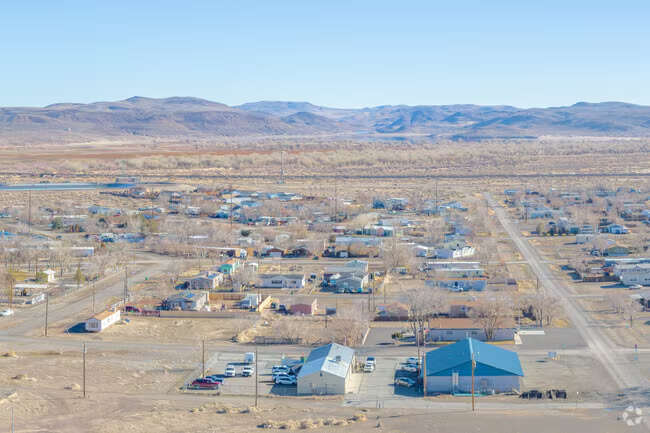
- Silver Springs - manufactured homes, rural parcels and Lahontan Reservoir area properties
- Stagecoach - hillside lots and well-and-septic households
- Smith Valley and Wellington - remote agricultural properties and seasonal residences
- Mound House and Moundhouse corridor - mixed commercial and residential buildings
We also respond to neighboring communities in Storey County, Carson City and Douglas County, giving Lyon County residents access to regional equipment and crew depth during widespread storm or wildfire events.
Seasonal Damage Patterns in Lyon County
Damage types shift predictably through the year in the high desert.
- December through February - Frozen pipe breaks lead the season. Wood stove and heating equipment fires rise, bringing smoke damage restoration work with them.
- March through May - Peak flood window. Sierra snowmelt, atmospheric river storms and saturated ground drive flooded basement calls, groundwater intrusion and septic backups requiring sewage cleanup.
- June through August - Wildfire season intensifies across sagebrush rangeland. Fire and smoke damage restoration dominates, along with monsoon microbursts that overwhelm gutters and flood low-lying garages.
- September through November - Mold removal requests climb as spring and summer moisture trapped inside wall cavities finally becomes visible. Irrigation shutdown and first freeze events cause additional line breaks.
Mold does not follow a strict calendar here. Because indoor humidity stays higher than outdoor humidity in a dry climate, hidden growth from a spring leak can surface months later once heating systems circulate air through affected cavities.
Housing Characteristics & Restoration Considerations
Lyon County housing spans more than a century of building practice, and each era responds differently to water, fire and mold.
Older Homes - Pre-1970 Construction
- Common in Yerington and historic Dayton, often with plaster walls and lath
- Wood-framed crawlspaces without vapor barriers hold moisture and invite mold growth
- Galvanized and older copper plumbing prone to pinhole leaks
- Asbestos and lead paint testing may be needed before demolition
- Balloon framing allows smoke and fire to travel between floors quickly
Manufactured and Modular Homes
- Widespread in Silver Springs, Stagecoach and Smith Valley
- Particleboard subfloors swell and fail rapidly after water exposure
- Belly wrap insulation traps water beneath the floor, requiring specialized drying access
- Tight envelopes concentrate smoke odor in soft goods and ductwork
Newer Subdivision Homes
- Concentrated in Fernley and Dayton Valley, built largely after 1995
- Engineered flooring and MDF trim absorb water quickly and rarely recover
- Slab-on-grade construction hides moisture migration under flooring
- Two-story layouts allow upstairs supply line failures to damage multiple levels
What This Means for Restoration
- Drying plans are built per structure type, not from a template
- Below-grade and crawlspace access is evaluated before equipment placement
- Contents are inventoried and cleaned separately from structural work
- Rebuild materials are matched to existing finishes where possible
Environmental Conditions & Damage Implications
The environment around Lyon County shapes both how damage happens and how restoration must be performed.
Climate
- Low relative humidity accelerates evaporation but can mask deep moisture in framing
- Wide day-to-night temperature swings cause condensation inside wall cavities and attics
- Hard winter freezes reach unprotected plumbing in garages, barns and well houses
Soil and Terrain
- Alkaline, clay-heavy soils in valley floors drain slowly and push water toward foundations
- Sandy alluvial soils near river corridors allow rapid groundwater rise during flood events
- Sloped desert lots channel storm runoff directly into driveways and garage thresholds
Water Conditions
- Hard mineral-rich water stresses fixtures, water heaters and supply connections
- Many rural properties rely on private wells and septic systems, raising sewage cleanup risk when ground saturates
- Irrigation canals and ditches near agricultural parcels contribute contaminated floodwater
Air Quality
- Wildfire smoke drifts into homes from regional fires, coating surfaces with fine ash
- Blowing dust and alkali particulate embeds in HVAC systems alongside soot
- Post-fire cleaning requires HEPA filtration and duct work, not surface wiping alone
These conditions mean drying, deodorization and mold remediation each need moisture readings, containment and verification specific to the property.
Wildfire and Flood Preparedness for Lyon County Property Owners
With over 31,000 county properties carrying wildfire risk and recent flood events reshaping drainage across the valley, preparation matters as much as response. Property owners who plan ahead recover faster.
Before an Event
- Clear defensible space of cheatgrass, dead sage and stacked firewood within 30 feet of structures
- Install ember-resistant vent screening on attic and crawlspace openings
- Photograph rooms, contents and serial numbers for insurance documentation
- Locate and label the main water shutoff and gas shutoff
- Extend downspouts and regrade soil away from foundations before spring runoff
- Insulate exposed pipes in garages, well houses and crawlspaces ahead of winter
Our Start-to-Finish Process
- Emergency call - we answer any hour and dispatch a local crew.
- Assessment - moisture mapping, soot testing and contamination categorization define the scope.
- Stabilization - board-up, tarping, water extraction and containment stop further loss.
- Removal - unsalvageable materials, sewage-contaminated porous items and charred debris are hauled out.
- Drying and cleaning - dehumidifiers, air movers, HEPA scrubbers and soot removal restore the environment.
- Deodorization and remediation - odor neutralization and mold treatment address what cannot be seen.
- Reconstruction - drywall, flooring, cabinetry, trim and paint return the property to pre-loss condition.
- Final walkthrough - readings verified, documentation delivered to your insurer.
Because CRBR handles mitigation and rebuild under one roof, Lyon County homeowners never juggle separate contractors or gaps in accountability. One team, one file, one point of contact from the first phone call to the final inspection.