
Damage Restoration in Silver Springs, NV
- Damage Restoration Services Overview
- Common Damage Restoration Issues in Silver Springs, Nevada
- Neighborhoods We Serve in Silver Springs
- Seasonal Damage Patterns in Silver Springs
- Housing Characteristics & Restoration Considerations
- Environmental Conditions & Damage Implications
- Earthquake Aftermath and Hidden Water Damage in Silver Springs
Damage Restoration Services Overview
When water spreads across a floor or smoke settles into drywall, the clock starts immediately. In the first 24 to 48 hours, clean water turns contaminated, subfloors swell, and mold spores begin colonizing damp materials. Blaze responds around the clock across Silver Springs so property owners are not left waiting while damage multiplies.
Our restoration teams handle the full range of emergency property losses:
- Water Damage Restoration - burst supply lines, failed water heaters, roof leaks, and appliance overflows extracted and dried with monitored equipment
- Flooded Basement - pumping, extraction, structural drying, and content protection for below-grade spaces
- Sewage Cleanup - septic backups and gray or black water events handled with containment, removal, and antimicrobial treatment
- Fire Damage Restoration - board-up, debris removal, soot cleaning, and rebuilding of damaged assemblies
- Smoke Damage Restoration - odor neutralization, HVAC cleaning, and treatment of porous surfaces after wildfire or structure fires
- Mold Removal - containment, HEPA filtration, material removal, and correction of the moisture source
Benefits for Silver Springs homeowners are practical: documented moisture readings for insurance claims, fewer replaced materials because drying started early, and a single point of contact from the emergency call to final reconstruction. Reach Blaze at (775) 419-0116 or the emergency line at (775) 722-5275.
Common Damage Restoration Issues in Silver Springs, Nevada
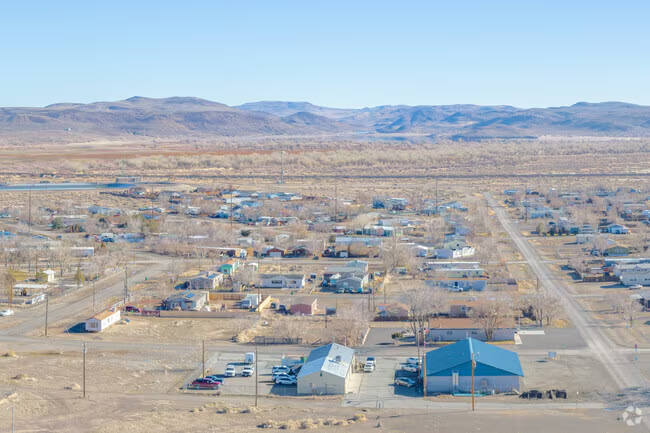
Silver Springs sits in a high desert basin near Lahontan Reservoir and the Carson River corridor, and that setting creates a distinct mix of restoration problems. Dry air lulls people into thinking moisture damage is rare - then a single frozen pipe or septic backup proves otherwise.
Local Causes We Respond To Most
- Freeze-thaw pipe failures in unheated garages, crawl spaces, and manufactured home skirting during winter cold snaps
- Seismic activity - the magnitude 5.7 event near Silver Springs and the aftershocks that followed loosened fittings, cracked slabs, and shifted water heater connections, producing slow leaks that surfaced weeks later
- Septic and leach field backups on rural parcels where systems age out or saturate
- Wildfire and range fire smoke pulled indoors through swamp coolers and HVAC returns
- Flash runoff from summer monsoon cells hitting hardpan soil and running toward low-lying structures
- Well pump and pressure tank failures that flood utility rooms and basements unnoticed
Warning Signs Worth Acting On
- Musty odor near baseboards, closets, or under sinks
- Cupping or separating flooring in a single area
- Staining on ceilings after wind-driven rain
- Gurgling drains or slow toilets - often the first sign of a septic problem
- Soot film on window glass or a persistent burnt odor after nearby fire activity
- Hairline cracks that appeared after shaking, especially where plumbing penetrates the slab
Catching any of these early usually means drying rather than demolition.
Neighborhoods We Serve in Silver Springs
Blaze covers Silver Springs and the surrounding Lyon County communities, including rural parcels well off the main highways.
- Central Silver Springs along US-50 and Highway 95A
- Stagecoach and the Highway 50 East corridor
- Silver Springs Airport area and adjacent industrial parcels
- Lahontan Reservoir shoreline properties and Fort Churchill area
- Rolling A and outlying ranchette subdivisions
- Dayton, Mound House, and the Carson River corridor
- Fernley, Fallon, and Silver City for extended response
Rural addresses often mean long driveways, private wells, and septic systems - conditions our crews plan for before arriving. We bring generators, extended hose runs, and portable extraction units so response is not limited by utility access or road surface.
Seasonal Damage Patterns in Silver Springs
Restoration demand in Silver Springs shifts predictably with the calendar, and knowing the pattern helps homeowners prepare.
- December through February - frozen and burst pipes dominate. Overnight lows drop well below freezing, and uninsulated lines in crawl spaces and manufactured home undercarriages split. Flooded basement calls spike after thaws.
- March and April - snowmelt and runoff from the Sierra foothills raise groundwater. Basement seepage, sump failures, and septic saturation increase. Hidden winter leaks reveal themselves as mold.
- May and June - warming temperatures accelerate mold growth in anything that stayed wet through spring. A good window for inspections and remediation.
- July through September - monsoon thunderstorms bring flash flooding and lightning-caused range fires. Smoke damage restoration calls climb as wildfire haze infiltrates homes through evaporative coolers.
- October and November - heating systems restart, producing furnace puff-backs, chimney fires, and soot deposits. Time to service septic systems and insulate exposed plumbing before the first freeze.
Seismic events do not follow a season, which is why post-earthquake plumbing inspections belong on every Silver Springs maintenance list.
Housing Characteristics & Restoration Considerations
Silver Springs housing stock is varied, and each construction type responds to water, fire, and mold differently. Understanding what a structure is made of determines how it gets dried and rebuilt.
Common Construction Types
- Manufactured and modular homes - a large share of local housing. Water travels between the belly wrap and subfloor, where it sits invisibly and breeds mold. Drying requires belly board access and targeted airflow rather than surface fans.
- Site-built ranch homes from the 1970s through 1990s - typically slab-on-grade or crawl space with wood framing and drywall. Older galvanized or polybutylene supply lines are frequent leak sources.
- Newer stucco and stick-frame builds - tighter envelopes trap moisture and smoke odor, so containment and negative air are more important during remediation.
- Detached shops, barns, and outbuildings - common on acreage, often with stored chemicals or equipment that complicate fire cleanup.
How Construction Affects the Work
- Crawl spaces need vapor barrier replacement and joist drying after any plumbing failure
- Below-grade rooms and daylight basements require extraction plus dehumidification, since evaporation alone raises humidity elsewhere
- Blown-in attic insulation holds smoke odor and usually needs removal after fire
- Homes built before the 1980s may contain asbestos-bearing flooring or texture, requiring testing before demolition
- Post-earthquake structures should be checked for shifted water heaters, cracked drain lines, and separated flue pipes
We inspect construction details first, then build a drying or remediation plan around them.
Environmental Conditions & Damage Implications
The high desert environment shapes every restoration project in Silver Springs, sometimes helping and sometimes hiding problems.
Climate and Air
- Low relative humidity speeds surface drying but masks moisture trapped inside wall cavities and under flooring
- Wide daily temperature swings drive condensation inside poorly insulated assemblies
- Wildfire smoke seasons load indoor air with fine particulate that settles on HVAC coils, ducts, and soft goods
- Wind-blown alkali dust bonds with soot residue, making post-fire cleaning more demanding
Water and Soil
- Many properties rely on private wells, so a pump or pressure tank failure means both flooding and loss of water service
- Hard, mineral-heavy water accelerates corrosion in water heaters and supply fittings
- Sandy and alkali-rich soils drain quickly in some areas but sit on caliche hardpan in others, sending runoff toward foundations
- Septic systems near the Carson River and Lahontan Reservoir can saturate during high groundwater periods, contributing to backups
What This Means for Restoration
We rely on moisture meters and thermal imaging rather than surface appearance, because desert air will dry the visible layer while framing stays wet. Mold remediation includes correcting the humidity source - often a crawl space, evaporative cooler, or plumbing defect. Sewage cleanup includes soil and subfloor assessment when a septic event reaches structural materials. Smoke work pairs surface cleaning with duct and filtration treatment so odor does not return with the next warm day.
Earthquake Aftermath and Hidden Water Damage in Silver Springs
The magnitude 5.7 earthquake that struck near Silver Springs, followed by more than a dozen aftershocks, was felt as far away as Modesto and the Tahoe area. Locally, residents described strong side-to-side shaking, humming, and items falling from shelves. Most homes came through standing - but the damage that matters for restoration is rarely visible from the driveway.
What Shaking Does to Plumbing and Building Systems
- Water heater connections loosen or crack, leaking slowly into garages and utility closets
- Rigid supply lines under sinks develop pinhole failures at threaded joints
- Cast iron and ABS drain lines separate at couplings beneath slabs and in crawl spaces
- Septic tank inlet and outlet fittings shift, causing backups weeks later
- Gas flues and chimney liners crack, creating fire and smoke risk when heating season starts
- Foundation and stucco cracks open pathways for runoff during monsoon storms
Recommended Steps After Seismic Activity
- Check water heater straps, connections, and the surrounding floor for dampness
- Read the water meter with all fixtures off - movement indicates a hidden leak
- Inspect crawl spaces and under-home areas for wet insulation or standing water
- Watch drains for gurgling or slow flow, an early septic warning
- Have chimneys and furnace flues inspected before first use
- Photograph any new cracks for insurance documentation
Blaze crews live and work in this part of Lyon County. We know how manufactured home floors hide moisture, how local septic systems behave, and how quickly a small post-quake leak becomes a mold remediation project. When something surfaces, call (775) 419-0116 or the 24/7 emergency line at (775) 722-5275 - the sooner drying begins, the less gets torn out.





