
Damage Restoration in Helena, MT
- Damage Restoration Services Overview
- Common Damage Restoration Issues in Helena, Montana
- Neighborhoods We Serve in Helena
- Seasonal Damage Patterns in Helena
- Housing Characteristics & Restoration Considerations
- Environmental Conditions & Damage Implications
- Working With Insurance and Understanding Your Restoration Plan in Helena
Damage Restoration Services Overview
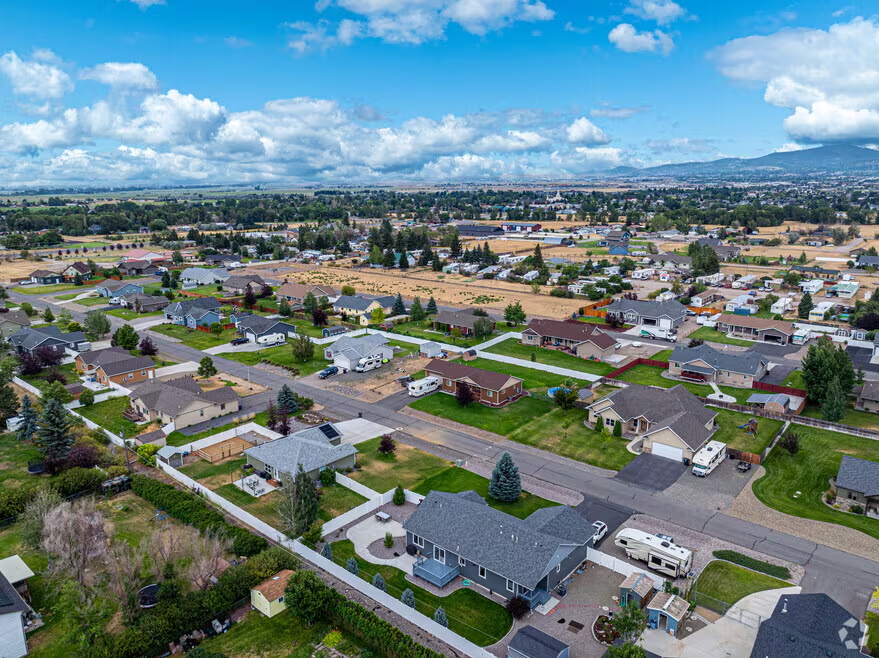
Helena sits at roughly 4,090 feet in elevation, and the city averages more than 45 inches of snowfall each winter - most of which eventually becomes groundwater pressing against foundations across the valley. That single fact explains why so many local restoration calls start in a basement.
Property damage rarely announces itself politely. A pipe splits behind a wall on a January night, a chimney fire fills a living room with soot, or a floor drain backs up during spring thaw.
Restoration services available to Helena homeowners and business owners include:
- Water Damage Restoration - moisture mapping, extraction, structural drying, and repair of affected building materials
- Flooded Basement - pumping standing water, drying below-grade concrete and framing, and salvaging stored belongings
- Sewage Cleanup - removal of contaminated water and materials, antimicrobial treatment, and safe disposal
- Fire Damage Restoration - debris removal, structural stabilization, soot cleaning, and reconstruction coordination
- Smoke Damage Restoration - odor neutralization, HVAC cleaning, and surface treatment for porous materials
- Mold Removal - containment, air filtration, removal of colonized materials, and moisture source correction
Key benefits for Helena residents include 24/7 emergency response, documentation that supports insurance claims, and drying methods matched to Montana's dry-but-freezing climate.
Common Damage Restoration Issues in Helena, Montana
Helena's terrain does much of the damage on its own. Neighborhoods below Mount Helena and the surrounding foothills sit downhill from significant snowpack, and meltwater follows gravity straight toward foundations.
Local Factors Behind Property Damage
- Sloped terrain and runoff - properties near Mount Helena City Park and the west-side hills catch concentrated snowmelt
- Deep freeze cycles - subzero nights split supply lines in crawl spaces, garages, and exterior walls
- Older sewer laterals - clay and cast-iron lines in historic districts crack and back up under heavy flow
- Wood heat and older wiring - stoves, chimneys, and dated electrical panels remain common fire sources
- Wildfire smoke - regional fires push smoke and fine particulate into homes through vents and windows
- Frozen ground - saturated soil that cannot absorb water forces it toward window wells and basement walls
Warning Signs Worth Acting On
- Musty odor in lower levels, especially after warm afternoons
- Water stains near ceilings, baseboards, or rim joists
- Warped hardwood, cupping laminate, or peeling paint
- Efflorescence - white powdery residue - on basement concrete
- Gurgling floor drains or slow-clearing fixtures
- Lingering smoke smell that returns when the furnace runs
Catching these early keeps a water problem from becoming a mold problem.
Neighborhoods We Serve in Helena
Coverage extends across the city and into the surrounding Helena Valley.
- Downtown and the Last Chance Gulch district - historic masonry buildings and mixed-use properties
- Mansion District and the South Hills - older homes with stone foundations and steep drainage
- Helena West Side - established residential streets near Mount Helena
- Helena Valley Northeast and Northwest - newer subdivisions on former agricultural ground
- Lockey Park, Rodney Street, and Sixth Ward areas
- Kessler and Broadwater neighborhoods
Surrounding communities served include East Helena, Montana City, Clancy, Jefferson City, Lincoln, Boulder, Townsend, and Canyon Ferry Lake properties. Crews familiar with Highway 12, I-15, and valley back roads reach these areas quickly, which matters when standing water is already spreading.
Seasonal Damage Patterns in Helena
Each season brings a different call volume pattern.
- December through February - frozen and burst pipes drive water damage calls; heating equipment, wood stoves, and space heaters raise fire and smoke damage risk during the coldest stretches.
- March through May - the heaviest flooded basement season, as uneven thaw and saturated soil push water through foundation cracks and window wells; sewage cleanup calls climb as overloaded lines back up.
- June through August - thunderstorms, hail, and wind-driven rain cause roof and window intrusion; wildfire season brings smoke damage and outdoor air quality concerns.
- September through November - mold removal requests peak as spring and summer moisture that went unnoticed finally shows itself; first hard freezes crack outdoor spigots and irrigation lines.
Year-Round Risks
- Appliance failures - water heaters, washing machines, dishwashers
- Sump pump breakdowns during power outages
- Slow supply-line leaks behind cabinets and walls
- Hidden mold in crawl spaces regardless of season
Housing Characteristics & Restoration Considerations
Helena's housing stock spans well over a century. Victorian-era homes near the Mansion District share the map with 1950s ranches, 1970s split-levels, and subdivisions built in the last twenty years out in the valley.
How Construction Age Shapes Restoration
- Pre-1940 homes - stone or brick foundations, plaster-and-lath walls, and balloon framing that lets water and smoke travel between floors unseen
- 1940s to 1970s homes - cast-iron drain lines prone to failure, minimal wall insulation, and asbestos-containing materials that require careful handling during fire and water repairs
- 1980s to 2000s homes - poured concrete basements with finished living space, meaning drywall, carpet, and framing all absorb water fast
- Newer valley construction - tight building envelopes that trap humidity and accelerate mold growth after any water event
Features That Complicate Cleanup
- Finished basements with carpet over concrete slab
- Crawl spaces with exposed dirt floors
- Wood stoves and masonry chimneys in older homes
- Add-on rooms with mismatched drainage and roof tie-ins
- Original hardwood that needs specialized drying rather than replacement
Plaster dries differently than drywall. Old-growth framing holds moisture longer. Restoration plans in Helena account for what the house is actually made of, not a generic template.
Environmental Conditions & Damage Implications
Helena's semi-arid climate is often assumed to prevent moisture problems. It does the opposite in one specific way - low outdoor humidity masks interior moisture until damage is advanced.
Climate and Air
- Roughly 12 inches of annual precipitation, concentrated in late spring
- Winter temperatures that drop well below zero, freezing pipes in unheated spaces
- Wide daily temperature swings that drive condensation inside walls and attics
- Summer wildfire smoke that deposits fine particulate on interior surfaces and in ductwork
Soil and Water
- Valley soils include clay-heavy layers that hold water against foundations rather than draining
- Rocky, shallow soils in the foothills channel runoff downhill instead of absorbing it
- Frozen ground in early spring prevents infiltration entirely, sending meltwater sideways
- Hard, mineral-rich water contributes to scale buildup and premature failure of supply lines and water heaters
What This Means for Restoration
- Drying equipment must be sized for cold-weather conditions, when outside air offers little dehumidifying help
- Mold removal often uncovers colonies in crawl spaces and behind vapor barriers rather than open rooms
- Smoke damage restoration frequently includes HVAC and duct cleaning because particulate settles system-wide
- Sewage cleanup requires attention to soil contamination where lines run beneath yards and slabs
Working With Insurance and Understanding Your Restoration Plan in Helena
The most stressful part of property damage is usually not the water on the floor. It is not knowing what happens next, what it involves, or who is responsible for which piece.
What Clear Communication Looks Like
- A walkthrough of the affected areas with you present, pointing out what is damaged and what is salvageable
- Written scope of work describing each phase - extraction, drying, cleaning, repair
- Photo and moisture-reading documentation captured from day one
- Plain-language explanation of why certain materials must be removed instead of dried
- Direct answers about what your policy typically covers and what it typically does not
How a Restoration Project Generally Unfolds
- Emergency call and dispatch - 24/7 response to stop the source and limit spread
- Assessment and documentation - moisture meters, thermal imaging, and photographs recorded for your claim
- Mitigation - water extraction, sewage removal, soot cleaning, or mold containment depending on the loss
- Drying and monitoring - air movers and dehumidifiers placed, with daily readings logged until materials reach dry standard
- Cleaning and deodorizing - antimicrobial application, smoke odor treatment, and contents cleaning
- Reconstruction - drywall, flooring, paint, and finish work to return the space to pre-loss condition
Questions Worth Asking Any Restoration Company
- Are technicians certified for water, fire, and mold work?
- Will you communicate directly with my adjuster?
- How will I know when the structure is actually dry?
- Who handles the rebuild once mitigation finishes?
Helena property owners deserve straight answers throughout. Call 406-991-4262 for emergency response any hour, any day.





