
Damage Restoration in Waterville, ME
- Damage Restoration Services Overview
- Common Damage Restoration Issues in Waterville, Maine
- Neighborhoods We Serve in Waterville
- Seasonal Damage Patterns in Waterville
- Housing Characteristics & Restoration Considerations
- Environmental Conditions & Damage Implications
- Emergency Response and the Restoration Process in Central Maine
Damage Restoration Services Overview
What happens in the first few hours after a pipe bursts, a basement fills, or smoke settles into every room of your house? In Waterville, those early decisions often determine whether a property is dried and repaired - or torn apart months later because moisture went unaddressed.
Central Maine properties face a specific mix of hazards: hard freezes, spring melt off the Kennebec, aging sewer laterals, and heating equipment that runs hard from October through April. Restoration work here covers the full arc of a loss, from extraction through reconstruction.
- Water Damage Restoration - extraction, structural drying, moisture mapping, and monitoring of framing, subfloor, and insulation.
- Flooded Basement - pump-out, removal of saturated storage and finishes, sanitizing of slab and foundation walls.
- Sewage Cleanup - containment, removal of contaminated porous materials, antimicrobial treatment of affected areas.
- Fire Damage Restoration - board-up, debris removal, soot cleaning, and coordination of rebuild work.
- Smoke Damage Restoration - odor neutralization, HVAC cleaning, treatment of walls, ceilings, and soft contents.
- Mold Removal - containment barriers, HEPA filtration, removal of colonized material, and correcting the moisture source.
The benefit for homeowners and business owners is straightforward: less material lost, fewer surprises during repairs, and a property that dries clean rather than hiding damage behind new drywall.
Common Damage Restoration Issues in Waterville, Maine
Waterville sits along the Kennebec River in a climate that swings from subzero January nights to humid July afternoons. That range puts constant stress on plumbing, foundations, roofs, and heating systems.
Frequent Causes of Loss
- Frozen and burst supply lines in crawl spaces, unheated ells, and exterior walls of older homes
- Ice dams along low-slope and north-facing roofs, pushing meltwater into ceilings and wall cavities
- Groundwater intrusion through fieldstone and block foundations during spring thaw and heavy rain
- Sump pump failure or power loss during storms, leaving basements to fill
- Sewer backups from root-intruded or undersized laterals connecting to city mains
- Heating-related fires from wood stoves, chimneys, furnaces, and space heaters
- Kitchen fires that spread greasy soot residue through duct systems
- Hidden mold behind vinyl wallpaper, under carpet padding, and inside closed-off basements
Warning Signs Worth Acting On
- Musty odor that intensifies when the furnace or AC cycles on
- Cupping or crowning hardwood floors near dishwashers, sinks, and exterior doors
- Efflorescence - white powdery mineral deposits - on basement walls
- Staining that reappears after painting, indicating an active leak
- Soot film on window glass, lampshades, or the tops of door casings after a small fire
- Gurgling floor drains or slow tub drainage, both early indicators of a sewer issue
Small clues in a Waterville home rarely stay small. Cold cavities dry slowly, which means a minor leak in February can support mold growth well before spring.
Neighborhoods We Serve in Waterville
Coverage extends across the city and out into the surrounding Kennebec County communities, with response for both residential and commercial properties.
- Downtown Waterville and Main Street corridor - mixed-use brick blocks, upper-floor apartments, and storefronts
- The South End and Water Street - dense older housing stock near the river
- Mayflower Hill and the Colby College area - single-family homes and student rentals
- North End and Kennedy Memorial Drive - postwar ranches, capes, and commercial plazas
- Sheldon Place, Silver Street, and Western Avenue neighborhoods
Surrounding service areas include Winslow, Oakland, Fairfield, Benton, Vassalboro, Sidney, Clinton, Belgrade, China, Albion, Augusta, and the smaller towns throughout Central Maine. Rural properties on private wells and septic systems receive the same response as in-town homes connected to municipal water and sewer.
Seasonal Damage Patterns in Waterville
Winter - December through February
- Burst pipes during extended cold snaps and after power outages
- Ice dam leaks into second-floor ceilings and attic insulation
- Chimney and wood stove fires, plus furnace puff-backs that coat interiors in soot
- Smoke odor spreading through forced-air systems in tightly sealed homes
Spring - March through May
- Snowmelt and frost heave drive water through foundation cracks and window wells.
- Saturated soils overwhelm sump pumps and perimeter drains, flooding basements.
- Rising groundwater and heavy rain contribute to sewer backups in older lines.
- Materials wet during winter begin producing visible mold as temperatures climb.
Summer - June through August
- High humidity fuels mold growth in basements, crawl spaces, and closed camps
- Condensation on ductwork and cold water lines wets ceilings and insulation
- Thunderstorms bring roof leaks and lightning-related fires
- Failed AC condensate lines soak walls and finished ceilings below
Fall - September through November
- First heating cycles reveal furnace and flue problems
- Clogged gutters and leaf debris redirect roof runoff toward foundations
- Outdoor burning and fireplace use raise fire and smoke damage risk
Housing Characteristics & Restoration Considerations
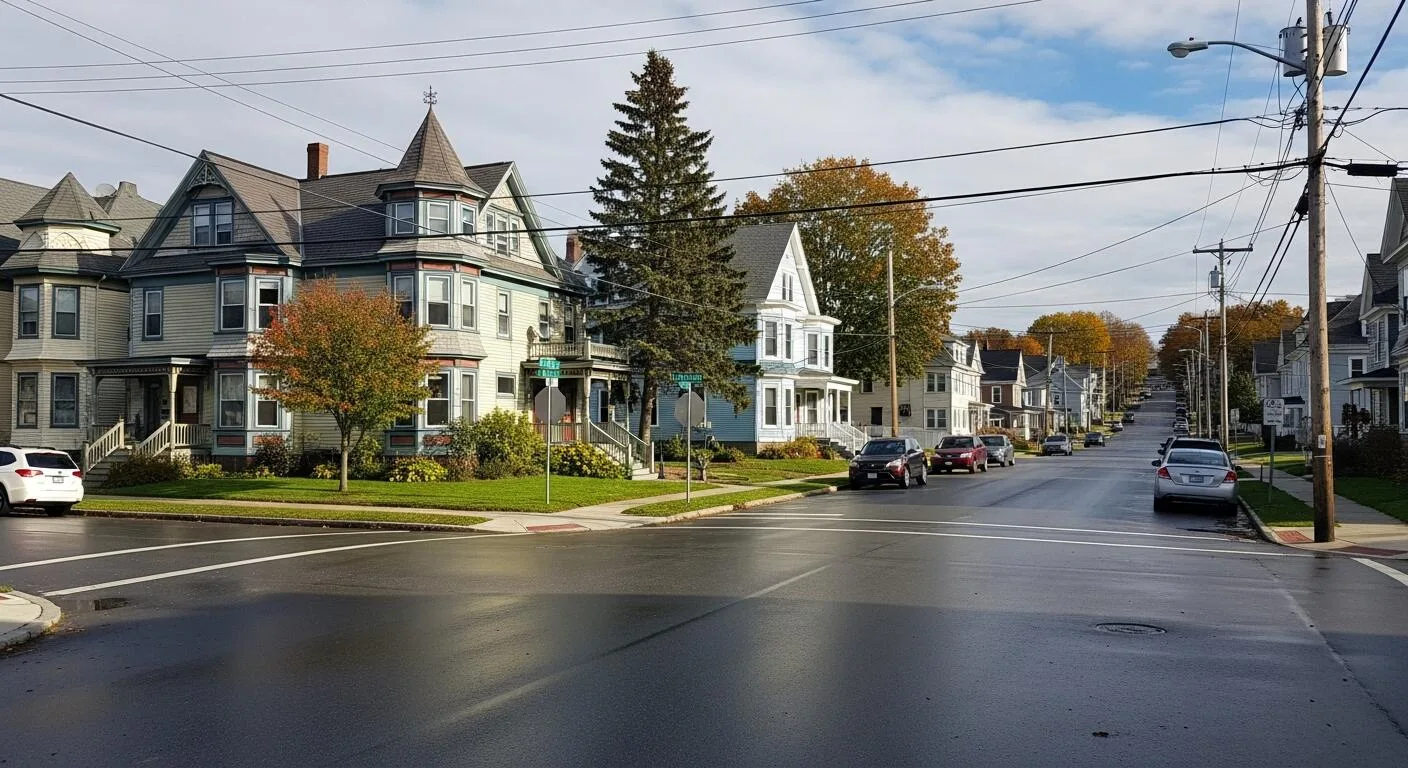
Waterville's housing stock skews old. A large share of homes date to the mill era and early twentieth century, joined by postwar ranches and capes and a smaller pool of recent construction on the outskirts.
Common Construction Types
- Late 1800s to early 1900s multi-family and single-family homes - balloon framing, plaster over wood lath, fieldstone or rubble foundations
- 1920s to 1940s bungalows and capes - narrow board sheathing, minimal cavity insulation, brick chimneys
- 1950s to 1970s ranches and splits - block foundations, finished basement rec rooms, forced hot air or baseboard heat
- Downtown brick blocks - shared walls, commercial ground floors, residential above
- Newer subdivisions - poured concrete foundations, engineered lumber, tighter envelopes
How Age Affects Restoration
- Balloon framing lets water and smoke travel vertically from basement to attic through open stud bays
- Plaster holds moisture longer than drywall and needs different drying strategies before it is condemned
- Fieldstone foundations wick groundwater continuously, so basement drying must address the source, not just standing water
- Knob-and-tube wiring and older panels require careful evaluation after any water or fire event
- Pre-1980 materials may contain asbestos or lead, calling for testing before demolition
- Finished basements built over slab without a vapor barrier are frequent sites of hidden mold
- Tight modern homes trap smoke odor and humidity, making air scrubbing and dehumidification more important
Environmental Conditions & Damage Implications
Location on the Kennebec River shapes nearly every aspect of moisture behavior in Waterville buildings.
Climate Factors
- Roughly 45 inches of annual precipitation plus 70 or more inches of snow in a typical winter
- Deep frost penetration that cracks foundations and stresses buried water lines
- Summer dew points regularly in the 60s, pushing basement relative humidity into mold-supporting range
- Wide daily temperature swings in shoulder seasons that drive condensation inside wall and roof assemblies
Soil, Water, and Air
- Glacial till, clay lenses, and river-valley sand and gravel drain unevenly, so hydrostatic pressure varies lot to lot
- High water tables near the river and its tributaries keep basement slabs damp year-round
- Radon is present across much of Central Maine, making sub-slab and crawl space work a health consideration as well as a moisture one
- Rural properties on wells and septic systems face contamination risk when flooding reaches wellheads or leach fields
- Wood smoke from stoves is a common winter air quality factor, and existing residue can complicate odor work after a fire
Practical Implications
- Drying plans must account for cold-season conditions where outside air offers no dehumidification help
- Sewage and floodwater events near the river should be treated as contaminated until proven otherwise
- Mold prevention depends on year-round humidity control, not seasonal cleanup alone
Emergency Response and the Restoration Process in Central Maine
Waterville property owners often ask what actually happens between the emergency call and the final walkthrough. The sequence is consistent whether the loss is a flooded basement in Winslow or a kitchen fire on Silver Street.
How a Project Typically Unfolds
- Emergency contact and triage - safety hazards, utility shutoffs, and the scope of the loss are identified before crews arrive.
- Inspection and damage assessment - moisture meters, thermal imaging, and category classification for water losses determine what can be dried and what must be removed.
- Water extraction or debris removal - truck-mounted extraction, pumping, board-up, and tarping stabilize the property.
- Removal of unsalvageable materials - saturated carpet pad, wet insulation, contaminated drywall, and fire-damaged finishes come out under containment.
- Drying and dehumidification - air movers and commercial dehumidifiers run with daily moisture readings logged until materials reach dry standard.
- Cleaning, sanitizing, and odor treatment - antimicrobial application, soot removal, HEPA vacuuming, duct cleaning, and deodorization.
- Restoration and reconstruction - drywall, paint, flooring, trim, and larger rebuild work return the property to pre-loss condition.
What Supports a Smoother Outcome
- Clear communication so property owners understand each recommendation before work begins
- Documentation of moisture readings and photos that support insurance claims
- Content pack-out to a secure facility for cleaning and storage when a home is uninhabitable
- Local crews familiar with Central Maine building styles, from mill-era duplexes to lakeside camps
- Coordination between mitigation and rebuild teams so nothing gets closed up while still wet
More than 16 years of work across Waterville, Augusta, and the surrounding towns has shown a consistent pattern: properties that get dried, cleaned, and rebuilt as one continuous process avoid the repeat problems that come from stopping halfway.





