
Damage Restoration in Diamondhead, MS
- Damage Restoration Services Overview
- Common Damage Restoration Issues in Diamondhead, Mississippi
- Neighborhoods We Serve in Diamondhead
- Seasonal Damage Patterns in Diamondhead
- Housing Characteristics & Restoration Considerations
- Environmental Conditions & Damage Implications
- Storm Response and What Diamondhead Homeowners Should Do First
Damage Restoration Services Overview
Water that sits for a weekend in a Diamondhead home rarely stays a water problem. It becomes swollen subfloor, delaminated cabinet bases, rusted fastener heads, and colonies of mold growing behind baseboards where nobody looks until the smell arrives. Fire and sewage losses follow the same pattern - the initial event is over in minutes, but acidic soot residue keeps etching metal and glass, and bacterial contamination keeps spreading through porous materials.
Our IICRC-certified technicians handle the full range of property losses across Hancock County and the Mississippi Gulf Coast:
- Water Damage Restoration - extraction, structural drying, moisture mapping, and monitoring until materials return to dry standard
- Flooded Basement and below-grade cleanup - pump-outs, saturated insulation removal, and dehumidification for slab-level and sunken living areas
- Sewage Cleanup - Category 3 water handling, contaminated material disposal, and antimicrobial treatment
- Fire Damage Restoration - debris removal, structural stabilization, and content salvage
- Smoke Damage Restoration - soot removal from surfaces and HVAC, thermal fogging, and odor neutralization
- Mold Removal - containment, HEPA filtration, affected material removal, and moisture source correction
Fast response protects framing, flooring, and indoor air quality. Call (228) 467-4450 any hour, any day.
Common Damage Restoration Issues in Diamondhead, Mississippi
Diamondhead sits inland from the beachfront communities of Bay Saint Louis and Waveland, but the bayous, drainage swales, and heavy clay soils around the golf course community create their own flooding profile. Rainfall arrives in intense bursts, and low-lying lots along the drainage corridors take on water quickly.
What causes most losses here
- Tropical systems and named storms pushing wind-driven rain through roof penetrations and window seals
- Summer thunderstorms dropping several inches in an hour, overwhelming yard drainage and sunken slabs
- Sewer backups when saturated ground and stormwater overload lateral lines
- Supply line and water heater failures in homes with original 1970s and 1980s plumbing
- Winter cold snaps freezing exposed hose bibs and uninsulated pipes in crawlspaces
- Electrical fires in older panels and original wiring, plus kitchen and grill-related ignitions
- HVAC condensate overflow and clogged drain pans feeding hidden mold growth
Warning signs worth acting on
- Musty odor that intensifies when the air handler cycles on
- Buckling, cupping, or hollow-sounding wood and laminate flooring
- Discoloration or bubbling paint along baseboards and around window casings
- Gurgling drains or slow toilets - often the first hint of a lateral line problem
- Persistent smoke odor that returns on humid days after a small kitchen fire
- Allergy or asthma symptoms that ease when family members leave the house
Neighborhoods We Serve in Diamondhead
We respond throughout Diamondhead and the wider Hancock County area, including:
- The residential streets surrounding the Diamondhead Country Club and both golf courses
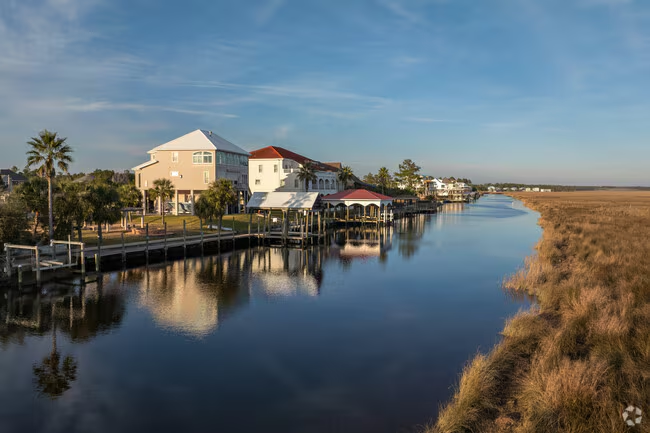
- Waterfront and canal-front properties along the Jourdan River side of the community
- Homes off Diamondhead Drive East and Diamondhead Drive West
- The commercial corridor near Interstate 10 and Highway 603
- Kiln, Bay Saint Louis, Waveland, and Pearlington
- Picayune and surrounding Pearl River County communities
Beyond Hancock County, our crews cover the full Mississippi Gulf Coast - Pass Christian, Long Beach, Gulfport, Biloxi, D'Iberville, Ocean Springs, Gautier, Pascagoula, and Moss Point, spanning Harrison and Jackson Counties. Staging equipment across the region means water extraction units, air movers, dehumidifiers, and HEPA scrubbers reach Diamondhead addresses quickly during widespread storm events, when demand spikes across every coastal community at once.
Seasonal Damage Patterns in Diamondhead
- December through February: Freeze events crack exposed pipes and hose bibs. Drier continental air occasionally pushes in, raising fire risk while heating systems run harder. Smoke damage calls rise with fireplace and space heater use.
- March through May: Severe thunderstorm and tornado season. Wind-driven rain, roof breaches, and flash flooding drive water damage and flooded lower-level calls. Rising humidity starts mold activity in previously wet materials.
- June through August: Peak mold season. Daily thunderstorms, sustained humidity above 70 percent, and overworked air conditioners create ideal growth conditions. Condensate overflows and sewage backups from saturated ground peak now.
- September through November: Height of hurricane and tropical storm activity. Widespread water intrusion, sewer surcharges, and post-storm generator and candle fires. Mold follows within days of any untreated saturation.
Damage rarely stays in one category here - a storm loss in September often becomes a mold remediation project by October if drying was incomplete.
Housing Characteristics & Restoration Considerations
Diamondhead was developed largely from the early 1970s onward, so much of the housing stock now carries 40 to 50 years of wear on original systems. Post-Katrina rebuilds and newer subdivisions add a second layer of construction styles.
Common construction features and what they mean
- Slab-on-grade foundations: Water spreads laterally under flooring instead of draining away. Wicking into wall cavities happens fast, and drying requires targeted equipment rather than surface fans.
- Sunken dens and split-level layouts: These function as the community's version of a flooded basement, collecting runoff and plumbing overflow at the lowest interior point.
- Crawlspace and pier-and-beam homes near the water: Ventilated undersides trap humid air, feeding joist and subfloor mold.
- Original 1970s plumbing and electrical: Aging supply lines fail without warning, and older panels and wiring raise ignition risk.
- Brick veneer over wood framing: Moisture hides behind masonry, requiring moisture meters and thermal imaging to locate.
- Blown insulation in attics: Holds soot and smoke odor long after visible cleanup, and stays wet after roof leaks.
Restoration plans account for these differences. A slab home with tile over saturated adhesive gets a different drying approach than a raised home with an open crawlspace, and homes with original ductwork usually need HVAC cleaning as part of any smoke or mold project.
Environmental Conditions & Damage Implications
The subtropical Gulf climate shapes every restoration decision in Diamondhead. Annual rainfall runs high, humidity stays elevated much of the year, and warm temperatures keep microbial activity going through most seasons.
Conditions that influence restoration work
- High ambient humidity: Open windows and box fans do not dry a structure here. Sealed environments with commercial dehumidification are required to pull moisture from framing and subfloor.
- Dense clay and silty soils: Poor percolation keeps stormwater at the surface longer, pushing it toward slabs and low entry points.
- High seasonal water table: Saturated ground contributes to hydrostatic pressure, seepage, and sewer line infiltration.
- Warm year-round temperatures: Mold can colonize wet materials within 24 to 48 hours instead of the longer window seen in cooler regions.
- Salt-laden coastal air: Accelerates corrosion on fasteners, HVAC coils, and electronics - a factor after both water and fire losses.
- Occasional dry winter air: Brief low-humidity stretches raise fire spread risk in homes and wooded lots.
Sewage cleanup carries added weight in this environment. Warm, contaminated water in a humid structure multiplies bacterial load rapidly, which is why Category 3 losses call for containment, removal of porous materials, antimicrobial application, and post-remediation verification before rebuilding starts.
Storm Response and What Diamondhead Homeowners Should Do First
When tropical systems move through South Mississippi, phones ring across Hancock County, Diamondhead, and Picayune simultaneously. Crews and equipment get staged ahead of forecasted events so response times hold up when demand spikes.
First steps after discovering damage
- Handle safety first. Shut off power to affected areas at the panel if it is safe to reach. Avoid standing water near outlets or submerged appliances.
- Stop the source if you can. Close the main water valve for supply line failures. Do not use plumbing fixtures during a sewer backup.
- Call for assessment. Reach us at (228) 467-4450 or (844) 725-6298. On-site inspections and estimates are provided at no charge throughout the Gulf Coast.
- Document everything. Photograph and video every room, appliance, and damaged item before anything is moved or removed.
- Move what you safely can. Lift furniture legs onto blocks or foil, and relocate documents, electronics, and valuables to dry space.
- Leave contaminated water alone. Sewage and floodwater require protective equipment and trained handling.
- Notify your insurer. Open a claim early - we work directly with adjusters and provide moisture readings, scope documentation, and drying logs.
What happens during our response
- Moisture mapping with meters and thermal imaging to find hidden saturation
- Extraction, then placement of air movers and dehumidifiers sized to the affected area
- Daily monitoring and readings until materials reach dry standard
- Containment and HEPA filtration where mold or soot is present
- Soot removal, odor neutralization, and HVAC cleaning on fire and smoke losses
- Clear communication about what can be salvaged and what needs replacement
Residential and commercial losses both get the same certified process - because in Diamondhead, the difference between a repair and a rebuild is usually measured in how fast someone showed up.





