
Damage Restoration in Lawrence, KS
- Damage Restoration Services Overview
- Common Damage Restoration Issues in Lawrence, Kansas
- Neighborhoods We Serve in Lawrence
- Seasonal Damage Patterns in Lawrence
- Housing Characteristics & Restoration Considerations
- Environmental Conditions & Damage Implications
- Sewage Backups and Contaminated Water in Lawrence Basements
Damage Restoration Services Overview
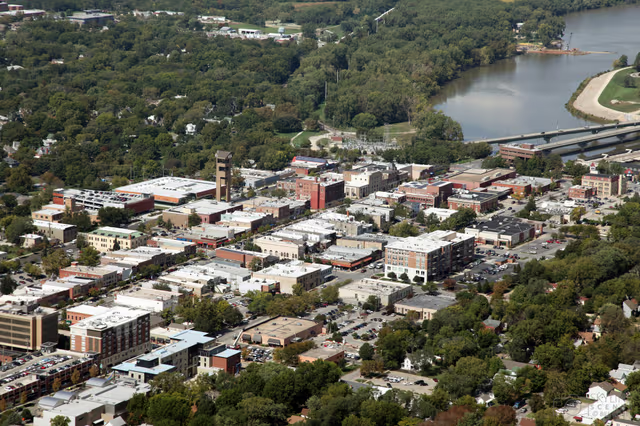
Lawrence sits in a river valley between the Kansas and Wakarusa Rivers - a location that shaped the city's history and also gave it a long record of flooding. That geography, combined with Kansas thunderstorm season, means local homeowners deal with water, fire, smoke, and mold problems more often than the average Midwestern city.
Restoration work here covers a wide range of emergencies, and most properties eventually need at least one of them:
- Water Damage Restoration - extraction, structural drying, and moisture mapping after pipe breaks, appliance failures, and roof leaks
- Flooded Basement - pumping standing water, drying foundation walls, and salvaging finished lower levels
- Sewage Cleanup - safe removal of contaminated material, disinfection, and odor control after backups
- Fire Damage Restoration - debris removal, soot cleaning, board-up, and reconstruction of damaged framing and finishes
- Smoke Damage Restoration - air scrubbing, deodorizing, and cleaning of surfaces and contents affected by residue
- Mold Removal - containment, removal of colonized materials, and correction of the moisture source
The benefit of acting quickly is straightforward: drying a wet basement within the first day or two often prevents a mold job later, and cleaning soot before it sets protects finishes that would otherwise need full replacement. Fast response protects both your building and your budget.
Common Damage Restoration Issues in Lawrence, Kansas
Most restoration calls in Douglas County trace back to a handful of repeat causes tied to weather, terrain, and building age.
What Triggers Damage Locally
- Missing or cracked shingles after hail and straight-line winds, opening a path for rain
- Water intrusion showing up as ceiling or wall stains days after a storm
- Broken or cracked windows from flying debris during spring storm cells
- Fallen tree limbs damaging roofs, gutters, and fences in older tree-lined neighborhoods
- Flooding in lower-lying parts of yards and basements near the river bottoms
- Frozen and burst supply lines during January cold snaps
- Municipal or lateral sewer backups when heavy rain overwhelms drainage
- Kitchen fires, space heater fires, and chimney fires during the heating season
Warning Signs Worth Acting On
- Shingles scattered across your yard or driveway after a storm
- New leaks or damp spots inside after rain
- Gutters hanging loose or torn from the roofline
- A musty smell in a basement, crawlspace, or closet
- Buckling flooring, bubbling paint, or soft drywall near the baseboard
- Gurgling floor drains or slow toilets, which often precede a sewage backup
- Lingering smoke odor that returns on humid days after a small fire
Recognizing these patterns helps you take timely action, which saves money and stress later. Damage rarely stays contained to one room - water travels along framing, and smoke residue moves through ductwork into spaces the fire never touched.
Neighborhoods We Serve in Lawrence
Restoration crews respond across Lawrence and the surrounding Douglas County communities, including:
- Old West Lawrence and East Lawrence - historic homes with stone foundations, plaster walls, and mature trees
- Oread and the campus area - rentals and student housing near the University of Kansas
- Pinckney and North Lawrence - low-lying areas near the Kansas River with a long flooding history
- Brook Creek, Barker, and Centennial - mid-century homes with finished basements
- West Lawrence, Alvamar, and Fall Creek - newer subdivisions with slab and poured foundations
- Southwest Lawrence and the Wakarusa corridor - properties near creek drainage
- Haskell area, Prairie Park, and Deerfield
Service also extends to Eudora, Baldwin City, Lecompton, Perry, Tonganoxie, and Ottawa, along with commercial properties downtown along Massachusetts Street and in the research and industrial parks.
Seasonal Damage Patterns in Lawrence
Each season brings its own restoration workload in northeast Kansas.
- March through June - peak severe weather. Hail and wind strip shingles, driving rain enters through damaged roofs and broken windows, and saturated ground pushes water into basements. Sewage backups spike when downpours overload drainage.
- July and August - heat and humidity drive mold growth in basements, crawlspaces, and behind wall cavities that never fully dried out in spring. Air conditioning condensate line clogs cause quiet, slow water damage.
- September through November - clogged gutters from falling leaves send water down foundation walls. Chimney and furnace startup fires begin, bringing early smoke damage calls.
- December through February - frozen and burst pipes in unheated garages, crawlspaces, and exterior walls. Ice dams back water under shingles. Space heaters, candles, and cooking fires make winter the busiest fire and smoke season.
Thaw cycles in late February and early March combine snowmelt with rain, which is a common trigger for flooded basements before storm season even starts.
Housing Characteristics & Restoration Considerations
Lawrence has an unusually wide range of housing stock for a city its size - Victorian-era homes near downtown, post-war ranches, dense student rentals, and newer construction on the west side. Each responds differently to water, fire, and mold.
Older Homes (pre-1950)
- Stone or block foundations that wick moisture and seep during heavy rain
- Plaster and lath walls that hold water longer than drywall and need slower, controlled drying
- Cast iron and clay sewer laterals prone to root intrusion and backups
- Knob-and-tube or aged wiring that raises fire risk and complicates post-fire repairs
- Original wood trim and floors that often justify cleaning and restoration rather than replacement
Mid-Century Homes (1950s-1980s)
- Finished basements with paneling, carpet pad, and framed walls that trap water out of sight
- Galvanized or early copper plumbing nearing the end of service life
- Limited or no vapor barriers, which encourages mold behind finished lower-level walls
Newer Construction and Rentals
- Engineered wood flooring and MDF trim that swell quickly and need fast extraction
- Tight building envelopes that hold smoke odor and humidity longer
- Multi-unit rentals near campus where one supply line failure affects several units and shared walls
Crews adjust drying equipment placement, containment, and cleaning methods based on these differences - a plaster wall in Old West Lawrence and a drywall basement in Fall Creek are not treated the same way.
Environmental Conditions & Damage Implications
Local climate and ground conditions shape how damage develops and how restoration is handled.
- Humid continental climate - hot, humid summers keep indoor moisture high, which accelerates mold after any water event. Dehumidification matters as much as extraction here.
- Heavy rainfall bursts - Kansas storms drop large volumes in short windows, overwhelming gutters, window wells, and sump systems faster than steady rain would.
- River valley geography - proximity to the Kansas and Wakarusa Rivers means high water tables in North Lawrence and other bottomland areas, with hydrostatic pressure pushing water through foundation cracks.
- Expansive clay soils - eastern Kansas clay swells when wet and shrinks in drought. That cycle stresses foundation walls, opens cracks, and creates repeat basement seepage points.
- Poor drainage soils - clay drains slowly, so water pools against foundations long after a storm passes.
- Seasonal air quality - regional agricultural burning, pollen, and summer haze already burden indoor air, so smoke residue and mold spores compound respiratory irritation.
- Hard, mineral-rich water - scale buildup shortens water heater and supply line life, a frequent source of sudden indoor flooding.
These conditions explain why drying alone is not enough. Grading, downspout extensions, sump pump backups, and vapor barriers are often recommended alongside the restoration itself so the same basement does not flood again the next spring.
Sewage Backups and Contaminated Water in Lawrence Basements
Of all the restoration categories, sewage cleanup is the one Lawrence homeowners are least prepared for - and the one where do-it-yourself efforts cause the most harm. When storm runoff surges through older combined drainage areas or a root-clogged clay lateral gives way, wastewater comes up through floor drains, basement toilets, and laundry standpipes.
Why It Requires Professional Handling
- Category 3 water carries bacteria, viruses, and parasites that shop vacuums and household cleaners do not neutralize
- Porous materials - carpet, pad, drywall, particleboard, upholstered furniture - generally cannot be disinfected and must be removed
- Contaminants wick upward into wall cavities well above the visible waterline
- Improper drying spreads aerosolized bacteria through the HVAC system
- Residual moisture in a contaminated space almost always turns into a mold problem
How the Process Typically Works
- Assessment of the source, contamination category, and affected square footage
- Containment with barriers and negative air pressure to protect the rest of the home
- Extraction of standing wastewater and removal of unsalvageable materials
- Cleaning and antimicrobial treatment of framing, concrete, and remaining hard surfaces
- Structural drying with air movers and dehumidifiers, monitored with moisture meters
- Air scrubbing and deodorizing to eliminate lingering odor rather than mask it
- Reconstruction of flooring, drywall, and finishes once readings confirm the space is dry
Steps That Reduce Your Risk
- Install a backwater valve on the sewer lateral, especially in low-lying neighborhoods
- Have older clay laterals camera-inspected for root intrusion before storm season
- Keep a battery backup sump pump in finished basements
- Store valuables and documents off basement floors on shelving
- Extend downspouts several feet from the foundation to reduce hydrostatic pressure
Documentation matters too. Photographs, moisture logs, and itemized material inventories support insurance claims and make the difference between a smooth settlement and a drawn-out one.





