Damage Restoration in Cass County, ND
- Damage Restoration Services Overview
- Common Damage Restoration Issues in Cass County, North Dakota
- Neighborhoods We Serve in Cass County
- Seasonal Damage Patterns in Cass County
- Housing Characteristics & Restoration Considerations
- Environmental Conditions & Damage Implications
- Spring Snowmelt, Sump Failures, and Flooded Basement Recovery in the Red River Valley
Damage Restoration Services Overview
Water spreads through drywall, subfloor, and insulation within minutes, and mold colonies can begin forming in as little as 24 to 48 hours. In fire and smoke situations, acidic soot residues start etching metal, glass, and finishes almost immediately. Fast action protects both your property and your budget.
Homeowners and business owners across Cass County rely on a full range of emergency and reconstruction services, delivered with free estimates and a 60-minute response target:
- Water Damage Restoration - extraction, structural drying, moisture mapping, and content protection after burst pipes, appliance failures, or roof leaks.
- Flooded Basement - pump-outs, sump failure recovery, and drying of below-grade spaces common in Red River Valley homes.
- Sewage Cleanup - containment, removal of contaminated materials, and antimicrobial treatment after backups and floor drain overflows.
- Fire Damage Restoration - board-up, debris removal, structural cleaning, and rebuild coordination.
- Smoke Damage Restoration - soot removal, thermal fogging, HVAC cleaning, and odor neutralization.
- Mold Removal - containment barriers, HEPA filtration, material removal, and moisture source correction.
Every project follows a proven sequence: assess the damage, remove the water, dehumidify and dry the structure, then sanitize and restore. Documentation for insurance carriers is prepared throughout.
Common Damage Restoration Issues in Cass County, North Dakota
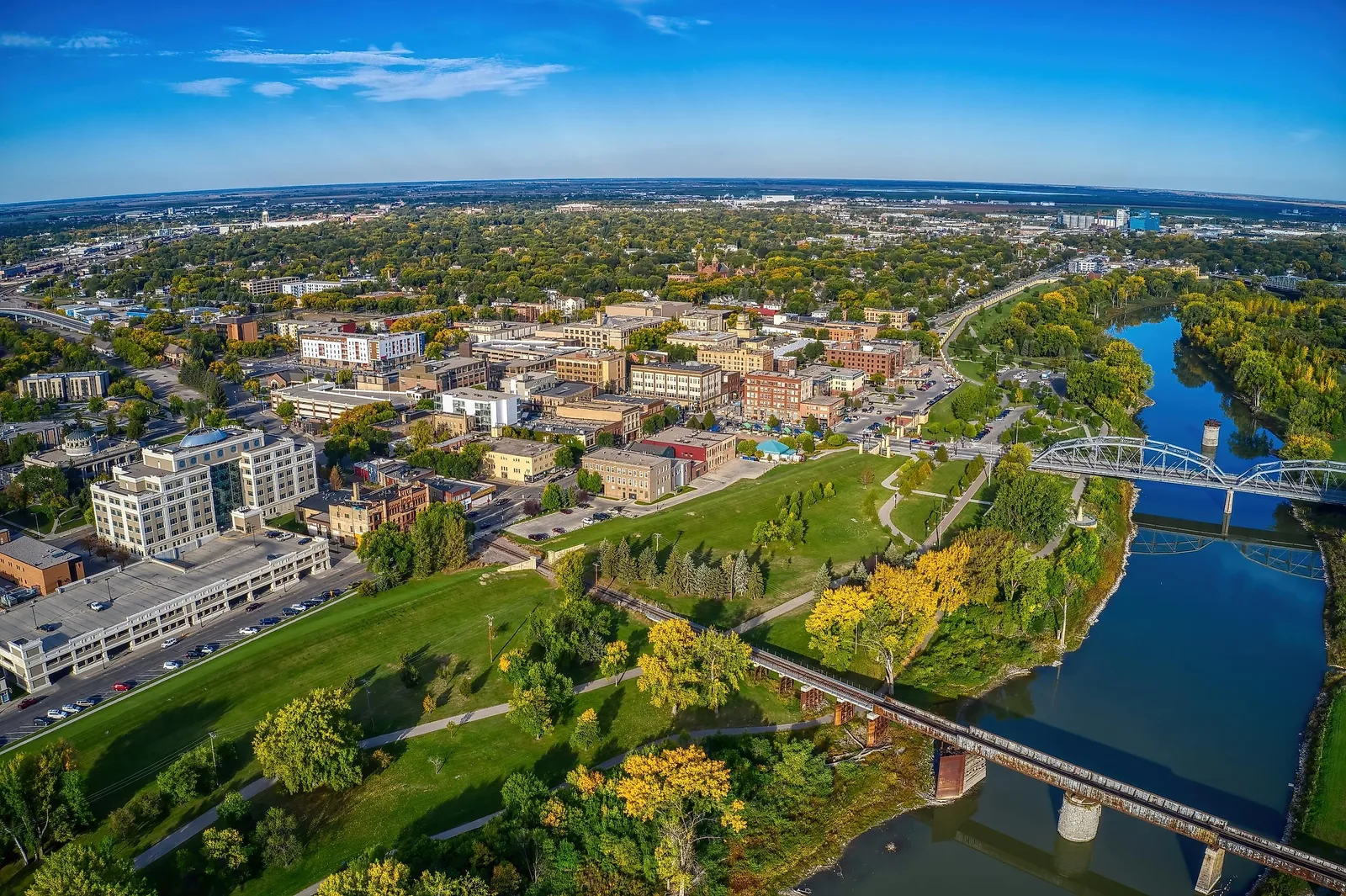
Cass County sits in the flat Red River Valley, where poor natural drainage, heavy clay soils, and extreme temperature swings create a demanding environment for buildings. Snowmelt has nowhere to go, and frost depths can exceed six feet.
Frequent Causes of Loss
- Frozen and burst pipes in exterior walls, crawl spaces, and unheated garages during January and February cold snaps
- Spring snowmelt and overland flooding pushing groundwater against foundation walls and through window wells
- Sump pump and backup power failures during storms, leading to flooded basements within hours
- Sanitary sewer backups when municipal lines surcharge during heavy rain events
- Ice damming along eaves, forcing water into attics, ceilings, and wall cavities
- Kitchen and heating-appliance fires, plus furnace puffbacks that distribute soot through entire homes
- Hidden mold growth behind finished basement paneling, under carpet pads, and inside sill plate areas
Warning Signs Worth Acting On
- Musty or earthy odors that intensify when the furnace or AC runs
- Efflorescence, white chalky staining, or peeling paint on basement walls
- Cupping hardwood, soft spots in subfloor, or tack strip rust lines
- Gurgling floor drains or slow basement fixtures
- Sooty film on windowsills, lampshades, and vent registers after a small fire
- Unexplained allergy or asthma flare-ups among household members
Neighborhoods We Serve in Cass County
Crews cover the entire Cass and Clay County corridor, from dense Fargo neighborhoods to rural farmsteads and small-town main streets.
- Fargo - downtown, Roosevelt, Hawthorne, Horace Mann, Madison, Osgood, Rose Creek, Timber Creek, and Prairie Farms
- West Fargo - Eagle Run, The Preserve, Deer Creek, and Sheyenne Street commercial corridors
- Horace, Harwood, Mapleton, Casselton, and Kindred
- Argusville, Gardner, Hunter, Arthur, Page, and Buffalo
- Davenport, Leonard, Grandin, Reile's Acres, Frontier, and Briarwood
- Moorhead and Dilworth across the Red River in Clay County
Service extends to single-family homes, apartment buildings, student rentals near NDSU, churches, restaurants, clinics, warehouses, and agricultural outbuildings.
Seasonal Damage Patterns in Cass County
Winter (December - February)
- Frozen and burst supply lines, the single largest driver of winter water damage calls
- Ice dams pushing meltwater into attic insulation and ceilings
- Heating-related fires, chimney fires, and furnace puffbacks producing widespread smoke damage
Spring (March - May)
- Snowmelt and Red River rise causing flooded basements and crawl space saturation
- Sump pump overload and sewage backups during rapid thaw combined with rainfall
- Mold growth beginning in materials that stayed damp through winter
Summer (June - August)
- Severe thunderstorms, hail, and wind-driven rain leading to roof and window leaks
- Power outages disabling sump pumps and dehumidifiers
- Peak mold season as humidity climbs and basements sweat
- Grilling, fireworks, and electrical fires
Fall (September - November)
- Condensation issues as warm interior air meets cooling foundation walls
- Water heater and appliance failures discovered after summer vacancies
- First-use furnace fires and smoke odors from dust burn-off or blocked flues
Housing Characteristics & Restoration Considerations
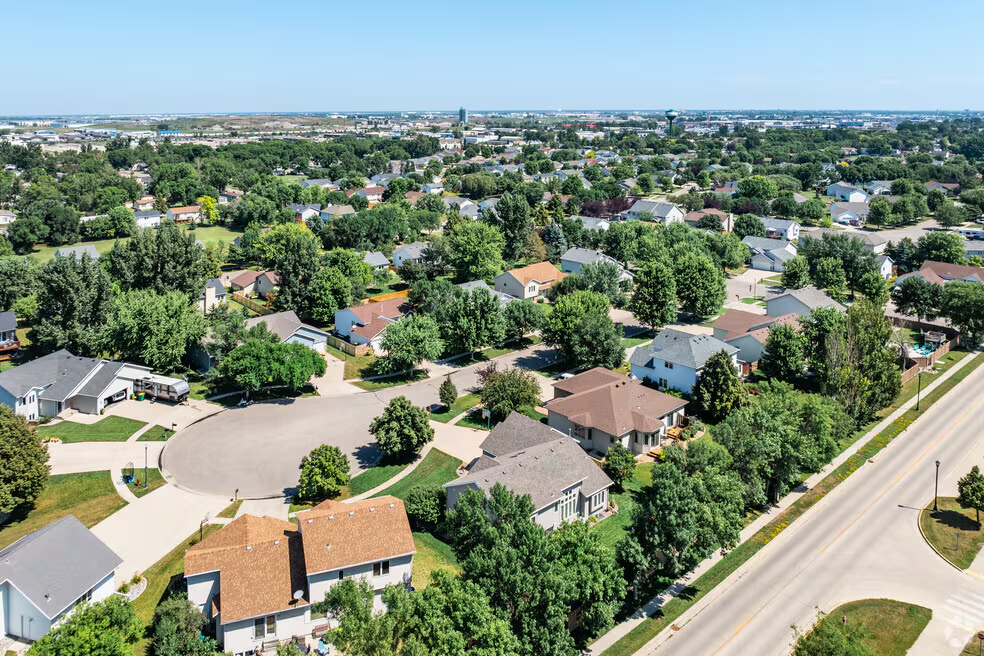
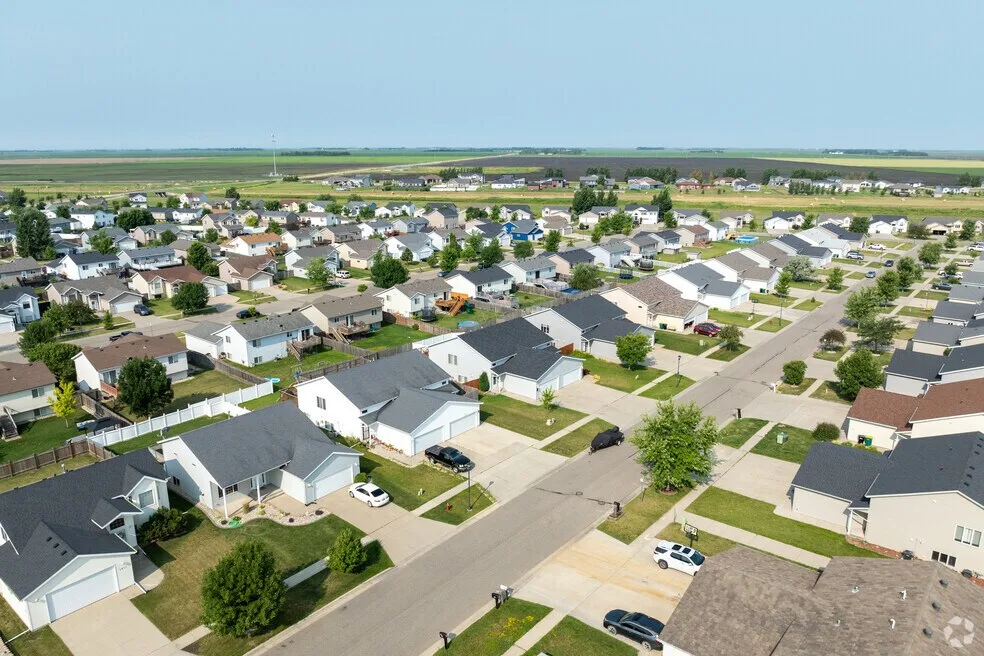
Cass County housing spans century-old farmhouses, mid-century post-war neighborhoods, and rapidly built subdivisions in West Fargo, Horace, and south Fargo. Nearly all homes here have full basements, which concentrates risk below grade.
How Local Construction Shapes Restoration
- Pre-1950 homes - stone, brick, or unreinforced concrete foundations with high permeability; often contain plaster, balloon framing, and knob-and-tube remnants. Drying takes longer, and asbestos or lead testing may apply before demolition.
- 1950s - 1980s homes - block foundations, finished basement rec rooms with wood paneling and carpet over slab, prime hiding places for mold after flooding.
- 1990s - present builds - poured walls, drain tile, and sump systems; faster to dry but with sealed envelopes that trap smoke odor and humidity.
- Egress windows and window wells - common entry points for overland water during spring melt.
- Deep frost-line plumbing - repairs after freeze breaks often require careful cavity access and targeted structural drying.
- Attached garages and shared HVAC - accelerate smoke spread, making duct cleaning a standard part of fire recovery.
Sewage cleanup in older homes frequently involves clay or cast-iron laterals prone to root intrusion and cracking. Restoration plans account for material age, salvageability, and the reality that thick insulation and vapor barriers hold moisture far longer than surface readings suggest. Moisture meters and thermal imaging guide selective removal rather than blanket demolition.
Environmental Conditions & Damage Implications
The county's continental climate produces temperature swings exceeding 130 degrees between January lows and July highs, plus roughly 20 inches of annual precipitation and 40 or more inches of snow. That combination stresses building envelopes year-round.
Local Conditions That Influence Every Project
- Heavy Fargo clay soils - low permeability keeps water perched against foundations, extending hydrostatic pressure long after surface water recedes.
- Flat valley topography - minimal grade means slow drainage and repeated overland flow across yards and driveways.
- High spring water tables - continuous sump discharge and slab seepage that must be controlled before drying can succeed.
- Hard, mineral-rich water - scale buildup shortens water heater and supply line life, raising failure risk.
- Very low winter humidity - helps drying but causes wood shrinkage and joint separation that create new leak paths.
- Humid, still summer air - basement dew point conditions allow mold on cold walls without any leak at all.
- Agricultural dust and regional wildfire smoke drift - complicate indoor air quality assessments and filtration planning.
These realities shape equipment choices. Low-grain refrigerant dehumidifiers and desiccant units handle saturated clay-adjacent basements, negative air machines with HEPA filtration control mold spores and soot particulate, and antimicrobial application addresses the bacterial load carried by floodwater and sewage. Post-drying verification with documented moisture readings confirms materials reached dry standard before reconstruction begins.
Spring Snowmelt, Sump Failures, and Flooded Basement Recovery in the Red River Valley
No hazard defines Cass County property risk like spring melt. When frozen clay soil cannot absorb runoff, water travels sideways toward the lowest point available - often a basement window well, foundation crack, or floor drain. Add a saturated sanitary system and a single pump that cannot keep up, and a finished basement floods in under an hour.
How Flooded Basement Response Works
- Safety and source control - verify electrical safety, identify whether water is clean, gray, or sewage-contaminated, and stop or divert the source.
- Extraction - truck-mounted and portable pumps remove standing water; submersible units handle continuing infiltration.
- Selective demolition - carpet pad, saturated drywall bottoms, wet insulation, and contaminated contents are removed and documented.
- Sanitizing - antimicrobial treatment applied to framing, slab, and salvageable surfaces, with containment used for sewage events.
- Structural drying - air movers plus dehumidifiers, with cavity drying systems for wall interiors and daily moisture logs.
- Verification and restoration - readings confirm dry standard, then rebuild of drywall, trim, flooring, and paint.
Prevention Steps Worth Taking Before the Melt
- Test your sump pump and install a battery or water-powered backup
- Clear snow at least six feet from foundation walls and window wells
- Add downspout extensions and correct negative grading around the house
- Install a backwater valve if sewer backups have occurred before
- Insulate pipes on exterior walls and keep cabinet doors open in deep cold
- Move stored valuables off basement floors onto shelving or pallets
Because no two homes drain the same way, each recovery plan is built around your soil conditions, foundation type, and finish materials rather than a fixed template. Free estimates and rapid response help limit secondary damage such as mold growth and warped framing.