
Damage Restoration in Fargo, ND
- Damage Restoration Services Overview
- Common Damage Restoration Issues in Fargo, North Dakota
- Neighborhoods We Serve in Fargo
- Seasonal Damage Patterns in Fargo
- Seasonal Damage Patterns in Fargo
- Housing Characteristics & Restoration Considerations
- Environmental Conditions & Damage Implications
- Red River Flooding, Sewer Backups, and Insurance Documentation in Fargo
Damage Restoration Services Overview
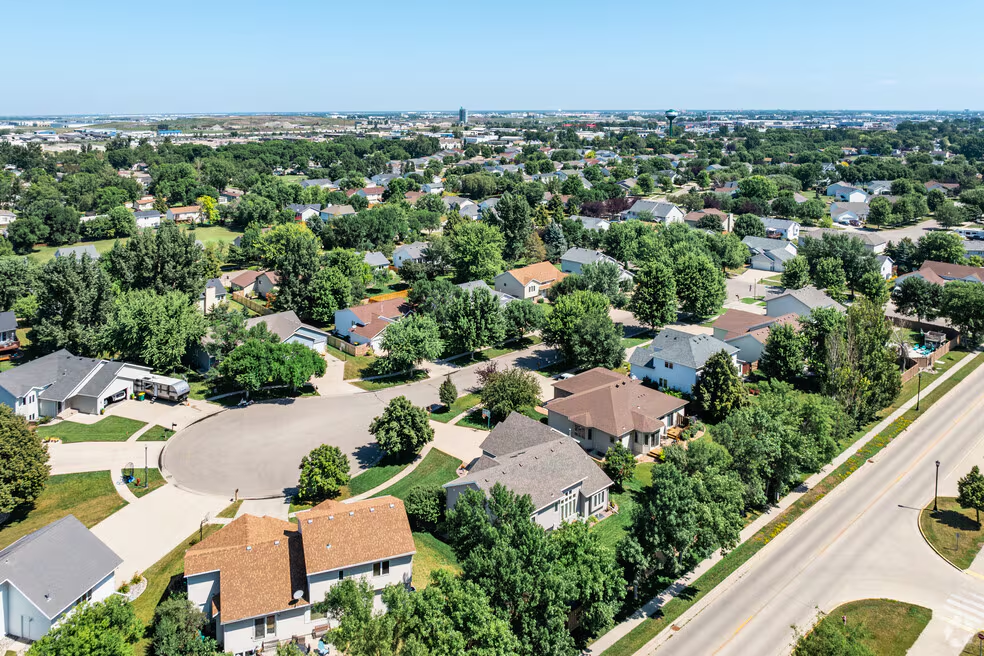
Fargo sits in the Red River Valley - one of the flattest river basins in North America, with a river that flows north and floods almost every spring. That geography alone puts local basements at higher risk than most Midwest cities, and it explains why restoration work here is a year-round need rather than an occasional emergency.
Property owners across Fargo rely on a full slate of mitigation and rebuild services, each addressing a different failure point in a home or commercial building:
- Water Damage Restoration - moisture mapping, extraction, structural drying, and dehumidification after pipe breaks, appliance failures, or roof leaks
- Flooded Basement Cleanup - groundwater intrusion, sump pump failure, and window well overflow response
- Sewage Cleanup - safe removal of Category 3 contaminated water from backed-up floor drains and sanitary lines
- Fire Damage Restoration - structural stabilization, debris removal, contents cleaning, and reconstruction
- Smoke Damage Restoration - soot removal, thermal fogging, HVAC cleaning, and odor neutralization
- Mold Removal - containment, HEPA filtration, affected material removal, and antimicrobial treatment
The benefit of handling these under one roof is continuity. A frozen supply line that floods a basement can create mold within days and may involve contaminated water if a floor drain is involved. Coordinated crews with moisture meters, thermal imaging, air movers, and IICRC-aligned training address each layer in the correct order, protecting both the building and the health of the people inside it.
Common Damage Restoration Issues in Fargo, North Dakota
Fargo's flat clay-heavy terrain, extreme temperature swings, and older housing stock combine to produce a predictable set of restoration calls.
Leading Causes of Damage
- Spring snowmelt and Red River rise - saturated soil pushes groundwater against foundation walls and up through floor drains
- Frozen and burst pipes - lines in unheated crawl spaces, garages, and exterior walls fail during deep January cold snaps
- Sump pump failure - a single power outage during a heavy rain can flood a finished basement in hours
- Sanitary sewer backups - combined load during rapid melt or thunderstorms forces wastewater back through basement drains
- Ice damming - snow melts over warm attics, refreezes at eaves, and drives water into ceilings and wall cavities
- Heating and cooking fires - furnace, wood stove, and space heater use spikes through the long heating season
- Hidden mold - tightly sealed, insulated homes trap humidity behind vapor barriers and finished basement framing
Warning Signs Fargo Homeowners Should Watch
- Efflorescence, white chalky streaks, or fresh cracks on basement block walls
- Musty odors that intensify when the furnace or air handler cycles
- Buckling laminate, cupping hardwood, or soft spots in basement carpet padding
- Water staining at ceiling corners on north-facing eaves after a thaw
- Gurgling floor drains or slow basement fixtures during rainfall
- Lingering smoke odor weeks after a small kitchen or furnace puff-back
- Condensation on the inside of windows through the winter months
Documenting these early gives restoration technicians a smaller area to dry, less material to remove, and a shorter path back to pre-loss condition.
Neighborhoods We Serve in Fargo
Restoration crews cover the full Fargo-Moorhead metro and the surrounding Cass County communities, including:
- Downtown and Roosevelt - century-old homes, brick commercial buildings, and converted lofts near Broadway
- Hawthorne, Horace Mann, and Madison - older neighborhoods with stone and block foundations
- Osgood, Rose Creek, and Timber Creek - newer subdivisions in south Fargo with finished basements
- Village West and areas near the Fargodome and NDSU campus - rental properties and student housing
- North Fargo and El Zagal area - properties closest to the Red River corridor
- West Fargo, Horace, Harwood, and Mapleton
- Moorhead and Dilworth, Minnesota, just across the river
Familiarity with local building codes and permitting expectations in both Fargo and West Fargo keeps reconstruction work compliant and inspection-ready, which matters when insurance documentation depends on properly permitted repairs.
Seasonal Damage Patterns in Fargo
Seasonal Damage Patterns in Fargo
- December through February - burst pipes, ice dams, furnace puff-backs, and heating-related fire and smoke damage dominate. Vacant properties and unheated garages are the most common loss sites.
- March and April - peak season for flooded basements. Snowmelt over frozen ground has nowhere to go, overwhelming sump systems and sewer laterals throughout the valley.
- May and June - heavy thunderstorms bring window well overflow, roof leaks, and sewage backups. Mold from spring flooding begins surfacing in wall cavities that were never fully dried.
- July and August - humidity climbs and mold growth accelerates in basements and crawl spaces. Air conditioning condensate line clogs and failed water heaters add to water damage volume.
- September and October - grilling, fire pit, and early furnace startup fires appear. This is the ideal window for sump pump testing, gutter clearing, and mold inspections before freeze-up.
- November - first hard freezes expose vulnerable supply lines, hose bibbs, and poorly insulated exterior walls.
Because these patterns repeat annually, seasonal preparation - backup sump power, pipe insulation, and dryer vent cleaning - measurably reduces claim frequency.
Housing Characteristics & Restoration Considerations
Fargo's housing stock spans more than a century, and construction era heavily influences how a loss is handled.
Pre-1950 Homes (Downtown, Hawthorne, Horace Mann)
- Fieldstone, brick, or unreinforced block basement walls that wick moisture readily
- Plaster and lath walls that hold soot deeply and require specialized smoke cleaning
- Balloon framing that allows smoke and water to travel vertically between floors
- Possible asbestos-containing floor tile, mastic, or pipe wrap requiring testing before demolition
- Galvanized or cast iron drain lines prone to sewage backups
1960s-1990s Homes
- Poured concrete basements with paneled or carpeted finishes that trap moisture
- Original sump pits without battery backup or secondary pumps
- Fiberglass batt insulation in rim joists where hidden mold commonly appears
Newer Construction and Multifamily
- Tight building envelopes with low natural air exchange, so humidity and smoke odor linger
- Fully finished basements with egress windows, wet bars, and bedrooms - high-value contents at the lowest elevation
- Engineered flooring and MDF trim that swell quickly and rarely survive extended saturation
- Shared walls and stacked plumbing in apartments and condos, allowing a single failure to affect multiple units
Technicians adjust drying strategy accordingly - cavity drying with injectidry systems for plaster walls, controlled demolition for MDF and drywall, and desiccant dehumidification in tightly sealed newer homes where conventional equipment struggles to pull moisture out fast enough.
Environmental Conditions & Damage Implications
Local climate and soil conditions shape nearly every restoration decision made in Fargo.
- Fargo clay soil - the valley's lacustrine clay expands when wet and contracts when dry, stressing foundation walls and creating the cracks that let groundwater in. Slow drainage means water sits against footings for days after heavy rain.
- Flat topography - minimal natural grade limits how fast surface water moves away from structures, making proper lot grading and downspout extension unusually important.
- Extreme temperature range - swings from well below zero to above 90°F drive freeze-thaw cracking in concrete and stress plumbing joints.
- Winter humidity control - furnaces dry indoor air, but sealed homes with humidifiers can push moisture into cold wall cavities, feeding hidden mold.
- Summer dew points - Red River Valley humidity supports mold growth on cool basement surfaces without any visible leak at all.
- Hard, mineral-rich water - scale buildup shortens the life of water heaters and supply valves, a frequent source of sudden interior flooding.
- Regional wildfire smoke and spring field dust - both degrade indoor air quality and load HVAC filters, compounding respiratory concerns after any fire or mold event.
These realities mean drying is verified with moisture meters and hygrometer readings rather than assumed, and post-remediation air filtration is treated as part of the job rather than an add-on. Documented daily readings confirm that materials reach dry standard before reconstruction begins.
Red River Flooding, Sewer Backups, and Insurance Documentation in Fargo
No topic matters more to Fargo property owners than spring flooding and the sewer backups that accompany it. The city has invested heavily in permanent levees, floodwalls, and the diversion project, but individual basements still fail from groundwater pressure, sump pump outages, and overloaded sanitary lines.
How Category 3 Water Is Handled
- Safety assessment - power isolation, gas check, and confinement of the affected zone before anyone enters standing water
- Containment - poly barriers and negative air machines with HEPA filtration prevent cross-contamination into living space
- Extraction - truck-mounted or portable pumps remove bulk contaminated water
- Controlled removal - carpet, pad, insulation, and affected drywall are cut back to unaffected material and disposed of per regulation
- Cleaning and disinfection - hard surfaces are washed and treated with EPA-registered antimicrobials
- Structural drying - air movers and dehumidifiers run with daily moisture logging until dry standard is met
- Clearance and rebuild - verification readings, then reconstruction of removed materials
Documentation That Protects Your Claim
- Photo and video record of pre-mitigation conditions in every affected room
- Moisture maps showing the migration path through floors, walls, and cavities
- Daily psychrometric logs of temperature, relative humidity, and grain depletion
- Itemized scope written in industry-standard estimating software adjusters recognize
- Separate documentation for contents versus structure, which many policies treat differently
Standard homeowner policies often exclude surface flooding and sewer backup unless an endorsement is in place, so reviewing coverage before spring is a practical step. Restoration teams trained to IICRC water damage and mold remediation standards also coordinate directly with adjusters, so decisions about salvageable materials are made with evidence rather than guesswork - whether the property is a century-old home near downtown or a newer build south of the Fargodome.





