
Damage Restoration in Augusta, KS
- Damage Restoration Services Overview
- Common Damage Restoration Issues in Augusta, Kansas
- Neighborhoods We Serve in Augusta
- Seasonal Damage Patterns in Augusta
- Housing Characteristics & Restoration Considerations
- Environmental Conditions & Damage Implications
- Storm Response and Sewer Backup Readiness for Augusta Properties
Damage Restoration Services Overview
You come home from work on a spring evening, open the basement door, and hear water running where no water should be. A supply line let go hours ago, and now carpet squishes underfoot and boxes of family photos sit in an inch of standing water.
Moments like that arrive without warning in Augusta, and the response over the first several hours shapes how much of your property can be saved. Restoration work covers a wide range of losses, and most homes need more than one service before the job is finished.
- Water damage restoration - extraction, structural drying, and moisture mapping after pipe breaks, appliance failures, and roof leaks
- Flooded basement recovery - pumping standing water, drying foundation walls, and salvaging stored belongings
- Sewage cleanup - containment, removal of contaminated materials, and antimicrobial treatment after backups
- Fire damage restoration - emergency board-up, debris removal, and structural cleaning
- Smoke damage restoration - soot removal from surfaces, HVAC cleaning, and odor neutralization
- Mold removal - containment, affected material removal, and moisture source correction
Working with one team across all of these means documentation stays consistent for your insurance claim, and no step gets handed off and forgotten.
Common Damage Restoration Issues in Augusta, Kansas
Butler County sits in a corridor where severe weather builds fast. Augusta property owners deal with a fairly predictable set of problems, though the timing rarely cooperates.
What Drives Damage Locally
- Heavy spring and summer downpours that overwhelm gutters, window wells, and yard drainage
- Hail and straight-line wind that opens roof seams, letting water travel down wall cavities
- Hard freezes that split supply lines in crawl spaces, garages, and exterior walls
- Municipal and private sewer lines backing up during saturated ground conditions
- Sump pump failures during extended power outages
- Kitchen fires, electrical faults, and space heater incidents during colder months
- Whole-home smoke circulation through forced-air HVAC systems after even small fires
Warning Signs Worth Acting On
- Musty odor in a basement or closet that returns after airing out the space
- Baseboards that have cupped, separated, or discolored near the floor
- Staining on drywall ceilings, often in a ring pattern that grows after each rain
- Gurgling drains or slow floor drains, both early indicators of sewer line trouble
- Efflorescence - white crystalline deposits - on poured or block foundation walls
- Soot film on registers, light fixtures, or the top edges of door frames
- Allergy-like symptoms that improve when you leave the house
Water and mold problems in particular escalate quietly. A leak behind a vanity or under a dishwasher can feed mold growth for weeks before anyone notices staining.
Neighborhoods We Serve in Augusta
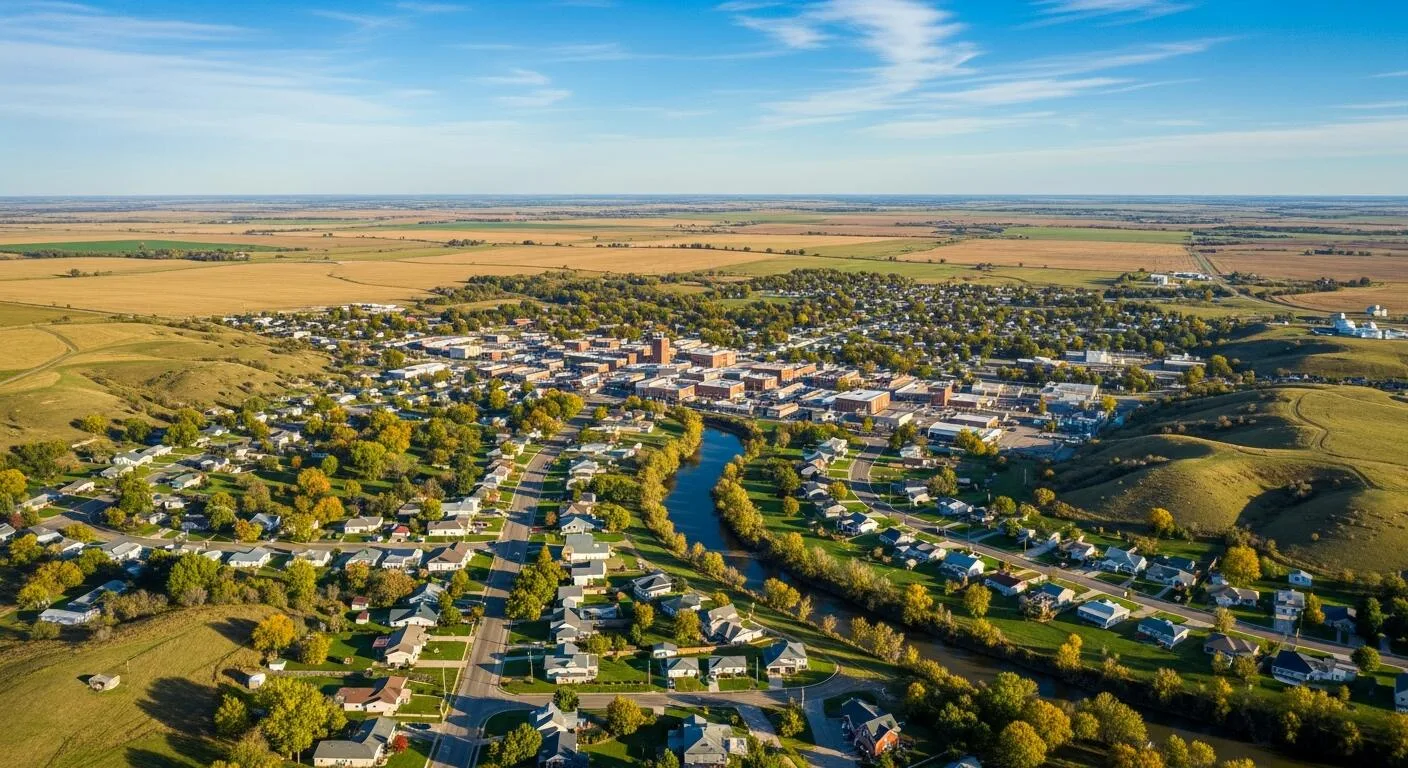
Crews cover the full city footprint along with the surrounding rural properties in Butler County.
- Downtown Augusta and the historic State Street corridor
- Older established blocks north and west of the Whitewater River
- Newer subdivisions along the Ohio Street and Kelly Road areas
- Homes near Garvin Park, Augusta City Lake, and Shryock Park
- Properties along US-54/Kellogg and the SW 7th Street business district
- Acreages and farmsteads on the outskirts toward Douglass and Leon
Service extends across the region as well, including El Dorado, Andover, Derby, Mulvane, Rose Hill, Wichita, Bel Aire, Haysville, Valley Center, Goddard, Park City, Maize, Newton, Halstead, Clearwater, and Cheney. That coverage matters after a widespread storm, when multiple communities need help on the same day and equipment has to be staged efficiently.
Seasonal Damage Patterns in Augusta
Spring (March - May)
- Peak season for flooded basements and storm-driven water intrusion
- Hail and wind damage opening roofs to rain
- Sewer backups as saturated soils pressure aging lines
Summer (June - August)
- Mold growth accelerates in humid crawl spaces and unconditioned basements
- Air conditioning condensate line clogs causing ceiling and closet leaks
- Lightning-related electrical fires during evening thunderstorms
Fall (September - November)
- Clogged gutters from leaf drop directing water against foundations
- First furnace runs stirring dust, soot, and lingering smoke odors
- Ideal window for moisture inspections before winter closes homes up
Winter (December - February)
- Frozen and burst pipes, especially in garages and exterior wall runs
- Ice dams pushing meltwater under shingles
- Highest volume of fire and smoke damage from heating equipment, fireplaces, and holiday cooking
Damage from one season often surfaces in the next. A slow winter leak frequently shows up as visible mold once summer humidity arrives.
Housing Characteristics & Restoration Considerations
Augusta's housing stock spans more than a century, and each era brings its own restoration challenges.
Older Homes (Pre-1960)
- Plaster and lath walls hold water differently than drywall and dry more slowly
- Stone, brick, and block foundations with mortar joints that wick moisture
- Original wood flooring that may be salvageable with controlled drying rather than replacement
- Knob-and-tube or early wiring that raises fire risk and complicates post-loss inspection
- Possible asbestos-containing materials and lead paint requiring careful handling
Mid-Century and Suburban Builds
- Finished basements with paneling, carpet, and drop ceilings that trap water
- Crawl spaces with limited ventilation where mold takes hold quickly
- Cast iron and clay sewer laterals prone to root intrusion and backups
- Forced-air duct systems that spread smoke and mold spores through the whole house
Newer Construction
- Tighter building envelopes that hold moisture in when a leak occurs
- Engineered wood flooring and OSB subfloor that swell and delaminate fast
- Open floor plans that let smoke travel unimpeded across the main level
Because so many Augusta homes have basements or partial basements, gravity works against you during any water loss. Extraction has to start at the lowest level, and drying plans need to account for insulation, framing cavities, and subfloor layers that hold moisture long after surfaces feel dry to the touch.
Environmental Conditions & Damage Implications
Local climate and ground conditions influence how damage develops and how drying is approached.
Climate Factors
- Humid continental pattern with hot, muggy summers and cold, dry winters
- Summer indoor humidity readings that easily support mold growth in basements
- Wide freeze-thaw swings that stress foundations and plumbing
- Severe storm season with hail, high wind, and occasional tornadic activity
Soil and Groundwater
- Clay-heavy soils common to south-central Kansas expand when wet and shrink when dry
- That movement opens foundation cracks that become water entry points
- Slow-draining clay holds water against basement walls after heavy rain
- Proximity to the Whitewater River and area creeks raises the water table in low-lying spots
Air and Water Quality
- Agricultural dust and pollen add to indoor particulate loads, worsening post-fire air quality
- Hard water is common regionally, contributing to appliance and water heater failures
- Smoke residues combine with existing dust to create stubborn films on surfaces
These conditions shape the equipment plan. Dehumidification capacity gets sized for actual grain-depression targets rather than guesswork, HEPA air scrubbers run during mold and fire cleanup, and moisture readings are logged over multiple visits until materials return to documented dry standards.
Storm Response and Sewer Backup Readiness for Augusta Properties
When a line of storms rolls through Butler County, the calls come in clusters. Roof breaches, basement flooding, and sewer backups often hit the same neighborhood within hours of each other.
What Careful Storm Response Looks Like
- Stabilize first - tarping, board-up, and shutting off compromised utilities to stop damage from spreading
- Categorize the water - clean supply water, gray water from appliances, and black water from sewage each require different handling and disposal
- Extract and demolish selectively - remove only saturated materials that cannot be dried, flood-cutting drywall above the water line where needed
- Set containment - negative air pressure and barriers keep contaminants and odors out of unaffected rooms
- Dry with documentation - daily moisture readings on framing, subfloor, and concrete, adjusted as materials respond
- Clean and disinfect - antimicrobial application on all contacted surfaces after sewage or prolonged saturation
- Verify before rebuild - confirm dry standards and clear air quality before any material goes back in
Sewage Losses Deserve Extra Caution
- Contaminated water carries bacteria and viruses that surface cleaning will not resolve
- Porous materials - carpet, pad, particleboard, insulation - are removed rather than treated
- Wall cavities are opened and inspected because wicking travels higher than the visible line
- HVAC returns near the affected area are checked to prevent contaminant circulation
- Personal protective equipment and proper waste disposal follow established protocols
Things Augusta Owners Can Do Ahead of Time
- Install and test a backwater valve if your basement has floor drains
- Keep a battery backup on the sump pump for outage-driven flooding
- Photograph finished basements and stored belongings for claim documentation
- Extend downspouts well away from the foundation and regrade low spots
- Know where your main water shutoff is - and make sure it turns
Thorough documentation throughout gives your insurance carrier what it needs and gives you a clear record of what was found, what was removed, and why.





