Damage Restoration in Tooele County, UT
- Damage Restoration Services Overview
- Common Damage Restoration Issues in Tooele County, Utah
- Neighborhoods We Serve in Tooele County
- Seasonal Damage Patterns in Tooele County
- Housing Characteristics & Restoration Considerations
- Environmental Conditions & Damage Implications
- 24/7 Emergency Response and Insurance Coordination Across Tooele County
Damage Restoration Services Overview
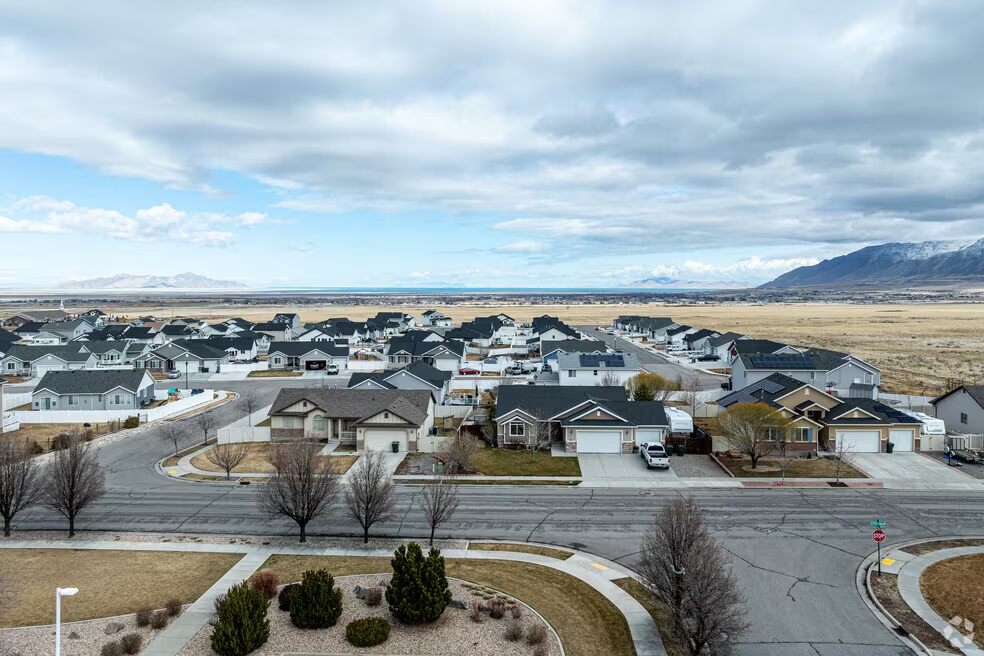
Tooele County sits in a high desert valley between the Oquirrh Mountains and the Great Salt Lake Desert, where dry air, hard mineral-heavy water, and sharp temperature swings create restoration challenges you won't find in wetter climates. Properties here face freeze-thaw pipe failures in winter, canyon runoff in spring, and wildfire smoke intrusion in late summer - often in the same calendar year.
Restoration work in this area covers a full range of emergency and recovery needs:
- Water Damage Restoration - extraction, structural drying, dehumidification, and repair of affected building materials
- Flooded Basement - pump-out, below-grade moisture control, and salvage of finished lower levels
- Sewage Cleanup - removal of contaminated water, antimicrobial treatment, and safe disposal of porous materials
- Fire Damage Restoration - debris removal, structural stabilization, soot cleaning, and content recovery
- Smoke Damage Restoration - odor neutralization, HVAC decontamination, and surface deodorization
- Mold Removal - containment, controlled remediation, and correcting the moisture source behind growth
The benefit of fast local response is simple: moisture that sits for days becomes mold, and soot that sits untreated etches metal, glass, and finishes permanently. Crews working throughout Tooele County provide 24/7 emergency response and coordinate documentation directly with insurance carriers, so homeowners aren't left managing the claim alone.
Common Damage Restoration Issues in Tooele County, Utah
Local geography and construction habits drive most restoration calls in this valley. Understanding what causes damage here helps property owners catch problems before they spread.
Leading Causes of Damage
- Burst and frozen pipes - unheated garages, crawl spaces, and exterior walls in older Tooele and Grantsville homes are frequent failure points during hard freezes
- Spring runoff from the Oquirrh and Stansbury ranges - saturated soil pushes groundwater against foundations, flooding basements through cracks and window wells
- Irrigation and sprinkler line breaks - common on larger residential lots in Erda and Stansbury Park
- Sewer backups - root intrusion in older clay laterals and overwhelmed lines during heavy storm events
- Water heater and appliance failures - hard water shortens tank life, and basement-installed units flood finished space quickly
- Wildfire and structure fires - dry summer vegetation near the foothills raises risk of exterior ignition and smoke intrusion
Warning Signs Worth Acting On
- Musty odors in basements or crawl spaces, especially after snowmelt
- Efflorescence, staining, or bubbling paint along foundation walls
- Warped baseboards, cupping hardwood, or soft drywall near plumbing walls
- Slow drains, gurgling toilets, or repeated backups pointing toward a failing sewer lateral
- Persistent smoke odor that returns when the furnace or AC runs - a sign soot has entered ductwork
- Unexplained allergy symptoms that improve when occupants leave the property
Catching these early keeps a mitigation job from becoming a full reconstruction project.
Neighborhoods We Serve in Tooele County
Emergency crews respond across the entire county, from valley subdivisions to rural properties on well and septic systems.
- Tooele City - Overlake, Copper Canyon, Middle Canyon, and the older downtown grid
- Stansbury Park - lakeside and golf course neighborhoods with finished basements
- Erda - larger acreage properties and newer custom builds
- Grantsville - historic homes, farmsteads, and expanding west-side developments
- Lake Point and Mills Junction - properties near the I-80 corridor and Great Salt Lake shoreline
- Rush Valley, Stockton, and Vernon - rural residences often served by private wells and septic
- Wendover, Dugway, and Ophir - remote west desert communities
Response also extends to surrounding Salt Lake Valley communities along the I-80 and SR-36 routes, which keeps arrival times short even for late-night calls.
Seasonal Damage Patterns in Tooele County
- December through February - Peak season for frozen and burst pipes. Ice damming on north-facing roofs pushes meltwater into attics and ceilings. Heating equipment, fireplaces, and space heaters drive the year's highest fire and smoke damage volume.
- March through May - Snowmelt from the Oquirrh and Stansbury mountains saturates valley soil. Flooded basements, window well intrusion, and sump pump failures dominate calls. Sewage backups increase as saturated ground infiltrates aging lateral lines.
- June through August - Monsoon thunderstorms produce flash flooding along canyon drainages. Dry heat and vegetation raise wildfire risk, bringing smoke damage and HVAC contamination even to homes far from the burn.
- September through November - Mold discoveries spike as homeowners close windows and run heat, trapping moisture that built up over spring and summer. Sprinkler blowout mistakes and early freezes cause line breaks.
Because damage types overlap across seasons, restoration crews in Tooele County stay equipped year-round for extraction, drying, soot cleaning, and remediation rather than rotating gear seasonally.
Housing Characteristics & Restoration Considerations
Tooele County housing spans more than a century of construction, and each era responds differently to water, fire, and mold.
Older Homes (pre-1970, common in Tooele City and Grantsville)
- Galvanized or early copper supply lines prone to pinhole leaks and corrosion from hard water
- Clay or cast iron sewer laterals vulnerable to root intrusion and collapse
- Lath-and-plaster walls that hold moisture longer than drywall and require slower, monitored drying
- Balloon framing that lets smoke and fire travel vertically through wall cavities
- Unsealed stone or block foundations that wick groundwater into basements
Mid-Century and Ranch Construction
- Crawl spaces with minimal vapor barriers - a frequent source of hidden mold
- Original ductwork that spreads soot and spores throughout the house
- Limited insulation in exterior walls, increasing freeze-related pipe failures
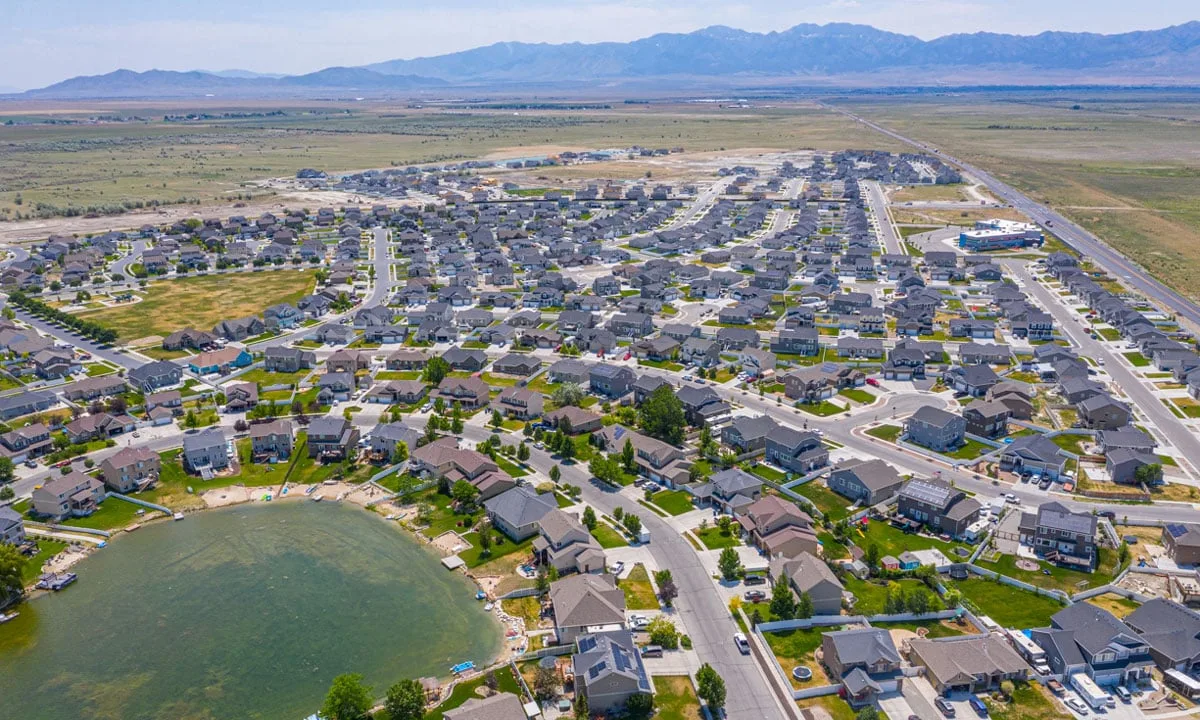
Newer Subdivisions (Overlake, Stansbury Park, Erda)
- Deep, fully finished basements where a single failure destroys carpet, drywall, and cabinetry at once
- Tight building envelopes that trap humidity and smoke odor without mechanical drying
- Engineered wood, laminate flooring, and MDF trim that swell rapidly and rarely dry successfully
- Second-floor laundry and bathroom placements that send water through multiple levels
Restoration plans account for these differences - drying an 1890s plaster home requires a different approach than a 2018 build with spray foam and sealed sheathing.
Environmental Conditions & Damage Implications
The valley's environment shapes how damage behaves once it starts.
Climate and Air
- Low humidity speeds surface evaporation but masks deep moisture trapped in subfloors, wall cavities, and insulation - meters and thermal imaging are required rather than visual checks
- Winter inversions trap particulates in the valley, compounding indoor air problems after fire or smoke events
- Wide daily temperature swings create condensation on cold surfaces, feeding mold in crawl spaces and behind furniture on exterior walls
- Wildfire smoke from regional burns settles into attics and duct systems, leaving odor that returns each time the HVAC cycles
Water and Soil
- Hard, mineral-rich water accelerates corrosion in water heaters, supply lines, and valves - a major source of sudden indoor flooding
- Clay-heavy and alkaline soils hold moisture against foundations and shift with wet-dry cycles, opening cracks that let groundwater into basements
- High water tables near the Great Salt Lake and Stansbury Park keep below-grade spaces damp and increase sump pump dependence
- Rural septic systems in Rush Valley, Vernon, and Erda can back up during saturated ground conditions, requiring full contamination protocols
- Alkaline dust from the west desert combines with soot after fires, making chemical cleaning selection important to avoid setting stains
Effective restoration here means treating both the visible damage and the environmental conditions that caused it.
24/7 Emergency Response and Insurance Coordination Across Tooele County
Damage doesn't schedule itself for business hours. A supply line lets go at 2 a.m., a sewer backs up during a holiday weekend, a kitchen fire fills a home with soot on a Sunday evening. What happens in the first few hours determines whether a property needs mitigation or full reconstruction.
What Rapid Response Prevents
- Mold colonization, which can begin in damp materials within a day or two
- Permanent swelling and delamination of cabinets, subfloor, and engineered flooring
- Acidic soot etching glass, chrome, appliances, and aluminum window frames
- Smoke odor bonding permanently into textiles, insulation, and duct interiors
- Category 3 contamination spreading from a sewage event into adjacent clean rooms
How an Emergency Call Progresses
- Immediate phone triage - guidance on shutting off water, gas, or power and staying clear of contaminated or fire-damaged areas
- Crew dispatch - technicians roll from within the county or along the I-80 corridor with extraction, drying, and containment equipment
- Assessment and documentation - moisture mapping, photos, and material inventory captured for the claim before anything is removed
- Stabilization - standing water extracted, board-up or tarping installed after fire, containment barriers built around mold or sewage
- Drying and cleaning - air movers and dehumidifiers placed with daily monitoring, soot removal and deodorization performed by surface type
- Repair and rebuild - drywall, flooring, paint, and finish work returning the property to pre-loss condition
Working With Your Insurer
- Detailed moisture logs and photo records supplied directly to the adjuster
- Line-item scopes written in the estimating format carriers expect
- Direct communication with adjusters so homeowners aren't relaying technical details
Local crews across Tooele County answer around the clock - reach out immediately at (801) 513-1137 when water, fire, smoke, sewage, or mold threatens your property.