
Damage Restoration in Green River, WY
- Damage Restoration Services Overview
- Common Damage Restoration Issues in Green River, Wyoming
- Neighborhoods We Serve in Green River
- Seasonal Damage Patterns in Green River
- Housing Characteristics & Restoration Considerations
- Environmental Conditions & Damage Implications
- Emergency Response Timing: Why the First Hours Matter in Green River
Damage Restoration Services Overview
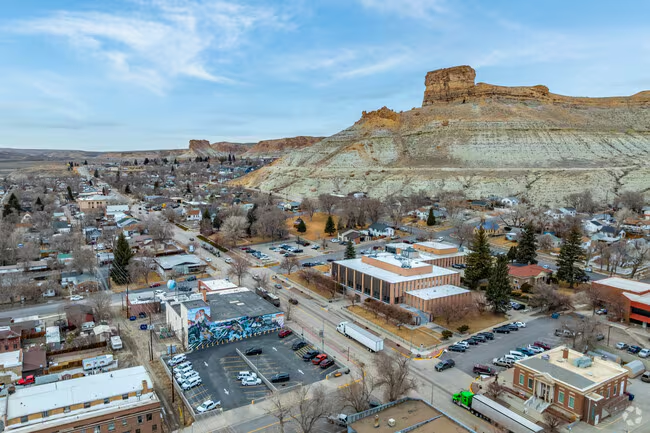
Green River sits in a high desert basin where dry air, hard water, freeze-thaw swings, and sudden spring runoff from the Green River create restoration challenges you won't find in milder climates. Homes here deal with frozen supply lines in January and wind-driven wildfire smoke in August - sometimes in the same calendar year.
Elements of Restoration provides professional water damage restoration in Rock Springs, Green River, and surrounding Wyoming communities, with 24/7 emergency response across Sweetwater, Uinta, and Lincoln Counties.
- Water Damage Restoration - extraction, structural drying, and moisture mapping after burst pipes, appliance failures, and roof leaks
- Flooded Basement Cleanup - pump-out, content handling, and drying for below-grade spaces along the river corridor
- Sewage Cleanup - safe removal of contaminated water, disinfection, and disposal of unsalvageable materials
- Fire Damage Restoration - debris removal, soot cleaning, structural repair, and reconstruction
- Smoke Damage Restoration - odor neutralization, HVAC cleaning, and treatment of porous surfaces
- Mold Removal - containment, air filtration, remediation, and correction of the moisture source
Key benefits for Green River residents include rapid dispatch, IICRC-certified technicians, documented moisture readings, and direct coordination with insurance carriers so you aren't managing the claim alone.
Common Damage Restoration Issues in Green River, Wyoming
Elevation near 6,100 feet means long, cold winters and rapid temperature swings that punish plumbing and building envelopes. Most emergency calls in this area trace back to a handful of repeat offenders.
Frequent Causes of Damage
- Frozen and burst supply lines in crawl spaces, garages, and exterior walls
- Ice dams and wind-driven snow entering roof penetrations
- Spring runoff and saturated soil pushing water through basement walls and window wells
- Sewer backups when older laterals clog or main lines surcharge during heavy melt
- Water heater and washing machine hose failures - often discovered days later
- Kitchen fires, wood stove and chimney fires, and electrical faults in older wiring
- Wildfire smoke infiltration through HVAC systems during regional fire events
Warning Signs Worth Acting On
- Musty or earthy odors in basements, closets, or near baseboards
- Bubbling paint, cupped flooring, or drywall that feels soft or cool to the touch
- Staining rings on ceilings that grow after snowmelt or rain
- Persistent gurgling in floor drains or slow toilets - early sewage backup indicators
- Lingering smoke odor that returns when heat or humidity rises
- Unexplained allergy symptoms that improve when you leave the house
Damage rarely stays where it starts. Water wicks up drywall, follows framing, and settles under subfloor - which is why moisture meters and thermal imaging matter more than a visual inspection.
Neighborhoods We Serve in Green River
Crews cover the full city and the surrounding Sweetwater County corridor, with response available around the clock.
- Downtown Green River and the historic Riverside district near the river corridor
- Uptown and the neighborhoods bordering Wyoming Highway 530
- Sweetwater Estates, Castle Rock, and the bench neighborhoods above town
- Monroe Avenue, Shoshone Avenue, and Bridger Drive residential blocks
- Expedition Island, Evers Park, and Scott's Bottom areas near the water
- Rural properties along the Green River, Little America, and James Town
Service extends beyond city limits to Rock Springs, Superior, Farson, Granger, Lyman, Mountain View, Evanston, Kemmerer, and communities throughout Uinta and Lincoln Counties. Commercial work covers schools, retail, restaurants, trona-industry offices, and multi-unit housing - buildings where a single failed pipe can disrupt an entire operation.
Seasonal Damage Patterns in Green River
Winter - December through February
- Peak season for burst pipes in unheated crawl spaces, garages, and vacant properties
- Ice dam leaks along roof edges and around vents
- Heating-related fire and smoke damage from furnaces, wood stoves, and space heaters
Spring - March through May
- Flooded basements from snowmelt, saturated ground, and clogged window wells
- Sewer backups when systems take on excess groundwater
- Mold growth appearing from winter leaks that went unnoticed
Summer - June through August
- Monsoon-style thunderstorms causing flash flooding and roof intrusion
- Wildfire smoke damage and odor infiltration from regional fires
- Air conditioning condensate line overflows and appliance leaks
Fall - September through November
- First hard freezes bursting outdoor spigots and irrigation lines
- Chimney and flue fires as wood stoves come back into use
- Ideal window for moisture inspections before winter locks in the damage
Housing Characteristics & Restoration Considerations
Green River's housing stock reflects its boom-and-bust history - a core of early- and mid-century homes, a large wave of 1970s and early 1980s construction from the trona expansion, and newer subdivisions on the benches.
How Local Construction Affects Restoration
- Pre-1960 homes - plaster walls, lath, and knob-and-tube remnants; plaster holds moisture longer and demands slower, monitored drying
- 1970s-1980s builds - full or partial basements, aging galvanized and polybutylene supply lines, and original cast iron drains prone to sewage backups
- Finished basements - carpet pad, paneling, and framed walls trap water against concrete, creating hidden mold reservoirs
- Manufactured and modular homes - belly wrap holds water under the floor and rarely drains on its own
- Newer subdivisions - tighter envelopes and spray foam slow natural drying, so mechanical dehumidification is required
- Crawl space foundations - vapor barriers and vented crawls on the outskirts collect groundwater during runoff
What This Means for Repairs
- Asbestos and lead-paint screening on older materials before demolition
- Careful removal of paneling and drop ceilings to reach wet cavities
- Cabinet toe-kick and subfloor drying rather than blanket tear-out where possible
- HVAC duct cleaning after fires, smoke events, and mold discoveries
- Documentation of every affected material for the insurance file
Environmental Conditions & Damage Implications
The high desert climate around Green River is deceptive. Low humidity suggests mold shouldn't be a problem - until water is trapped inside a wall cavity where conditions turn humid and stay that way.
Local Conditions That Shape Restoration
- Semi-arid climate - roughly nine inches of annual precipitation, but concentrated in spring runoff and summer downbursts
- Wide temperature swings - daily 30 to 40 degree changes stress pipes, seals, and building materials
- Alkaline, mineral-heavy water - scale buildup shortens water heater and fixture life, contributing to sudden failures
- Clay and shale-based soils - poor drainage around foundations, expansion and contraction that opens cracks
- High winds - drive rain and snow into siding, soffits, and roof seams; also carry wildfire smoke long distances
- Elevation and thin air - drying equipment must be sized and staged differently than at lower altitude
Effects on Each Service
- Dry outdoor air helps drying, but only when moisture is exchanged mechanically - closed-up rooms stall
- Mold colonies thrive in the microclimate behind wet drywall regardless of desert conditions outside
- Smoke residues bond aggressively to cold winter surfaces and require solvent-based cleaning
- Sewage contamination in cold soil breaks down slowly, making full disinfection non-negotiable
- Alkaline dust and mineral residue complicate soot cleanup on painted and textured surfaces
Emergency Response Timing: Why the First Hours Matter in Green River
Restoration outcomes are decided in the first day. Water that sits becomes a mold problem; soot that sits becomes permanent etching on metal, glass, and finishes.
The Damage Timeline
- Minutes to 1 hour - water spreads across flooring, wicks into drywall, and saturates carpet pad
- 2 to 24 hours - furniture stains transfer, particleboard swells, drywall softens, and odors develop
- 24 to 48 hours - mold spores activate on damp organic material; soot acids begin etching surfaces
- 48 to 72 hours - contaminated water categories escalate; more materials become unsalvageable
- Beyond 72 hours - structural concerns, widespread microbial growth, and larger reconstruction scope
What Happens When You Call
- Immediate dispatch with a crew headed toward Green River, typically arriving within a couple of hours
- Source identification and shutoff where possible - stopping the loss before drying begins
- Safety assessment for electrical hazards, contamination category, and structural stability
- Moisture mapping with meters and thermal imaging to find water you can't see
- Extraction, controlled demolition where needed, antimicrobial treatment, and equipment placement
- Daily monitoring with logged readings until materials reach dry standard
- Reconstruction and full documentation submitted to your insurance carrier
What You Can Do Before Crews Arrive
- Shut off the main water valve if a pipe has failed
- Cut power to affected rooms only if the panel is safely accessible
- Stay out of any space with sewage, standing water, or fire damage
- Photograph everything before moving items
- Move valuables and electronics to a dry, unaffected area
- Avoid running fans on suspected mold - it spreads spores
Winter nights, holiday weekends, and 3 a.m. discoveries are exactly when losses happen. Emergency lines stay open 24/7 for Green River, Rock Springs, and the surrounding Sweetwater, Uinta, and Lincoln County communities.





