
Damage Restoration in Brockton, MA
- Damage Restoration Services Overview
- Common Damage Restoration Issues in Brockton, Massachusetts
- Neighborhoods We Serve in Brockton
- Seasonal Damage Patterns in Brockton
- Housing Characteristics & Restoration Considerations
- Environmental Conditions & Damage Implications
- Insurance Documentation and the Brockton Claims Process
Damage Restoration Services Overview
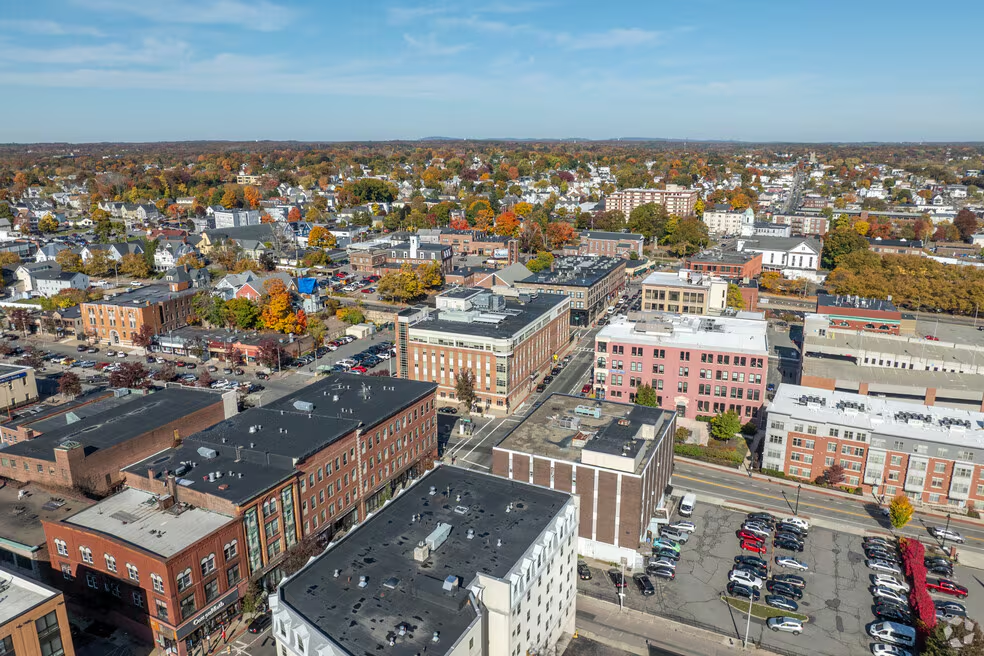
Water spreads through drywall, subfloor, and insulation within minutes of a pipe failure or storm surge. In Brockton, where many homes date back generations and basements sit low against the water table, the first hours after a loss shape the entire recovery.
Restoration work covers a wide span of emergencies, and most Brockton properties eventually face at least one of them:
- Water Damage Restoration - extraction, structural drying, and moisture mapping after supply line breaks, roof leaks, or appliance failures
- Flooded Basement - pump-outs, sump failure response, and drying of foundation walls and slab
- Sewage Cleanup - removal of contaminated material, antimicrobial treatment, and safe disposal after backups
- Fire Damage Restoration - debris removal, soot cleaning, board-up, and structural stabilization
- Smoke Damage Restoration - odor neutralization, HVAC cleaning, and treatment of porous contents
- Mold Removal - containment, air filtration, material removal, and moisture source correction
Acting quickly protects more than building materials. Fast response limits secondary damage, lowers the chance of mold colonization, keeps insurance documentation clean, and shortens the time a family or business spends displaced.
Common Damage Restoration Issues in Brockton, Massachusetts
Brockton sits in the Salisbury Plain River watershed, and heavy rain moves fast across dense residential streets with limited absorption. Aging municipal lines and older private laterals add pressure during those same storms.
Frequent Causes of Loss
- Frozen and burst supply pipes in uninsulated basements, crawl spaces, and exterior walls
- Sump pump failure or power loss during nor'easters and summer thunderstorms
- Sewer backups when combined stormwater and sanitary flow overwhelms older lines
- Groundwater seepage through fieldstone and cracked poured foundations
- Kitchen fires, chimney and woodstove fires, and electrical faults in older wiring
- Smoke migration through balloon-framed wall cavities in pre-war homes
- Hidden mold behind finished basement paneling and beneath vinyl flooring
Warning Signs Worth Investigating
- Musty odor that strengthens on humid days or when the HVAC runs
- Efflorescence, white chalky residue, or peeling paint on basement walls
- Staining on ceilings below bathrooms or around chimney chases
- Slow floor drains, gurgling fixtures, or repeated toilet backups
- Cupped hardwood, spongy subfloor, or baseboard separation
- Lingering smoke odor weeks after a small kitchen or appliance fire
- Unexplained allergy symptoms that improve when occupants leave the house
Any one of these signals warrants a moisture reading before cosmetic repairs go forward.
Neighborhoods We Serve in Brockton
Coverage extends across the full city and into the surrounding Plymouth County communities.
- Campello and the South Side, with its dense triple-decker and cottage housing
- Montello and the North End near the commuter rail corridor
- Downtown Brockton and the Main Street commercial district
- West Side neighborhoods around D.W. Field Park and Waldo Lake
- Brookfield, Cary Hill, and the Belmont Street corridor
- East Side streets bordering Whitman and Abington
Service also reaches nearby towns including Avon, Holbrook, Stoughton, Easton, West Bridgewater, Bridgewater, Whitman, Abington, Randolph, and Canton. Crews familiar with local street layouts, Route 24 and Route 28 access points, and municipal permitting move faster when a basement is filling or a structure needs emergency board-up.
Seasonal Damage Patterns in Brockton
Winter (December - February)
- Burst pipes during deep freezes and after extended vacancies
- Ice dams forcing meltwater under shingles into attics and top-floor ceilings
- Heating equipment and chimney fires, plus puffback soot from oil furnaces
Spring (March - May)
- Snowmelt combined with rain overwhelming sump pumps and perimeter drains
- Flooded basements as the water table rises across low-lying neighborhoods
- First mold growth appearing on materials that stayed damp through winter
Summer (June - August)
- Peak mold season driven by high dew points and humid basement air
- Sewage backups after intense thunderstorm downpours
- Air conditioning condensate line clogs causing ceiling and wall damage
Fall (September - November)
- Tropical remnants and nor'easters producing roof leaks and wind-driven rain intrusion
- Clogged gutters redirecting water against foundations
- Season's first furnace and woodstove use releasing smoke odor and soot
Housing Characteristics & Restoration Considerations
Brockton's housing stock leans old. A large share of homes were built before 1940, when the shoe industry drove rapid neighborhood expansion, and many more went up in the postwar decades.
Common Construction Types
- Triple-deckers and two-family homes with shared stacks and stairwells
- Victorian-era single-families with balloon framing and plaster-over-lath walls
- Postwar capes and ranches with poured concrete or block foundations
- Fieldstone and rubble foundations in the oldest housing
- Finished basement apartments and in-law units
How Age Shapes Restoration Work
- Balloon framing lets smoke, heat, and water travel vertically between floors, so inspection has to reach beyond the visible damage zone
- Plaster and lath holds moisture far longer than drywall and needs targeted drying rather than automatic removal
- Fieldstone foundations weep continuously, making basement drying a matter of managing humidity, not just extraction
- Pre-1978 materials require lead-safe practices, and pre-1980 flooring, insulation, and pipe wrap may need asbestos testing before demolition
- Multi-family layouts mean one unit's loss often affects neighbors, so containment and coordination with owners matter
- Undersized or single-line electrical can limit drying equipment placement, sometimes requiring generator support
Documenting original materials early also helps insurance adjusters value repairs accurately in older homes.
Environmental Conditions & Damage Implications
Brockton's coastal-influenced climate produces humid summers, cold wet winters, and roughly four feet of annual precipitation spread across the year. That moisture load never really lets up.
Local Conditions That Affect Restoration
- Summer dew points regularly climbing into the 60s and 70s, keeping unconditioned basements above the threshold where mold colonizes
- Glacial till and clay-heavy soils that drain slowly and hold water against foundation walls
- High seasonal water table in areas near Salisbury Plain River, Trout Brook, and the D.W. Field Park pond chain
- Freeze-thaw cycling that widens foundation cracks year after year, creating new seepage paths
- Nor'easter wind-driven rain that penetrates siding and window flashing on exposed elevations
- Dense urban lots with limited grading options and roof runoff discharging close to foundations
Practical Implications
- Dehumidification often needs to run longer than in drier regions to hit target moisture content
- Mold remediation must address the humidity source, or growth returns the next warm season
- Sewage cleanup in high-water-table basements requires verification that groundwater is not reintroducing contamination
- Smoke odor lingers longer in humid air, so thermal fogging and hydroxyl treatment may need repeat cycles
- Post-fire structures left open are vulnerable to rain intrusion, making prompt tarping and board-up part of the fire response
Insurance Documentation and the Brockton Claims Process
Most Brockton losses involve an insurance claim, and how the first day is handled affects what gets covered. Massachusetts policies treat sudden water discharge, fire, and smoke differently from gradual seepage, groundwater flooding, and long-term mold.
What Documentation Should Capture
- Wide and close-up photos of every affected room before anything is moved
- Moisture meter and thermal imaging readings showing the extent of migration
- Daily drying logs with temperature, relative humidity, and equipment placement
- An itemized inventory of damaged contents, including model and serial numbers where readable
- The source of loss, photographed at the failure point
- Written scope tied to standard industry line items adjusters recognize
Steps to Take After a Loss
- Shut off the water supply or the affected electrical circuit if it is safe to do so
- Leave sewage-contaminated areas and keep children and pets out entirely
- Photograph and video conditions before removing anything
- Notify your insurance carrier and request a claim number
- Call a restoration crew for emergency mitigation - policies generally expect you to prevent further damage
- Save receipts for temporary lodging, fans, and emergency supplies
- Keep damaged materials, or samples of them, until the adjuster inspects
Coverage Gaps Brockton Homeowners Often Encounter
- Basement groundwater flooding, which typically falls outside standard homeowners coverage
- Sewer and drain backup, which usually requires a separate endorsement
- Mold, which is often capped at a limited dollar amount
- Losses in unoccupied properties where heat was not maintained during winter
Reviewing your policy before storm season - and adding backup coverage if your street has a history of surcharge issues - costs far less than discovering the gap mid-claim.





