
Damage Restoration in Bridgewater, MA
- Damage Restoration Services Overview
- Common Damage Restoration Issues in Bridgewater, Massachusetts
- Neighborhoods We Serve in Bridgewater
- Seasonal Damage Patterns in Bridgewater
- Housing Characteristics & Restoration Considerations
- Environmental Conditions & Damage Implications
- Septic Systems, Sump Pumps and Basement Protection in Bridgewater
Damage Restoration Services Overview
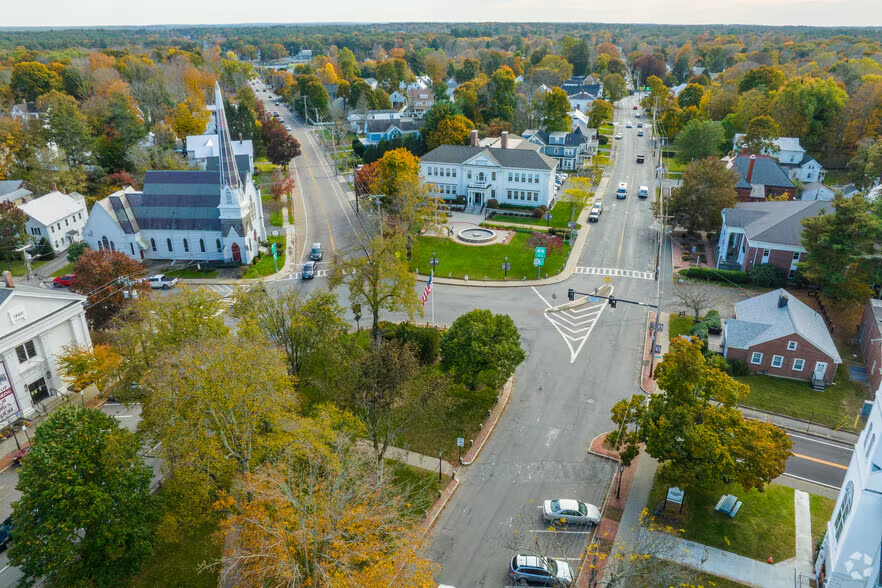
Bridgewater sits on some of the flattest, most water-retentive ground in Plymouth County - the Town River, the Taunton River watershed, and a high seasonal water table mean many local basements sit within a few feet of saturated soil for months at a time. That geography explains why water intrusion calls outnumber fire calls in most southeastern Massachusetts towns by a wide margin.
Restoration work here covers a connected set of problems, and most jobs involve more than one:
- Water Damage Restoration - burst supply lines, failed water heaters, ice-dam leaks, appliance overflows and roof intrusion
- Flooded Basement - sump pump failure, hydrostatic pressure through foundation cracks, storm surge into bulkheads
- Sewage Cleanup - septic backups, main line blockages, Category 3 contamination requiring full sanitization
- Fire Damage Restoration - structural cleaning, soot removal, contents pack-out and reconstruction
- Smoke Damage Restoration - odor neutralization, HVAC decontamination, thermal fogging and sealing
- Mold Removal - containment, HEPA filtration, antimicrobial treatment and material replacement
The benefit of addressing these quickly is straightforward: drying a structure before microbial growth begins costs far less than remediating it afterward, and documented mitigation supports a smoother insurance claim for Bridgewater homeowners and business operators alike.
Common Damage Restoration Issues in Bridgewater, Massachusetts
Local property damage tends to follow predictable patterns tied to soil, housing stock, and New England weather swings.
Leading Causes We See Locally
- High groundwater - clay-heavy and glacial till soils drain slowly, pushing water through foundation seams after heavy rain
- Septic system saturation - many properties outside the sewer district rely on septic; saturated leach fields cause backups into lower-level fixtures
- Frozen and burst pipes - uninsulated crawlspaces and older copper lines fail during January and February cold snaps
- Ice dams - poorly ventilated attics create meltwater that tracks behind fascia into ceilings and wall cavities
- Heating equipment fires - furnaces, wood stoves and space heaters remain a common ignition source in winter
- Hidden mold - behind finished basement paneling, under vinyl flooring, and inside insulated exterior walls
Warning Signs Worth Acting On
- Musty or earthy odor in the basement, especially after rain
- Efflorescence - white mineral crusting - on foundation walls
- Staining, bubbling paint, or a soft spot on a ceiling below a bathroom
- Slow drains paired with gurgling in a floor drain, a precursor to septic backup
- Persistent smoke odor that returns on humid days after a small kitchen or chimney fire
- Unexplained allergy symptoms that improve when you leave the house
Catching any of these early narrows the scope of work dramatically. A single damp wall cavity handled within a couple of days rarely becomes a full mold containment project.
Neighborhoods We Serve in Bridgewater
Service extends across the full town footprint and into the surrounding communities that share the same watershed and housing profile.
- Bridgewater Center - historic homes near Central Square, Bridgewater State University rentals and multifamily properties
- Scotland and the Scotland Road corridor - larger lots, private wells and septic systems
- Stanley and the Route 104 area - mixed post-war and modern subdivisions
- Titicut - riverfront and low-lying parcels near the Taunton River
- Sprague's Hill and neighborhoods off Pleasant Street and Summer Street
- Waterford Village and nearby condominium associations
Coverage also reaches West Bridgewater, East Bridgewater, Raynham, Halifax, Middleborough, Taunton, Brockton and Easton. Crews familiar with local building departments, septic regulations and the Town River flood zones move faster through permitting and inspection steps than out-of-area contractors.
Seasonal Damage Patterns in Bridgewater
Knowing when each problem peaks helps property owners prepare instead of react.
Winter (December - February)
- Frozen and burst pipes during sustained sub-freezing stretches
- Ice dam leaks into second-floor ceilings and exterior walls
- Heating-related fire and smoke damage from furnaces, chimneys and space heaters
Spring (March - May)
- Peak flooded basement season as snowmelt meets a rising water table
- Sump pump overload and failure
- Septic backups when leach fields sit in saturated ground
Summer (June - August)
- Mold growth accelerates in humid, poorly ventilated basements and crawlspaces
- Thunderstorm and tropical-remnant flooding
- Air conditioning condensate line clogs causing slow ceiling leaks
Fall (September - November)
- Nor'easter and hurricane-remnant rain driving water through roofs and bulkheads
- Clogged gutters redirecting water against foundations
- First-use chimney and heating system fires as temperatures drop
Housing Characteristics & Restoration Considerations
Bridgewater's housing stock spans nearly three centuries, and each era brings its own restoration challenges.
Antique and Colonial-Era Homes
- Fieldstone and rubble foundations that wick moisture continuously
- Balloon-framed walls that let water - and fire - travel between floors unimpeded
- Horsehair plaster requiring specialty drying rather than demolition
- Potential for asbestos and lead paint, which changes demolition protocol
Mid-Century and Post-War Homes
- Poured concrete basements with cold joints and pipe penetrations prone to seepage
- Original cast iron waste lines nearing end of life, a frequent sewage cleanup trigger
- Modest attic insulation contributing to ice damming
Newer Subdivisions and Condominiums
- Tight building envelopes that trap moisture when drying is incomplete
- Finished basements with carpet, framed walls and batt insulation - materials that hold water and support mold
- Shared walls and stacked plumbing, meaning one unit's leak becomes three units' damage
- PEX and CPVC fittings that can fail at connections
The practical takeaway: drying plans are built around what the structure is made of. A plaster-and-lath wall gets injection drying and monitored dehumidification; a finished basement with wet insulation gets controlled removal, containment and antimicrobial treatment before rebuild. Fire and smoke work follows the same logic - open framing cavities in older homes almost always need sealing to stop odor from returning months later.
Environmental Conditions & Damage Implications
Environmental factors around Bridgewater shape both how damage happens and how long drying takes.
Climate and Humidity
- Summer dew points regularly climb into the muggy range, keeping indoor relative humidity above the level where mold activates
- Annual precipitation is spread evenly, so soil rarely gets a long dry rest period
- Freeze-thaw cycling widens foundation cracks year over year
Soil and Groundwater
- Glacial till and clay lenses drain slowly, sustaining hydrostatic pressure against basement walls
- Low elevation across much of town keeps the water table close to slab depth
- Proximity to the Town River and Taunton River watershed raises flood exposure on riverside parcels
Water and Air Quality Factors
- Private wells and septic systems on many properties mean contamination risk is handled with Category 3 protocols and post-cleanup verification
- Iron and mineral content in local groundwater leaves staining that requires specific cleaning agents
- Pollen and seasonal particulates load HVAC filters, which matters after smoke events when the duct system becomes an odor reservoir
These conditions push drying equipment harder than in drier climates. Desiccant or high-capacity refrigerant dehumidifiers, containment barriers and daily moisture readings are what keep a Bridgewater structure from re-wetting from the ground up before the rebuild starts.
Septic Systems, Sump Pumps and Basement Protection in Bridgewater
The two most common emergency calls in town trace back to the same pair of systems: the septic tank and the sump pump. Both operate out of sight, both fail without warning, and both create contaminated or standing water when they do.
Why Septic Failures Turn Into Sewage Cleanup Jobs
When a leach field saturates during spring melt or a multi-day rain, wastewater has nowhere to go but back through the lowest fixture in the house. That water is Category 3 - it carries bacteria and requires a different response than a clean supply line break.
- Occupants and pets are kept out of the affected zone while containment goes up
- Solids and contaminated water are extracted with dedicated equipment
- Porous materials - carpet, pad, drywall below the water line, particleboard - are removed and disposed of
- Hard surfaces are cleaned, then treated with EPA-registered antimicrobials
- Structural drying runs under HEPA air filtration until moisture readings return to normal
- Air quality and surface verification confirm the space is safe before rebuild
Sump Pump Realities in a High Water Table Town
- A single pump with no battery backup fails exactly when the power goes out during a storm
- Discharge lines that terminate too close to the foundation recycle the same water
- Float switches jam against pit walls in older, undersized crock installations
Custom Solutions After the Water Is Out
Restoration is the right moment to fix the cause. That might mean sealing foundation cracks with epoxy injection while walls are exposed, specifying closed-cell insulation and moisture-tolerant materials instead of paper-faced drywall in a rebuilt basement, adding a secondary pump, or grading and gutter changes to move roof runoff away from the house. Rebuilding the same assembly that just failed guarantees a repeat call - matching materials and drainage to Bridgewater's soil and water conditions is what makes the repair last.





