
Damage Restoration in Payette, ID
- Damage Restoration Services Overview
- Common Damage Restoration Issues in Payette, Idaho
- Neighborhoods We Serve in Payette
- Seasonal Damage Patterns in Payette
- Housing Characteristics & Restoration Considerations
- Environmental Conditions & Damage Implications
- Insurance Coordination and the Restoration Timeline in Payette
Damage Restoration Services Overview
You come home from work on a February evening, step into the hallway, and the carpet squishes under your shoe. A supply line in the crawlspace let go sometime that morning, and the water has been spreading for hours.
That scenario plays out in Payette homes every winter. It also plays out in a dozen other ways - a sewer backup during irrigation season, a kitchen fire that leaves soot in every room, mold discovered behind a basement wall months after a slow leak.
Paul Davis Restoration of Idaho handles the full range of property damage in Payette County:
- Water Damage Restoration - burst pipes, appliance failures, roof and window intrusion, and irrigation-related saturation
- Flooded Basement - extraction, structural drying, and salvage of stored contents in below-grade spaces
- Sewage Cleanup - containment, removal of contaminated materials, and antimicrobial treatment after backups
- Fire Damage Restoration - board-up, debris removal, structural cleaning, and reconstruction
- Smoke Damage Restoration - soot removal, odor neutralization, and HVAC decontamination
- Mold Removal - containment, moisture source correction, and remediation of affected assemblies
Fast response matters more than most homeowners realize. Water spreads within minutes, mold colonies establish in a couple of days, and smoke residues become acidic and permanent the longer they sit on surfaces.
Common Damage Restoration Issues in Payette, Idaho
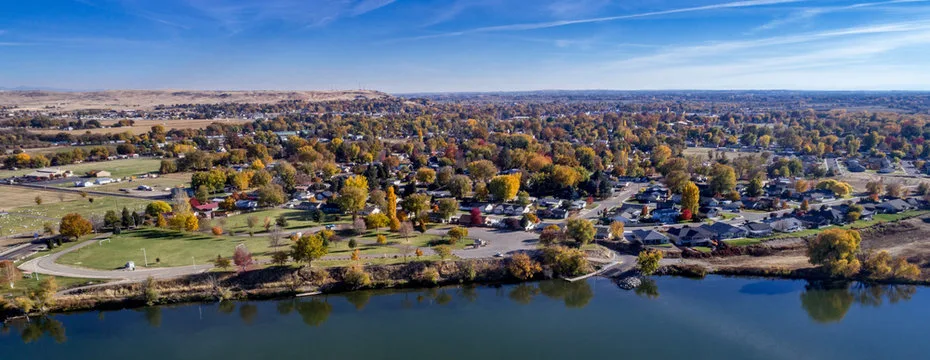
Payette sits at the confluence of the Payette and Snake rivers. The ground carries moisture year-round, the water table climbs with spring runoff, and irrigation season keeps it elevated well into late summer.
That single geographic fact shapes most of the damage we see here.
Frequent Causes of Loss
- Frozen and failed supply lines in uninsulated crawlspaces during January and February cold snaps
- Groundwater intrusion into basements and crawlspaces during runoff and canal season
- Sewer and septic backups when saturated soil reduces drain field capacity
- Aging water heaters and washing machine hoses in homes where original fixtures were never replaced
- Kitchen and heating fires, more common in winter when wood stoves and space heaters run hard
- Hidden mold in crawlspaces with poor ventilation and dense original framing
Warning Signs Worth Acting On
- A musty smell that gets stronger near floor vents or basement stairs
- Cupping or lifting at the edges of hardwood and laminate flooring
- Efflorescence - white chalky residue - on basement foundation walls
- Slow drains in multiple fixtures at once, which often precedes a backup
- Yellow or brown staining on ceilings below bathrooms
- Soot film on window glass or lampshades after any small fire event
Payette's dry summer air can mask problems. Surface materials feel dry while framing, subfloor, and insulation stay wet underneath - which is exactly the condition mold needs.
Neighborhoods We Serve in Payette
We cover the city of Payette and the surrounding communities across Payette County and into Malheur County, Oregon.
- Downtown and Historic Payette - older housing stock along 1st through 16th Avenue with original plumbing and full basements
- North Payette - established residential streets near the golf course and river bottoms
- South Payette and Highway 95 corridor - mixed residential and commercial properties
- Riverside area - properties near the Payette and Snake river confluence with high groundwater exposure
- New Plymouth, Fruitland, and Nyssa - agricultural and small-lot residential properties
- Ontario, Oregon and surrounding rural addresses across the state line
- Weiser, Parma, and unincorporated Payette County - farm homes, outbuildings, and irrigation-adjacent structures
Rural addresses receive the same response commitment as in-town properties. Crews stage equipment out of the Treasure Valley, so long driveways, canal crossings, and septic systems are familiar territory.
Seasonal Damage Patterns in Payette
December through February
- Peak season for frozen and burst supply lines in crawlspaces and exterior walls
- Highest volume of fire and smoke damage calls tied to heating equipment and wood stoves
- Ice dam and roof leak water intrusion after freeze-thaw cycles
March through May
- Snowmelt and river runoff drive flooded basement calls
- Rising water table pushes moisture through foundation walls and crawlspace vapor barriers
- Sewage backups increase as saturated soil limits septic drainage
June through August
- Irrigation season keeps groundwater high, sustaining crawlspace moisture
- Mold discovery peaks as spring water damage that was never dried properly becomes visible
- Wildfire smoke intrusion affects indoor air quality and requires HVAC and contents cleaning
- Air conditioning condensate line failures cause slow, hidden leaks
September through November
- Irrigation shutoff and canal draining exposes previously hidden saturation
- First hard freeze catches unwinterized hose bibs and outbuilding lines
- Furnace startup circulates existing soot and mold spores, prompting odor complaints
Housing Characteristics & Restoration Considerations
Payette is an old town by Idaho standards. A meaningful share of the residential stock predates modern plumbing entirely, and much of the rest was built before 1980.
What We Encounter Most
- Pre-1940 homes with balloon framing, lath and plaster, and full unfinished basements
- Post-war ranch homes on crawlspaces with limited access and minimal ventilation
- Farm houses and additions where multiple eras of plumbing and wiring coexist
- Manufactured homes with belly wrap that traps water and hides damage
- Newer subdivision construction with slab or shallow crawlspace foundations
How Age Changes the Work
- Drying takes longer. Dense old-growth framing, plaster, and thick subfloor assemblies hold water far longer than modern drywall and engineered lumber.
- Access is limited. Low crawlspaces and tight basement stairs restrict equipment placement, so we plan air mover and dehumidifier positioning carefully.
- Hazardous materials are possible. Older flooring, mastic, and insulation may require testing before demolition begins.
- Smoke travels through gaps. Balloon framing gives soot an open path between floors and into attics, expanding the cleaning scope well beyond the fire room.
- Plumbing is original or once-replaced. Galvanized and early copper lines fail without warning, and one failure often signals more to come.
Basements built for storage complicate flooded basement work. Cardboard boxes, stored textiles, and wood shelving absorb water fast and feed mold growth, which is why contents pack-out often runs alongside structural drying.
Environmental Conditions & Damage Implications
Southwest Idaho's high-desert climate creates a genuine paradox for restoration work. The outdoor air is dry, but the ground under Payette homes is not.
Climate Factors
- Low summer humidity can help drying - but only where air actually reaches the wet material
- Extreme August heat pushes surface evaporation while moisture stays trapped in assemblies
- Cold, damp winters slow drying dramatically and raise the risk of secondary mold
- Wide daily temperature swings create condensation on cold foundation walls and ductwork
Water and Soil
- River confluence location means a naturally high water table
- Spring runoff and canal irrigation raise groundwater for months at a time
- Alluvial and silt loam soils hold moisture against foundations rather than draining it away
- Hard water and mineral content accelerate wear on supply lines and water heaters
- Agricultural runoff can add contaminants to intrusion water, changing the cleanup category
Air Quality
- Late-summer wildfire smoke settles into HVAC systems, insulation, and soft contents
- Winter inversions trap particulates and make smoke odor complaints more persistent
- Agricultural dust adds to the loading on filters and duct interiors
These conditions push us to measure rather than assume. Moisture meters, thermal imaging, and daily readings tell us when a structure is genuinely dry - not when it feels dry to the touch.
Insurance Coordination and the Restoration Timeline in Payette
Most Payette homeowners have never filed a large property claim before. The paperwork and documentation requirements arrive at the worst possible moment - while the house is still wet or still smells like smoke.
Documentation done correctly on day one shapes everything that follows.
What Happens After You Call
- Emergency response. Crews arrive to stop the source, extract standing water, or board up and secure a fire-damaged structure.
- Assessment and documentation. Moisture mapping, photographs, thermal imaging, and a room-by-room scope are recorded before any material is removed.
- Mitigation. Contaminated or unsalvageable materials come out. Air movers, dehumidifiers, and containment go in. Sewage losses receive antimicrobial treatment.
- Contents handling. Belongings are inventoried, cleaned on site, or packed out for off-site storage and restoration.
- Daily monitoring. Readings are logged until target dry standards are met - not until a set number of days pass.
- Reconstruction. Flooring, drywall, cabinetry, paint, and trim are rebuilt to match the original.
How Coordination Helps You
- Scope and photo documentation submitted in the format adjusters expect
- Direct communication with your carrier, so you are not relaying technical details
- Clear separation of covered mitigation work from optional upgrades
- Category and class determinations documented for water and sewage losses
- Written moisture logs that support the length of the drying period
Category 3 sewage losses and mold remediation draw the most scrutiny from carriers. Containment records, disposal documentation, and post-remediation verification matter here.
Paul Davis Restoration of Idaho brings 25+ years and IICRC-certified technicians to Payette County properties, handling emergency response through final reconstruction under one roof.





