
Damage Restoration in Fruitland, ID
- Damage Restoration Services Overview
- Common Damage Restoration Issues in Fruitland, Idaho
- Neighborhoods We Serve in Fruitland
- Seasonal Damage Patterns in Fruitland
- Housing Characteristics & Restoration Considerations
- Environmental Conditions & Damage Implications
- Irrigation Season, Canal Systems, and Basement Flooding in Payette County
Damage Restoration Services Overview
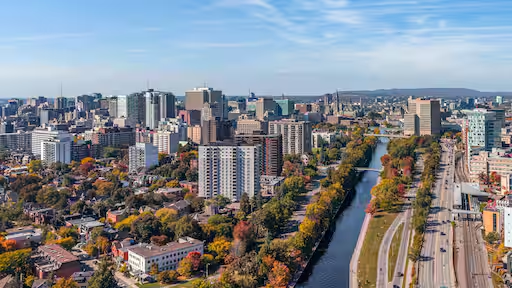
Fruitland sits at the confluence of the Payette and Snake Rivers - a location that gave the town its orchards and irrigation canals, and also places thousands of properties within reach of high water tables and seasonal flooding. That geography shapes nearly every restoration call in Payette County.
Property damage rarely announces itself politely. A supply line lets go behind a washing machine, a canal backs up during spring release, or a kitchen fire fills a home with acrid smoke in minutes.
Restoration services available to Fruitland homeowners and business owners include:
- Water Damage Restoration - extraction, structural drying, moisture mapping, and repair of affected building materials
- Flooded Basement - pump-out, sump system evaluation, foundation moisture control, and contents recovery
- Sewage Cleanup - removal of Category 3 contaminated water, antimicrobial treatment, and safe disposal of porous materials
- Fire Damage Restoration - structural stabilization, debris removal, soot cleaning, and rebuild coordination
- Smoke Damage Restoration - odor neutralization, HVAC cleaning, thermal fogging, and content deodorization
- Mold Removal - containment, HEPA filtration, affected material removal, and moisture source correction
Benefits for local residents are practical: faster drying means fewer materials thrown away, documented moisture readings support insurance claims, and IICRC-certified methods reduce the odds of a secondary mold problem three months later.
Common Damage Restoration Issues in Fruitland, Idaho
Fruitland's mix of river-valley soils, irrigation infrastructure, and older agricultural housing stock creates a distinct pattern of damage claims.
Local Causes We See Repeatedly
- Irrigation and canal season - lateral ditches running April through October raise groundwater near properties along Whitley Drive and rural parcels outside city limits
- Frozen and burst pipes - uninsulated crawl space plumbing in homes built before modern code updates
- Sewer and septic backups - older clay laterals invaded by mature tree roots, plus septic systems stressed by saturated drain fields
- Ice damming - freeze-thaw cycles pushing meltwater under shingles and into ceiling cavities
- Wind and hail roof damage - Treasure Valley storm cells that strip shingles and open the envelope to water intrusion
- Kitchen and heating fires - wood stoves, space heaters, and chimney creosote buildup during long heating seasons
- Wildfire smoke infiltration - regional smoke drawn into homes through HVAC returns and leaky windows
Warning Signs Worth Acting On
- Musty odor in a basement or crawl space that intensifies after irrigation turns on
- Efflorescence - white powdery residue - on foundation walls
- Cupping or darkening at the edges of hardwood flooring
- Slow floor drains, gurgling toilets, or sewage odor near cleanouts
- Smoke odor returning on humid days after a fire has been cleaned
- Peeling paint, sagging drywall tape, or rust stains at baseboards
- Persistent allergy symptoms that improve when occupants leave the house
Neighborhoods We Serve in Fruitland
Response coverage extends across the city and into the surrounding Payette County and Malheur County communities.
- Central Fruitland - established blocks near Whitley Drive, NW 3rd Street, and the downtown corridor
- North Fruitland - newer subdivisions and larger-lot homes off Highway 95 and Elmore Road
- South Fruitland and Alameda area - properties closer to the Snake River bottomland
- Pennsylvania Avenue and Fruitland High School district - mixed residential and commercial buildings
- Agricultural parcels - orchard and row-crop properties along irrigation laterals
Nearby communities also served include Payette, New Plymouth, Ontario and Nyssa in Oregon, Weiser, Parma, Wilder, Notus, and the Emmett area. Commercial work covers packing sheds, cold storage, restaurants, churches, schools, and rental portfolios throughout the lower Treasure Valley.
Seasonal Damage Patterns in Fruitland
Winter - December through February
- Burst supply lines in crawl spaces and exterior walls during hard freezes
- Ice damming on north-facing roof slopes
- Peak season for heating-related fire and smoke damage
- Frozen septic lines contributing to sewage backups
Spring - March through May
- Snowmelt and Payette River runoff raising groundwater
- Flooded basements as canal systems charge for the growing season
- Storm and hail damage to roofs and siding
- Mold growth accelerating in spaces wetted over winter
Summer - June through August
- Air conditioning condensate line failures and water heater leaks
- Irrigation overflow and sprinkler line breaks near foundations
- Grass, field, and wildland fires plus regional smoke intrusion
- Sewer surcharges during heavy thunderstorm cells
Fall - September through November
- First-use furnace and wood stove fires
- Clogged gutters routing rain into basements
- Hidden mold discovered during pre-winter inspections
- Canal shutdown revealing foundation seepage patterns
Housing Characteristics & Restoration Considerations
Fruitland's housing inventory spans more than a century, from early farmhouses tied to the orchard economy to subdivisions built during the Treasure Valley's recent growth. That range means two houses on the same street can need entirely different drying plans.
Common Construction Types and What They Mean
- Pre-1950 farmhouses - board sheathing, lath and plaster, balloon framing that lets smoke and fire travel vertically between floors; plaster holds moisture far longer than drywall
- 1950s-1970s ranch homes - shallow crawl spaces, minimal vapor barriers, cast iron and clay drain lines prone to sewage backups
- 1980s-1990s homes - finished basements with paneling and carpet that trap water against foundation walls
- Post-2000 construction - tighter envelopes, engineered wood I-joists, OSB subfloors, and vinyl plank flooring that traps moisture underneath
- Manufactured housing - belly wrap and underfloor insulation that holds water long after visible surfaces dry
Restoration Implications
- Older homes may contain asbestos in floor tile, mastic, or pipe wrap - testing precedes demolition
- Lead-safe practices apply to pre-1978 painted surfaces during fire and water repairs
- Engineered lumber loses strength fast when saturated, so structural drying must be aggressive and monitored
- Knob-and-tube or aluminum wiring affects both fire cause investigation and safe reconstruction
- Crawl space vapor barriers and encapsulation often become part of long-term mold prevention
- Multi-layer flooring in remodeled homes usually requires removal rather than in-place drying
Environmental Conditions & Damage Implications
The lower Payette Valley sits in a high-desert climate with roughly ten to twelve inches of annual precipitation, hot dry summers, and cold winters. Low outdoor humidity is an advantage during drying - but the local soil and water conditions cut the other way.
Soil and Groundwater
- Alluvial silts, sandy loams, and clay lenses deposited by the Payette and Snake Rivers
- Clay layers hold hydrostatic pressure against foundation walls after irrigation or rain
- Shallow water tables in bottomland areas push moisture through slab cracks and cove joints
- Expansive soils shifting seasonally, opening the cracks water later exploits
Air and Water Quality Factors
- Hard, mineral-rich water that corrodes water heaters, valves, and supply connections over time
- Agricultural dust and pollen that load HVAC systems and complicate post-fire air scrubbing
- Summer wildfire smoke from Idaho and Oregon fires depositing fine particulate indoors
- Winter inversions trapping wood smoke and slowing outdoor air exchange
How This Shapes the Work
- Dehumidification is sized for the actual dew point, not a generic formula, so drying stays efficient
- Sewage cleanup near shallow groundwater requires careful containment and disposal to avoid cross-contamination
- Mold remediation pairs removal with drainage, grading, or sump corrections so growth does not return
- Smoke deodorization accounts for agricultural and wildfire particulate already in the ductwork
- Foundation and crawl space moisture control follows the irrigation calendar, not just the weather forecast
Irrigation Season, Canal Systems, and Basement Flooding in Payette County
Few things surprise new Fruitland homeowners more than a dry basement in March that turns damp in late April. The trigger is usually the irrigation system, not the sky.
Water flows into the Payette Valley's laterals and ditches once the season opens, raising the local water table across whole blocks. Properties that never saw seepage during winter suddenly show wet cove joints, damp carpet pad, or standing water near the floor drain.
What Happens During Irrigation Season
- Canal and lateral charging lifts groundwater several feet in bottomland neighborhoods
- Hydrostatic pressure finds cold joints, form-tie holes, and cracks in older foundations
- Septic drain fields near irrigated ground lose capacity, contributing to backups
- Overwatered lawns and broken sprinkler lines saturate soil directly against footings
- Sump pumps that idled all winter fail on their first heavy demand
Steps to Take When Water Appears
- Cut power to affected circuits at the panel before entering standing water
- Photograph and video everything before moving contents - documentation supports the claim
- Assume water that contacted soil or sewer lines is contaminated and keep occupants and pets out
- Call for emergency extraction so drying begins before materials wick moisture upward
- Lift and remove carpet pad, which almost never dries in place
- Verify the sump pump, check valve, and discharge line are functioning
- Follow up with moisture readings behind walls and under flooring, not just surface checks
Reducing the Odds Next Season
- Test the sump pump and add battery backup before the canals open
- Regrade soil to slope away from the foundation and extend downspouts
- Move sprinkler heads and adjust run times away from foundation walls
- Have sewer laterals scoped for root intrusion in older neighborhoods
- Install a backwater valve where sewage backups have occurred before
- Encapsulate crawl spaces with a sealed vapor barrier to limit mold growth
Certified technicians with 24/7 emergency dispatch handle water extraction, sewage decontamination, fire and smoke cleanup, and mold remediation across Fruitland and neighboring communities - with moisture documentation that holds up throughout the insurance process.





