
Damage Restoration in La Grange, KY
- Damage Restoration Services Overview
- Common Damage Restoration Issues in La Grange, Kentucky
- Neighborhoods We Serve in La Grange
- Seasonal Damage Patterns in La Grange
- Housing Characteristics & Restoration Considerations
- Environmental Conditions & Damage Implications
- Insurance Documentation and Transparent Communication for La Grange Property Owners
Damage Restoration Services Overview
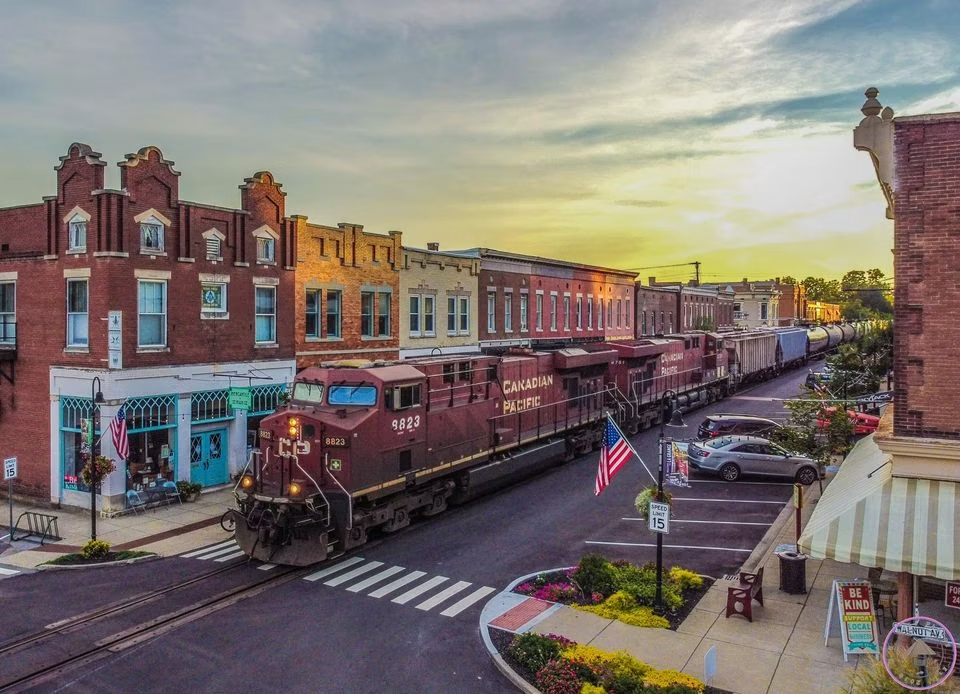
La Grange sits in the rolling terrain of Oldham County, where limestone bedrock, clay-heavy soils, and humid Ohio Valley air combine to create restoration challenges that differ from those in flatter parts of Kentucky. Historic homes near the downtown railroad corridor, mid-century ranches, and newer subdivisions along Highway 53 each respond differently when water, smoke, or microbial growth takes hold.
Restoration companies serving the area - including SERVPRO, ANR Restoration, and Purofirst Disaster Services - handle a full spectrum of property emergencies:
- Water Damage Restoration - extraction, structural drying, and moisture mapping after supply line breaks, appliance failures, and roof leaks
- Flooded Basement - pump-out, sump failure response, and drying of below-grade walls and slabs
- Sewage Cleanup - removal of contaminated material, antimicrobial treatment, and safe disposal after backups
- Fire Damage Restoration - board-up, debris removal, soot cleaning, and structural rebuild coordination
- Smoke Damage Restoration - odor neutralization, HVAC cleaning, and content restoration
- Mold Removal - containment, spore control, and removal of colonized materials
Acting quickly protects framing, drywall, flooring, and indoor air quality - and gives homeowners stronger documentation when filing an insurance claim.
Common Damage Restoration Issues in La Grange, Kentucky
Local geography drives much of what La Grange property owners face. Clay soils hold water against foundation walls, and heavy spring rainfall regularly overwhelms sump systems and older drainage tile.
Frequent Causes of Loss
- Hydrostatic pressure pushing groundwater through basement wall cracks and cove joints
- Sump pump failures during multi-day rain events or power outages from storms
- Frozen and burst supply lines in unheated crawl spaces and garages during January cold snaps
- Sanitary sewer backups when combined stormwater volume surges through older lateral lines
- Kitchen fires, chimney and wood stove issues, and electrical faults in aging panels
- Aging water heaters, washing machine hoses, and refrigerator supply lines
Warning Signs Not to Ignore
- Musty odors in basements, closets, or near HVAC returns - often the first sign of hidden mold
- Efflorescence, white chalky residue, or bubbling paint on foundation walls
- Cupped hardwood, soft subfloor, or tile that sounds hollow underfoot
- Gurgling floor drains or slow-draining fixtures signaling a partial sewer blockage
- Persistent smoke odor that returns on humid days after a small fire
- Staining on ceilings below bathrooms or around roof penetrations
Because Kentucky's humidity keeps interior surfaces damp, mold can establish itself in a matter of days after any water intrusion - which is why water and mold work so often overlap on the same property.
Neighborhoods We Serve in La Grange
Coverage extends across the city limits and into the surrounding Oldham County communities:
- Downtown La Grange and the Main Street historic district along the railroad tracks
- Oldham Reserve and the commercial corridor near KY-53 and I-71
- Sanders Ridge, Bridlewood, and other established residential subdivisions
- Rural properties along Highway 146, Ballardsville Road, and Cedar Point Road
- Nearby communities including Crestwood, Buckner, Pewee Valley, Goshen, Prospect, and Smithfield
- Outlying areas toward Bedford, Campbellsburg, and the Ohio River corridor
Response teams familiar with local street layouts, rail crossings, and county permitting can reach affected properties quickly - which matters most in the first hours after a burst pipe or sewage backup.
Seasonal Damage Patterns in La Grange
Winter (December - February)
- Frozen pipe breaks in crawl spaces, attics, and exterior walls
- Ice damming that forces meltwater under shingles
- Peak season for heating-related fire and smoke damage from furnaces, space heaters, and fireplaces
Spring (March - May)
- Highest volume of flooded basement calls as saturated clay soils shed runoff toward foundations
- Sewer backups during intense thunderstorm cells
- Wind and hail creating roof openings that lead to interior water damage
Summer (June - August)
- Mold growth accelerates as indoor humidity climbs above 60 percent
- HVAC condensate line clogs flooding closets and attic platforms
- Lightning strikes causing electrical fires and surge damage
Fall (September - November)
- Clogged gutters and downspouts redirecting water to foundation walls
- First furnace startup releasing dust and smoke odor, occasionally revealing venting problems
- Ideal window for pre-winter pipe insulation and sump pump testing
Housing Characteristics & Restoration Considerations
La Grange housing stock spans well over a century, and each era carries its own restoration implications.
Pre-1940 Homes Near Downtown
- Stone or brick foundations with porous mortar joints that wick moisture
- Plaster-and-lath walls that hold water longer than drywall and require careful drying or selective removal
- Knob-and-tube remnants and outdated wiring that raise fire risk
- Possible asbestos and lead paint requiring testing before demolition
Mid-Century Ranches and Split-Levels
- Block basements and crawl spaces prone to seepage at the cove joint
- Original cast iron or clay sewer laterals susceptible to root intrusion and backups
- Limited insulation, allowing condensation inside wall cavities
Newer Subdivision Construction
- Finished basements with carpet, padding, and drywall that must be addressed fast after flooding
- PEX and CPVC plumbing with fitting failures that can go unnoticed behind walls
- Tighter building envelopes that trap smoke odor and moisture without mechanical ventilation
- Engineered wood flooring and MDF trim that delaminate quickly when wet
Restoration planning starts with identifying the assembly type - a poured concrete wall dries very differently from stone, and a plaster ceiling requires different equipment placement than modern drywall.
Environmental Conditions & Damage Implications
Oldham County's humid subtropical climate delivers roughly 45 inches of annual precipitation, with the wettest stretch typically falling between March and July. Summer dew points frequently sit in the upper 60s and low 70s, creating conditions where untreated moisture becomes a mold problem within days.
Local Conditions That Shape Restoration Work
- Clay-rich soils - expand when saturated, pressing against foundation walls and pushing water through hairline cracks
- Limestone bedrock and karst features - unpredictable groundwater movement that can send water into basements even without surface flooding
- Hard water - mineral scale shortens the life of water heaters and supply valves, a common source of sudden leaks
- Seasonal freeze-thaw cycles - widen foundation cracks and stress exterior spigots and hose bibs
- Pollen and agricultural dust - load HVAC filters and combine with soot residue to complicate post-fire air cleaning
- Rural septic systems - saturated drain fields during wet months can lead to backups requiring sewage cleanup protocols
How Conditions Affect Drying and Remediation
- Dehumidification carries more of the drying load than open-window ventilation for much of the year
- Containment barriers are needed during mold removal to prevent spore migration through humid air
- Thermal fogging and hydroxyl treatment for smoke odor may require repeat application in high-humidity months
Insurance Documentation and Transparent Communication for La Grange Property Owners
One of the most stressful parts of any loss is not the damage itself - it is the uncertainty about what happens next and what the insurance carrier will cover. Clear documentation from the first hour changes that dynamic.
What a Well-Documented Restoration Looks Like
- Initial assessment - photographs and video of every affected room before anything is moved or removed
- Moisture mapping - meter readings recorded on a floor plan showing the true extent of water migration, including areas that look dry
- Category and class determination - identifying whether water is clean, gray, or contaminated, which drives whether materials can be dried or must be discarded
- Written scope of work - a plain-language explanation of equipment placement, demolition, and cleaning steps
- Daily monitoring logs - temperature, relative humidity, and material moisture readings that prove drying progress
- Completion documentation - final readings, clearance testing where applicable, and photo records for the claim file
Questions Worth Asking Any Restoration Contractor
- Are technicians certified through the IICRC for water, fire, and mold work?
- Will you communicate directly with my adjuster and share moisture logs?
- What materials are you removing, and why can't they be dried in place?
- Who performs post-remediation verification after mold work - and is it independent?
- How will contents be inventoried, cleaned, or stored during reconstruction?
Steps to Take Before Help Arrives
- Shut off water at the main valve or kill power to the affected area if safe to do so
- Photograph standing water, soot lines, and damaged belongings from multiple angles
- Avoid contact with sewage-contaminated water and keep children and pets away
- Do not run the HVAC system after a fire - it spreads soot through every duct
- Locate your policy declarations page and note coverage for water backup and mold, which are often separate endorsements
Property owners who understand the scope and the reasoning behind each decision consistently have smoother claims and fewer surprises at the end of the project.





