
Damage Restoration in Weymouth, MA
- Damage Restoration Services Overview
- Common Damage Restoration Issues in Weymouth, Massachusetts
- Neighborhoods We Serve in Weymouth
- Seasonal Damage Patterns in Weymouth
- Housing Characteristics & Restoration Considerations
- Environmental Conditions & Damage Implications
- Emergency Response and Insurance Documentation for Weymouth Properties
Damage Restoration Services Overview
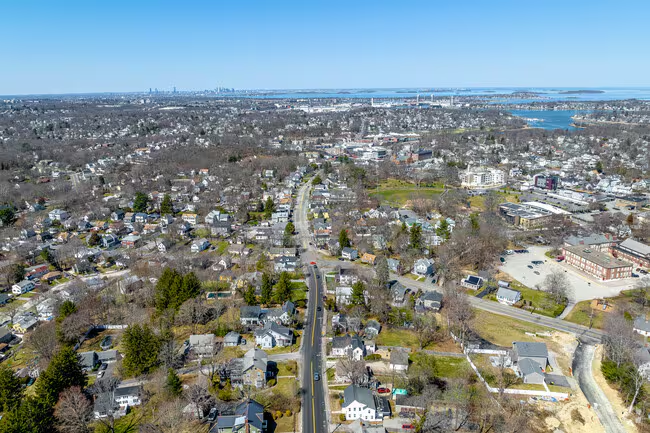
Few things rattle a homeowner like walking into a basement filled with water or smelling smoke long after a fire is out. In Weymouth, where coastal weather, aging housing stock, and older municipal sewer lines all play a role, property damage rarely announces itself in advance.
Restoration work spans several disciplines, and most jobs touch more than one. A single storm event can create standing water, sewage backup, and mold growth within days.
- Water Damage Restoration - extraction, structural drying, moisture mapping, and monitoring until materials return to normal levels.
- Flooded Basement - pump-out, sump and drainage evaluation, removal of saturated storage and finished materials.
- Sewage Cleanup - containment of Category 3 contamination, disposal of porous materials, antimicrobial treatment of affected surfaces.
- Fire Damage Restoration - debris removal, soot cleaning, structural stabilization, and coordination of rebuild work.
- Smoke Damage Restoration - odor neutralization, HVAC cleaning, and treatment of contents that absorbed smoke residue.
- Mold Removal - containment barriers, HEPA filtration, removal of colonized materials, and correction of the moisture source.
Benefits for Weymouth property owners are practical: faster drying limits secondary damage, documented moisture readings support insurance claims, and proper containment protects the parts of the home that were never affected.
Common Damage Restoration Issues in Weymouth, Massachusetts
Weymouth sits between the Fore River, Weymouth Back River, and the open water of Hingham Bay, which shapes nearly every damage pattern seen here. High water tables, coastal storm surge, and a mix of housing built across a century create recurring problems.
Frequent Causes
- Nor'easters and coastal flooding pushing water into low-lying basements near the Back River and Wessagusset shoreline.
- Groundwater seepage through fieldstone and block foundations during spring thaw and heavy rain.
- Sewer and septic backups when saturated ground overwhelms drainage capacity.
- Frozen and burst supply lines in unheated crawl spaces, garages, and older additions.
- Kitchen fires, chimney fires, and space heater incidents during long heating seasons.
- Failed water heaters, washing machine hoses, and dishwasher supply connections.
Warning Signs Worth Acting On
- Musty odor in a basement or closet that persists after ventilation.
- Efflorescence, white powdery residue, or dark staining along foundation walls.
- Cupping hardwood, bubbling paint, or soft spots in drywall near the floor line.
- Gurgling floor drains or slow-draining fixtures on the lowest level.
- Lingering smoke smell that returns on humid days or when heat runs.
- Unexplained allergy symptoms that improve when residents leave the house.
Catching any of these early usually means less demolition, fewer contents lost, and a shorter disruption to daily life.
Neighborhoods We Serve in Weymouth
Weymouth's distinct villages each present different restoration challenges, from waterfront exposure to hillside drainage.
- North Weymouth - shoreline homes near Wessagusset Beach and the Fore River, prone to storm surge and salt-air corrosion.
- East Weymouth - older mixed housing near Whitman's Pond with high groundwater concerns.
- South Weymouth - postwar and newer construction near Union Point and Route 18.
- Weymouth Landing - dense historic properties bordering Braintree with shared walls and legacy plumbing.
- Weymouth Heights and Columbian Square - established residential streets with mature trees and older sewer laterals.
- Lovell's Corner and Idlewell - low-lying pockets where basement flooding recurs.
Service also extends to surrounding South Shore communities including Braintree, Hingham, Quincy, Holbrook, Rockland, and Abington.
Seasonal Damage Patterns in Weymouth
Damage types in Weymouth follow a fairly predictable calendar, which helps homeowners prepare rather than react.
- December through February: Frozen and burst pipes dominate. Heating equipment, wood stoves, and holiday cooking drive fire and smoke damage calls. Ice dams push meltwater into ceilings and exterior walls.
- March through May: Snowmelt combines with spring rain to raise the water table. Flooded basements peak, sump pumps fail under continuous load, and sewage backups increase as systems reach capacity.
- June through August: Humid coastal air keeps indoor moisture high. Mold growth accelerates in basements, crawl spaces, and behind vinyl wallcoverings. Thunderstorms produce localized roof leaks and power outages that disable pumps.
- September through November: Nor'easters and tropical remnants bring wind-driven rain and coastal flooding. Clogged gutters and leaf-packed drains redirect water toward foundations. Chimney and furnace startup issues generate early-season smoke damage.
Two habits reduce risk year-round: testing the sump pump and battery backup each season, and having heating equipment and chimneys inspected before first use.
Housing Characteristics & Restoration Considerations
Weymouth's housing stock is older than the national average, with a heavy concentration of homes built before 1970 and a meaningful share dating to the early 1900s or earlier. That age directly affects how restoration is planned and executed.
Common Construction Types
- Colonials and antique capes - plaster over wood lath, balloon framing, and hidden cavities that let water and smoke travel between floors.
- Postwar ranches and split-levels - slab-adjacent finished basements, low ceiling heights, and limited drying access.
- Two- and three-family homes - shared plumbing stacks where one failure affects multiple units.
- Newer construction near Union Point - tighter building envelopes that trap moisture when ventilation fails.
How Age Shapes the Work
- Fieldstone and rubble foundations absorb and hold water, requiring extended drying and sometimes controlled demolition of finished walls.
- Plaster dries slowly and unevenly, so moisture meters and thermal imaging guide decisions rather than surface appearance.
- Homes built before 1978 may contain lead paint, and pre-1980 flooring and insulation may contain asbestos - testing precedes disturbance.
- Cast iron drain lines and clay laterals crack with age, increasing sewage backup frequency.
- Knob-and-tube or outdated wiring complicates fire damage assessment and rebuild scope.
- Original wood trim and floors often merit restorative cleaning instead of replacement.
Understanding these details up front prevents surprises mid-project and keeps the rebuild consistent with the character of the home.
Environmental Conditions & Damage Implications
Coastal New England conditions create a demanding environment for building materials, and they influence every stage of a restoration project.
Climate and Moisture
- Roughly 45 to 50 inches of annual precipitation, spread across rain and snow, keeps soil moisture consistently elevated.
- Summer dew points regularly climb into the 60s, meaning basement air alone can raise material moisture content without any leak present.
- Freeze-thaw cycling opens hairline cracks in foundations and masonry each winter.
Soil, Water, and Air
- Glacial till and marine clay deposits drain slowly, holding water against foundation walls after storms.
- Proximity to tidal water raises the water table in North and East Weymouth, defeating passive drainage.
- Salt-laden coastal air accelerates corrosion of fasteners, HVAC coils, and metal framing already stressed by fire or water exposure.
- Seasonal pollen and outdoor particulates add to indoor air burden, compounding the effect of mold spores and smoke residue.
What This Means for Restoration
- Dehumidification must be sized for local humidity loads, not generic square footage charts.
- Mold remediation must address the moisture source - drainage, grading, or ventilation - or growth returns.
- Post-fire cleaning includes HVAC systems, since smoke residue recirculates and reactivates with humidity.
- Sewage cleanup requires full removal of porous materials because contaminated moisture wicks deep into cellulose.
Emergency Response and Insurance Documentation for Weymouth Properties
The hours immediately after a loss determine how much of a Weymouth home can be saved. Water migrates through framing within minutes, mold can establish in 24 to 48 hours under the right conditions, and acidic soot begins etching metal, glass, and finishes almost immediately after a fire.
What a Structured Response Looks Like
- Safety assessment - electrical hazards, structural stability, and contamination category are evaluated before anyone enters.
- Source control - the leak, backup, or intrusion point is stopped or isolated so drying can begin.
- Extraction and stabilization - standing water removed, tarping or board-up installed after fire, containment erected for mold or sewage.
- Documentation - photographs, moisture maps, and material readings recorded before demolition.
- Drying and cleaning - air movers, dehumidifiers, HEPA filtration, and appropriate antimicrobial or soot-specific cleaning agents applied.
- Verification - daily readings confirm materials reach documented dry standard before reconstruction starts.
Industry Standards That Guide the Work
- IICRC S500 for water damage restoration and drying verification.
- IICRC S520 for mold remediation containment and clearance practices.
- IICRC S700 for fire and smoke damage cleaning and odor control.
- Massachusetts requirements for lead-safe and asbestos-aware work in older housing.
Working With Your Insurer
- Detailed scope documentation and moisture logs support the claim rather than leaving adjusters guessing.
- Contents inventories separate salvageable items from total losses.
- Direct communication with adjusters reduces back-and-forth delays for homeowners.
- No-obligation assessments let Weymouth residents understand the scope before committing.
The result is a project that moves from emergency to rebuild without gaps - and a home that is genuinely dry, clean, and safe rather than simply patched over.





