
Damage Restoration in Quincy, MA
- Damage Restoration Services Overview
- Common Damage Restoration Issues in Quincy, Massachusetts
- Neighborhoods We Serve in Quincy
- Seasonal Damage Patterns in Quincy
- Housing Characteristics & Restoration Considerations
- Environmental Conditions & Damage Implications
- One Contractor from Mitigation Through Rebuild - and What That Means for Your Insurance Claim
Damage Restoration Services Overview
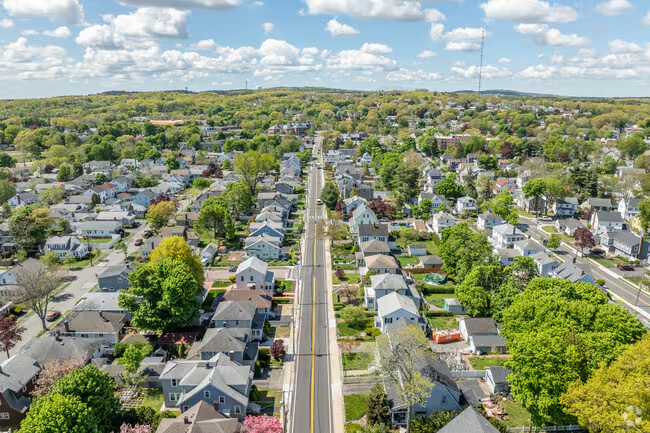
Coming home to standing water in the basement, soot on the ceiling, or a musty smell behind the baseboards throws a household into chaos. In Quincy, where granite-era homes sit alongside triple-deckers and waterfront condos, damage rarely stays contained to the room where it started.
Restoration work covers six connected disciplines, and most losses touch more than one:
- Water damage restoration - extraction, moisture mapping, and verified structural drying after burst pipes, roof leaks, or appliance failures
- Flooded basement cleanup - pumping, content triage, and drying of below-grade slabs, framing, and foundation walls
- Sewage cleanup - containment, removal of contaminated porous materials, and antimicrobial treatment of Category 3 losses
- Fire damage restoration - structural stabilization, debris removal, and reconstruction of framing, drywall, and finishes
- Smoke damage restoration - soot removal from surfaces and HVAC systems, plus odor neutralization in wall cavities and soft goods
- Mold removal - containment, negative air, removal of colonized materials, and correction of the moisture source
The practical benefit for Quincy property owners is continuity. Many homeowners end up hiring one contractor for mitigation and a second for rebuild, and the handoff between them creates gaps, scheduling delays, and insurance friction. Handling both phases under one contractor means the rebuild is being planned while the drying equipment is still running - one invoice, one point of contact, from the first call to the final walkthrough.
Common Damage Restoration Issues in Quincy, Massachusetts
Quincy's housing stock skews old, its terrain runs from tidal marsh to steep hillside, and its winters swing between deep freeze and thaw. That combination produces predictable damage patterns.
What causes most local losses
- Burst pipes - heaviest January through March in older buildings with uninsulated supply lines in exterior walls and crawl spaces
- Ice dam infiltration - water backing under shingles and through soffits, especially in the hillside neighborhoods around Wollaston Heights and Presidents Hill
- Roof leaks and wind-driven rain - nor'easters push water past flashing, chimneys, and dormers
- Basement water entry and foundation seepage - common where fieldstone or block foundations meet a high water table
- Appliance failures - water heater ruptures, washing machine hose bursts, dishwasher leaks, and HVAC condensate overflows
- Toilet and drain overflows - a recurring problem in multi-unit buildings where a single blockage affects several floors
- Sewer backups - surcharged municipal lines during heavy rain events push Category 3 water into finished basements
Warning signs worth acting on
- Tide lines or discoloration on basement walls that reappear after rain
- Buckling hardwood, cupped laminate, or soft spots underfoot near exterior walls
- A persistent earthy odor in a finished basement, even when everything looks dry
- Peeling paint or blistered drywall tape below a bathroom or kitchen
- Lingering smoke odor that intensifies when the heat or AC runs - usually soot in the ductwork
- Rust or sediment around a water heater base, often the first sign of an impending rupture
Neighborhoods We Serve in Quincy
Restoration crews cover the full city and the adjoining South Shore communities, with response tailored to each area's construction and terrain.
- Quincy Center - mixed-use buildings, older multifamily, and converted commercial space
- Wollaston and Wollaston Beach - coastal exposure, storm surge, and salt-air corrosion
- North Quincy - dense triple-deckers and two-families with shared plumbing stacks
- Merrymount and Adams Shore - low elevation, tidal flooding, and high groundwater
- Houghs Neck and Germantown - waterfront properties with slab and crawl-space foundations
- Squantum - peninsula homes facing wind-driven rain from multiple directions
- West Quincy and Quarry Hills - ledge-backed lots where runoff drives basement seepage
- Presidents Hill and Wollaston Heights - steep grades with heavy ice dam activity
- Marina Bay - condominium buildings with shared-wall and stacked-unit loss exposure
Service also extends to Braintree, Milton, Weymouth, Hingham, Randolph, and neighboring Boston districts including Dorchester and Neponset.
Seasonal Damage Patterns in Quincy
Winter (December - March)
- Frozen and burst supply lines peak, particularly during extended sub-freezing stretches
- Ice dams force water into attics, ceilings, and exterior wall cavities
- Heating equipment, space heaters, and chimney issues drive most fire and smoke calls
- Nor'easters combine surge flooding along the shore with roof intrusion inland
Spring (April - June)
- Snowmelt and saturated soil raise the water table, producing foundation seepage and flooded basements
- Sewer surcharges follow heavy rain, leading to sewage backup cleanup
- Mold growth from winter moisture becomes visible as temperatures climb
Summer (July - September)
- Humidity keeps basements and crawl spaces above safe moisture thresholds, feeding mold
- Air conditioning condensate lines clog and overflow into ceilings and subfloors
- Tropical systems and thunderstorms produce sudden roof and window intrusion
Fall (October - November)
- Early nor'easters bring wind-driven rain and clogged-gutter overflow
- Heating systems fire up after months idle - a common source of puffback soot damage
- Fireplace and flue problems begin generating smoke damage calls
Housing Characteristics & Restoration Considerations
Quincy's building stock is largely pre-war, with substantial numbers of homes built between 1900 and 1950 and pockets of mid-century and modern construction near the waterfront and transit corridors. That age shapes every phase of restoration.
Construction types and what they mean
- Triple-deckers and two-families - stacked plumbing means an upper-floor leak travels through two units and the basement; drying requires access to every affected level
- Fieldstone and rubble foundations - porous, irregular, and prone to seepage; drying takes longer than poured concrete
- Balloon framing in older homes - open wall cavities let water, smoke, and fire travel vertically without obstruction
- Plaster and wood lath - holds moisture far longer than drywall and absorbs smoke odor deeply
- Knob-and-tube and mixed-era wiring - requires careful de-energizing before extraction in wet areas
- Blown-in or degraded insulation - loses R-value when wet and generally has to be removed rather than dried
- Marina Bay and Quincy Center condos - shared walls, common areas, and association coverage add coordination steps
How this shapes the rebuild
- Moisture mapping documents wall cavities, subfloor, and framing before any demolition
- Selective removal targets colonized or contaminated materials while preserving salvageable original finishes
- Drying continues until meter readings match documented dry standards - not until equipment days run out
- Rebuild covers drywall, insulation, framing repairs, subfloor, trim, finishes, and paint
- Older-home details like plaster profiles and period trim get matched during reconstruction
Environmental Conditions & Damage Implications
Quincy sits on Boston Harbor with a humid continental climate, roughly 45 to 48 inches of annual precipitation, and long stretches of elevated summer humidity. Those conditions slow drying and accelerate secondary damage.
Local environmental factors
- Coastal humidity and dew point - ambient moisture works against evaporation, so dehumidification capacity matters more here than in drier inland areas
- High water table near Adams Shore, Merrymount, and Houghs Neck - hydrostatic pressure pushes water through foundation cracks and cove joints
- Glacial till and clay-heavy soils - drain slowly, holding water against foundation walls after storms
- Ledge and granite bedrock in West Quincy - forces runoff laterally toward basements instead of downward
- Tidal influence - storm surge coinciding with high tide raises flooding risk along the shore
- Salt air - corrodes fasteners, HVAC components, and metal framing connectors, complicating fire and water repairs
Consequences for each service
- Mold colonies establish quickly once materials stay above 16 percent moisture content, making early intervention the difference between cleaning and demolition
- Sewage losses in a humid basement spread bioaerosols fast, so containment and negative air come before anything else
- Smoke residues bond harder to cold, damp surfaces during winter, requiring specific cleaning agents by soot type
- Fire-damaged framing exposed to coastal weather needs prompt tarping and board-up to prevent a water loss on top of a fire loss
One Contractor from Mitigation Through Rebuild - and What That Means for Your Insurance Claim
The single biggest source of delay in Quincy restoration projects is not the drying - it is the handoff. A mitigation company extracts water, runs equipment, pulls wet drywall, and leaves. Weeks later a separate general contractor arrives, reviews an unfamiliar scope, disagrees with what was documented, and the claim stalls while adjusters reconcile two sets of paperwork.
How the single-contractor approach works
- Emergency response - stop the source, extract standing water, board up or tarp as needed
- Documentation from day one - moisture readings, photographs, affected-material inventory, and scope notes captured for the insurer before demolition begins
- Controlled demolition - removal of unsalvageable drywall, insulation, flooring, and contaminated porous materials
- Verified structural drying - air movement and dehumidification monitored to documented dry standards, with daily readings logged
- Sanitizing and remediation - antimicrobial treatment, soot and odor removal, or mold containment depending on loss type
- Rebuild - framing repairs, subfloor, insulation, drywall, trim, finishes, and paint
- Final walkthrough - the same point of contact who took the first call closes the job
Why it matters on a Quincy claim
- Mitigation decisions get made with the rebuild already in mind - what gets cut, where seams land, how access is created
- One scope, one invoice, and one set of documentation reduces back-and-forth with the adjuster
- No dead time between drying completion and reconstruction start
- Accountability stays in one place if something needs correcting
- Sequencing works around occupied units in multifamily buildings and condo association requirements
Whether the loss is a burst pipe in a North Quincy two-family, sewage in a Merrymount basement, a puffback in Wollaston, or mold discovered behind Squantum baseboards, the goal is the same: get the property dry, clean, and rebuilt without a gap in the middle.





