
Damage Restoration in Braintree Town, MA
- Damage Restoration Services Overview
- Common Damage Restoration Issues in Braintree Town, Massachusetts
- Neighborhoods We Serve in Braintree Town
- Seasonal Damage Patterns in Braintree Town
- Housing Characteristics & Restoration Considerations
- Environmental Conditions & Damage Implications
- Advanced Drying and Restoration Technology for South Shore Properties
Damage Restoration Services Overview
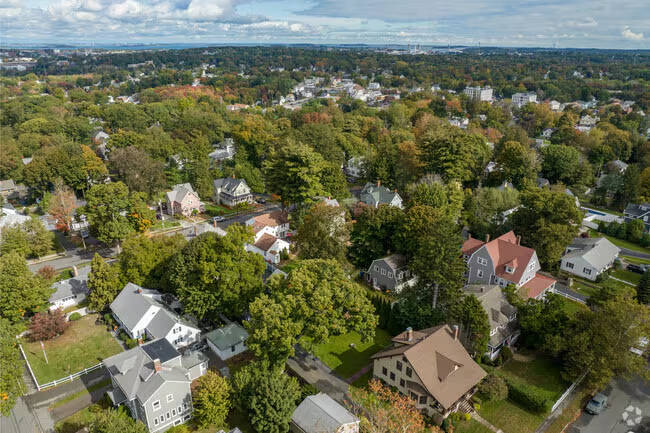
Water spreads through drywall, subfloor, and insulation within minutes, and smoke residues turn acidic within hours - which is why restoration in Braintree Town starts with speed, not paperwork. Every hour a saturated basement or fire-damaged kitchen sits untreated, the repair scope grows.
Braintree homeowners and business operators rely on a full range of restoration disciplines, each addressing a different failure point in a building:
- Water Damage Restoration - extraction, structural drying, and moisture mapping after burst pipes, appliance failures, and roof leaks.
- Flooded Basement Cleanup - pumping standing water, drying foundation walls, and salvaging stored contents in below-grade spaces.
- Sewage Cleanup - containment, removal of contaminated materials, and antimicrobial treatment after backups and septic failures.
- Fire Damage Restoration - emergency board-up, tarping, debris removal, and structural cleaning of charred materials.
- Smoke Damage Restoration - soot removal from surfaces, HVAC decontamination, and odor neutralization deep in porous materials.
- Mold Removal - containment barriers, HEPA filtration, affected material removal, and correction of the moisture source.
The benefit for Braintree property owners is continuity. One coordinated response handles emergency stabilization, documentation for insurance carriers, and the rebuilding steps that follow - reducing displacement time for families near Hollis Elementary and downtime for businesses around South Shore Plaza.
Common Damage Restoration Issues in Braintree Town, Massachusetts
Braintree's position between the Fore River, the Monatiquot River, and Boston Harbor's southern edge means water is a constant variable - from tidal surge during nor'easters to groundwater pressure against older foundation walls.
Local Causes We Respond To Most
- Frozen and burst supply lines in unheated crawl spaces, garages, and older uninsulated exterior walls during January and February cold snaps.
- Coastal and stormwater flooding from nor'easters that overwhelm street drainage in low-lying East Braintree and Weymouth Landing areas.
- Hydrostatic pressure seepage through fieldstone and poured foundation walls after prolonged spring rain.
- Municipal sewer backups and failed ejector pumps that push contaminated water into finished lower levels.
- Kitchen and electrical fires in homes with aging wiring, plus chimney and heating-system fires during the winter months.
- Hidden mold colonies behind bathroom tile, beneath basement carpet, and inside wall cavities dried improperly after a previous leak.
Warning Signs Worth Acting On
- Musty odor that strengthens when the HVAC system runs.
- Efflorescence - white chalky mineral deposits - on basement block or concrete.
- Cupping hardwood, bubbling paint, or drywall that feels cool and soft near the baseboard.
- Gurgling floor drains or slow tub drainage, both early signals of a sewer line issue.
- Yellow-brown staining on ceilings after a smoke event, indicating soot migration through the structure.
- Persistent smoke odor that returns on humid days, showing residues remain in porous materials.
Neighborhoods We Serve in Braintree Town
Coverage spans every corner of Braintree, from tidal waterfront blocks to inland residential streets and the commercial corridor.
- Braintree Highlands - hillside properties with sloped-lot drainage and older split-level basements.
- East Braintree and Weymouth Landing - low elevation near the Fore River, with tidal and stormwater exposure.
- South Braintree and South Braintree Square - dense mix of triple-deckers, capes, and small businesses.
- Braintree Village and the Town Center - historic homes with plaster walls and stone foundations.
- Five Corners and the Elm Street corridor - established single-family neighborhoods.
- The South Shore Plaza commercial district - retail, restaurant, and office spaces needing after-hours response.
Service extends to surrounding communities as well, including Quincy, Weymouth, Randolph, Holbrook, Milton, and Canton - useful when a single storm system affects multiple properties across the South Shore at once.
Seasonal Damage Patterns in Braintree Town
Restoration demand in Braintree follows a predictable annual rhythm tied to New England weather and heating cycles.
- December through February - peak season for burst pipes, ice dam water intrusion behind soffits, and heating-related fire and smoke damage. Chimney and space heater incidents cluster here.
- March and April - snowmelt combined with saturated ground drives flooded basements, sump pump failures, and foundation seepage.
- May and June - moisture trapped over winter surfaces as mold growth once indoor temperatures climb. This is the highest month for first-time mold discovery.
- July and August - humidity above 60 percent sustains mold in basements and crawl spaces; thunderstorms cause roof leaks and localized flash flooding.
- September through November - hurricane remnants and early nor'easters bring wind-driven rain, roof damage, and coastal flooding. Sewer systems can surcharge during heavy rainfall, creating backup events.
Year-round, appliance failures - washing machine hoses, water heaters, dishwashers, and refrigerator lines - account for a steady share of emergency water calls regardless of the season.
Housing Characteristics & Restoration Considerations
Braintree's housing stock skews older than the national average, with a large share of homes built before 1970 and a meaningful number dating to the pre-war and colonial-revival eras. Building age directly shapes how restoration is performed.
Construction Types and Their Restoration Impact
- Fieldstone and rubble foundations in historic Braintree Village homes are porous and hold moisture, requiring extended drying cycles and often dehumidification rather than simple extraction.
- Plaster-and-lath walls retain water and smoke residue differently than drywall; aggressive cleaning can damage them, so controlled drying and specialized soot sponges are used.
- Post-war capes and ranches frequently have finished basements added later without proper vapor barriers - a common mold and flooding vulnerability.
- Split-levels and raised ranches in the Highlands have partially below-grade living space where sewage backups affect finished flooring directly.
- Multi-family triple-deckers in South Braintree allow water and smoke to migrate between units through shared stairwells and chases, widening the affected area.
- Newer construction near the commercial corridor is tighter and better insulated, which slows natural drying and increases the need for mechanical dehumidification.
Additional Factors
- Homes built before 1980 may contain asbestos in floor tile, pipe wrap, or joint compound - testing precedes demolition.
- Lead paint considerations apply to pre-1978 properties during fire and water repair work.
- Older cast iron drain lines are more prone to the cracks and blockages that lead to sewage cleanup calls.
Environmental Conditions & Damage Implications
Braintree's humid continental climate with coastal moderation creates a long window each year where mold growth is thermodynamically favorable indoors.
Climate and Moisture
- Annual precipitation typically exceeds 45 inches, spread evenly across the year with no true dry season.
- Summer dew points regularly reach the 60s, keeping basement relative humidity elevated even without a leak.
- Freeze-thaw cycling opens micro-cracks in foundations and masonry, creating new water entry paths each spring.
- Coastal salt air accelerates corrosion on flashing, gutters, and HVAC condensate systems - small failures that produce slow, hidden leaks.
Soil, Water, and Air Factors
- Glacial till and clay-heavy soils across much of Braintree drain slowly, holding water against foundation walls after storms.
- Areas near the Monatiquot and Fore Rivers have higher water tables, making sump systems essential rather than optional.
- Tidal influence in East Braintree can restrict stormwater outfall during high tide, backing water into low-lying streets and basements.
- Brackish floodwater is classified as contaminated and requires the same sanitizing protocols as sewage - not standard clean-water drying.
- Post-fire indoor air carries fine particulate and volatile compounds; HEPA filtration and hydroxyl or ozone treatment address what surface cleaning cannot.
These conditions mean drying targets in Braintree are set against local baseline humidity, and moisture readings are verified in wall cavities rather than assumed from surface appearance.
Advanced Drying and Restoration Technology for South Shore Properties
Modern restoration in Braintree relies on measurement and controlled science rather than fans and guesswork - an important distinction in a town where stone foundations and coastal humidity make surfaces feel dry long before the structure actually is.
Equipment Used on Braintree Projects
- Thermal imaging cameras to trace water migration behind plaster, under hardwood, and above ceilings without opening walls unnecessarily.
- Penetrating and non-penetrating moisture meters to establish dry standards from unaffected areas of the same home.
- Low-grain refrigerant and desiccant dehumidifiers sized to the cubic footage and material load of each space - desiccants perform better against cold, damp Braintree basements.
- Truck-mounted and portable extraction units for rapid removal of standing water in flooded basements.
- Injectidry systems and negative-pressure mats to dry wall cavities and hardwood in place, preserving original materials in historic homes.
- HEPA air scrubbers and negative air machines to contain mold spores and soot particulate during removal.
- Hydroxyl generators and thermal fogging for smoke odor that has bonded to framing, insulation, and contents.
How a Typical Response Unfolds
- Emergency contact and dispatch, with stabilization steps advised over the phone.
- On-site inspection - moisture mapping, contamination category assessment, and photo documentation for the insurance file.
- Water extraction, debris removal, or emergency board-up and tarping depending on the loss type.
- Removal of unsalvageable materials under containment, followed by antimicrobial application.
- Structured drying with daily monitoring readings until documented dry standards are met.
- Cleaning, deodorizing, and content restoration.
- Reconstruction of removed drywall, flooring, cabinetry, and finishes.
Documentation matters as much as equipment. Daily moisture logs, psychrometric readings, and photographic records give Braintree property owners the evidence carriers request - and confirm the job finished at a verified endpoint rather than a visual guess.





