
Damage Restoration in Ranchettes, WY
- Damage Restoration Services Overview
- Common Damage Restoration Issues in Ranchettes, Wyoming
- Neighborhoods We Serve in Ranchettes
- Seasonal Damage Patterns in Ranchettes
- Housing Characteristics & Restoration Considerations
- Environmental Conditions & Damage Implications
- Septic Systems, Well Water, and Sewage Cleanup on Ranchettes Acreage
Damage Restoration Services Overview
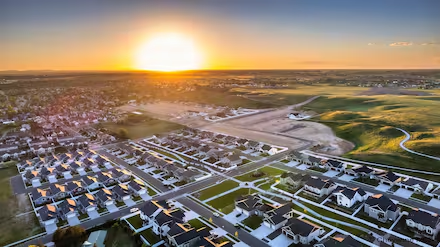
When a supply line splits at 2 a.m. or smoke rolls through a kitchen, the fastest path back to normal starts with a certified crew that knows Laramie County properties. Restoration Wranglers brings IICRC certified technicians, commercial-grade drying equipment, and clear documentation to every job in Ranchettes.
Our restoration services for Ranchettes homeowners, landlords, and business owners include:
- Water Damage Restoration - extraction, structural drying, moisture mapping, and monitoring until materials return to dry standard.
- Flooded Basement Cleanup - removal of standing water, saturated carpet pad, and wet insulation below grade.
- Sewage Cleanup - containment, extraction, and disinfection of Category 3 contamination from backups and septic failures.
- Fire Damage Restoration - board-up, debris removal, soot cleaning, and structural stabilization after flame damage.
- Smoke Damage Restoration - odor neutralization, HVAC cleaning, and treatment of surfaces coated in fine particulate.
- Mold Removal - inspection, containment, HEPA filtration, and remediation of affected building materials.
Benefits Ranchettes property owners see from a professional response:
- Less secondary damage to framing, drywall, and flooring
- Photo and moisture-log documentation that supports insurance claims
- Straight answers on what can be saved and what should be replaced
- Air quality protection for children, seniors, and anyone with respiratory sensitivity
Common Damage Restoration Issues in Ranchettes, Wyoming
Ranchettes sits just north of Cheyenne at roughly 6,100 feet, where hard freezes, wind-driven snow, and sudden spring downpours all put pressure on buildings. Many homes here sit on larger lots with private wells, septic systems, and outbuildings - each adding failure points a city-lot home does not have.
Problems we respond to most often in the area:
- Frozen and burst pipes in crawl spaces, garages, and exterior walls during January and February cold snaps
- Flooded basements from rapid snowmelt, saturated clay soils, and sump pump failure during power outages
- Septic backups when drain fields freeze or become overloaded, pushing sewage into floor drains and lower-level bathrooms
- Fire damage tied to wood stoves, pellet stoves, chimney creosote, space heaters, and grassland fire exposure
- Smoke damage from furnace puff-backs and regional wildfire smoke drawn in through HVAC intakes
- Hidden mold behind vapor barriers and in tightly sealed, well-insulated homes with limited ventilation
Warning signs worth acting on quickly:
- Musty odor in a basement, closet, or crawl space that does not clear with ventilation
- Staining, bubbling paint, or soft spots on drywall near the floor line
- Water meter movement when every fixture is off
- Slow floor drains or gurgling toilets - often the first hint of a septic or sewer issue
- Sooty film on window glass, light fixtures, or air return grilles
- Warped baseboards or cupping hardwood after a snowmelt event
Neighborhoods We Serve in Ranchettes
Our crews cover Ranchettes and the surrounding Laramie County corridor, including:
- Central Ranchettes along Yellowstone Road and College Drive
- Acreage properties off Powderhouse Road and Whitney Road
- North Cheyenne neighborhoods bordering Ranchettes
- Fox Farm-College and South Greeley Highway areas
- Antelope Ridge, Buffalo Ridge, and nearby rural subdivisions
- Orchard Valley, Cheyenne, and Warren AFB housing
- Burns, Carpenter, Pine Bluffs, and Albin to the east
- Chugwater and Wheatland to the north along I-25
We handle single-family homes, manufactured homes, barns and shops, rental properties, and small commercial buildings. Because many Ranchettes addresses sit off gravel county roads with long driveways, our trucks are equipped for extended hose runs and remote power staging so equipment placement is never the bottleneck.
Seasonal Damage Patterns in Ranchettes
- December through February: Peak season for frozen pipe bursts, ice damming on low-slope roofs, and heating-related fire and smoke damage. Furnace puff-backs coat interiors in oily soot.
- March and April: Wyoming's heaviest snow months give way to fast melt. Flooded basements, crawl space saturation, and sump pump overload dominate call volume, along with septic drain field backups as frost leaves the ground.
- May and June: Thunderstorms and hail bring roof leaks, window intrusion, and sewer surcharges. Water left from spring melt begins producing visible mold growth.
- July and August: Grassland fire risk peaks with dry winds. Regional wildfire smoke infiltrates homes, requiring HVAC cleaning and odor treatment. Air conditioning condensate lines clog and leak.
- September and October: Wood stoves and chimneys come back online after a summer idle - creosote fires and first-burn smoke events increase. Good window for mold inspection before homes seal up.
- November: First hard freezes catch unwinterized hose bibs, sprinkler lines, and outbuilding plumbing.
Housing Characteristics & Restoration Considerations
Ranchettes housing stock is a mix of 1970s and 1980s ranch homes, manufactured and modular homes on permanent foundations, and newer construction built since the 2000s on subdivided acreage. Each type responds to water, fire, and mold differently.
- 1970s-1980s ranch homes: Often have full or partial basements, original galvanized or polybutylene supply lines, and limited perimeter drainage. Finished basements from that era commonly used paneling and carpet over concrete - materials that hold moisture and hide growth.
- Manufactured and modular homes: Belly wrap and underfloor insulation trap water after a plumbing failure and rarely drain on their own. Restoration requires opening the belly board, removing saturated batting, and drying the cavity directly.
- Post-2000 construction: Tighter envelopes, spray foam, and better insulation reduce heat loss but slow natural drying. Moisture that gets into a wall assembly tends to stay there.
- Crawl space foundations: Common on older acreage properties. Vapor barriers can conceal standing water and support mold on floor joists.
- Outbuildings, shops, and barns: Metal-clad structures with concrete slabs experience condensation, stored-content losses, and equipment-related fires.
Restoration planning accounts for these differences from the first walkthrough. We check for asbestos-era flooring and popcorn ceilings in pre-1985 homes, verify septic versus municipal sewer connection before sewage cleanup, and map moisture behind finished surfaces with thermal imaging and penetrating meters rather than guessing where to cut.
Environmental Conditions & Damage Implications
Ranchettes sits in a high plains semi-arid climate - roughly 15 inches of annual precipitation, wide daily temperature swings, and relentless wind. Those conditions shape how damage behaves here.
- Low ambient humidity: Helps drying in summer, but it also means surface materials can feel dry while framing and subfloor remain saturated. Meter readings, not touch tests, drive our decisions.
- Deep frost line: Laramie County frost depths push well below three feet, freezing shallow water lines, septic laterals, and unheated outbuilding plumbing.
- Expansive clay and caliche soils: These soils shed water poorly and expand when wet, pressing against foundation walls and opening cracks that let water into basements.
- Hard groundwater: Well-supplied properties see mineral scale that shortens water heater and appliance life, a frequent source of sudden leaks.
- Wind-driven precipitation: Sideways rain and snow find gaps around windows, siding seams, and roof penetrations that vertical rain never would.
- Wildfire and dust events: Fine particulate loads HVAC filters and settles in ductwork, compounding smoke odor after any fire event.
- High elevation and UV exposure: Accelerates degradation of roof shingles, seals, and exterior caulking, creating slow leaks that surface as interior mold.
We adjust dehumidifier selection, air mover counts, and drying targets to local conditions rather than applying a one-size template, and we document readings daily so the drying record matches what the structure actually did.
Septic Systems, Well Water, and Sewage Cleanup on Ranchettes Acreage
A large share of Ranchettes properties operate on private septic systems and private wells rather than city utilities. That independence is a benefit most of the year - and a specific liability when something fails.
Why Septic Backups Behave Differently Here
- Frozen or frost-heaved drain fields push effluent back toward the house through the lowest fixture, usually a basement floor drain or shower
- Tanks that go too long between pumping allow solids to reach the field and clog it permanently
- Spring saturation raises the water table, leaving the field with nowhere to discharge
- Snowmelt and heavy irrigation over the field area reduce absorption capacity
How We Handle Sewage Cleanup
- Establish containment and negative air pressure so contamination stays in the affected zone
- Extract sewage and remove porous materials - carpet, pad, drywall below the water line, and saturated insulation
- Clean and apply antimicrobial treatment to all remaining hard surfaces and framing
- Run HEPA filtration and structural drying with daily moisture documentation
- Verify dryness and cleanliness before any reconstruction discussion begins
Well Water Considerations After a Loss
When a private well is involved - flooded wellhead, contaminated casing, or a pump failure that caused the leak - we coordinate around water testing and advise on temporary water sources during the drying phase. Sewage contamination near a wellhead deserves particular attention on acreage lots.
Prevention Steps for Ranchettes Property Owners
- Pump the septic tank on a regular schedule based on household size
- Install a backwater valve where the layout allows
- Keep vehicles, livestock, and stored equipment off the drain field
- Insulate or heat-trace lines in crawl spaces, garages, and shops
- Keep snow cover intact over the field for insulation rather than plowing it bare
If a backup, burst pipe, fire, or mold discovery happens on your property, our IICRC certified team is licensed and insured to handle the full scope - from biohazard remediation through structural drying and odor control - with honest communication at every step.





